Venus. Earth’s twin. Approximately the same size. Comparatively located in a temperate orbit around the sun.
Earth’s evening star. The brightest object in observable space besides the sun and moon. A glowing beauty named for a Roman goddess. Namesake of one of the best athletes of all time.
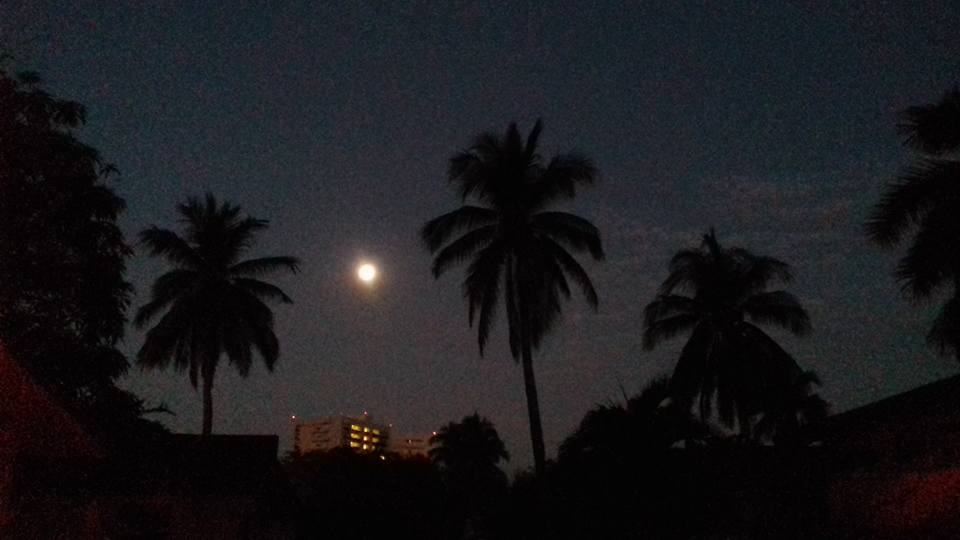
Uninhabitable planet. The atmosphere consists of carbon dioxide and sulfuric acid. The mean surface temperature is 464C (867F). The cloudy miasma reflects romantic light upon the Earth like ice cream of the cosmos. From this distance we bask in the planet’s companionship of albedo light when we face the darkness. Science says Venus is dead beyond rehabilitation and any interest in its history constitutes an astronomical post mortem inquiry into what in geophysical hell made it evolve so wrong and how long ago. Somehow in its clouds and acid muck it hides its evidence of demise, but some proof exists at high altitudes that long, long ago Venus could have sustained life as we know it.
In measures of millions of years a few millenia here and there unaccounted for could make or break a planet struggling to balance an ecosystem struggling to sustain against abuse by one or more life forms competing for survival. Nobody wants to explore the surface of Venus for evidence of past civilizations long extinct. It’s a sci fi projection of imagination to suggest sometime long ago when nobody on Earth was keeping track a civilization such as the human race once emerged on a verdant planet we now call Venus and over the course of a kind of anthropocene period and runs of bad geological luck the planet went to hell. Look how it is now.
Earth has endured its own evolutionary kicks. Who would have taken dinosaurs seriously in the days of the Holy Roman Empire, but today we project back to a whole age and era when such creatures may have dominated all wildlife on the planet until an asteroid smacked prehistoric siberia or the mexican yucatan and crashed the weather so badly the climate wiped out enough dinosaurs to create coal and petroleum over the time it took for mammals to arise and rediscover its place in the universe.
In the 1980s there was a song called The Final Countdown that sang “Oh, we’re heading for Venus” which I used to think was a clue the band, Europe they called themselves, didn’t know what they were singing about because no sensible space emigrant on Earth would aspire to Venus. But now I hear that song as a warning. Maybe they were saying the direction human civilization was headed in its treatment of the planet was Venus.
Here on Earth we quibble over temperature increases of fractions of degrees, whether the variations are realistic measures or hard trends. Sea levels rise in inches. Forests burn by the mega acres and it smokes across the land. Rain withholds itself. The mammals who try to keep order haven’t far to point out crises of existential significance. Earth’s dinosaurs didn’t care if Venus was a democracy or dictatorship. Firearm crimes alone undermine people’s trust in the next guy. How bad did the people of Venus let themselves go before they passed a tipping point? When did their air and water get so bad it couldn’t be saved? What worldwide catastrophe sealed the destiny of Venus? If their civilization’s technology was advanced enough to bring about its planetary destruction, did they consider colonizing space? Could they have come to Earth?
I noticed it was missing from my hand while Roxanne and I were making dinner. In a panic I retraced what I’d been doing all day. The first place I looked was my faithful ZOZO couch. I tore off the pillows, cushions and shook the Afghan stagecoach blanket. I ran my hands within the creases. Surprisingly clean, no pocket change, no gold band.
Next I went upstairs to inspect our bed. The floor around the bed. I checked my desk, the wastebasket, the floor. I surveyed the whole loft, the corner with the stereo and CDs, certain book shelves I’d so much as touched that day. Drawers I picked out a handkerchief or handled paraphernalia. I could not put a finger on exactly when I had seen it last. I was sure I started the day with it, or at least went to bed with it on. It seemed impossible to have lost it the day before, but even so I didn’t go anywhere that day either. Downstairs I checked the couch again, then the floors of the living room, dining room under the table, the tv lounge, coffee tables, bathroom floor behind the toilet, the shower deck (we use a tight drain overlay to catch hair before it clogs the pipe which would have kept the ring from going down the drain) and under the fixtures and the radiators (Roxanne lost a bra for two weeks this summer until found behind the bathroom radiator) and every windowsill and cabinet, then surveyed Koki’s play room even though the kid was definitely not responsible, hadn’t come for day care in three days. (Even so, if she’d found it she would bring it to me, and she certainly would never extract it from my hand and hide it. She’s clever but devious.) No ring.
I turned my pockets inside out. Again and again. Checked the couch from separate disparate angles. Surveyed the built-in buffet where knick knacks and paddywacks accuminlate. If was as if my current life was passing before my eyes.
Midmorning that day through noon I had assisted Roxanne at a project to restore grassy growth to places in our yard burned crisp as chaparral by drought and glaring summer sunshine from loss of mature maple trees a few years ago due to disease. Roxanne hacked and dug out the matted dead grass, I raked it for clumps of dead thatch, and we manually grabbed up and shook the dead clods (and weeds) off the soil and disposed them into a regulation-paper yard bag to get picked up at the curb Monday. Roxanne generously re-seeded the sites, fertilized and spread fresh dirt and then patiently spread tattered sheets of burlap across the sites pinned down with bent sections of coat-hanger wire to keep away birds and squirrels. I helped scatter the seed, fertilizer and soil. It’s September and the right time to do this. Roxanne has had success with this method.
While I dug through the refuse in the lawn bag Roxanne stripped off the burlap and gently probed the soil and seed for the ring. I manually divided half the clods, weeds and dead turf into a second lawn bag, sifting the contents of each back and forth frantically feeling and peering for my ring. In the end Roxanne replaced her burlap and I set the two lawn bags aside the garage empty handed. We washed up and proceeded with dinner, not quite where we left off.
Until sundown I paced around the yard anywhere I might have walked. It will turn up was the mantra. I was certain it was somewhere on the premises. I was obsessed with mortification.
Men I’ve known of who lost their wedding bands were often suspects of misbehavior. I’ve looked upon it as at the least a casual disrespect of the sacred.
This was my second time. The first about four years ago happened at the AMC Southdale movie theater where Roxanne and I brought Kitty and her best friend cousin Erin to a movie around Kitty’s eleventh birthday. An age-appropriate film called The Nutcracker and the Four Realms, it was a lavish live-action fantasy about a young girl on a quest which never lives up to its lavish production values. Out in the lobby as we were leaving the theater I noticed my ring missing. I checked my pockets. I checked the rest room. I looked and rooted (a little) around the waste container where I tossed my empty popcorn cylinder and Coke cup. I gave the rest room a thorough look-see. There was something shady about the Dyson air-dry machine, a perfect device to suck a ring off a skinny finger. I checked with the lost-and-found. Nobody had turned it in. I checked back at the theater every time we saw a movie there and my ring was not among the keys and bracelets and wallets kept in the unclaimed box back of the box office. I would keep checking if I go see a movie there again after covid. I swear I lost it that day at that stupid movie.
I’ve had about four years to kiss that ring good-bye. I wore it more than 45 years. Roxanne and I bought his/her matching plain gold bands at a mom and pop jewelry shop on the main street (Excelsion Blvd then) in downtown Hopkins in 1973 for $37.50 apiece. I wish I remembered the shop’s name. The elder lady behind the counter was very nice to us. We had our initials and our wedding date inscribed inside. If you come across a gold wedding band with my initials and 3-31-73 engraved inside, it’s mine.
Roxanne bought me a replacement. We were at ShaneCo to pick up a repair of the gold chain necklace I bought there for Christmas for Roxanne that held a horizontal row of five birthstones, each for our children and grandchildren: Michel peridot, Vincent aquamarine, Clara aquamarine again, Kitty citrine and Neko sapphire. The chain broke when baby Neko inadvertently gave it too strong a tug. It was the second time but under warranty ShaneCo made the repairs free. Still Roxanne meant to keep it away from the baby’s hands without declining to wear it, she admired it so much, and it almost seemed like a show piece collector’s item after we noticed one of the exact style worn by the CNN White House correspondent Kaitlan Collins. As we inspected and signed off for the repaired necklace Roxanne asked if they still sold old fashioned yellow gold wedding bands for me. Oh yes. A guy measured my finger, went away and came back with a band exactly my size exacly like the original, minus initials and date engraved. The price was significantly more than the original but Roxanne insisted we buy it. It was like she begged me to marry her all over again. Though I felt unworthy I ponied up the credit card and wore it home.
Losing this one humiliated me more because it could have been predicted and prevented. Just the day before — when I last clearly remember noticing I was wearing it — a wedding ring gets to be part of the hand, taken for granted as certain as a digit or knuckle — I felt a gap and a slippage and looked at how it slid around my finger so loosely I could barely detect a white tan line, telling me it was loose enough to fall off like oversized pants without a cinch. I made a deliberate note in my mind to take it off and put it somewhere safe until I could fatten up my finger again.
How my finger got so skinny is not a mystery. I have ruled out excessive typewriting. It’s not compulsive gardening. My manual digital skills are minimal. Overall I lost about 15 pounds early this summer when I developed an abscessed tooth requiring a root canal which led to a gastrointestinal infection that laid me so low I lay for days on the ZOZO couch worrying whether I was past the point of requiring medical care or I might die, which I didn’t, and which I didn’t want. All because I refused to sit a long time in a waiting queue seeking urgent care — I calculated I could suffer more comfortably in my own living room if all it meant was acetaminophen and water until I could stand to take food. There was no respiratory infection. I tested three times that week with one of those home test kits for covid promoted by the governor, Tim Balz-to-the Walz, and each came up negative.
Gradually I got better. Appetites returned. As they say, my stomach shrunk and it doesn’t seem to take so much to fill me at one seating. But I am eating regularly — probably the most regularly of my entire life of merely eating when hungry and not by a clock of meal times. It’s been all the rest of summer and if I must admit my stamina is at about 90% what it was before I got sick my weight is down 15 pounds and fluctuating upward. Roxanne is skeptical about my health and doesn’t see my weight loss as a good idea, but it is what it is. If my fingers have shrunk a millimeter it seems my body has downsized appropriately and there’s no sign of swelling or inflammation — just that old guy bruising that goes with sun scars. As for my overall body mass, I’m satisfied my skeleton is supporting its weight in tissue and muscle proportionately enough to carry me upright as much as need be. I need to be more active, I know. That’s why I take an assistant role in Roxanne’s simple and arduous landscape project. Plus she and I are making plans to at last visit Portugal, someplace we’ve never been and Europe’s missing link for us and a curious destination throughout the travel stoppage. It requires stamina to enjoy travel and I’ll need to be in shape enough to carry my weight. I’m glad I haven’t gained 15 more pounds than my historical average. But then my fingers might just be a little thicker and my wedding band would not have fallen off like clown pants.
We were convinced the ring was lost and could be found on the premises. Every inch of the property was under search. Roxanne suggested we rent a metal detector. They rented by four hours or an all day rate. They were closed Sundays, which was okay, we could search every possible where in the meantime. It could still reveal itself in folds of a sheet or pillowcase. If not found by Monday we could rent a metal detector and run it across the yard, especially the site of the old chaparral. Meanwhile by Sunday we planned to empty and sort the twin bags of refuse she had hoed up and dug to expose plain dirt. She suggested laying a tarp on the ground in the yard and emptying each yard bag onto the tarp and sifting it as we put it back in the yard bag for pick-up Monday.
Sunday came and no sign of the ring. No culprit Gollum Smeagol emerged. My faith it would be found never stopped but my confoundment how well it concealed itself cast doubt the hiding place would ever reveal itself. Roxanne got texted to play pickleball at their club and I spread the tarp from the basement, a former shower curtain stained artfully with drips and mistakes painted in colors somewhere around the house. I dumped the entire first sack of dead sod and weeds and clods of earth. Handful by handful I sifted loose soil. I recalled when we undertook the removal the yard sack weighed more heavily from moist soil but after three days the dirt shook off dusty. Crisp grass flaked off. Hand by hand I parsed off the clods. By the time I replenished the roots and dead shoots into the yard bag there was a significant pile of soil and ground organic dust but no gold ring.
So I repeated the dumping process of the second sack. I liked how good I was getting at shaking the dirt loose and fraying through the roots and tangled matter, satisfied so far how meticulous my search was. And there it was, my ring, in a clump in my left hand, freshly unearthed and revealed. I put it in my pocket. Safe. Gave thanks to the silver sun in the southern sky. Finished the yard bag clean-up and shook out the dirt and crumbs in the woods behind the garage and hauled the yard bag to the curb. I consolidated the two bags of yard waste into one by just shaking out more soil.
I texted Roxanne in CAPS the news of the find, which she read and responded after her pickleball session concluded. I wanted to share the immediate joy of finding the ring and solving the bummer. When we talked later we decided not to rent a metal detector Monday, even though we had nothing else to do. We could go prospecting at the beach, I said. We could, she said, humoring me. Do those things really work? According to advocates and users, I could safely say. Personally I can think of other ways to entertain us. I’m just so glad to find it. I’m relieved of so much guilt and shame. What kind of schmuck loses his wedding band? Twice…
“Our family is permanent.” So affirmed my granddaughter Tess on a Christmas card when she was five. She’s now 13.
There are nine of us: Roxanne and I; our daughter Michel, her husband Sid and their daughters Clara and Tess, the Kysylyczyns; and our son Vincent, his wife Amelie and their two year old daughter Neko. Currently we all live here on the south side of the city in separate residences within a few miles of each other. Both Roxanne’s and my parents are deceased. She and I as well as Sid and Amelie come from extended families, and we mix casually and frequently. It’s easy to see how Tess would infer family durability as a self evident truth.
Our nuclear family vacations epitomize all the dynamics composing who we are, maybe more so this year than any other. We have convened in northern Minnesota, of course, and also southern Utah, Normandy in France and Venice in Italy while the Kysyslyczyns lived in Switzerland. Not all together every year, as it’s hard to get simultaneous time off for the working kids. Family vacation in fact revived itself as our kids matured and took a greater interest in spending time with Roxanne and me. We used to go camping and sightseeing around the region when they were little kids. For Michel’s 13th birthday we took a road trip west to Los Angeles, saw Grand Canyon, Disneyland, Hollywood and Compton — it was 1991 and I used to say for that birthday I gave her the Pacific Ocean. Vincent got the Caribbean, Cancun and the Yucatan at Chichen Itza. The teenage years, high school, then college, significant others, jobs, independence leading to an empty nest nurtured a gap in spending extended leisure time with parents. Before Michel married Sid we took an extended weekend to Wisconsin Dells and lived in a water park, rode the Ducks and got an old timey family portrait. I’ve always wished they would come down for a week and stay with us at Ixtapa, but that’s another story. The family vacation revival emerged while our kids grew up and seemed to notice we were still rather viable people who liked to go places and do things. This coincided with the advent of grandchildren, along with the grandparents having the means to front group excursions, and as products of opportunity and common prosperity the family vacation evolved towards tradition. Vincent became an expert at finding cabins on lakes near the Canadian border. Roxanne and Michel collaborated to find accommodations at cosmopolitan destinations or near national parks.
Last summer we planned a week in late June near Rocky Mountain National Park. Roxanne booked a home-away rental at a town called Allenspark, near the Beaver Meadows entrance to the national park. She booked it about seven months in advance and we had until April to cancel and get our deposit back. Last year was ZOZO, the lost year. The covid-19 pandemic wiped out not only that vacation but practically shut down Thanksgiving and Christmas and all our birthdays and most every occasion we took for granted as commonplace. It seemed we saw more of the Kysylyczyns when they lived in Switzerland. Back then we used Skype. During ZOZO it was FaceTime. We formed a pod with Vincent and Amalie so we could sometimes watch Neko, who was out of day care, while Amalie worked from home and Vincent looked for work. We wore masks. We got tested at least three times. We knew well before April there would be no vacation in Colorado that June.
No sojourn to Mexico for that matter.
ZOZO, the long lost year of deprivation and sacrifice, anxiety, loneliness, disconnection and a massive disruption of society as we simultaneously erupted in a great clamor to survive, eventually evolved into a new year of hope and aspiration. In the depth of a petulant winter the vaccines arrived.
Roxanne polled the family and we decided to try again for Colorado. She picked a commodious rental in the town of Estes Park, nearer to the same entrance to the national park.
Spring disinfected the terrain and brought the earth back to life like Lazarus. Construction displaced demolition where the riots of ZOZO burned. Our governor, Tim Balz-to-the Walz, a reasonable and pragmatic, plain-spoken leader who, when he erred he did so out of compassion and too much trust in people to police themselves, lifted significant public restrictions related to the pandemic although he did not terminate his emergency powers just yet. Shyly and tepidly we emerged like kidnapped tourists with blindfolds off at the light of dawn. The numbers were really going down. Despite an unbelievable cohort of yahoos bent on self-destruction through self-delusion and self-centered misinformation, somehow the politics of all being in this together was working, people could actually see that all the cooperation through ZOZO and the self-sacrifice we put in was paying benefits in disease mitigation. Mitigation of the economic impact by the new liberal administration in DC, administrated through our state, kept the wolves from the doors and cracks from swallowing whole communities. Much as people resented the prohibited aspects of the big ZOZO shutdown it was vividly evident this spring that most of us were lucky, it could have been so much worse if we had done nothing. In a predicament where it seemed assured everybody was going to take a haircut, some of us only seemed to take a trim — and got an extra $1400 to go to the mall, soon as it opens. And now, with the numbers going down, we had vaccines.
Three of them. They were the Andrews Sisters of Mercy, all named Maxine. Maxine Pfizer, Maxine Moderna and Maxine Johnson. When Maxine debuted ZOZO was over.
Leaders who predicted herd immunity in the USA with 70-80% eligible Americans vaccinated by the nation’s 245th birthday, July 4, seemed to be setting an easy target. If there was enough Maxine to go around — and Roxanne and I (senior citizens) got both our doses by late February — there seemed no way every eligible person in America would not be vaccinated by the 4th of July. It seemed so simple.
I looked ahead to summer when the governor would terminate his emergency powers and turn to his adversaries who called him a tyrant, and say, “There you go.”
As Minnesota opened up this spring, so too the rest of the country. Some places bragged they never closed — they’re lying but that’s another story. Some places closed more than we did and opened slower. All around I read about local economic rebounds. Word about hiring increases and worker shortages, blaming generous pandemic unemployment benefits for the inflationary wages now demanded by employees. Work from home — or anywhere — succeeded so well the fate of gray flannel suits who worked downtown in Henry Miller’s air conditioned nightmare office towers is in doubt about inhabiting those buildings again. Vincent got a job with the same company that laid him off, not management, less money but pretty good, working from home. The company agreed to let him take vacation time to go with us to Colorado.
The Kysyslyczyns planned to drive. Their family car is a GMC Acadia SUV, suited to a family of four plus luggage. Ground transportation gave them an opportunity to explore. They had never been to the Black Hills (not even Michel) or Wyoming, and the kids weren’t familiar with South Dakota, Nebraska and Iowa. They had a few days at both ends of the Colorado rental period to bracket the vacation with a road trip across Middle America with stops along the way.
Roxanne and I first considered making it a road trip too. We used to drive all over the place. We spent our honeymoon camping east across Canada from Lake Superior to Nova Scotia in a VW Beetle. Then we recounted our last experience that we qualified as a real road trip, when we flew down to Atlanta, rented a car and drove from there down to Melbourne, Florida, which is on the middle Florida coast, for my brother Sean’s daughter’s wedding. On the way we stopped in Savannah, Georgia, and on the way back Charleston, South Carolina going to Atlanta to drop the car and fly to Minneapolis. We remembered it as a great road trip but recalled complaining of the long, tedious distances and the fatigue of driving and riding long intervals between destinations. In 48 years since our honeymoon the road lost some of its wonder over time, which as too bad because it was the first time we visited the Deep South. We could say easily we’d driven across Nebraska, Iowa, Wyoming and South Dakota enough times to expect long hours of nothing much just to get to the magnificent Rockies and back home.
It wasn’t that we don’t have a reliable, comfortable car. It’s an eight year old Nissan Altima with gravity seats. At about 58,000 miles it almost qualifies as a little old couple who only drives to church and the grocery store cars. It certainly wouldn’t hurt it to go to Colorado and back just to blow the carbon out of the cylinders. (That’s an old gearhead joke from the ’70s.) The more we thought about it the less we wanted to drive. We were admittedly not fond of long hours on boring roads. We could skip all that, fly into Denver and rent a car.
Air fair was really cheap. Aviation was trying to get passengers to trust air travel again as Maxine kept driving down the occurrence of covid-19. Masks were required on all flights, vaccinated or not. It was only about a 90 minute flight, and in Denver we would gain an hour on Mountain Time. The problem was in looking to book a rental car. Roxanne saw rates from a couple of thousand bucks a week. We knew we would need two cars to haul around the nine of us. The Kysylyczyns would bring their Acadia and we would need one more — with a car seat for Neko. Our Altima practically has a built-in car seat as much as Vincent and Amalie’s do. They drive a Nissan Rogue, a compact SUV in the style of the Acadia.
They, however, had no intention of driving to the Rockies and back — not with a two year old only child. Neither Vincent nor Amalie could take more than a week off work, meaning they had no time in the budget for leisurely road travel. They intended to fly to Denver and expected to connect up with Roxanne and me providing ground transportation with a car seat to ride with us to Estes Park to rendezvous with the Kysylyczyns.
Roxanne and I knew we had to either bite a big bag of boo and pony up for a suitable rental car with a baby seat or otherwise drive cross country ourselves and getting to Denver in time to pick up Vincent, Amalie and Neko at the airport. In searching for a rental car in Denver Roxanne learned that the rental car market crashed at the pandemic and all the companies sold off their fleets for cash and there was a gross shortage of cars. The weekly rental rates seemed to increase daily for the week we desired. She heard vacationers were booking U-Haul vans for leisure travel because they were still cheap by the day and sufficed to transport a couple of tourists determined to visit.
So it seemed our faithful red Altima would come to the rescue after all. (Bless me, Altima, I’ve been heard to say the past eight years.) Given sufficient lead time Roxanne and I would drive west and rendezvous with the other Kellys and Vincent et al at the Denver airport. At least we would have two cars to caravan the nine of us or go in different directions at Estes Park. It was too bad our Altima sedan would seem so cramped in the back seat for two adult sized people and the car seat, but maybe Clara and Tess would ride with Neko, me and Roxanne. The solution to that was to swap cars with Vincent and Amalie and Roxanne and I take off for Denver in the more spacious Nissan Rogue. This way they could send their luggage with us instead of hauling it on the plane.
So Rox and I resigned to another road trip after all. The Rogue would be a nice car. Newer than ours. Has a navigation system, which ours doesn’t. It might be nice to take a closer look at what’s inside the back roads of our neighbor Iowa. Just where are those bridges again, so famous for a while about thirty years ago, those covered bridges? Madison County. Maybe we could go there, have a bread and cheese picnic thing on our way to Lincoln, Nebraska. Hey, maybe, being late June the Nebraska fields might be kind of green with row crops instead of hundreds of miles of flat black dirt, or mud if it had been raining. Neither of us relished driving at night. Used to be I liked making tracks through the night but now we made a plan to get to every destination before sunset every day. Roxanne chose lodging in towns within a day’s drive without pushing it. We told ourselves we owed it to ourselves one last time to mosey through this geographic heart land of America and gather our observations. I say one last time because I am 69 years old and don’t really care to travel this route again by car unless I really have to.
Chapter 2
I didn’t know what to expect. I anticipated possible encounters with hostile forces, Trump fanatics, anti-mask anti-vaccination militants and right wing white supremacists bounty hunting liberals. (This from a guy who once not long ago wanted to walk miles to our hotel across Chicago after a Shakira concert.) Pandemic isolation fostered in me a new paranoia. A comfort zone of introversion. Agoraphobia. Lost confidence in social graces. Depressing lack of esteem for the human race. Palpable fear of facing baskets of deplorables. The lost year of ZOZO sucked away just about everything except raw hope our culture can grow back its exceptionalism.
News of a new sars-cov-2 mutation called the delta variant ignited a wave of infections across India and the UK. Sure enough it made the news as sweeping into the United States via the unvaccinated Deep South. The CDC, NIH and WHO concurred the three Maxines stood up against the delta variant in preventing severe infection, hospitalization and death, even if conceding a 25-30% chance of contracting a mild or symptom-free case. Even so, as the nation gradually opened up to hospitality and commerce in the spring the political posturing kept up its nasty haggling. The debate over the efficacy of masks, vaccinated or not, veered into demands for liberty, the right to common protection, shame and scorn on both sides and showed no sign of truce by next school year without going to court. Our family took note and commiserated.
Further worry about mountain wildfires hexed our planning. The Mountain West was parched. Drought prevailed. Uncontrollable fires already broke out in California and Oregon, also Canada. So far nothing yet where we were going, Colorado, Wyoming or the Black Hills, but it’s happened before — we watched daily.
June was hot and sultry like it was deep July, but it didn’t rain much. Rain clouds passed over us and nested east into Wisconsin and leaving us deeper in drought, Minnesota the land of 10,000 lakes and a zillion rivers. A retreat to higher elevation seemed like destiny so the family voted to keep the plan. Unless covid spiked suddenly nationwide at horror movie numbers like a national superspreader, we assured each other we could follow common sense and science as if we always do and could travel safely and enjoy time together on vacation in the Colorada Rockies. Michel is a licensed working nurse and she saw no reason to opt out. Tess, 13, just got her second Pfizer and would be considered fully Maxined by her arrival at Estes Park, leaving only Neko the 2-and-a-half or so year old the only one of us nine unvaccinated. Vincent and Amalie made plane reservations.
Roxanne said even if all the kids canceled we would go and use the rental home ourselves as long as we were paying for it. I looked forward to being in the Rockies again. I’d never been in Denver or that part of the Rockies. It would be the first trip to the Rockies for Clara and Tess and I anticipated asking their observations comparing Colorado to the Swiss Alps. I missed going on adventures with them, almost jealous not going with them to the Black Hills, where there is so much to discuss.
The week before our rendezvous in the Rockies a heat wave broasted North America like a chicken. Pacific northwestern states used to rainy temperate summers like Oregon and Washington underwent serial days with temperatures over 100 degrees Fahrenheit, as well as sites in western Canada. In Minneapolis the temps roosted in the 90s. There was a general alert to look out for the vulnerable and everybody seems to know what that means. Roxanne and I got covid tested for the road — negative again. Same with Vincent and Amalie before their flight.
The Kysylyczyns left for the Black Hills the day before Roxanne and I for Lincoln, Nebraska. That afternoon before we left we swapped cars with Vincent and Amelie. Neko objected. Insisted she wanted to keep her own car. We argued lamely. I left it to her parents to explain how it takes two days by car to travel the same distance as two hours by airplane. My parting advice to the child: Look out the window; it will all become clear.
We left home in the early morning with a full tank of gas. Roxanne drove first shift, Interstate 35W south. Beautiful day. No sign of rain. In our absence we asked our closest neighbor to water our flowers if no rain in two days. Other than our flowers we harbored no concerns left behind. We told ourselves we had all the time in the world yet it seemed like we weren’t getting anywhere. Roxanne expressed disappointment Iowa’s fields didn’t roll the way she remembered and I said wait until we passed Des Moines, the topography would change, though I really didn’t know what I was talking about.
When we saw signs for Clear Lake, Iowa I got out the iPod and plugged it into the Rogue’s Bose system and cued up “That’ll Be The Day”. Was there any reason to exit? Any special place to pay our respects? The Surf Ballroom? Is there a corn field within a few miles where there is a marker like Flight 93 so people can mourn? It’s never lost on Roxanne in any discussion of this that the plane crash that killed Buddy Holly, Richie Valens and the Big Bopper happened on her birthday, though she was only 6 and unaware what that meant at the time. It adds to her legend along with the Police song of her name. People assume she has all kinds of rock and roll karma, which in a way she does — she’s got me.
We stopped for gas before Des Moines, which is just past the middle of Iowa and the place to head west towards Denver. I would drive now. Barely mid-day the temp was 100 degrees F. West on Interstate 80 the young corn and beans seemed to crackle with sweat. It was funny, every few miles there were many towns but at every exit only gas stations and fast food, never a real town. We ate at a Subway shop at such an exit. Operated by a crew of teenage boys who lived however far away. Outside the air conditioning we wilted like lettuce. No way as the temp reached toward 105F would we enjoy hiking around Madison County checking out lovely covered bridges on a day like this. It didn’t feel right. We drove on towards Omaha.
The Nissan Rogue drove like a chocolate smoothie. We had good reasons for choosing the Altima in 2013 but the Rogue caused us to reconsider. For a bigger vehicle it handled like a sedan in the elegant way we were accustomed from Nissan. Riding a little higher but not exaggerated as a truck the road panorama looked more harmonious to the steering wheel. Getting in and out at a climb rather than a descent seemed easier for our aging hips. Its seating capacity compared to our Altima was the reason we were driving it to Colorado — and back in 2013 we had two grandkids aged 8 and 5, plenty of room in the back seat then for two, we weren’t looking very far ahead back then; with its permanent carseat for Neko the Altima might as well be a sports car. Ah, but it’s paid for. The Rogue being a few years newer came with features like a blind spot alert and built-in GPS navigation system but in over all design and function the Nissan hadn’t changed in quality in those years.
We were west of Omaha heading for Lincoln with Roxanne at the wheel again when she noticed the dashboard alert for an oil change. We made mental note. Since western middle Iowa the scenery tumbled to humble wooded bluffs approaching the border to Nebraska at the Missouri River. I got us across and through Omaha. We anticipated a hassle through the big city but we glided through hassle free. Seemed the last time we drove this way through Omaha the entire freeway system through the city was under construction, lane diversions past half-cast concrete and piles of graded dirt marked by orange barrels and diamond shaped warning signs through miles and miles of the city. That memory tainted my whole approach to traversing Omaha, which transpired almost twenty years ago. This time the traffic was seamless and Omaha looked like a whole different town, there and gone in the blink. By the time we passed the SAC base and stopped to take a whiz and switch drivers the horizon was flattening out and the freeway cut unbroken lines into cornfield eternity.
After Omaha, Nebraska is the epitome of building the interstate highway a safe distance away from populated towns so you can’t see where people live. Lincoln comes sooner than you might think. Past Lincoln a new day where the horizon stretches wider and the invisible towns hide behind stretches of faraway nothing.
At our hotel in suburban Lincoln we got our first real encounter with the grand reopening of America. The swimming pool was still closed but the restaurant had just reopened, limited in menu and short staffed. All employees wore masks, and we did too except while dining. Only a week or so ago this kind of thing was practically illegal. Being fully vaccinated made us feel bold but not reckless. The fettucini in cream sauce with chicken and mushrooms was surprisingly flawless and I probably undertipped.
That evening and before we checked out the next day Roxanne texted with Vincent and asked him about the oil change alert on the dashboard. He protested, no way it should be due. Maybe by calendar but not by mileage, though he could not recall when the car had last had an oil change. During the pandemic nobody drove many miles. In the morning Roxanne inspected the windshield for a sticker from Midas and learned the recommended mileage indicated an oil change. So we programmed the GPS to guide us to a Jiffy Lube in the heart of Lincoln. A disciplined crew of young tattooed misfit and sketchy individuals in beat up uniform overalls and ball caps cocked forward and back performed the service routine while we sat in the car above the service pit. Checked the fluids. Tire pressures. Windshield washer fluid. There were three vehicles in the garage at a time and the crew performed like a crack squad. They were all white, none as old as twenty five and some as young as eighteen. They all looked shady and Roxanne quipped what I was already thinking, they could be jailbirds. Potential Charles Starkweather and Carol Ann Fugates averted by gainful employment and automotive maintenance skills.
We chided ourselves for our judgemental attitude along the way through the old downtown to a side of the city where we could catch an arterial to an entrance ramp west on I80. A sturdy brown brick city constructed in a commercial grid bridging railroad yards and bracketing a state capitol that sticks up as the skyline’s only high rise like a naked corncob. Named Lincoln you might surmise the capital city and the state of Nebraska dates after the Civil War, which ended in 1865, and the old bones of downtown testify to a bona fide cultural foundation rooted more in the 19th Century than the 20th. The original name of the city was the village of Lancaster and it was renamed Lincoln after Nebraska was admitted to the union (in 1867) and the city was designated as its capital in 1869. There is a flavor to the city that it wouldn’t mind regressing back in time to re-live its heritage. We got gas and beat cheeks out of town, Roxanne at the wheel.
The rest of Nebraska is about guessing how far away the Platte River is according to a tree line on the horizon. West of Grand Island exit there’s a spurt of greenery where the Platte courses underneath the freeway and runs parallel south of the highway beyond the cover of vaguely distant aspens. Further westward the topography gets plainer, as if it’s possible, and as row crops give way to pasture and chaparral the obscure towns named on the exit signs meekly diminished like dropouts from high school. About two hours west of Grand Island the Platte crosses back underneath the highway near the town of North Platte and exiles itself back into hiding somewhat parallel to the north. You get the impression North Platte could be the last real city until Denver.
It should be noted the Platte River actually flows east and we were figuratively driving upstream. It originates in marshlands of the Rocky Mountain foothills as two distinct rivers a few hundred miles apart, the North Platte and South Platte, which merge around the town of North Platte and flows northwest in a loop across the rest of Nebraska until it joins the Missouri River south of Omaha. All the way upriver when you get a look at it the water is so muddy, the current so slow and shallow you can’t really tell which direction it’s flowing, or if it’s flowing at all.
After North Platte I80 traces parallel to the route of the South Platte River, which originates in Colorado. The landscape gets thirstier and it’s hard to believe there is really a river out there except for the vague tree line. Harder yet to believe people might live out there. About an hour after North Platte the interstate diverges and we continued tracing the South Platte on I76 into the northeast corner of Colorado.
Somehow I thought once we left Nebraska for Colorado it magically got better and suddenly the majestic Rockies would appear on the horizon like salvation. It actually got worse. The topography got asymmetrically rougher in places and the soil sandier, but it was still the desert plain with sunburnt skin. Gravel pits and oil derricks popped up among the scrub brush. Exits ceased to designate town names, just numbers or local roads. We passed by several scenes of acres and acres of cattle shoulder to shoulder in corrals, thousands of steers and heifers with nowhere to go. Even with the air conditioning in the Rogue the cowpie stench penetrated our senses and our consciences.
At the exit to the town of Sterling we pulled off to get gas. The town of course was a few miles up the road from the exit. It wasn’t assuring there were no chain store truck stops along the freeway, but we were low on gas with Denver about 130 miles away. Over a hill and around a curve Sterling came out of hiding. A sad and shabby looking town, it wore its resentment of being looked down upon and passed by with practiced indifference to its shame. It summed the region of brown soil and dust living at the brink of ghost town. The first gas station had mittens on the pump handles of its 87 octane gas. A Sinclair station had a couple pumps functional. A hand printed sign said they gave a 3% discount for paying cash. I bought $20 worth and the sullen, maskless cashier punched up the 60 cent discount and slid a receipt, two quarters and a dime under the covid window with a grimace and no eye contact like she never wanted to see me again. I didn’t wear a mask either and maybe should have. Body language works both ways. Maybe it was the Minnesota plates. Maybe it was that I only put about five gallons in the tank. Or perhaps it was nothing but my own awkward self-conscious brooding for people stuck in my judgmental impression of low yield lives.
Fertile ground for nothing more than resentment and prejudice towards conspiracy gossip to rationalize resentment, Trump acolytes thrive like nightshade in such communities who find themselves at the bottom of society with no escape and need somebody to blame. It’s moot to try to explain how Trump victimizes them. Certain themes play well. It might be a hard sell for the Green New Deal in the land of petroleum and red meat. Where are the wind turbines and solar farms? If Joe Biden’s big Infrastructure deal goes through will it matter to the citizens of Sterling, Colorado?
From there the plateau rises ever slightly towards the Mile High City. At about the same time you see a glimpse of the snowcapped crowns of the Rockies on the horizon ahead you sense the gravity of the orbit around Denver. Sparse excavation and construction sites promised future factories and warehouses. A future hotel. A convergence of highways loomed. A route to the international airport beyond the boondocks begged for speculative developers. You could sense a development boom in the offing but it might be ten years away. Closer and closer to Denver the construction sites multiplied until highway construction took over and dominated the landscape. New entrances, exits, wider lanes and bridges in varying stages of completion terraced our route. You may recall my recollection of driving through Omaha several years ago and encountering a whole city of freeway construction. Denver was ten times that, but with clear signage and miles of orange safety barrels we found our way.
Credit goes to the in-built navigation system, programmed to the address of our hotel. I refer to the navigation system as the Garmin, though it’s probably a different brand, I just like Garmin for an ad campaign they ran a number of Christmases ago and because they sponsored a bicycle racing team at Le Tour de France. Anyway, there was not much for sightseeing on the freeways of Denver and not much to see. Traffic bunched and whizzed by. ‘Twas rush hour. No time to gawk at the football stadium or admire any architecture downtown. Any residential neighborhoods hid behind tidy buffer walls. The Garmin guided us to an exit to a commercial boulevard where we found our hotel amid a row of office skyscrapers in the suburb of Lakewood.
The hotel staff wore masks. We were not required because we were vaccinated. The bar and restaurant were closed for lack of staff. Colorado had just reopened that week and the hospitality industry needed a little time to reorganize. Covid protocol restricted capacity at the swimming pool so reservations were required but the pool was booked for the night.
Our room on the 11th floor faced west and we could see the white crowns of the Rockies peeking over the golden foothills. From our window we could look down on Union Boulevard where there was a restaurant decked in a Mexican motif called Jose O’Shea’s. Roxanne checked them out online and they were taking reservations. She booked a slot for us within the hour. The walk took ten minutes including long waits at the crosswalks. We still arrived a little early but the host brought us to a table on a mezzanine right away. The service, the food, the margaritas, the atmosphere all converged as blessings at our table. From the mezzanine we could see the ambience of half the restaurant, the second floor loft above and the main floor below, and all around a general sense of joy flowed through the place. After a day — two days — on the road we let ourselves relax and take our time. Even the chairs were simpatico.
Reminded me of my favorite restaurantes en Ixtapa Zihuatanejo. Jose O’Shea’s was authentic as an American restaurant can be.
A good meal always settles anxious agendas. It took more than a year to arrive at this place at the door to the Rockies. To savor the success of this leg of the trip we ordered a second round of margaritas. No more driving. The hotel maybe two blocks. Our first ever night in Denver — we passed through several times before and stayed in Colorado Springs — and tomorrow we intended to explore, after we picked up Vincent, Amelie and Neko at the airport. The day after that we would go through that door into the Rockies and rendezvous with the rest of the family in the mountains. It was a good summer night (almost, it was two days shy of solstice) to let loose and express how much our family meant to me, the people I loved most in life, how happy and rich they have made me and what good company they have always been, how proud I am to know them and for who they are, all without weeping. We toasted cheers and agreed eye to eye we are blessed.
Chapter 3
The Denver airport is deliberately an hour or more out of town. It exists as far away as it can from the city to suck traffic and congestion away from downtown and remove airplanes from the urban equation. It serves as a major connecting hub between the eastern and western United States such that many passengers who pass through its terminal neither originate nor end up in Denver for Denver’s sake. It’s as much a feeder airport as a destination. If you’re starting out or ending up in Denver or the surrounding Colorado community, the extra commute factors into the anticipated distances within the region as a territory of blank spaces on Mountain Time. Otherwise it’s just a layover on your way to Honolulu, LA, Fairbanks or Green Bay.
Denver airport has its own freeway. Miles and miles away from the city and its network of highways to the mountains, the airport freeway leads straight into the parched plains, half back towards Sterling and half nowhere. It may be the perfect place to locate an international airport, unobstructed flatland, uninhabited and undeveloped, uncherished, and easy to get to if you build a modern highway. Along the way the highway engineers made arrays of giant slanted spikes for snow fences to arrest the effects of the windswept prairie wind burying the roadway. This being the day before the first day of summer the slanted spikes in neat rows among the parched prairie grass and sand could have been redundant minimalist sculpture. There was little else to look at. To me the spikes resembled the pikes erected in the French countryside by the occupying German army they called Rommel’s Asparagus, meant to impale paratroopers in the invent of an invasion such as at Normandy. In truth the closer to the terminal the more desolate the location and the more the territory took on the feel of a military base, only no checkpoints. Not yet. The signage was explicit and left no doubt we were going the right way. Ripples on the plain obscured where the airplanes came and went. It seemed easy to imagine the neighborhoods, shopping malls and offices that would infill between metro Denver and the airport the next generation or two. You could feel the hope the airport might suck the urban sprawl this direction, away from more precious land bordering the mountains. But it would not happen soon, no land rush here except Holiday Inn Express. Not even an exit to Denny’s.
Symbolic perhaps, the main terminal comes into view as a group of white cones at the end loop of the freeway like a long driveway to a gated community KOA. The airport is almost twenty five years old but seems brand new and four times as old. The white cones are a series of big tents over the roof of the terminal, suggesting teepees or Bedouin dwellings. A city of transients. Gathering of circuses. It was very easy to find Vincent, Amelie and Neko at the curb for arrivals.
Neko was both nonplussed to see Grandma Roxanne and me drive up in her family’s own car and vindicated to reclaim her own car seat. Vincent drove because he knew the territory, Amelie took the shotgun navigator seat, Grandma buckled into the back middle seat next to Neko and I got the window seat in the back, we exited the airport loop and cruised back to Denver, Lakewood and our hotel. Before being laid off during ZOZO the year of the pandemic, Vincent was a western territories marketing manager for a hearing aid company and he had several retail audiologists in this region he visited on the job. This and both his and Amelie’s travels through the west in their thirty-something years of life well qualified the two to chauffeur us senior aged rookies through the Denver metro and up into the Rockies. In truth I’ve grown accustomed to being a passenger.
Vincent admitted he had never seen so much highway construction in a concentrated area. He hoped it was all on the plains side of the city and the route west into the mountains would be work zone free. Back at the hotel the kids checked in and found their room on the same floor as ours. Grandma Roxy offered to take Neko to the swimming pool but there was no time. Vincent arranged to spend the afternoon with a friend and ex colleague named Tyler at his house with his family. They took the car. Roxanne and I figured out how to ride the light rail downtown to catch a baseball game between the Colorado Rockies and the Milwaukee Brewers.
The desk guy in the manner of a concierge steered us to a walkway behind the hotel to reach a sketchy shortcut to the light rail platform. We made mental notes to come back the long way via the main lighted street after sundown. The rail platforms formed an end of the line square on a barren tract of plain I learned later used to belong to the army. It felt as if it used to be fenced off. There was room for a park and ride but few cars. A few scattered riders, everyone masked.
The trains were like we have at home — built by Siemens. We bought all day senior tickets. Practically had our pick of seats. Within a few stops the cars began to fill. I was beginning to forget this was Colorado’s first week of reopening after the long pandemic restrictions. Among people again there was an up tempo euphoria to the back beat of getting by. It was Saturday. I tried not to gawk and remembered not to stare. My first true look inside the legendary city of Denver. Unlike cities with subway mass transit, where you pop up somewhere in a neighborhood and didn’t see how you got there, street level light rail escorts you block by block, station to station and everywhere in between and offers a street level sample of what the city is made of. (Chicago offers an elevated view.) As a rule the most elegant accommodations of any city are not built along rail corridors, so the view from the tracks gives an honest look at the community’s cohesion. It was hard to define Denver on one ride. Thus far it offered little personality to substantiate exceptionalism. Lots of middle class ranch style bungalows.
Downtown had a whole different feel. Lots and lots of 19th Century brick and stone. Here was a city built of substance and purpose. Union Station is the fort that holds down the fort. An edifice at least a block square, it’s a temple constituted to last the ages, not a mere temporary depot to reconstruct another time. There is no waterfront to anchor Denver so Union Station stands as its gateway. Off the light rail, we made note of where to return to catch the train back to Lakewood and followed the crowd wearing baseball shirts through the terminal. Most of the dozens of gates were deserted but here and there rope lines formed anticipating buses to come. The bus passengers observed us pedestrians with little interest, their pending trips preoccupying their masked psyches.
We could not keep up with the baseball crowd — that is, yours truly the dawdler fell behind the pace of the people we were following — my excuse is always blaming my deliberate sense of wonder and curiosity though it seems to slow down Roxanne sometimes to the point of annoyance. No worries as we exited the back end of the terminal we joined the flow of more baseball fans and within a few brickhouse blocks we found Coors Field.
Being in downtown Denver unearthed an accidental milestone for my life. Half a century ago or so I read the confessional adventures of Sal Paradise and Dean Moriarity told by Jack Kerouac. On the Road chronicled continuous back and forth across America between Greenwich Village and San Francisco in the early 1950s, and its geographic checkpoint between east and west was Denver. Specifically a place called Larimer Street. Which is only two blocks from Coors Field. Here was every urban renovationist, preservationist, repurposist — gentrificationist’s — dream. What I heard second hand when I asked around about Denver in my teens and young twenties (“What do you want with Larimer Street for?”) described Larimer Street as Skid Row. A bum slum. It figures. Kerouac was hardly the prophet of the bourgeoisie. Yet today Larimer Street is an open arcade of outdoor dining and pedestrian only zones among bulb lit warehouse patios and apartment lofts. You can see what used to be but it’s clearly not like that anymore.
Coors Field in its iron and brickwork fits its footprint inside Old Town as if on the outside it’s like another neighborhood repurposed rugged old building. Inside it’s a timeless baseball park. Our seats were on the second deck, which meant we had to climb a ramp of stairs. Roxanne’s biggest concern this vacation was altitude. We were now a mile high. She gauged her stamina based on our moseying around Old Town and climbing staircases at the ball park. She reported feeling okay but was glad she didn’t have to climb another deck. We had good seats behind the on deck circle on the third base side, the visiting Brewers. We were outdoors so nobody wore masks. We fell in with a guy in his young twenties, his mom and stepfather. Locals. Fans since the 1990s (i.e. before the young guy was born) the young guy rued the day the team let go of shortstop Troy Tulowitzki. The mom told us why the team mascot was a purple dinosaur (not a dragon) because during excavation to build the ball field, right about home plate, they unearthed the skeleton of a dinosaur. Set stadium completion back a full season (they played at Mile High, the football stadium). The lady said the mascot’s name was Dinger, but I thought she said Digger. No, Dinger! Seemed obvious to her. Digger, seemed to me more obvious, the subject of an excavation, but never mind. Roxanne was making social contact.
(Dinger is baseball slang for a home run. Due to its mile high elevation, Denver became a haven for home run hitters. It led to a policy of keeping baseballs used at Coors Field in a humidor to try to keep all things equal to the rest of the major leagues.)
It was dawning on me how much Roxanne missed social contact during the pandemic. I would have been content to watch the game for its own sake. Roxanne used it as an occasion to cultivate conversation with strangers. It reminded me of Mexico, where people know me as Roxanne’s husband. Of our countless tours of Europe, where Roxanne engaged random travelers and residents alike while I would have minded my own business or observed from a comfortable distance. Long gone the days when I was the outgoing one and she was shy. I could see how the pandemic confirmed my inner introvert and gave me license to retire to an asocial comfort zone in my advanced age — not anti-social, just indifferent to whether I fit in among social groups. Roxanne turned into a virtual gadfly, asking innocent personal questions and following up the answers.
The Rockies held the lead late in the game but the Brewers rallied in the ninth and shut the Rockies down 6-5. We took our sweet time moseying back to Union Station to catch the train to Lakewood. It was Saturday night in the Mile High City. The first Saturday night since the opening of covid-19 protocols. The sidewalks melded with the rope lines queuing to get into the clubs. Dance music and neon pulsed in the streets. We took the outdoor way around the depot to take in the street ambience. At the light rail platform we learned — confirmed by a transit officer — the last train going where we needed to go left twelve minutes ago.
So much for our all day senior tickets. Who would have thought there would be such a thing as a last train in a formidable city such as Denver? We looked around to get some bearings, street names, looking in vain for taxi cabs. Out of hand we decided not to call Vincent. Much as he said he knew Denver we presumed it would be a stretch to ask him to find us efficiently — and man, would he be crabby. It looked like we had no choice but to bite a big bag of boo and book a ride with Uber. At $84 it cost us more than twenty times the light rail ticket downtown. But what a story for the next morning.
Chapter 4
Our Uber driver found us at the designated intersection. A personable guy he hardly registers in the story except as our paid rescuer. If aware of how dependent we bumpkins were he didn’t act like it. The topic of the ride was Colorado’s cautious embrace at reopening since the pandemic. Roxanne remarked people didn’t seem all that reluctant by all the partying underway downtown. Pent up demand, he called it. Getting justification for all the sacrifice. When he learned we were headed to Estes Park he urged us to check out the Stanley Hotel, which served as the setting for the movie of Stephen King’s novel The Shining. (“Here’s Johnny!”) On our way he urged us to check out Red Rocks, the famous open air concert canyon where he said even the Beatles played (which I doubted but did not dispute — I would have been wrong.) At our Lakewood exit the ramp was blocked by road flares and cop cars, lights flashing red and blue. Uniformed cops with flashlight torches waved us away. The exit was closed.
“Probably a fatality,” the driver said and adjusted his speed to proceed to the next exit. “It’s been a bad year for traffic fatalities.” I asked if legalized marijuana took the blame. He said no, he thought the fault lay with the state legislature for not passing a law prohibiting texting while driving. That and the drop in traffic from the pandemic dropping inhibitions of reckless drivers going too fast.
We could see the cop car lights at the top of the exit from our hotel. We could even see the lights flicker in reflections off the boulevard from our hotel room. Roxanne remembered on our honeymoon (as it were) we were on a lonely straight stretch across Quebec on the national highway where we encountered a scene of a massive collision involving at least a dozen cars and a flatbed semi-trailer truck all gnarled and wrecked on both sides of the eastbound freeway in the middle of nowhere, during afternoon daylight, rescue crews putting bodies on stretchers, cops directing eastbound traffic through a creepy crawl between highway flares defining the scene. Yes, I remembered. At the time we tried to calculate whether we could have been in the scene of the crash if we had not stopped to eat at the last town — at a cafe where they charged for each serving of coffee, no free refills monsieur.
Safe in bed high above ground in the mile high city, lying awake on my back in a luxe king-size bed while Roxanne sprawled and snored gently like a white noise machine of the sea, I didn’t mind ruminating in the almost dark. Hotel rooms invariably provide thick light tight window drapes. I like window light to keep my bearings, often moreso than bathroom nightlights. Eleven floors up I felt secure against peeping toms so I cracked the drapes open. Classier hotels like this Marriott include a gauzy inner curtain, and even through the opaque gauze the ambient street light pulsed pale red and blue milk reflecting on the ceiling. A far cry from Larimer Street 1956. I would have been five years old.
My next birthday I’ll be 70 years old. This was supposed to be my Summer of 69. Whatever that idiom means beyond being 69 years old doesn’t matter, it’s the only summer of my life I will spend being 69 years old. The song by Bryan Adams came out in 1984, when I was 33 1/3 and Bryan Adams himself was 25 — in the year 1969 he would have been ten, way too young to have all that romantic adventure, even for a Canadian. Nonetheless, that year I was 18, perfectly old enough to relate to the rock and roll masterpiece that came later in the year of George Orwell. If as Adams hints the title phrase means a latter-day sensuality, it should be observed beyond the snickers that such a deal requires a mutual commitment that seems exotically arousing to some couples in concept but not so appealing to intimately fulfill, particularly standing — on anybody’s mama’s porch.
That said, my Roxanne partner 48 years sleeping close by, barely touching leg to leg, my mind was divided whether the 69 year path my life has gone added up to a life well-enough lived or amounted to extraordinary luck to have lived so long. ZOZO the lost year of covid-19 could have ended it all. In addition to curtains the windows could be cracked open to bring in the local air, but there were no sounds coming in with the lamplights. No sirens. No motorcycles or growling semi trucks. (Lorries they call them in the UK.) It was not a priority to come to a final conclusion that night… heaven forbid, you might say… the idea behind the prayer Angel of God My Guardian Dear… my next seven, eight, nine days were mapped in front of me among my beloved.
It brought to mind a bronze paper weight my elder granddaughter Clara gave me for Christmas the same year Tess wrote Our Family Is Permanent. The paperweight was a cast sculpture of a stack of ballpoint pens with an inscription on the base attributed to Benjamin Franklin: “Either write something worth reading or do something worth writing.”
So I try… Attempt. Essay…
Morning light lured me awake enough to start coffee. The western sky looked gray but not rainy. Roxanne texted Vincent to let us know if Neko would like to get breakfast with us while he and Amelie woke up. What a nice grandma. Neko of course took her up on it and we walked down to the light at the intersection leading to the freeway exit which had been closed last night and crossed over the boulevard to the Denny’s, promising pancakes. Our timing was very good, we got a booth right away just minutes ahead of the morning rush of the church letout, and shortly there was a waiting line. Staff wore masks and most diners didn’t. Tables were spaced further apart than the usual floor plan. The servants seemed naively cheerful for their efforts. They may have been short staffed and it was Sunday of the first week of the post-pandemic reopening and yet Denny’s made no excuses and acted as if this wasn’t the first rodeo. Just the same we ate up our eggs, pancakes, hashbrowns and sausage patties and toast and got out of there as the wait list swelled and Neko’s attention span spun and she ate what she was going to eat and it was time to hit the road. “Time to mosey,” Roxanne said.
Neko asked to be carried and we said no. It was too bad we didn’t have a stroller with us but it was only a little over a block back to the hotel — most of the time waiting for cross lights — and at almost three she was a kid who knew how to hike. She also was not one to whimper and whine. As a reward for walking we allowed her to wander off the sidewalk onto the lawn into the shrubbery around the office park near the hotel while we watched that she didn’t stray alone into the parking lot. At the hotel she wanted to go exploring so Grandma Roxy escorted her up the grand staircase to the second level to look at the pool while I hung around the lobby like I was casing the joint, as if there was anything to steal. Our fellow guests consisted of the usual riff raff and bumpkins with any excuse to be away from home. Wedding parties. Soccer teams. Young couples just like me and Roxanne only decades younger. Young moms and dads with small children a little older than Neko. Met a guy in his fifties staying there in the interim while placing his belongings he couldn’t take with him into storage after liquidating the rest of his property before embarking by van to Costa Rica tomorrow, where he was starting up his own swimming pool construction company. This guy stood out because he was the only fellow traveler who spoke to me at the Marriott when Roxanne wasn’t there.
If ever there was a time when strangers avoided other strangers it was obvious it was the aftermath of the covid-19 pandemic. There was a new look in people’s eyes, even masked people, that seemed to say hello but I gotta go, not making any new friends right now, sorry thanks — and those were the expressive few who made eye contact.
Checkout was as efficient and unsentimental as technology and quasi-sterile conditions can contrive. We loaded our luggage, snapped Neko in her seat, buckled up and hit the road, Amelie at the wheel, Vincent shotgun. We passed the freeway ramp, the scene of flares and torches where we presumed somebody died, and there was no evidence of mishap. No scars on the pavement. Roxanne of course by now relayed the story of our night out. Funny, she said, something bad can happen one night and the next day it’s like life goes on.
The kids talked about their visit to Tyler and Cissie’s. Their kids got along — they have two, one older and one younger than Neko, a girl and a boy. They have a jungle gym in their back yard. They have a nice house in a nice neighborhood not very far from the hotel. Tyler is still employed by the hearing aid company but he and Vincent are no longer colleagues in the same organizational structure. Cissi was a national sales rep for an eyeglass manufacturer until covid, but apparently does not miss the rat race. It’s interesting to listen to our kids talk about their friends and peers as they reflect what they want us to know about their generation. Vincent is 39, Amelie 38. Millennials. Old millennials. Almost can pass as young Gen X.
Late with child, Neko, they are themselves ironically the babies of their families. Married eleven years now, Neko is a sincere, prolonged effort to make a baby and thus have a family. After several and several more cycles of clinically trying, including a heartbreaking miscarriage, it seemed surreal when Neko was born at term a perfectly healthy baby girl. A miracle child. Yet so normal.
The kids met at South High. Graduated a year apart. Dated off and on through their college years and moved in together after they each completed their degrees, Amelie in four years, Vincent in six. Vincent graduated the College of Natural Resources at the local U of M and his first job after college was as a senior counselor at a Boy Scout camp for the Boy Scouts of America in northern Wisconsin. Amelie grew up camping with her folks and spent summers at a girls camp called Menogyn in the northern Minnesota wilderness near the Canadian border, where she metamorphed from camper to counselor to leader of group canoe expeditions into Quetico Provincial Park. She landed a job with the regional council of the Girl Scouts, where she directed the logistics of their annual cookie drive for a number of years. I joked at their wedding that the boy scout married the girl scout. Their mutual enduring love of the outdoors outlasted the joke.
Their careers changed, as careers do. Amelie found a liking for non-profit administration and joined the management of an org that provides crisis child care. Vincent left the Scouts after one season. For a while he worked as a concierge at a suburban Marriott, where he came in contact with people in the hearing aid business at their corporate headquarters nearby. Over time he networked a job at one of that company’s local retail stores and after that managing their national call center, which launched him into marketing and landed him a big western territory which included Colorado before the pandemic upended the company’s entire retail business model and Vincent was furloughed, then laid off. Amelie on the other hand was an essential worker as the pandemic squeezed the stress levels of parenting and she worked diligently from home to keep the crisis nursery viable to meet increased demand from harried parents. Vincent returning to work meant Neko returning to pre-school day care three days a week and one day each with grandparents.
Vacationing with these three — and just the two of them before Neko was born — was nothing novel. At least once a year they invited Roxanne and me to join them at least a few days at rental cabins on lakes up north near the Boundary Waters. We swim and hike, kayak or canoe, hang out, bonfire, cook and eat. They’re good company. During the pandemic and the lost year of ZOZO they were our closest friends, almost our only social life. While the Kysylyczyns lived in Europe they were our only local kids. They looked after us, in an after sort of fashion, independent as we are. We couldn’t ask for our son to find a mate more conducive and complementary than Amelie.
Leaving Denver, Amelie at the wheel, the highway climbed off the plateau into the arid foothills. Vincent narrated the way, which passed the famous outdoor concert venue Red Rocks and he recounted seeing LCD Soundsystem there on a business trip. He liked them so much he came back for a second concert the next night. Amelie signaled to turn into the Red Rocks entrance to check the place out. Vincent was all for it. None of the rest of us had ever been there so Amelie drove into the park entrance for a quick look.
An older African American man with a deep suntan sat on a ledge of rock called out to us to say the park and amphitheatre were open for visitors and waved us towards a parking area. Come on in, look around, he said. How the man was dressed he could have been a park employee or a day hiker. Either way we waved thanks and took him up on his invitation.
The scenery around Red Rocks Park is gorgeous, a perfect lift into the echelons of mountain strata. An abutment of buttes and cliffs in a glimpse of painted desert, all red like rosy rust that never sleeps, striated and etched by centuries of wind and sand, the aura of the place radiated a gateway to eternity. Amelie did not find a parking spot on our first pass through the lot, so she offered to let me and Roxanne out at the amphitheatre entrance which was open free to visitors, no show going on. Roxanne had to use the restroom. Vincent stayed with Amelie and Neko. We said we’d be right back and they said they’d hover.
Up a wide staircase and a ramp (and probably an elevator) the ampitheatre entrance opens to a spacious mezzanine at the back of the bleachers, which descend down to the stage in the canyon. The canyon walls enclosed the seats with intimacy as if this were a room and not outdoors with the open air above liberating this room without a ceiling from inducing tunnel vision. I could only guess at the acoustic effects. I did not hurry. I noticed Roxanne among the crowd taking a look around, she couldn’t resist having come that far to go to the bathroom. More than one other spectator I overheard informing his companions how the great upheaval of what are now the Rocky Mountains, about 75 million years ago, tilted the existing horizontal rock bed and turned it vertical. Most people were not masked, which left me thinking we were vaccinated. People browsed at a social distance. On a kiosk back by the beer stand near the museum gift shop I read a plaque dedicated to the Beatles, who played there August 26, 1964.
So then I ran into Amelie standing out in the crowd overhearing a guy explaining the tectonic upheaval that tilted the sandstone rocks when the Rockies formed. This was her first trip to Red Rocks too. She found a parking spot and left Vincent and Neko there to get a look at this iconic place, and her impressions confirmed I was not alone feeling it was worthwhile.
And then she turned the conversation to the Zombies, the rock band from the middle-1960s. She said they went bankrupt and broke up over the release of their first album because it initially didn’t sell and they couldn’t cover the production costs. They had to reassemble the band to go on tour once their songs caught on. It took a new single “Time of the Season” to break even. I didn’t know any of this. “Tell Her No” and “She’s Not There” to me were seminal records in the British rock canon, and I asked, where did you learn all this? She said one day she was scrolling the internet and came across a story about the Zombies. I did not ask if she was doomscrolling and checking for the latest on the zombie apocalypse. Why would somebody her age care about a 1960s English rock band? Then again, Amelie grew up with a copy of an album called Buddy Holly Lives! Roxanne joined us as we headed to the exit and I split off on the way out to take a whiz.
Back on the road we wound our way to higher elevation with gradual subtlety. Beyond Red Rocks the terrain terraces from plain to valley to peaks without majestic awesome vistas so much as a constant flow of unsurprising pretty landscapes. Tidy towns. Rolling ranches. All accompanied on the horizon by rocky peaks. Didn’t look at all like a bad life.
At the city of Boulder we cruised the main boulevard through town. Saw the campus of the University of Colorado, the shopping and commerce district, if not Old Town. Via his iPhone Garmin Vincent navigated Amelie to an address near a midtown strip mall where we parked in an alley behind a low rent storefront. A marijuana dispensary. Roxanne stayed behind with the snoozing baby while Vincent, Amelie and I entered the premises via the back door. There was a No Smoking sign on the fence where we parked.
Inside we were greeted in an austere anteroom by a guy behind covid glass who asked for our ids, scanned them and asked us to wait. In a few moments we were ushered behind a security door to the cannabis showroom, where a guy behind a glass display counter welcomed us noncommitally and gave us our ids back. The kids did all the talking. I tried to take in what was said and studied the merchandise. My frame of reference was Amsterdam and its smoky cafe reefer bars along the canal. This being America there was seemingly infinite product variety and no consumption allowed on the premises. The aroma of the place smelled of fruit candy and fresh herbs. Amelie and Vincent asked questions about edible gummies and the properties of different kinds, such as sleepiness or simple anxiety relief. The guy behind the counter seemed to warm up as he answered their questions and described what someone might expect with the products they asked about. I eavesdropped at the display counter next to us where a regular customer placed his order and the guy helping him measured it out from the glass humidors behind the counter. There was a printed sign on the countertop saying if anyone spoke a word about taking the product out of state the transaction would be terminated and the customer asked to leave. (It seemed obvious we were from elsewhere by our id cards but I didn’t expect anything to be left over at the end of the week, and nobody asked.) Amelie asked for some combo CBD THC gummie edibles. Vincent ordered a measure of a certain kind of flowertops, some fruit flavored THC gummies and a few pre-rolled joints. I didn’t technically get anything for myself but was factored into Vincent’s order — and he asked me for $40. The guy filled the order, tallied it up and got us what he called bagged and tagged — everything in a paper bag with the receipt stapled to seal it. At the end we exited the showroom directly to the street out the front door. We had to walk around through the alley to get to the car, where Neko was awake and asking where we been.
Next we drove to the strip mall around the corner where Roxanne, Amelie and Vincent shopped at the liquor store. I hung back with Neko. I said we went to the store to buy supplies for the vacation. Grown up supplies, like beer and Coke. Say, when you were on the airplane, did you look out the window? What did you see?
The airplane wing. Clouds. The sky.
Another hour up into the hills we arrived at the lakeside town of Estes Park. Obviously a vacation town, a tidy central business district decked out for visitors like the Hallmark Channel and outskirts arranged discreetly to veil the residences beyond comely commercial buildings and thickets of Aspen trees and tall red pines. We drove up the driveway to the Stanley Hotel, as Amelie put it, to get it overwith.
Stately and sovereign like a massive Southern antebellum mansion it anchors a wedge in the valley facing downtown like the town’s own White House. Even from the outside you can x-ray see in your mind long white corridors of doors and an endless scarlet carpet. What I recall from the movie (which I’ve never completely watched, and the book I’ve never read) is the hotel is located in a site so remote the winter snows isolate the place so desolately and for so long it drives a man mad, so he goes on a homicidal rage against his wife and kid. You look at the real life hotel and it isn’t scary and you wonder why Jack Nicholson just couldn’t shovel his way out the front door and snowshoe downtown to hang out with guys at the brew pub to watch the Lakers v Nuggets.
Our home-away rental cabin was easy to find. Garmin guided us to the address, which was on an urban like grid off the main road. The landlord named the place Mountain Forest Home, apropos enough. All the way up the extensive driveway we heralded Roxanne, who did it again, booked the nicest, finest, most awesome, appropriate accommodations. More chateau than chalet it was a mansion made of logs and stone. Lofty, split level main floor with a lower level bedroom and lounge and play room, there were four bedrooms in all, three bathrooms and sprawling open kitchen and dining area. Front deck just off the big bedroom, back deck off the two back bedrooms and the kitchen. Picnic area on a patio with beach lounge chairs next to the hot tub.
At the kids’ insistence Roxanne and I moved into the main bedroom and they and Neko claimed the one downstairs. Of course Neko wanted to go in the hot tub. Amelie and I walked her down to check it out. Amelie worked back the hood and showed her child the buttons to push to turn on the bubblers and what not to touch to change the temperature, which was preset. She wanted to climb in but we said not without a swimsuit. She offered to be naked, and we said no. Amelie and I watched over her putting her arms in the whirling water and the mom asked her to push the button to stop the jets, which she did, and then pushed the button to turn them back on.
Here’s the first rule of the hot tub, I said in my grandfather the narrator voice. Nobody goes in the hot tub alone. So Koki what’s the first rule number one of the hot tub? Nobody goes in the hot tub alone. Always only with a grown up, added Amelie, or your cousins.
It turned out Neko didn’t cotton to the hot tub all that much. She found the jet bubblers a little intimidating and the temperature too hot. Content to fiddle around on the stairsteps with her arms up to her shoulders she played with the floating saucer cleaner whenever somebody lounged in the tub, which held six, if four comfortably.
First mission on move-in day was the grocery store. In the weeks leading up to the trip the meal planners coordinated through Roxanne to compile a grocery list, and with said list Roxanne took the car and the Garmin to town while the rest of us made ourselves at Mountain Forest Home waiting for the Kysylyczyns.
Chapter 5
All the while on the road Michel kept in touch with Roxanne by text. We knew they had good weather, if burning hot across South Dakota. They were safe. The Corn Palace was not open to visitors in Mitchell. Visited Crazy Horse monument. Saw her very first herd of bison at Custer State Park.
The iPhone and its internet capabilities have linked our family long-distance almost ten years. Daughter and mother kept close dialogues while the K’s lived in Europe and while we toured Europe. I admired their intimacy with the kind of jealousy that arises from respect for both their personalities who mean so much to me. My observation in life is no good comes from mothers and daughters who feud. When I consider how strong each personality I thank my lucky stars Michel and her mother get along so well. To my benefit I get privy into my daughter’s life and insight into her soul. Being close to Michel is important to me and cannot be delegated, but during times when I’ve felt distant I’ve relied on Roxanne to keep me attuned. Hence the jealousy. I remember times I wondered if Michel loved me, but I know better now and don’t think that direction anymore. I wonder how much being her dad may have embarrassed her, and if so how much courage she mustered to consort with me with nuanced pride and introduce me as her father. I wasn’t a bad father, like I wasn’t a bad husband, or a bad worker or bad citizen, but always eccentric and flawed. I’ve often credited Roxanne for keeping me from going over the top by keeping me under the top. To that I’ve tried to be a good father, and as well as I’ve done I can credit Roxanne their mother for helping me expose them to a good life of quality and to step back as they made their way in the wide wide world.
Michel sent a text estimating they were half an hour from Estes Park. In the meanwhile exploring the terrain with Neko, examining the pine cones, along came a young doe followed loosely behind by a young buck grazing their way through the yard under the red pines. We watched in awe together as they moseyed past the hot tub into the neighbors’ properties. When the deer were gone Amelie and Vincent called to us from the back deck: Did you watch the deer? What’s the under-over on the wildlife this week?
The Kysylyczyns arrived before Roxanne returned with the groceries. We greeted them and helped unload their baggage from the car, showed them into the house and the two unclaimed rooms on the backside of the house. The teenagers got the room at the end of the hall and went about trying the lights and the ceiling fan. Sid and Michel took the room at the head of the stairs, though Michel questioned why Vincent, Amelie and Neko automatically got the basement. And where’s Mom? Michel asked why I didn’t go with her to the store.
Not that I was needed at the house to greet them. Not that Roxanne wasn’t a big girl with skills who almost exclusively did the grocery shopping since the lost year of ZOZO. It came to mind to say I wouldn’t have witnessed my youngest granddaughter observing the deer with enchanted stillness a few moments ago. In truth, as Roxanne drove away it occurred to me what Michel was now thinking and I quick stepped into my sandals and chased after her out the front porch and lamely waved after her halfway down the driveway before she took a left and drove to town. So I agreed with my daughter and described how I had a second thought and followed her down the driveway, but she got away.
You didn’t try very hard, said Vincent, who observed my half-assed effort. He explained his option for the basement bedroom because they had Neko.
Michel presented me with a gift bag and a hug. Happy Fathers Day. Should I open it now or save it for a ceremony? I opened it. Hand drawn cards from the girls. iTunes gift cards worth about fifteen songs. A Happy Buffalo milk chocolate candy bar from the gift shop at Custer State Park along with a tiny stone sculpted buffalo the size of half my thumb and a pair of socks printed with bison grazing beneath mountain peaks and pines, also from the Custer gift shop. I was touched. At that moment nothing meant more.
Sid and the girls discovered a clogged drain in one of the bathroom sinks. There were burned out bedroom light bulbs so we began a household hunt for spare bulbs and such, inventorying the small appliances and compiling a list of things we might call the landlord about after Roxanne got back. Sid himself fished open the clogged sink drain with a wire coat hanger (a rag?) so now it was down to sundry light bulbs.
At one point I thought I saw Roxanne pull up in the driveway so I mustered everybody to help with the groceries but it was a false alarm. Both cars were black SUVs and at a glance out the picture window I mistook Michel moving her car in the driveway to a parking space at the front staircase landing. I thanked everyone for their prompt response.
Roxanne’s grocery list was a compilation of advance meal planning by Roxanne, Michel, Vincent and Amelie, who have been collaborating to feed family vacations and holidays as long as we’ve all been together. When Rox arrived Sid watched the little one while the rest of us hauled in the bags. We packed the fridge and the pantry. To make the first night easy Roxanne improvised and bought a couple of rotisserie chickens. Boiled rice. Salad. Broccoli. The teenage girls ate vegetarian, so Grandma brought them plant based chicken nuggets. While we pitched in to lay the table and lend a hand with the food, Roxanne directed tasks with too much urgency, still buzzed with adrenaline from showing up at a full house as if the rest of us wouldn’t have a clue what to do without her.
Can I mix you a gin and tonic, babe? We feasted. This goes without saying, as a family we always eat richly with no shame. I say this boldly because it’s true and it’s a given, our family can count on itself too feed ourselves. At the dinner table it’s all for one and one for all. Unwritten rule number one is Feed the House.
We celebrated a couple of things. It was exactly two weeks since Tess’s second dose of the Maxine. Now all of us were vaccinated except Neko, who was still too young. Ahem ahem, why didn’t anybody explain Neko had a cough, Michel asked around and the rest of us didn’t notice because three year olds are expected to get sniffles as they adapt their young immune systems, as Michel a nurse and mom knows, and besides she wasn’t back to pre-school yet and only spends time with her parents and grandparents. We toasted Tess as testimony to how lucky our family has been the past 15 months to evade covid-19.
We celebrated a toast to Fathers Day, to Sid, Vincent and me. We toasted to our safe travels. The topic turned to the Kysylyczyns’ sojourn in the Black Hills. Their consensus was first impressions of beauty that made you question its isolation, how a place so pretty and serene can seem so alone and ignored. As Minnesotans we grew up giving the Dakotas the fish eye, and still for the sake of teaching our kids kindness, tolerance and open-minded inclusion and diversity we try to keep our criticism civil and expect our progeny to figure out for themselves to trust their own observations in light of what the elders say. Clara and Tess were conflicted over their impressions of Mount Rushmore — not conflicted against each other but innerly conflicted to themselves over the enormousness of the project by the sculptor and its success and the idea that the mountain was sacred to Native people and stolen to sculpt giant busts of white patriarchs. They’re three years apart in school but keep each other up in the ways of the world that sustained them as bunkmates in Switzerland four years, resulting in an alliance of kinship and sisterness, empathy and sympathy bonded in immortal gold. Which is not to say identical twins, though they share the same dialect if not the same point of view. In this instance neither meant any disrespect but the mountain and history could have done without another portrait of George Washington and if they ever commission an additional face it better not be Youknow Who.
On the other hand they saw the monument in progress to Crazy Horse, a different sculpture of a man on a mountain of a different color stone. When finished it is supposed to be the largest sculpted mountain in the world. It will show Crazy Horse on a horse pointing to the sacred heart of the Black Hills. What troubled them about Crazy Horse was the monument completely controlled by a white private family who shared the fame and the proceeds with the Lakota nation at their sole discretion. Sid texted me a link to a story in The New Yorker — “Who Speaks for Crazy Horse?” (2019). Started in 1948 by a guy who had worked on the Mount Rushmore project it’s long from done, and severe critics accuse the family of perpetually milking it for profit with no end in sight. The chief’s face is clear and you are invited to imagine the shape of what will be his body, his horse and his outstretched arm. At $30 per car the Kysylyczyns considered it a stretch value except when they got there somebody let them go in free when they circled to drive away.
The teenagers wanted to bring Neko to the hot tub before sundown, which was still nearly two hours away. Tess asked if the hot tub might attract bears and Vincent answered that it wasn’t the quality of water wildlife prefer to drink, and there’s no fish. Amelie re-stated rule number one of the hot tub, nobody goes in it alone and offered to go with the girls. While the rest of us cleaned up after dinner we encountered our first conundrum.
We made a pot of coffee, which according to the measures at the side of the glass pot there should have been about twelve cups. At the end of the brew it only came to about eight. It was an automatic drip maker like Mr Coffee only made by Braun. Nothing complicated. I in fact made the brew, and I know I filled the pot all the way to 12 and poured it into the reservoir. Sid asked if maybe I skimmed a fast early cup off the first of the brew, but I swore there was no tampering, in the pot it made only 8. Which was sufficient for the five coffee mongers after dinner.
I ventured to suggest maybe a djinni lived in the wall behind the coffee maker below the counter top who extracted a portion of every pot of coffee as a kind of cosmic tax. Nobody really heard me.
Instead the weather seeped into the conversation. Sid and Michel said South Dakota east of the Badlands was a desert of humidity. With temperatures approaching 100F from Minneapolis to Wall Drug it seemed the freeway was an air conditioned tube across a muggy green plain steaming under the sun. At the Black Hills the rise of elevation seemed to lift them out of the soup, and for that Custer State Park was a nice place to stay at a rustic cabin. The drive down through Wyoming only proved the cooling effect of arid higher elevation. Roxanne and I agreed. Here in Estes Park the high temp barely cracked 80F, and even so, the humidity was so low the breezes swept clear your perspiration. Vincent made clear he despised hot weather and these alpine conditions delighted him to mix up a fresh gin and tonic to toast our coffees on his way out to the hot tub.
My parting words on my way to dress for the hot tub were another toast to Roxanne for finding us this vacation mansion. I invited her to accompany me to the hot tub but she deferred to stick around the kitchen island and discuss plans for tomorrow. Maybe later, she said, and besides it might be rather crowded down there. The teenage girls were just getting out and drying off when I arrived and they were the ones who told me Neko didn’t like being in the hot tub and that’s why she knelt on the top step leaning into the first step down into the tub and up to her shoulders just her arms stirring the water. The elder girls were simply done. How was it? Good. I excused myself over the little one and joined her mom and dad in the tub, now not crowded at all.
It was hard to judge sundown as red light faded and shadows turned purple and blue sky only got bluer as it went away not quite night. The hot tub was conceivably the top of the line, jets like shiatsu massage and an over the shoulders waterfall at the back bench. Each corner featured jets directed somewhere else at your back, or feet as it were. I lay back and floated under the waterfall. The spray mist landed cold to my face and chest, which made me immerse more to keep snug. Roxanne showed up in her bathing suit and took her turns in the jet rotation. Neko showed signs of a shiver and when even Grandma couldn’t lure her into the tub on Grandma’s lap, Amelie volunteered to bring her baby indoors to get ready for pajamas and Vincent belatedly offered to take Neko in but Amelie was already committed. Roxanne had just arrived and me too, so we promised to shut down the tub apparatus and secure the cover when we left, and nobody would remain alone.
Vincent and his mom and dad. It was one of those Truth and Soul moments with him when he frankly thanked us for being good parents. Every now and then he does this, and not in an intoxicated I Love You Man way. He sincerely wants to acknowledge his gratitude for his upbringing, how his mom and I raised him morally and provided him with security and opportunity and intellectual stimulus to live an interesting and fulfilling life. He was that succinct. Rox and I feigned no modesty and said he was welcome. I said my greatest fear was to have one of my children on a psychiatric couch complaining about me. As he was learning, fatherhood isn’t an automatic easy, he said, the responsibility enormous and the stakes, a person’s life and way of engaging the world. We did it in the name of love, we say. We love ya, man.
What he needed was reassurance that he was a good father, and he was. He told how good Neko was on the airplane, wore her mask without fussing. The pandemic offered Vincent a golden opportunity to build a father daughter bond few dads in this world ever get and few dads get to choose. I envy him. With Michel and him I had to struggle to satisfy my need to spend time with them when they were little against a work ethic demanding strict dedication to a job and job culture. My true worst fear was ending up like the dad in the Harry Chapin song “Cat’s in the Cradle”. Plus there was contending against my own selfishness, expressed today in what they refer to as Me Time, which included whatever I was writing at the time. For all that, it pleased me Vincent was fond of how I turned out as his dad. For a while in my life my sixth biggest fear was ending up like a different guy in a Harry Chapin song, “Taxi”.
There was a time when I didn’t think I wanted to be a father. I wasn’t convinced it was right to bring children into this badass world. Roxanne helped convince me, and forty-something years ago we took responsibility to foster offspring and try to engender a generation of good people who would do the world some good. I decided I wanted to be a father so I would create someone to love.
Michel and Sid did not join us at the hot tub. The air was pine crisp and chilly. Lights from surrounding homes suggested nobody occupied them. The next to next next best thing to being alone in the mountain woods. We spoke in low after-dark tones in case somebody was really out there, respecting the neighbors. Sound didn’t seem to carry far anyway. No stars so far but it seemed an air traffic route approaching Denver flew above us too high to hear, beacons pulsing. Definitely this was not wilderness camping. Back in the house dried off we talked plans for tomorrow and the rest of the week. Roxanne got us reservations to enter the national park at one o’clock. Sid had been looking on the internet for river rafting excursions and we elected one for Wednesday. Tuesday seemed like a likely day to go to town at Estes Park and get our family portrait taken in an antique style.
Down at the basement level Neko found a Smokey Bear doll. Smokey’s hand permanently held a shovel, but he was missing his classical hat. This doll became a familiar companion. Neko also discovered a little pup tent downstairs, nylon light weight, which she dragged upstairs and installed at the fringe of the living room, which nobody seemed to mind. There she assembled her playthings, collecting knick-knacks such as moose and bear to accompany Smokey and the dolly she brought from home. Neko settled in. Home base.
Sid curated our music through his iPhone and a JBL while we all played UNO, a card game of matching, divestiture and attrition. Even Neko joined us — the game maker wisely included a set of bogus playing cards, but it wasn’t a few rounds before the little one figured out her cards didn’t affect the game and her attention turned back to her toys and tent. With eight of us around the table we thought we would play through quickly and have time for several rounds but the game lasted over an hour. Up and down, almost each of us at one point declared “UNO!” and ended up fattening up on discards in the deck. Being so nearsighted and unwilling to put on my glasses, the playing table so large for eight of us, I had to stand up and lean in every time it was my turn so I could read the card in play. Whenever I couldn’t play a card in my hand and ended up stoking from the draw, Tess who sat across from me would taunt, “Keep pickin’, chicken.” Sid eventually won, thanks to Clara who before him played the exact card he needed to go out.
And so the happy family of Kellys and Kysylyczyns adjourned to the cushy chairs and couches of the living room to relax before retiring. Most everyone scanned a hand-held device — phone, pad, tablet, laptop. It was Sunday night, and even though on PTO Vincent was obliged to compile a report for his boss for the cursory Monday morning meeting. The teenagers each wore earbuds, the new white ones without cords which resembled little meerschaum Swiss mountain horn pipes. Michel and Roxanne could have been checking Facebook or news feeds. Amelie snuggled Neko to calm and cajole her towards sleepy time while playing some simple graphics game of shapes, colors, vegetables and animals on an iPhone. At times like this Neko liked to relax sucking on her nuk. Sid shopped the net for a river rafting expedition Wednesday — morning or afternoon? In the background the big screen TV played by some kind of random consensus the Game Show Channel, which this time of night — every night — ran a couple of hours of back to back to back episodes of Family Feud hosted by Steve Harvey. And everybody except Neko in the room adept at multi-tasking, especially the teenagers, kept up with the questions — you know, 100 people surveyed, top seven answers are on the board…
Mountain time.
Let me say, if I ever see Steve Harvey on TV again it will be too soon. As game hosts go he’s probably one of the best, but game shows don’t entertain me (not even Jeopardy) much and the household consensus to default to the Game Show Channel before bedtime left me a little alienated, if forgiving. The Steve Harvey show in prime time only paid the winning team (family) $5 a point and didn’t pretend to be a high brow show. Any TV network or station whose most commercial break advertisers are promotions for its own shows lives in a niche market and I resented this particular niche marketing itself into my family vacation, but I let it pass without comment (until now). For one thing I didn’t want to challenge a consensus that seemed to be working alongside everybody else’s interactions and personal distractions.
My preference would have been CNN but I was aware how exhausted we all were from fierce political clashes and relentless coverage of the covid coronavirus (no longer novel) pandemic, and I with my very own big time iPhone could follow any of that any time I wanted on my own, and that was the point. As the week went on the Steve Harvey network gave over to TBS, a different Steve and the NBA playoffs, themselves whole other kinds of game shows. If there were a Gymnastic Channel either Clara or Tess would have found it. Default seemed to land at Family Feud where the contestants took turns guessing other peoples’ answers and playing foil to Steve Harvey and risking the XXX buzzer of three wrong answers.
In this light it was my prerogative to leave the house and go outdoors to smoke behind the garage. I didn’t expect to be missed and mostly I was right. My role in this enterprise was symbolic. Neither of my teenaged grand daughters sat at my lotus feet saying things that began, Pray Tell, and asking for my situational wisdom regarding the situation of the world. Unasked, I get to keep a lot of things to myself. What troubadour Bob Seger referred to as What to leave in and what to leave out. My official duty as grandfather to this family has evolved to being someone like the Holy Ghost. I have no oppressive authority as a patriarch. Maybe I could if I asserted it, but there’s nothing I would invoke to make it any different from how things go without me pretending to be boss.
Maybe I’m a nuanced whisperer but I behold no influence like Roxanne. I do not exaggerate, the world largely knows me as Roxanne’s husband, and so with my own family I am Dad by grace of Roxanne being Mom, Grandpa by virtue of Grandma Roxanne, and even among my own siblings they treat Rox like their own genetic sister almost like I am the in-law. My grandchildren don’t ask me questions about when I was young — maybe they’re afraid of what I would reveal. Up to a point my own kids expressed very little interest in who I might have been before they were born, and I might have fostered that point of view by treating their lives as being the beginnings of my life. Grown up now, lives of their own, I feel privileged to have honorary access to their existence. In Neko’s instance I participate in shaping her mind and character by minding her a day or two a week, but Grandma’s my boss and Neko can tell. Vincent and Michel can tell. It rubs off on Sid and Amelie and gets inherited through Clara and Tess. It’s not that my heritage counts for an interesting legacy. I am becoming translucent by transparency, almost invisible. I do not fret about being ignored or forgotten and take a measure of pride at being taken for granted, as if my work is done.
Outdoors that first night at the mountain home I think I was looking for shooting stars and actually saw fewer stars up through the pines than I wished. Again I saw air traffic on the overhead flight path to Denver. The next day, Monday, would be Summer Solstice. My dead mother’s birthday. First day of summer in the northern hemisphere of the planet. For some reason the night was not dark enough.
Some people say there’s nothing like a good cry. For me there’s nothing like a good cough. A good rough cleansing of the lungs and hearty blowout of the airways of the chest. I’ve had a cough most of my life. It’s a liberating act. I credit smoking for the impetus to clear my breathing. I know it runs counter to medical science and I would not recommend it to my grandchildren but inducing a deep cough has sustained me from suffocation and ennui. This night I hoped it would scare away bears.
Being outdoors alone gave me a look around the land surrounding us nobody noticed or cared about from inside the house. Despite the density of trees the visibility through the wooded properties went a long way in every direction by virtue of the straight bare trunks with no limbs at eye level until high into the canopy above the rooftops. The neighbor houses seemed even closer in the dark with their yard lights on and strategic interior room lights of nobody home. Alongside the garage a two car dumpster reeked and I hoped Monday might be the day the sanitation truck came to pick up what was in it. There was an iron bar with a latch across the lid to keep it secure from bears. With bears in mind I went back in the house, where nobody seemed to miss me.
Chapter 6
In the morning Michel made coffee. She carefully measured the water to the 12 cup line in the carafe. The net result again eight cups. I advanced my theory of a djinni living behind the cupboard who exacted a cut of the proceeds. Eventually Vincent elegantly explained the physics of how the atmosphere at this altitude absorbs boiled water at a higher ratio than where we live. Something about his delivery irritated his sister, who didn’t doubt he was right. I’ve lived with their sibling rivalry all their lives, about forty years, almost before Vincent was born, so this kind of buzz didn’t faze me, raise any red flags or blip my radar. The morning began where the night left off (minus Steve Harvey) only the sunlight shone bright through the pines and lit the log walls through the curtainless windows of the kitchen and living room.
Sid was first up, naturally, and went for a run into town and around the reservoir. His shoes on the ground scouting report gave this neighborhood of Estes Park an excellent rating and he quipped hope we weren’t considered the riff raff, not just tourists. Vincent was up with Neko, letting Amelie sleep in. Michel and the teenage girls got up about the same time as Sid, is why Michel made coffee. Neko came in our room to wake up Grandma.
The place had excellent wi fi. I did my morning banking and scrolled the news from the eEdition of the StarTribune over coffee and a raisin cinnamon bagel with cream cheese. The others ate breakfast and scrolled their phones and tablets too, engaging the wide world through those narrow portals we access to amuse and edify ourselves via the refined metaverse of what God has wrought. Sid booked us a river rafting expedition for Wednesday near Fort Collins. Tess liked Tik Tok and kept up with her best friend and cousin Erin. Clara watched music videos wearing earbuds, occasionally whisper singing softly to herself. Michel could have been checking texts or newsletters from the schools or church or the parent associations including the gymnastic, swim and diving teams and whatever else pertained to her citizen participation. Same with Amelie when she came upstairs. Roxanne double checked our reservations to enter the national park. It was a snapshot of family on a Monday morning. The big TV on the wall was off.
Our reservations were for eleven o’clock. Covid-19 protocols required visitors to make reservations at national parks to try to provide social distancing among the crowds. As we cleaned up after breakfast we prepared for the day trip. In the cabinet below the coffee counter the house came stocked with water bottles so those who hadn’t brought their own could bring water, which Vincent and Amelie reminded us was essential to well being at this altitude. They packed goldfish crackers for Neko. It would be colder and windy up the mountain. Michel reminded us to apply sunscreen and everybody have a mask, just in case such as trailheads and visitor centers.
We took both cars. Rox rode with the Kysylyczyns and I with Neko in the back seat with Amelie at the wheel and Vincent shotgun. We split up that way because Roxanne and I each have lifetime Golden Eagle senior passes to all US national parks, meaning we and our companions in each car got into the park free.
The park entrance could have been the back door out of Estes Park. We joined a line of about a dozen cars. More than half were turned away because apparently they had no reservations. Some you could see arguing with the ranger, who calmly withheld the map and day pass and waved them around the entrance hut, and a few of those gunned their engines on the way out but everybody obeyed. In a few hours the park would open to visitors without reservations at an attrition basis as reserved visitors left the park. A separate line of cars would soon form on a first come basis. We were waved in with smiles.
The two lane highway beyond the park entrance curved and curled as we climbed the timber cushioned canyon to the crossroads at Bear Lake Road, where led by Sid we attempted to enter. Our reservation did not include Bear Lake Road, so the ranger at that station waved us around to go back to the main road, which we did with smiles. We actually already knew our reservation didn’t include Bear Lake but Sid was of a mood to test the system; we’d heard Bear Lake was a cool destination and told ourselves nice try; the ranger reminded us as we departed this route would open to non-reservations at 3:00. We proceeded back to rejoin the main road US 36 to the Beaver Meadows visitors center, where we registered our tickets via Roxanne’s cell phone and we officially entered the park.
Tess put on her mask and went directly to the desk to register for the Junior Ranger program, get her booklet and a pencil. She knew what to do, she already had badges from about five other national parks. Clara passed on the opportunity, in her mind had aged out of the program and preferred to approach the experience like an adult tourist like her dad — no offense to her sister, whom she generally assisted anyway in spotting flora and fauna to complete the answers to the booklet.
We chose an easy place for our first hike, not far off the road with gradual uphill ascent near a rushing stony stream. Neko immediately made for the water’s edge, drawing a slew of guardians all around. The rest of us meandered up the stony hill, scattered to stake out preferred vantages.
That morning I’d read a blog by my friend Thom Amundsen about a hike he took up a mountain in Minnesota. He recalled advice from a friend for hiking steep terrain, pick up two stones about palm size and clasp one in each hand and hold them as you walk, transfer energy with the stones with every step. Two stones on the trail I walked volunteered themselves. They did not match in color or composition. One was rounder, the other slimmer and oblong. The rounder one suited my left hand for volume and the other fit tight between my knuckles and palm. Right away I felt a surge in my steps generating from my hands. It was a sense of propellant up my shoulders and back down to my hips. It wasn’t the first reference I’d heard regarding stones in hands — Thom’s friend could have been Fernando from Zihuatanejo — but his most recent reminder served as a cautionary consideration for myself as to whether I had any business hiking up mountainsides.
The lost year of ZOZO cost me more stamina than I could count. Months and months confined to my very own big time psychiatric couch did nothing for my muscle tone. Like it was one big long Lent I practically gave up swimming and walking. The YWCA was closed — beside a pool they’ve got a big field house with an elevated indoor track for walking laps when the landscape outdoors offers slippery risks or it’s just too cold. Didn’t walk the beach or swim at Ixtapa — didn’t go. Didn’t meander Mall of America. Even when weather conditions allowed safe passage I remained reluctant to go outdoors even to mosey through the neighborhood much less avail my city’s opulent lakes and parks except to please Roxanne, who fought stir craziness with exercise and warned me against rot if I lived this leisure life on the couch. I knew she was right but couldn’t rise to the urgency in a world where it may not matter and didn’t make a difference and I actually lost six pounds. Thus I drew what force I could from the two rocks I carried up the stony trail, one step at a time, one foot in front of the other.
Roxanne caught up to me and questioned her own stamina at this altitude, which was at least 8,000 feet. I told her about Thom Amundsen’s method and showed her my fists. She readily found her own two stones and passed me on the trail to catch up with Tess and Michel. Sid and Clara led all ascenders. The view was not spectacular but it was enchanting. Down by the creek Vincent and Amelie coaxed the little blond kid uphill among the rocks. So this is why they call it the Rocky Mountains.
We drove our little caravan further up what twisted and curved above the canyons to emerge to Trail Ridge Road above the tree line. The views ranged from enchanting to evocative to hypnotic. I was so happy not to be driving. Where we pulled off the road to wander and look, Tess brought her booklet and kept her eyes out for wildlife. I asked Clara how the Rockies so far compared to what she remembered of the Alps. She said similarities aside, the Alps seemed more densely peaked with steep valleys between, where the Rockies seemed more spread out and contiguous. Along the ridge Tess, whom I call Kitty, sidled to me to observe the view, a rolling cushy valley of tundra descending into a dark abyss that rose rocky and sturdy on the other side.
“Don’t you wish we could just roll and roll down that hill Grandpa? Doesn’t it look almost fluffy?”
“It’s a long long way down, Kitty. We’re seeing illusions of perspective. That green lushness down there is actually prickly treetops.”
“Even so, it looks entreating.” She had already identified a marmot and a tiny pika, a bighorn sheep and a white-tailed ptarmigan, a tundra bird that looks like a grouse. Or so she told me.
We reached tundra where the plant life exists like inch-high sprigs like succulents, too fragile to allow wanderers to trample. Signs posted at the crest of Kitty’s rolling hill prohibited foot traffic, and the slope of Kitty’s hill looked deceptively gentle enough but the tundra vegetation would be too slippery to climb back up, so the prohibition was probably more for the safety of humans than flora.
Near the top of the ridge we parked near a visitor center where a trail led up through the tundra to the peak of the mountain, over 12,000 feet. The ascent up the bare-ass tundra looked gradual enough. There was a rock formation like a fortress at the top. I joined Sid, Clara, Kitty and Michel on the hike to the top. Neko was cranky and otherwise too little for this trek for trek’s sake. Her mom and daddy and Granma Roxy stayed behind with her to savor the view from the edge of the ridge.
I had my two rocks in the pouch pocket of my hoodie, and when I carried them in my hands the rounder one still fit my left palm, the narrower one firmly clenched in my right. The trail was a bee line path bisecting an asymmetrical panorama of mossy prairie all the way to the horizon, which seemed further away with every step but at the same time a finite place in time at the fortress of stone. Soon I could see beyond that were other mountains peak with snow. The wind was gusting stiffly so I had to adjust my wide-brimmed hat and lace the string under my chin if it blew off, though the wind was at our backs going up. Thus I found the ascent surprisingly facile. Even so Sid set the pace ahead with his daughters. Michel escorted me much of the way, but along the way I tend to dawdle anyway and lag behind, a shepherding tendency as well as the advanced age prerogative to not hurry a new experience.
I knew I wasn’t alone. If needed I knew Clara and Tess would come back for me like they did a few years back on vacation at Bryce Canyon, when they, their dad Sid and I did the whole Queen’s Garden Navajo Loop trail, a magnificent descent to the floor of an effervescent desert canyon oasis and a captivating climb along the walls of timeless red rock which eventually climbs to about a dozen final switchbacks which seem eternal when looking down deeper backward into the canyon and realizing there is no going back, and up is the only way back to the real world from the surreal. When the guidebooks say the Navajo Loop going up is strenuous, take them for their word. The final dozen switchbacks are not suited for leisurely rambling conversation. Clara and Tess kept up with their dad, who was way ahead of me, maybe two switchbacks by the time he emerged. Yet the girls still took turns doubling back to walk with me and even hold my hand part way until I made it within the final two switchbacks. Compared to Bryce Canyon this tundra was a cakewalk, even three years older, this my summer of 69. Holding hands with stones.
At the top the horizon curved such that you couldn’t say we reached a peak but just and egg shaped dome. The stone tower was a formation of irregular stones that arose in staged crags about twenty feet tall and fifty feet across on the spongy tundra. A group of five or six boys, mostly strangers to one another, climbed the windblown crags and stood at the top flats and sat among the jutted rocks like this was their territory, not menacing but cocky. Their adult companions meandered across the dome of tundra. The presence of our teenage girls seemed to motivate the boys to recede to the shadows but the girls didn’t take up the invitation to climb.
Surveying the horizon edges around the slope of this giant, fuzzy egg it struck me that there were no posted prohibitions to walking on the tundra itself off the path up here. Except for stepping from the rock fortress to the paved trail I felt guilty walking on the tundra turf. At the same time the turf looked no worse for wear from the soles who meandered to explore beyond the path. There were no big crowds at any park mainstays, likely due to the reservation policy and the crowd mitigation of the park service. At this place there wasn’t a whole lot to explore, but I recalled Roxanne’s and my first and only visit to Yosemite, where huge crowds overran every square inch of available ground at every mainstay where people elbowed each other for grand vistas. Yosemite was the most egregiously crowded tourist attraction we ever saw, perhaps because the valley and canyon offer such critically limited space to share such immense natural beauty. I could complain about all the attractions I’ve been for the crowds, from Grand Canyon to Eiffel Tower. I feel guilty for my selfishness to wish to savor for myself and my intimate companions the glorious majesty of compelling sites without sharing the worthy experiences with thousands of strangers distracting my vision and crowding my space. The guilt comes from the reality of the public places, which are established to share the grandeur with everyone, not just the elite and privileged, especially wonders of nature but including works of humanity. Most times while touring I take the approach of people watching to see what they might be seeing, a sort of crowd bonding of not only sharing space and time but purpose. There’s a duality I can live with, like visiting the Greek agora in Athens to treat agoraphobia. At Yosemite we got a close up look at overpopularity threatening the park’s very existence, its sacred availability to the public domain allowing overpopulation by humans to erode away its natural environment, the reason it is so popular. As Don Henley sang, “Call someplace Paradise, kiss it good bye.”
Not so much this first day of summer at Rocky Mountain National Park, beautiful if not paradise and well shy of crowded. The covid pandemic which turned every public space into a potential superspreader kept a vacation like this unthinkable a year before, and this being the first weeks of official opening of institutional restrictions, it was still a sign that the habits and practices of the lost year of ZOZO were still with us high on the tundra under blue sky at 12,000 feet in North America in a stiff but not icy wind on solstice day and all the tourists scattered across the fuzzy horizon keeping relative social distance like a Stonehenge of people on the plain.
Even on the walk down slope to the cars I came in last. Every hike I take, no matter how fast I feel I’m going I always fall behind. Is it my shepherding tendency? The wind at my face was almost cold but I had my rocks in my hoodie pocket to keep me warm. My hat blew off but my chin lace kept me from having to chase it up the tundra. I never said wait for me, did I?
We regrouped at the parking lot. Neko napped in her car seat. Having reached the top of the ridge line we retreated back to our mountain forest home for lunch. Again I was happy to not be driving. Not that it was a harrowing or dangerous drive, it was simply too beautiful to keep my eyes on the road. Going back the other direction was not a simple repeat of where we came from but the unveiling of new angles and vistas revealed as if the mountain range rearranged itself behind our backs.
Outside the park entrance at the base of the valley, where a disciplined line of cars waited for a turn to get into the park as cars like ours left, Sid turned their car into the visitor center while Amelie drove directly through town to the house, where we laid out a spread of deli cold cuts, cheeses, hummus and breads on the vast island in the center of the kitchen. This center island served as buffet table and central meeting space the whole of our stay, the living room aside. After a look around the merchandise at the visitor center store, the Kysylyczyns and Roxanne joined the buffet. They said they saw a lot of interesting stuff but were too hungry to linger and buy anything right then.
Tess worked on her Junior Ranger booklet. She said she missed Erin, her cousin the same age and lifelong best friend. Two years ago, before ZOZO, Erin rode along with Sid, Michel, Clara and Kate on a family road trip to Tennessee, where they dropped Clara at a gymnastics camp outside of Nashville. While Clara practiced gymnastics at a camp with her peers they toured Nashville and the Great Smoky Mountains. At Smoky Mountain National Park Tess and Erin competed to complete their study guides to be first to get the Junior Ranger badge, which Erin won, Tess said by jumping the line. Erin spent a lot of time at her cousins’ house and hanging out with their activities and I half expected she would be with them on this trip to Colorado. I could see why Tess missed her, but they kept in touch by smartphone and their separation wasn’t that dire, not like the years Tess lived in Switzerland, and for me offered an extra opportunity to spend time with Tess.
Clara set up a shop of sorts at a portion of the big coffee table in the living room, arranged her array of colored threads and went about weaving bracelets, starting with Neko. The little one was fascinated and sat beside her teenage cousin and watched the process. She picked out the bracelet threads but otherwise didn’t interfere with Clara’s layout or procedure. For her patience she got a bracelet for each wrist and lessons how to create them herself whenever she ever felt so confident.
After lunch we got back in the cars and re-entered the park. The Bear Lake area was still closed to those without reservations until 3:00, and we had seen on the way down there was still a considerable line of cars, so we instead drove to Marys Lake, a tranquil little byway fringed by mountains at the edge of the woods with a level walking trail around the lake. Signs posted at the lakefront warned that swimming was illegal. Sid said he encountered signs like that posted around the reservoir in town where he ran that morning. The reason was, Victor explained, the water in this vicinity was typically so cold you could catch hypothermia and die quickly. Michel grew irritated whenever Neko was allowed to go the lake’s edge without close accompaniment and her brother countered that his little daughter had more impulse control than to worry about her. The lake was rippled but calm, no surf waves or tumbling rapids, and the edges sandy with reeds, grass and short trees of aspen and willow. Neko followed little blue dragonflies into the grasses. Tiny frogs hopped toward the beach and into the trees. Redwing blackbirds escorted us along the trail. This was yet early in the season for this ecosystem. No butterflies. Most wildflowers were yet to bloom. Eventually about four-fifths around the lake Neko started getting ornery and demanded to be carried. Victor and Amelie, Uncle Sid and Grandma strung her along and the girls said stuff like You Got This until it was clear, she would walk not another pace and her mother picked her up in her arms and cradled her and carried her the rest of the way, enjoying the blackbirds with red shoulders perched in the aspen along the marsh grass.
If I ever come back I would like to walk the trail the other way, clockwise around the lake. For the same reason to pay attention to the scenery both ways up and down the mountains because it’s different. Not that it’s likely I shall pass this way again, I don’t know why except that it was solely for the sake of my family I was there at all, not that I was drawn especially obsessed by Old West American History which by this time sailed right over my head, my focus more affixed by the geological and geographic history beyond the time of first humans and to admire it within the context of what humans have erected and created around such abundant natural beauty. This was where my family picked and chose to meet up and spend vacation time together for the simple sake of exploring a strange new place together or more simply spending time at leisure and recreation. We certainly didn’t have a family business, nothing dynastically commercial between us. There was no more reason to be there than simply wanting to be on a retreat together just to keep each other company exploring somewhere new, or at least new to somebody, and share whatever understanding keeps us, as Tess put it, permanent.
Everybody is presumed to want something from this vacation. Roxanne’s motives reinforce my own, to spend intimate special time with our kids and grandkids while we still can. Everybody includes even the three year old, who wants attention and affection no matter what, places to play and secure protection. The rest may be in it for lots of reasons. The teenagers because their parents said so, and after practically their lifetimes touring and exploring geography far from home, what Tess used to refer as real life, they overlap being exposed and exposed to places they may not ordinarily think about or come across at their ages except on a screen or in a book to being curious about the details of where they are. Sid and Michel travel as part of their nature and rarely revisit any given place except like Paris or Zurich, and go at it with destinations in mind and looking for excursions and collecting mementos. Rox and I have traveled with them, and given their life expectancies they will far and away go more places on this earth than I will, and already have. Their mutual attraction to travel vacations project onto their daughters awareness of a wider world which will continue to benefit them when they grow up and create their own real life lives. We all want our children to have a better life. Vincent and Amelie prefer to travel to obscure and wild places within North America, preferably near water, where they pass their wonder of nature to Neko. The adult kids all see vacations as paid time off work. Everybody might say this sojourn in northern Colorado was due for the reason of celebrating having survived the lost year of ZOZO, even though that long sixteen or so month year was barely over and this is more or less the same vacation we planned for a year ago before pandemic. Everybody had their own reasons to participate, lots of simple and complex motives of their own, none less than to accept Roxanne’s (and my) extravagant generosity.
Tacos for dinner. The kitchen island served as an excellent buffet for all the fixings. Around the table we could not stick to one topic. The new delta variant of covid-19 could overturn all the progress made against the pandemic just when restrictions were being taken down. Back home our governor announced plans to relinquish his emergency powers and call a special session of the legislature to finish appropriation bills. American vaccination rates lagged depressingly low considering copious availability of vaccines and it looked like President Biden’s national goal of 78% by the 4th of July would fall short. They called it vaccine hesitancy but we knew it was a polite euphemism for organized resistance. When Trump was president it was all about developing a vaccine at Warp Speed and now his supporters refuse to get vaccinated. So far the vaccines seemed to be effective against severe disease and death from the delta variant. In the coming weeks each of the teenage girls would be attending camps. It would take an overwhelming surge of serious infections and panic to bring back lockdowns, and even then the resistance would likely prevail and laissez-faire compliance render authority unenforceable. It seemed as if society was willing to let everything slide just when we were this close. Then again, we have been conditioned to accept dire prognoses. Dr Mike Osterholm’s name came up, our home town epidemiologist known for being too often right about his pessimistic predictions. We had come too far to let it get our goats.
In the hot tub with Clara and Tess as dusk eased its shadows under the red pines I asked them about this past school year, whether in fact they had become dumber. Oh no, not them. Clara had been a high school sophomore, barely a freshman year into high school society when distance learning kept her home attending classes over wi fi. She had no trouble keeping up her lessons and getting good grades. The experience only reinforced everything she learned about technology her whole life. Same with Tess — maybe more so. Clara missed social life being in a building in classes with rooms and students, even if she grew adept at group projects in virtual laptop sessions, such as choir practice and eventual concert, all shot from home. Homes. Tess said she didn’t miss going to her school and didn’t care if she returned to in-school learning (especially when she would attend a new middle school in the fall due to boundary changes) and didn’t seem to miss campus social life, she had all the social life she wanted without it. Tess was every bit as tech savvy as her older sister and also got good grades, and to her if that’s all that mattered for school she would rather go at it that way from home, her own studio.
I summarized with the chorus of a song I exposed them to when they were little: “I’m doing all right, getting good grades, the future’s so bright I gotta wear shades.”
Don’t forget climate change, said Tess.
Poverty, added Clara. The murder rate.
Grandma Roxanne and Michel showed up and we made room giving them the corner jets. Grandma wanted to hear about their upcoming camps. They would forego gymnastics camp in Tennessee another year because of covid. Instead Clara would go back to Tennessee to a Methodist church camp in Appalachia to do social service work for a week. Meanwhile Tess would attend a diving camp at Gustavus Adolphus College in St Peter MN, an hour or so south of the Twin Cities. Clara and Tess both attended a diving camp the summer before the pandemic as an offshoot of gymnastics. All their lives they dabbled in diving off the board at the swimming pool in their other grandparents’ back yard. Clara made the varsity Southwest high school diving team her sophomore year and Tess hoped to make the Southwest junior varsity squad her upcoming final year of middle school and make varsity her freshman year. Tess was a year too young to attend the church camp and still hadn’t gone through confirmation at their church. Clara needed to contribute social service to fulfill church commitments made with confirmation and could add the experience to her resume of public service towards her application to the National Honor Society.
The girls had enough and went back up to the house. Grand Ma and Ma Ma continued dialog about the girls, summer plans and keeping them busy during school break. Sid and Michel always kept their kids busy. They were pleasantly surprised how they adapted to home learning when the pandemic shut down their schools. Gymnastics was Clara’s only sport since pre-school track and field until high school diving. She broke her ankle on a faulty dismount from the beam a couple years ago and never quite recovered despite two surgeries. Whether she continued at the high school level or not she would require one more surgery to remove bone spurs. The gymnastics studio she and Tess belonged to shut down for a while too from the pandemic — one of the coach’s spouses died from covid — and league competition stopped. Year ZOZO squelched the gymnastic season for the girls and closed their social club and cost Clara a part time job coaching little beginners. Tess had played basketball and soccer and competitive swimming before focusing on gymnastics as a year round discipline. At three years difference, the younger Tess all her life seemed to trail along behind Clara in sports achievement and in gymnastics she was catching up fast. Now Clara was on the edge of retiring or aging out of their gym studio club, and Tess was approaching a chance to make the high school JV diving team as an eighth grader. The two sports coexisted but their competitive seasons did not overlap. Now that school was out and there were no scheduled team practices Michel spoke of the stress of keeping her daughters occupied.
Grand Ma of course offered to take them places and suggested one or both of them and even their constant cousin Erin might lend hands on days we watched Neko. I lounged deep into the fluming waters, just my face above the churning surface so I couldn’t hear so well, much less see anything but the bright blurry purple twilight sky. The sprinkles of spray in the air trickled chilly to the skin of my face, so I stuck my head out a little more to feel the tingles on my scalp. The moon was high and nearly full, almost straight up in the sky. Was I tuning out the conversation of my wife and daughter? No. I was immersed in serenity.
Chapter 7
Next morning I was up right after Sid, who went for a run. He started the coffee before he left and I nursed it along about halfway through the brew cycle adding about four more cups of water to the reservoir to net out a pot of 12 to outfox the djinni. Vincent kept the cannabis up high on the top shelf of the kitchen cabinet next to the coffeemaker. Nobody around, which is to say discreetly I extracted a fruity 10 mg edible cube and chewed it with savor like a vitamin diet supplement. Be it said that whole week I availed this stash day to day. This now the second day of summer, my summer of 69, the first summer since ZOZO, my heart was set on savoring this vacation as the pathway for the rest of my life. As it should be. I’ve had new beginnings before but this was not one. Even those old new beginnings were continuations, extensions, extrapolations of this same old charmed life. And being almost 70 I didn’t need an actuary to keep me posted that every year could be the home stretch.
The plan for this day was to go to town after breakfast to browse the shops and seek one of those old timey photo studios to take a family portrait. This would be our third since Amelie joined our clan, or kin if you prefer. The first two we had taken in Wisconsin Dells, where we spent long weekends at a condo at a water park, the first the summer Michel, Sid and the girls moved to Switzerland and the second the summer after they came back. The first one was a classic Old Western set at a public house with us men in broad brim hats and Wild West post-Civil War shirts and carrying long guns and the ladies primped up as saloon divas while the young girls in frilly dresses and wide hats and for some reason flashing straps of cash and cloth bags marked $. The second portrait set us back to the basics of the hardscrabble pioneers of the prairie with buckskin boys — Vincent even donned a raccoon cap and Sid a banjo — and all the womenfolk modestly homestead dressed, dainty caps and aprons, Amelie conspicuously eight months pregnant with would-be Neko, who was then oddly known as Frankie in the womb. Again I wore a wide brimmed hat and carried a long gun. If we were playing the same characters I at least wanted to convey continuity.
At breakfast Vincent seemed unusually grumpy and it grated his sister. Or maybe Michel was grumpy and Vincent was normal. Either way, I sensed the tension between the siblings and as usual didn’t do or say anything about it. He might have dropped a casual F-bomb within earshot of the kids. She may have been aggravated by by Neko running about unsupervised and undisciplined, not that she was into any mischief, playing in the pup tent on the landing above the sunken living room with Smokey Bear and a few wildlife figurines from around the house. I don’t know. The sibling rivalry as I said dates back to the day Vincent was born (maybe longer) and I’ve tolerated and mitigated it what seems like my entire life without solving it and life seems to go on. Maybe I even encouraged it by allowing them to argue. I never really shrugged it off or took sides except under extreme tempers, and they coexisted peaceably at worst and at best like best buds. I hoped the four year gap between them would narrow into adulthood but in time it was clear it wasn’t the difference in their ages or in the age they were raised but differences in their personalities. They tolerated and mitigated each other while unable to reconcile their similarities, which it seemed only Roxanne and I could see. This day it didn’t seem an unusual factor and I anticipated having another good day and ending up everybody copacetic.
Even so, Vincent was less than enthused about taking a trip into town, and not for covid reasons. He just had a skeptical attitude about tourist towns and if not for the importance of our vintage family portrait would have preferred to go back inside the park to poke around, or at least stay home. Everybody else was excited to take the picture and curious about the town. Michel found a photo studio offering what we were looking for and put a pin in it on her Google map. The women fixed their hair. Amelie tried to brush Neko’s flying tangled curls but the kid resisted. Nobody dressed up because we would all be in costume.
Downtown Estes Park was just far enough away to justify taking the cars but according to Sid it would make an interesting hike based on his morning run routes. All the while he was the only one who explored the area on foot. Apart from our activities within the park and our rafting trip, we explored by car. That way we covered a lot of ground. Off the main streets we found municipal parking downtown. A pedestrian walkway lined with shops ran along both sides of a creek through town. On the old main street we found the photo studio. We wore masks while we crammed into the crowded little lobby, which was occulied by another party ahead of us. The proprietor took our name and asked if we would wait outside until our turn, a reasonable request the first week away from covid restrictions. Out on the sidewalk we mingled with other tourists, some masked, some not. Michel stayed close to the photo studio for the signal to bring us in. Roxanne, the girls and Amelie checked out adjoining shops. Vincent ducked into the bar across the street. Sid and I hung out between Michel and the studio and the others and the shops. We walked up the block a little on the old main to eye the boutiques taken over the Old West storefronts and commented on their apparent relative prosperity after ZOZO the lost year. Further than we ventured I spied a music store that might sell records and CDs. I never got there — this mission was not to tie up vacation hours shuffling through music bins auditing recordings I probably didn’t need.
By the time the lady proprietor at the photo studio motioned for us to enter we were all assembled behind Michel at the door, even Vincent. As the previous group chose and paid for their pictures an older lady ushered us behind the curtain to the wardrobe and began choosing and distributing Victorian era costumes to put on over our street clothes. She dressed us in Sunday best finery. The women and girls wore high collar floor length brocade dresses and the guys suits with long coats and ascot neckties. The siblings’ couples stood in back, Sid and Vincent back to back like business partners, their wives at their sides like emerging grand dames. Next row the two teenagers looked like spinsters seated side by side below their parents, and Roxanne and I seated on the other half of the composition looked the matriarchal patriarchal part. Neko stood in the foreground in the middle. All the women and girls held folded parasols except Clara, who held a bouquet of flowers. I held a cane. Sid held his lapel. We all wore hats except Neko. Mine a medium brim gentleman’s hat, Vincent got a derby, Sid a serious wide brim, and the ladies wide brimmed, feathered and flowered. Neko’s wild blond curls rippled and radiated from the center of the frame. The floor was a carpet of an arabesque pattern of a mixture of leaves and the background a paradise wall of an Impressionist canopy of leafy trees.
The main proprietor lady posed us and framed us and took several shots. She was exact in her directions, almost autistically officious. Didn’t make small talk or joke around. Not unfriendly just unsocial. The session was over quicker than it took us to dress and undress. I learned from the older costume lady, more sociable, that she was the proprietor photographer’s mother, who taught the daughter the business, and she was just helping out getting the business restarted after the covid shutdown.
Through the modern technical miracle of computer photography we could see our proofs on screen right away and receive our prints in minutes. There were packages galore and Christmas cards. Each of our three households picked a favorite proof for an 8 x 10. I stayed behind to pick up the tab while everybody dispersed to the street. The proprietor saw my credit card and offered me a discount for cash. I happened to have enough cash to oblige her. In parting I turned back to the mom, putting the last of our hats away and commented how well the daughter learned the craft of the camera.
The portrait was in fact very good. We chose instead of black and white, or sepia tone like our previous two, to print this one in faux hand-tinted color. What the costumes and positions of the figures didn’t provide were conveyed by the postures and facial expressions of the people. Clara and Tess looked like spinsters because their faces are so innocently serious beyond their years. Michel and Amelie glare with fierce aristocratic elegance. Roxanne is forgivably smug as Grand Ma, formidable and graceful. I managed not to look feeble and daft with my cane and not a rifle.
Neko in the center foreground intrigued me by the way she was dressed. In a floor length black dress with a white lace hem and white lace collar and shoulders, she reminded me of Queen Victoria in mourning for her Prince Albert, or of one of those funeral portraits of a deceased child from the Colonial era. I was about to ask the studio ladies about this when, as I pocketed my change and thanked them both, Michel came back into the shop to see what was keeping me.
Out on the sidewalk and on main street the swell of late morning pedestrians caused need for the city to deploy a jolly traffic cop at the main corner to direct foot traffic and keep the walkers safe from the surges of cars from every direction. The crowds made Michel nervous and I was none too comfortable either. Most of our group had migrated to the third of fourth shop down the street, eyeballing t-shirts and earrings and Colorado memorabilia. I found the state flag interesting, big red C in the middle with a yellow sun circle in the C over a field of white bordered by two wide stripes. Nobody saw what they really wanted. Michel and Sid and the girls went on ahead seeking specialty coffee and ice cream. Vincent wanted to go straight back to the cabin. Amelie voted with Vincent on Neko’s behalf, as there wasn’t much to amuse the kid and what she did find interesting at the stores she couldn’t really play with. I and Roxanne were ambivalent. The outlook ahead appeared to be shops and more shops the likes we’ve seen since we were kids from Nisswa Minnesota to Niagara Falls. We would have rather gone back into the national park but we didn’t have a reservation and admission to the un-reserved was a few hors away, so I voted to go back to home base. Roxanne however preferred the back route to the car park along the patios on the banks of the little river. She found an ice cream shop on the way and thus some of us spoiled our lunch with dessert first. The downside of this elegant little scenic route was having to keep Neko away from the edge of the creek.
Carrying iPhones kept us all texted as to our separate whereabouts and cinched our rendezvous at Mountain Forest Home. Bread and cheese, cold chicken, cold cuts, peanut butter and jelly, quesadillas, Nutella, lots of choices and options awaited for lunch. Vincent mixed a gin and tonic and noted it was time to replenish. I decided to mix one for myself an found indeed the bottle of Boodles I’d brought from home had gone down rather fast. The Kysylyczyns arrived sooner that I would have thought, given how much further they ventured up the street. Nobody had any souvenirs. We all talked about feeling awkward among other tourists. Even with masks it seemed hard to make eye contact with strangers. Clara and Tess remarked they wanted to go back shopping at the national park visitor centers, having found nothing special downtown. Roxanne agreed.
While Amelie and Vincent took a trip to the liquor store I courted Neko. Out front of the house on the far side of the driveway a stand of boulders beckoned her to climb. Some as big as cars and trucks, the tallest was as big as a boxcar. Terraced and lumpy with a hollowed out bowl around the backside it almost seemed designed a monument to childsplay except it emerged from the earth like the natural pinnacle of some subterranean peak, even though it was the only rock formation of its kind in the neighborhood. Which meant if it was a landscape design it was not only perfectly executed but probably very expensive, if completely in keeping with the property. I tagged after Neko, who strutted and climbed up, down and all around, only hesitant to scale the dome all the way to the top.
While we contemplated whether she really wanted to try to crawl the pinnacle a muscular elk with a head of antlers crossed the far side of the property and paused to graze the fresh cut lawn of the neighbor. “Elk,” I grandpa-splained in nearly a whisper when I saw she saw. Both of us momentarily awestruck, the lovely animal paused and raised his head high before sniffing his march across the property borders and into the woods behind the house.
“Where is it going?” she asked as I gave her foot a boost up the craggy side of the peak.
“Into the woods looking for food.”
“Will it come back?”
“Probably not today.”
“Help me down.” She lowered herself to a ledge accessible to a plateau where she felt secure to tramp around and I could back off to ground level to observe sitting down on a rock. Not one old enough to appreciate catharsis her attention leaped to the next plateau whereas I fawned over my grandchild, her little mountain and the elk. How will she remember Grandpa Kelly? Even spending days like these with her at home at least once a week, how much of an impression am I making on her memory? The other two grandkids were mature enough now to know me as a vivid person and remember me in specific ways, but Neko got a late start, so much younger, even if she was more fun than ever to mess with her mind it would still take years and years to catch up to the level of value her cousins appreciate me.
Michel appeared on the deck of the front porch and asked where were Vincent and Amelie. They went to the store. So why was I letting Neko crawl all over those rocks? She’s a climber, I said. Climbers climb. I’m watching her.
The afternoon glided like two eagles riding air currents of summer so high and straight overhead you have to practically lean all the way back to observe them at all. The breeze grazed the trees and now and then a pine cone conked down on the needle spread turf. (Whenever out for a smoke and a cough I heeded the voice of Smokey Bear on TV when I was a kid: “Crush smokes out. Dead out. Only you can prevent forest fires.”) Next door, at the property in the direction where the elk appeared, a guy came out of the garage on a light riding lawnmower and gave the grass a run through, then went back in the house. Personally I liked the rustic look of the rest of the lots around us but conceded his pure green, level patch added visual repose under the high dry sun. The weather was perfect.
Indoors we kept the windows open and the ceiling fans circulating. We hung out on the front deck, back deck, the kitchen and the living room couches and easy chairs. Clara had a jag going with Taylor Swift’s album evermore on her phone listening on earbuds so no one else could hear but subtly singing along, murmuring in perfect pitch. Tess either read a book on her phone, scrolled TikTok or texted back and forth to home and her best friend cousin Erin. Sid and Vincent threw Rotten Tomatoes reviews at each other and quoted Jerry Seinfeld and Larry David — something about the time a guy named Poppy peed his pants on Jerry’s couch — I could better keep up with them when they used to reference The Onion. Michel fretted about what she read on her newsfeeds about the new delta variant of covid-19 spreading through the UK and India from South Africa. Not Amelie or Sid or Vincent (just rehired) had returned to an office worksite yet, all working from home except Michel, a nurse, and yet each of their employers were setting vague dates for them to return to the office at the end of summer — would the spread of delta variant upend these plans? It didn’t look like Joe Biden’s goal of 75% of all Americans vaccinated by the 4th of July was going to happen, but 68% by then looked feasible. The fear was that the unvaccinated will spread delta and incite reinfections and stress society and the health care system all over again and ZOZO the lost year would come back, which was a depressing topic for a family vacation. Here we were exploiting the new freedoms of the unlock-down like privileged citizens like we were part of some kind of underground compliance network of entitlements. It would be hard to surrender exceptionalism now after all we’ve been through. Michel, Amelie and Roxanne spoke of caution, toasted cheers and knocked wood to not jinx and spoil the sacrifices of the lost year.
Everybody had a mask just in case, even Neko.
Sid provided most of the soundtrack that week. In the house he live-streamed an app to the Minnesota Public Radio rock station, 89.3 The Current. They specialize in indie and alternative rock artists. That week the station celebrated its 15th anniversary on the air so they highlighted the tunes that lit up the listeners since they went on the air. These days I don’t spend much time in the car (trips like this one excepted) so I don’t listen to very much music radio, but when I did I could almost keep up with what was new and fresh listening to The Current. I could have gotten lazy and stale relying on my stock of CDs and my 859-song iPod Touche if not for the kids. Sid for one makes the effort to connect me with emerging artists with respect to my lifelong communion with rock and roll, back to the early 1950s. He came into Michel’s life fully literate in both Elvises, Presley and Costello (not that he’s a big fan of either — one deceased and the other not yet famous before Sid was even born) and passed on to me his own due diligence of emerging bands like Sun Kil Moon and My Morning Jacket. On this vacation I got to listen to the likes of Bon Iver, First Aid Kit, Trampled by Turtles, Lord Huron, Sufjan Stevens, Julien Baker and Lana Del Ray, whom I would not have taken the initiative to pursue on my own, especially in my depressed state of mind during the pandemic and ZOZO.
So Sid curated the ambient musical soundtrack, to no one’s objection. Without delusion Sid’s presence in the family tree fits like an eagle’s nest. Besides handsome and charming he possesses an intelligence strong yet subtle, the kind that engages without intimidation, gracious and inclusive, ingratiating without being loud or patronizing. Yet he isn’t humble either, carrying himself with an honest arrogance — a sincere arrogance — not borne of any righteous conceit but test based confidence. Thus he has become a leader at the company he works for, an international information firm, and they apparently pay him well, I can’t say because he keeps their family finances confidential between him and Michel, which I respect. I, coming from a corporate world the last two decades I worked, appreciate what Sid has accomplished in his career the twenty some years I’ve known him. The rest of Sid’s character bespeaks how much Michel my daughter loves him.
That Michel picked him, to me pays a high compliment. Daughters marry guys of all kinds for all kinds of motives, sometimes to spite their dads. There is no symbolic drama between me and Sid. Maybe that’s too bad and makes a dull story but I prefer the security and peace of mind of trusting my only daughter’s affections to a partner whose character I not only approve but admire. That he chose her only affirms my esteem.
Good husband. Dad. Brother, uncle, son. Neighbor, citizen. Friend.
Sid’s favorite inside joke about himself is if there’s one word to describe Sid it’s sports. In truth he’s the most actively athletic one in our family since Michel and Vincent played park board basketball, aside from his own daughters who practice gymnastics and diving. He golfs with his dad and brothers in law and skis with Michel and his girls. He has run half a dozen marathons and dozens of 5Ks. He played soccer and basketball through high school. He’s a fan of every sport to varying degrees (it took several seasons to get him to appreciate baseball) and being native Minnesotan knows the fatalism of liking good teams who lose big games. On this trip we looked forward to watching the Milwaukee Bucks take on the Atlanta Hawks in the NBA playoffs Wednesday night if we could pry the TV remote away from Family Feud.
The old patriarch, the new patriarch and the royal uncle would see to it, Wednesday night. This was Tuesday already, still, and as dinnertime approached each of us roused around the kitchen island stirring up and slicing. Roxanne had boiled a batch of ring noodles for tuna salad and put it in the refrigerator. My job was to cook burgers, weenies and meat-free facsimiles on the gas grill on the deck. It was almost a shame to spoil the alpine scent of the woods, even temporarily. To feed the family. Out the kitchen windows I could monitor the banter. It struck me that Michel’s voice sounded like my mom’s and Vincent’s sounded like my dad’s, and they weren’t even talking to each other. She was explaining to Roxanne something about absenteeism at work going up even as the pandemic got better. He was picking some kind of bone with Sid about a congressman from California of suspect ethos. One minute it sounded like the teenagers were engaged with Neko and the next minute Neko was on the deck with her mother. Amelie asked if I wanted cheese on my hamburger, and which kind. I picked Gouda. Amelie drew a graph of the array of burgers on the grill and assigned them by cheese.
While she made the map I got down on my haunches and spoke to Neko. “Koki,” I said. “When you go back in the house give Aunt Michel a hug.”
“For what?”
“She’s my daughter. If you were my daughter I would want my Koki to give you a hug.”
Soon as she and Amelie returned to the kitchen I saw Koki go straight to Michel and embrace her thigh. Michel bent down and hugged her back. No words. Then the kid ran off towards the teenagers and her pup tent, Smokey Bear and whatever. Amelie came back out with a cookie sheet of marinated asparagus for the grill. By the time the cheeses melted on the meats the asparagus was sauteed and the buffet ready to assemble. Amelie delivered the grilled goods to the kitchen island while I extinguished the grill and gathered the mitts, tongs and spatula.
It could not have been a more humble scene. My family. At table. Dinner. So simple.
I don’t know where the discussion came from or how it devolved but Vincent began to argue with Sid and Michel over the qualities of romantic comedies. Vincent asserted they were all essentially sexist, referring to something called the Bechdel Test (which I had vaguely heard of before but thought it was a metaphor for mercenary natural resource exploitation or something — confused with Bechtel) which measures if there are at least two female characters, whether they talk to each other and the topic of dialogue is not a male. Sid and Michel put up a few of their favorite movies and Vincent poopooed each one, and when it came to Love Actually, Sid’s proffered quintessential rom-com which Vincent called the worst offender Michel got upset and called him “a know-it-all who knows no boundaries of intellectual courtesy.”
Before he could challenge her and I could process what she meant, Tess quasi-frog marched Neko into the scene under arrest for discovering the remote control of the the ceiling lamp and fan in Tess and Clara’s bedroom, where Tess caught her playing with the buttons and creating light and fan speed chaos. Michel gave Vincent the this isn’t finished look as he took custody of the child and set off explaining respect of other people’s privacies, and the mood of the dining room migrated to commentary aligned with meal clean-up. Who wants the last bratwurst? Beans? Salad? Excellent salad, Roxanne.
About halfway through the brew cycle of our evening coffee I added about three more cups of water to compensate for the djinni, and it worked, in the end we had a full pot. I took mine with a spot of Bailey’s down at the hot tub with Tess and Clara to babysit me and be least interested in talking about Bechdel, Bechtel or Bertolt Brecht. Tess shared concern about bears and other roaming wildlife. I assured her that our obvious human presence — noise, scent — was sufficient to warn them away because none were predators of ours and would rather avoid than attack us. Made sense to Clara. Tess reminded us this was their habitat first. True enough, I said, but by generations gone by they have learned we are here and some kind of adaptive cohabitation has to happen if we are to coexist. This kind of win-win philosophy kept up my grandfather credibility for at least one more day.
“Granpa Kelly,” said Clara, and aside to Tess, “(don’t guess). What did the father buffalo tell his boy child when he dropped him off at school?”
Um.
“Bye son.”
Cracked me up.
“Haven’t you heard that one by now?” Tess teased.
“Actually it’s new to me,” I admitted naively.
“Was it ever awkward,” Tess asked.
“Growing up with your name?” Clara finished.
“Were you bullied?”
“Actually no, not really. The world was already filled with people named for plants and animals. Still is. Cat Stevens. Bobcat Goldthwait. Kat Perkins. Tiger Woods. Raven-Symone. Jay Leno. Wolf Blitzer — I went to high school with a Wolf Krause. There’s Dog Hammarskjold, great statesman, and Horse Buchholz the actor. Joseph Mallard W Turner the painter. Bee Lee, you all know, my neighbor. Lemur Kreutz, another kid from a different high school. Rooster Cogburn. Yeti Duginske. Robin Yount, Robin Wright, Robin Hood, Robin Williams and Robyn McCall, Leon Redbone, Leon Russell, Leonardo Da Vinci. Ray Bradbury, Ray Liotta, Ray Muxter, Salmon Chase, Rabbit Maranville, Wren Blair, Spider John Koerner, Mousey Tongue, Butterfly McQueen, Hawk Harrelson, Mink DeVille, Fox Mulder, NeNe Leakes, Bat Masterson, Bunny Wailer, Cardinal Newman, Marten Friedman, Moose Skowron, Seal, Deer Abby, and everyone named Phoebe …”
“Okay, okay, okay.”
“You don’t have to exaggerate.”
“Plus, keep in mind my first five or so years I was known as Michael, or Mike — not even Kelly but Sturgis, my dad’s name. Even when I went to school a lot of people still called me by my middle name, especially family. I was practically in high school when my mom changed my last name, and my life as Mike Sturgis was definitely a life of the past. Anyway, by that time of my life came around there was an expectation of respect for others’ feelings not being hurt. And like I always say, I’m rather proud — vain maybe — to be named for such a noble, symbolic creature, so mistreated and almost driven to extinction but survives.”
Philosophical points were never lost on these two kids. I’ve always leveled with them. It may be my reluctance to dumb down what I’m saying to kids or get caught patronizing them with kidspeak. Which is not to say I won’t explain things as simply as I can, I just won’t condescend. Like I recently told Neko, 3, I was going to talk to her like she’s a five year old. It’s one clear memory I have of my Grandpa Kelly, he never talked down to me. Most of the time I didn’t know what the H he was talking about but I liked that he talked to me as if I did. With Clara and Tess it’s always been conversations framed as widely as I can estimate, whenever I can get the chance. When they recommend books I try to read them (except, ahem, Harry Potter) and I’ll sometimes weave inferences into our conversations. One of Tess’s favorites is The Giver by Lois Lowry, and we’ve talked about cultural coercion and authoritarian society and how we expect to convey ethical behavior to future generations if memories of the past are forgotten by any people. Clara got me to read Purple Hibiscus, a novel set in post-colonial Nigeria by Chimamanda Ngozi Adichie about a family with a fetishly strict father. Clara wanted me to see the novel as an answer to Things Fall Apart, the novel by Chinua Achebe about the coming of British colonization to Nigeria told to my own generation of worldly readers. It wasn’t only Clara and Tess’s transcontinental displacement to Europe for four years that made time spent with them so precious, it merely made me realize time was precious spent with them whether they lived in Minneapolis or Zug, and it was up to me to get the most of every opportunity to get to know them. The pandemic and lost year ZOZO only made it so much more acute. The result is Clara comfortable using a word like contiguous in ordinary conversation to describe the Rockies.
The sun didn’t so much set as fade from a rosy passion to purple twilight. Smugly the comfort flow of the hot tub culled the catharsis of the day. Adrift within the confined currents it was easy to let it get dark without noticing and to bask in a waning moon already up there somewhere in the trees. The chilly sprinkles of spray caught in space spritzed my face awake and aware that I have reached my destiny, no greater comfort than the unconditional companionship of my family.
I looked for shooting stars. I saw an aircraft on high approaching Denver. The scent of pine resin again superseded cooked meat in the atmosphere, if a little tinge of chlorine — nothing’s perfect. (Olfactory events can be so transitory.) The girls talked about their summer plans. Tess would attend a gymnastics camp at Gustavus Adolphus College in the town of St Peter, Minnesota. Clara was headed to a church camp called Mountain TOP in eastern Tennessee. Tess seemed ambivalent about the gymnastics camp — as for skills development she would have rather gone back to the gymnastics camp she attended with Clara ttwo years ago, also in eastern Tennessee, except it was canceled again this summer due to the covid pandemic. She would have liked to go with Clara to the church camp along with a pair of cousins except Tess was not yet confirmed by her church (delayed by covid) and at thirteen two years too young for this camp. Her best friend cousin Erin, same age and circumstances, wouldn’t be attending the church camp either, so Tess was content with how things would be. Clara was nervous about the camp but reassured by her cousins, who had been there before, and her aunt, one of Sid’s sisters, who would go as a chaperone. I shared Tess’s ambivalence to competitive gymnastics — something fun to keep busy for a week hanging out with girls from the team. My support for Clara was more nuanced — not being a true believer in church evangelism, my enthusiasm focused on the adventure of participating in social service in Appalachia. I had no illusory expectations either one would be a star or a saint, I just wanted for them to be happy and well adjusted human beings.
Along came Sid and the kids indulged the inclusion of their dad until Sid got comfortable and then they excused themselves (literally) and left us to watch over ourselves in the spa. Without the kids the conversation simmered. Not that Sid and I had nothing to say to one another. Sid was easy to talk to, and he was just as easy to enjoy the silence, as Depeche Mode might say. No howling. The hum of the bubblers covered for small talk we didn’t feel obligated to make. It was understood we were in a moment of mindfulness. He in his early forties seemed humbled to be so proud of living a life of rough elegance, old enough and far enough into his career to recognize his fortune, see where he came from and realize where his life is and how it came to be that way and feel good about his chances. Likely he’ll be a grandpa someday. He never brags about his work, which leads me to think he’s satisfied enough with his job to feel secure inside the firm. He’s forever nice to Michel. Everybody loves him. It seemed an act of respect to a fellow Don to grant him the moment of mindfulness same as myself.
Such indulgent solitude doesn’t last, not in this world. We can hold our breath submerged under water for so long and then we come up for air and hear sounds and see light. We might make a sound, say a word. It might be a swear word. Expletive. God. A cry for help. A cry for love. Sooner or later we bump up to another person’s indulgent solitude emerging from their own inner self like ourselves. A moment Robert Bly, or Carol Bly would recognize. Even just to look each other in the eye is enough to set off enduring friendships. Eventually Amelie joined us in the spa and like good gentlemen we shifted our stations to allow her the best set of jets. It was not lost on her and she said as much. She also asked what Sid and I were talking about when she came down, and we both said nothing, we weren’t aware the other was in the hot tub. To which she retorted that we were technically breaking Rule 1 against going in the hot tub alone.
In short order we were joined by Vincent. Grandma, auntie and the cousins were watching Neko, ostensibly to get her ready for bed. Roxanne brought her down to the spa to say good night but she wasn’t having it. She insisted on playing in the water leaning over the top step up to her biceps, getting her jammies wet. This was the opposite of a contemplative moment. Sid was the first to declare he was finished, rose up and exited the tub being careful not to kick Neko on the stairs. Amelie and I stood up next, leaving Vincent alone in the tub looking stubborn to leave. Amelie said she’d take Neko indoors to put her to bed and Roxanne offered to stay to keep Vincent company though she was of no mind to go into the tub. I took a smoke while I toweled off, taking in the alpine chill. It seemed contradictory for the second day of summer to feel a shiver.
Call it a shiver of tranquility. Serenity. Elsewhere in America the heat indexes cooked drought parched landscapes and cities while wildfires torched forests regardless of habitat and here I stood in a perfect place. Together with my family we lucked into a sanctuary of good weather to exercise our privileges to celebrate this summer together, all healthy, all reasonably prosperous and content with our lives, surviving the worst pandemic in a hundred years to rest on our laurels and hardies and congratulations for surviving. It didn’t seem sinful to take pride in how life worked out. If I died that night I knew everything and everyone would carry on, I just wouldn’t be around to know the future, that’s all.
Back in the house Amelie and the teenagers wanted to play Telestrations, a game of making little white-board sketches of images of random words and passing them to the next person for decrypting the sketches, like playing glyphic telephone around the dinner table. I was indifferent to the game but said I’d play — more important to me to participate with the kids than quibble over the brand of activity. Sid said he was in. Michel said she’d play a few rounds and Rox suggested we play a few rounds for fun but not keep score. Vincent abstained to try to rock his naked baby to sleep. Since shucking her wet jammies to the dryer Neko declined to wear a diaper and continued to play in the puptent with dolls and figurines of deer and moose. Michel seemed annoyed at Neko’s lax discipline. Unlike at playing UNO Neko had no interest in playing a drawing game interpreting secret messages she could not read. She busied herself at the periphery of perception to the rest of us while her dad told her it was time for the night diaper. Michel commented the child was old enough to respect a regular bedtime, and Amelie and Roxanne agreed. Vincent credited vacation on top of pandemic irregularities.
“She’s wound up. Did you see her in downtown Estes? She’s never really been around that much foot traffic.”
True, but everybody knew Neko was a free-range child one way or another, acknowledged unapologetically by the parents raising her. Without being enrolled in pre-school day care she spent a lot of time in adult company — dad, mom, grandparents — in domestic settings or outdoors in pod isolation, distanced as we had been among the other tourists when we hiked up the edge of the continental divide the day before. Vacation with her dad’s family to Neko was the epitome of entitlement and she felt entitled to stay up late with the big kids and party. The jammies came out of the dryer warm and snuggly and Vincent seemed to convince her to at least curl up on the couch and relax and snuggle with him and a blanket and relax. That didn’t last. In a few minutes she was back circulating the dining table asking her cousins to show her what they were sketching while the salt in the egg timer sifted through the minute glass.
Michel seemed annoyed at Neko’s persistent reluctance to abide by bedtime. She expressed it as a mood subverting a fostered cheeriness, not by any indifference to the pesky child but to her gadfly brother who wasn’t really playing the game either yet haunted the peanut gallery. Uncle Sid indulged the toddler on his lap about a minute and at his wife’s intuition with a pat on the back and a Time For Bed as the kid rotated back to her mami, the most avid player at the table. Grandma came next to last. To me it wasn’t a matter of being whiny and bratty, she wasn’t. It was Neko’s vacation too, and if she was too nocturnally stimulated to surrender staying up late with the big kids it wasn’t as if we would be doing anything else once she went to sleep except maybe imbibe more wine and gin and beer, and even so not the teenagers, and didn’t completely prohibit her dad already. The kid was looked after by a competent collective of eight and it was no big deal. Neko didn’t come to me after grandma probably because she knew I would expect her to entertain me, not the other way around, and I was having enough of a time sketching stick figure icons to illustrate common nouns. It didn’t occur to me at the time to think any deeper into our family dynamics.
Vincent and Grandma eventually coaxed the baby to take another try at the second biggest couch in the living room where they snuggled under the big TV until Amelie took over once we completed a final telestration. After that the voice and attitude of Steve Harvey chuffing up the siblings and in-law aunties making up the teams getting quizzed mixed with Amelie’s soothing rock a bye philosophical persuasion of her new age daughter — forever we live in a new age after all — to save some of her energy for a new day and get some rest. Said logic affected both Michel and Grandma, who soon called it a night as well. Next the teenagers looking towards the next day going rafting. Still they lasted a few rounds with Steve Harvey: 100 people surveyed, the top five answers are on the board…
I stepped outdoors for a good cough.
Chapter 8
In the morning I woke up around sunrise and was surprised I was first, before Sid, who came out in his running clothes while I was making coffee and adding the extra water to make up for the evaporation tax to the djinni. We, along with Vincent and Amelie once she put the baby to sleep, outlasted the teenagers’ fixation for the Game Show Channel and once they went off to bed caught the last half of the late NBA game between the Clippers and the Suns. It was an especially close, intense, grinding, back and forth contest we acknowledged again the morning after, looking ahead to the early game in the East that evening between the Atlanta Hawks and the Milwaukee Bucks. We wanted to watch the guy they called the Greek who played for the Bucks. Our excursion to the rafting river wouldn’t be for several hours yet. While Sid went for his run I poured a cup, chewed a gummi from Vincent’s stash cabinet, took a smoke (outside) and curled up in an easy chair with the iPad to check the bank and read my hometown StarTribune while the rest of the family came out to toast bagels and nibble fruit and yogurt.
Two things I recall of interest in that morning newspaper. The first was more than one mention of the emerging trend of spread of the new delta variant of covid-19, the not-so-novel coronavirus. Having emerged in South Africa it was now spreading through the UK and may be detected in Florida. The delta strained was hoped to be milder and less inherently deadly as the original, and vaccination seemed effective against the delta in preventing severe sickness, but nobody knew. The current infection rate in the United States was slumping fast but flattening at a stubborn level where the curve met a ratio of the unvaccinated and so the science experts remained cautious about relaxing precautions like wearing N or KN95 masks in public places too soon. This prompted discussion whether to anticipate more virus variants in the future and updates to the vaccines, more boosters. Would this virus be always with us, as Jesus said of the poor, I wondered. Ironic to be contemplating this in Colorado, the setting of a novel by Peter Heller called The Dog Stars which features adventure in a world after a viral plague wiped out most of the population, it seemed as ironic to learn studying a park map that we were nearby a mountain peak called Mt Chapin and I had been thinking about Harry Chapin the other day regarding my life as a father and the song “Cat’s in the Cradle” and how my life could have been more like “Taxi” without Michel and Vincent.
The second stimulating thing I recall from the StarTribune e-edition that day was an obituary. I usually skip past the obits unless I’m looking for someone in particular, and this day on the iPad had to scroll through page by page to get through the B section to find Variety and Sports. The obit section midweek is usually pretty skimpy anyway. And there at the top of a page my eyes locked on a picture named for Florence F Habegger, the classic supermom of the parish school where I grew up, St Simon of Cyrene, a neighborhood mother of a couple of my childhood best friends. She passed away the past weekend. Just shy of 95. Natural cause. Services at St Simon of Cyrene would be delayed until October due to the pandemic. October 30. Far as I knew I had nothing else going on that morning, the day before Halloween and almost All Saints Day, Dia de los Muertos, and I might go. Mrs Habegger. 95. I was 69 years old now, my Summer of 69. Seeing her face even as an old lady there was recognition and instant retrospection of an underappreciated part of my life.
I didn’t mention it to the others — neither thing for that matter, not my occupation with covid variants as opposed to a cheery subject for breakfast. I mentioned Mrs Habegger to Roxanne in passing, which she thought odd since I avoid the obituaries. I said it just popped out at me and the lady was a neighborhood mom where I grew up, a dedicated church lady and trusted elder advisor to my mom — not that she always followed Mrs Habegger’s advice, she trusted it. Roxanne laughed. Since that past Monday would have been my mother’s 88th birthday it seemed fitting to reminisce about my mom associated with Mrs Habegger and her influence on the much younger and overwhelmed Colleen K Sturgis. This for me seemed my year of reflection as I approached age 70. ZOZO may have been a lost year but chronologically for me there would be no refund or deduction.
Cleaning up after breakfast I noticed next door at the lot where the day before a guy mowed the lawn, a group of people set up card tables on the lawn and brought an array of small items like statuettes and knick-knacks from the house and arranged them on the card tables. Looked like an estate sale. By the time we were loading Sid and Michel’s GMC for our day trip several cars pulled up on the road and people browsed the tables.
Roxanne was the last of us to get into the GMC. Amelie, Vincent and Neko didn’t go with us and at the carport Vincent and Roxanne had some kind of argument.
“Why is Vincent yelling at Mom?” Michel in the shotgun seat turned around to me sitting behind her. “He shouldn’t be yelling at Mom like that. Does he do that often?”
“N-no,”I answered, caught unaware and momentarily embarrassed.
When Roxanne got in Michel seethed at her, “You can’t let him get away with yelling at you like that. What was that about?”
Roxanne swept it away as she buckled her seatbelt. “Oh, Amelie asked me the key box door code in case they weren’t here when we get back and Vincent accused me of reciting it too loud so the neighbors could all hear.”
Then Michel said two words I’ve often used: “Even so.”
No matter. Sid had the GPS programmed and steered us around Estes Park up through a snaky two lane canyon towards Fort Collins and the headquarters of the rafting outfitters who would guide us down the Cache la Poudre, Colorado’s only nationally designated Wild and Scenic river.
Somewhere buried in the scenery that rolled like prairie and jutted up like spikes the outfitter’s compound appeared like an act of faith where the GPS voice said it would be. It sprawled a little like a camp, even had big nylon tents and a small amphitheater style bonfire ring. Ample parking. We disembarked and gathered at the check-in tent. The place bustled with maybe a dozen other excursion groups checking in or checking out. Sid got us set up. We signed the consent forms and were issued vouchers for wardrobe. I went with total wet suit and water shoes — no extra charge. It was a hazy sunny day, not expected to be hot and the river water would be predictably cold. No way I was going to jinx this adventure getting soaked and freezing my ass off in just shorts and t-shirt. Helmet and life vest were mandatory.
All the 11:00 groups assembled at the campfire amphitheater for orientation. The leader’s name was John, not Johnny, a wiry and wry guy in a broadbrim hat of indeterminate thirties with missing front teeth and eyes like he should be wearing mirrored shades. Like a boot sergeant he commanded total attention and drilled us with the basic rules of rafting. Number one was always wear a safety vest.
“This is not a life jacket. It is a safety vest. It will help you float. That’s it. How you stay alive if you fall in will depend on your actions in the water.” He proceeded to demonstrate how to roll on your back and ride the current until your guide got your raft maneuvered to pull you aboard the raft. “Don’t try to stand up.”
The other rule that stuck out with me was always hold your paddle with both hands. “And never, never let go of the knob or you might end up with teeth like mine.”
John introduced the individual raft guides, all in their twenties and obviously natural born river rats. They reminded me of surfers — John the Big Kahuna. We were assigned to Justin, the youngest of the lot. We boarded a school bus pulling a trailer of paddles and rubber rafts. Rafts were lashed to the roof of the bus. We rode the back roads deeper into the scenery while John periodically narrated non-sequiturs about the scenery and quips about the difficulty of winning navigation rights to pass between private properties. He reminded us the Cache la Poudre is the only official Wild and Scenic river in the state of Colorado. “Don’t ask me what cache la poudre means. I heard it means something like who stole my cat.”
A few miles from the launch site the road began to run alongside the river bank and we could imagine more vividly what our ride on the river might be like. The river was not wide or especially riven with rapids. Not too scary but not lazy. I sat near Tess on the bus and she was not nervous. Her mood was my baseline. She was a fearless type but not shy about expressing trepidation, not exactly stoic. Here she eyed the river for danger, noted the white caps and calculated the thrills. I’ve ridden with her on thrill rides from Wisconsin Dells to Parc Asterix practically all her life, including the zipline across the roof above the amusement park at our hometown Mall of America and a similar rafting trip three years before on the Sevier River in the Utah desert. She was a competitive swimmer, diver and gymnast and used to alpine ski, play soccer and basketball, so I’ve seen her when her adrenaline ran high. I’ve seen her sing solos on stage at a crowded auditorium. She was not superstitious or a daredevil. (Her best friend cousin Erin was the daredevil of the two.) I admired Tess, whom I call Kitty, for her measured approach to experience and straightforward grasp of what she was doing or about to do. I had the window seat on the bus and she gazed past me out the window and down the steep bank into the white caps determining herself safe and secure among the five of us plus our guide in a rubber raft riding down (all water flows downward, right) this agitated body of water in the gorge below. Her green eyed serenity jigsawed nicely to my own.
“You don’t remember I’m sure,” I leaned back and said into her helmet, “we went to Disney in Florida, you were about Koki’s age or a little more, and after a long day traipsing around and seeing the stuff and riding rides and the night parade and fireworks I got to carry you in my arms to the shuttle bus.”
“Oh I’m sorry Grandpa.”
“No, it was cool. And I remember telling you this within as close to your ear as I am now: I want you to remember this day the rest of your life.”
“Sorry again.”
We both laughed and I said, “This raft ride is going to be really cool.”
At a relatively flat landing along the riverbank the bus pulled over and we all got out to help unload the rafts off the trailer and the roof of the bus and lay them out in an order directed by Boss John on a patch of beach along a slow swirling eddy of the gushing river, the Poudre. Jason our guide assembled our crew as almost the last of six rafts. We were graded as semi-experienced. All of us in fact had rafted before, together in Utah on our vacation to Zion and Bryce. Going further, Sid and Michel had rafted rapids in Switzerland but not the girls. The girls on the Utah raft served as designated deputy coxswains counting out the strokes called out by our guide, but did not actually paddle. Even so, the Sevier river was graded a beginner excursion and posed no life and death plunges or boulders aimed at out heads, and that raft had two additional adults, adept canoists, Vincent and Amelie (before Neko.) Pictures (professionals assigned on the route) of Michel and Sid’s ride in the Swiss Alps depict almost constant whitewater drama, the two of them in the front row frozen still and grimaced, vested, goggled and helmeted with their paddle blades digging and swatting the churning torrents of rocky gorges.
So Justin inspected our chin straps and jackets, assigned Michel and Sid the front row. I sat behind Michel on the left next to Roxanne behind Sid on the right. Tess sat behind Roxanne and Clara behind me. Justin sat in the middle in the back — the stern — when he sat at all, where he called out rowing commands: “Give me four. Give me two.” And narrated a tour of the scenery. And reminded us (me) to always keep both hands on the paddle.
Before we shoved off I looked as far as I could upstream to get any impression I could of the river conditions at the higher elevations where even the advance placement excursions wouldn’t go. Ours was intermediate. Justin our guide introduced himself as an undergraduate in metallurgy at the university at Fort Collins. He grew up nearby. Been rafting the Poudre his whole life. A lifelong raft rat. Remarkably he learned all our names as soon as we embarked.
We weren’t ten minutes into the journey, at the edge of a mildly circulating eddy after a moderate three count paddle through moderate whitewater, Justin lost his balance and fell backward into the river. The girls immediately cried out and the rest of us turned around to look. Reflexively Michel and Sid backpaddled and Rox and I stalled our paddles while Tess laid her paddle across her knees to her sister, grabbed a supporting grip inside the raft and reached back with her other hand to grab at Justin’s jersey. Justin deftly rolled over on his stomach against the raft, braced himself gently on Tess’s arm, grabbed hold of the interior grip and hoisted himself back into the raft. Meantime Sid maneuvered his corner of the current to slow us down enough to intercept Justin’s paddle at the edge of the eddy, retrieve it and get it back into the guide’s hands in time for our next maneuver.
It was clearly the most embarrassing event in the young guide’s life. Besides thanking us for keeping cool and doing what we did, Tess for offering a hand and Sid for retrieving the paddle, he apologized and said that had never happened before and said he would appreciate it if we spoke of it no more.
We all laughed. Observing he was okay — not his first time getting wet, this river rat — who was he kidding this would become a family legend for the archives — hey maybe the hired photographer stalking us down the river to sell us the pictures back at base camp happened to get some shots — maybe the group of beginners behind us happened to witness it. What would the other guides say? What would John? Uh-oh. Justin’s job might be on the line. We could say he gave us a vivid demonstration of what exactly to do if you fall out of a raft. Yes, we thanked him for the lesson.
Perhaps to make it up to us he offered almost a league by league monologue of anecdotes about the river. Cache la Poudre comes from French explorers who hid their gunpowder from their enemies (enemies? French colonialists had enemies?) in the deep caves along the river gorge. Justin pointed to a narrow stretch flanked by aspen trees on both banks where dead squirrels turned up in large numbers along the banks downstream. To get to food sources on the opposite sides of the river the squirrels tried to leap from tree to tree to get across, often failing short and landing in the river. The local department of natural resources strung a cable high in the treetops to give the squirrels a tightrope bridge. And he spoke of the property owners along the river who fought the Wild and Scenic River designation and some who had erected barbed wire at the water line from bank to bank to stop public access kayaks and rafts. (That must have been nasty.) He showed us small sculptures of bears and elk fashioned from retrieved barbed wire displayed in the yards of some properties.
Mostly Justin called out paddling orders. Left side give me two. Everybody four. Right four, left three. Everybody give me three. Now two more. He did not bark his orders or shout. His command pitch resounded just above the sounds of the water and his cadence articulated a tempo to match our strokes. He yelled at me for taking my hand off the paddle knob for just a second to hike up the sleeve of my wetsuit. There was no time for socializing, though Sid got in a few interview questions Justin had limited time to answer. His fall off the raft seemed to enhance his authority and our respect.
The river did most of the talking. My whole life I’m fascinated to watch waterfalls and rushing rapid rivers like staring into a campfire or a red ball sunset. To be alive in the flow of such turmoil, splashing between jagged rocks inside the crest of the waves and somehow depending on my own interaction and my family’s paddling to keep up with gravity and balance our fate, moment by moment in throes of turmoil guided by a voice coaching when to stroke and silence when to abstain. No, it wasn’t all intense tension but it was no lazy river. In the intervals of placid drifting I reset myself, thigh braced to the hull next to the bridge, paddle across my lap to the ready. The day was perfect, the hazy clouds shading the sun from glaring. The cool spray aerosol was like living in a rainbow. Feeling in no way cold or uncomfortable, the wetsuit proved its worth. The long sleeves seemed a little confining but by sleight of hand I managed to hike the sleeves without untouching my paddle.
It was a blast. Around every meandering bend where a rapids appeared there was a rush of delusional anticipation madly fulfilled. All that jagged rock, all those pulsing rapids, all the velocity of dense gravity comes out all right when you act with the paddle as directed and poise your body crouch with the flow of the raft. Like every good pyrotechnic show on 4th of July this river ride had a grand finale. One last run of multiple plunges graced us into a flat sandy pool where we calmly drifted in a shallow eddy towards a beach where the other rafters ahead of us had gone ashore and either disembarking or already hefting their rafts on the bus roof or the trailer with their paddles.
We beached our raft and savored our catharsis in shin deep water when the final raft arrived. Our whole ride we never caught sight of the rafts ahead of us and the one behind never caught up, as if we had the whole gorge to ourselves. Sid, Justin, I and Clara dragged our raft up the sandy bank to the road and helped the crew raise it to the roof of the bus. We loosened our jackets and uncapped our helmets, mingling in the vague queue boarding the bus, everybody a bit giddy and frissoned getting their land legs back and breathing deep and stretching whatever muscles and joints got torqued. On the bus the rousing consensus raved about the trip and some said they wanted to go again on the next bus back, were it possible. If anybody didn’t enjoy the adventure they didn’t say, though a few seemed glad it was overwith. No reported accidents, though to some everything was a close call.
To the crew of guides it was a job and part of daily workouts for greater avocation, like surfers. They talked a few among themselves about an upcoming time trial kayak race they looked forward to doing in a few days. Back at the headquarters they broke into task teams to collect in effect the laundry, the helmets, jackets, wetsuits and water shoes for designated washtubs of disinfectants. Nobody said anything about Justin falling off the raft. Sid and I ponied up a cash tip we slipped to him discreetly after he finished his gig hanging life jackets up to dry.
We bought the digital download of photos of our passage. Spotted the photographer two times but couldn’t exactly wave at the lens or blow a smooch. We all look like we were getting our moneysworth. It was all Tess, Cllara and Sid could talk about once we closed ourselves in the car, Justin falling overboard on the first real spillway, and getting himself back on board, Sid picking his paddle, Clara braced and holding Tess, Tess lending an arm and leaning too give him room to grapple a handle inside the raft and pull himself over the edge too quickly get back in, his paddle waiting for him. There were no pictures of that, and no matter, even so, we were all there. We adults agreed a round of beers was in order, but we were also hungry and the pub fare under the beer tent didn’t appeal to the vegan teenagers, so we rode up the highway to Fort Collins to find a place Michel found on her phone from Yelp via Google and GPS called Slyce Pizza.
Fort Collins sprawls across a high plateau like a small Denver only more encased by peaks. Urbane, germane and suburbanite, it’s a college town and medical center. I heard once the university had a notable mental health department, or maybe I made that up. The GPS voice placed us in hip looking brick and mortar old town probably adjacent to campus. Nothing shabby in the neighborhood for the sake of shabby Slyce Pizza had a plank and glossy paint feel with ample window light. It seemed spooky we happened to be the only customers, though the kitchen staff seemed active. I guess it was early afternoon, mid-week, no classes, not ski season and just ahead of the summer tourists — and the first week being open to dine indoors since the covid pandemic — a reasonably slow day and a good one serving our family on such a gorgeous day.
Three young women about college age worked the front counter. One fulfilled our pizza orders and another our drinks. The third serviced take-out and delivery orders. Roxanne forgot to bring her drivers license and could not get a beer. So I ordered two. The pizza came in wide slices, about a quarter of a pie. They offered a wide variety and mix of ingredients, which pleased everybody. I was of a mind for a simple greasy pepperoni. Pizza is such a commodity most shops differentiate themselves by their crusts or their sauces. Slyce Pizza baked a medium thick crust with a toasty flavor, not too doughy, and a sauce not too sweet or spicy. Everybody liked what they got.
The camaraderie continued after lunch, tooling around residential Fort Collins and complimenting the tidy homes, then winding down to Estes Park. Sid played a satellite station featuring music from the likes of My Morning Jacket, the Cure and Likki Li. The terrain kept me busy, the sly slopes, spreading ranches, fir forests and edgy peaks. We backtracked the way we came but I recalled very little facing the other direction.
Never much for instigating travel conversations it occurred to me how lonely I got accustomed to be the past two years. ZOZO cost more than one year. Seemed ages ago Roxanne and I would regularly fly to Europe and rent a big Volkswagen and drive around the middle of the continent with Sid, Michel and the kids. Visited Normandy and Mt St Michel that way. Riding the rafting bus was the densest crowd (windows open) I’d mixed into and this vacation the furthest from home I’d been in years. Riding with my family again seemed like the commutation of a sentence. Could it be the pandemic was overwith?
All those hours, days, months depressed on the couch, I was surprised I didn’t ache more from the workout on the river. I looked forward to the hot tub that night. For the time being I could have used a nap but contemplated the scenery and meditated to the harmony of the voices in the car.
I remember our last dinner together at Sid and Michel’s before the first lockdown, when Tess confessed the kids at school were calling covid-19 the Boomer Killer. (“Sorry Grandpa.”) I remember their first family visit to our house when the lockdown started, they standing on our open porch like Christmas carolers in masks. At the time the separation we accepted as civic duty but soon the estrangement drove us to furtive pod behavior and guilt from technical violations and paranoia we might infect each other even as we tested frequently in front of planned clandestine reunions. It seemed worse than when the Kysylyczyns lived in Switzerland, when we kept in touch by text and Skype, and at least Roxanne and I could fly over there every six or nine months and we were free to mosey, mingle and congregate. Sadly the shock of social deprivation left me with cloistered and introverted habits and practices I grew used to and comfortable with but I missed Michel, Sid, Clara and Tess as they drifted away. Four years with effort I grandfathered the girls from afar and felt somehow to be keeping up with my self-assigned commitment to build a bonded legacy in their lives. ZOZO shorted the connection. They’ve been home about six years now, about twenty minutes across town. That first four years back we dined together at least once a week and visited each others houses for chats and coffee, took day trips and went out on outings, watched Sid run a couple of Grandma’s marathons, and attended games and meets. Roxanne, I or both would pick the kids up after school and drive them to gym once or twice a week when both Sid and Michel worked. We saw the kids as much as we wanted. Even when they outgrew day care necessity we looked after them and took them places. Then the pandemic.
Gone the continuity of the sessions. Furtive short visits crimped conversation. No movies together, no TV. Not enough time for a thorough lesson in TikTok or discussion about Purple Hibiscus and Things Fall Apart, or A Man Called Ove. No mosey (forced narch) Buffalo Kelly tours of the MIA or the Weisman. No gymnastic meets or diving meets. No swimming races to watch Kitty. No choir concerts or art exhibits. No shared meals. No drop by visits. I can’t remember the last time either of them asked me for help with homework. For all time’s sake I saw my old master plan slip away, my grandfatherly input into their minds wasn’t keeping up because I no longer had ready access to their heads.
They were teenagers now and needed their privacy respected. They were in an age when kids develop greater and greater ranges of independence anyway, which orbits further from grandparents as socio-familial relationships mature. It happens between children and parents too. Grandparents can be taken for granted. They may be prone to ghost a text of random Have a Nice Day. Clara would be a high school junior. Tess had one more year, eighth grade, in middle school plus she would attend a different middle school the coming year because of a redistricting of school attendance going into effect that year, pandemic or naught. Tess said she didn’t care where she takes classes if they have in-person school, and she still preferred remote learning on wi fi. Clara’s past two years had been the strangest high school years anybody knew.
So rather than pry, I rode along listening to Roxanne offering grandma philosophy and getting the girls to comment and project their thoughts. They weren’t controversial kids but weren’t sheltered conventional children either. What I could overhear in the car back to Forest Mountain Home impressed me how challenging their lives have seemed with the pandemic shutdowns, the virtual end of social life, or maybe not, their adaptations to their schooling, the strictures of daily routines. Lucky for them to live within a family with good household wi fi and cable TV with streaming, in a good (if imperfect) school district in a good (imperfect) city in a wider community of decency, with an extended family rich in love and character values that included me and their beloved Grandma Roxanne. I loved them so much all I wanted for them was a life of dignity, fulfillment and happiness.
Back at Forest Mountain Home Amelie was jealous and Neko ambivalent about our rafting adventure. Vincent seemed downright cynical. In response Michel seemed peeved. His attitude peeved me a little too, enough to remark, “We didn’t miss you one bit either.”
Keeping it moving Roxanne borrowed Amelie’s car key fob to drive into town to bring Neko to the Estes Park public park, kiddie playground with a kiddie pool and splash pad. Though it didn’t seem very hot even as the sun hung high, the air temp was around 80F. Grandma and Amelie put a new dose of sun screen on the fair baby girl before buckling her in the car seat.
In and around the house the rest of the afternoon the rest of us sprawled decadently. Michel napped in the big chair beneath the ceiling fan. The teenage girls, Clara and Tess, each read their phones, scrolling lazily at rest lounging as book end opposites on the big sofa. Sid and Vincent paced around the island in the kitchen crosschecking each other’s sources over a gentleman’s argument leading down some rabbit hole of absurdia I couldn’t listen to soon enough to follow, while Amelie anonymously unnoticeably curled in an afghan in the other window chair opposite mine intently reading articles on her phone.
At the mowed lot next door all the folding tables and display goods were gone, no sign of anyone around the house and no visitors. Nobody we should worry about bothering. Next day we had reservations to re-enter the national park to visit the moraine area. It would be our final full day together in Colorado. The Kysylyczyns were planning to depart Friday, the day after next, with the rest of us departing Saturday. It was mid-week already. It was only mid week. 4th of July still over ten days away. A lot of summer left. Of the Hundred Days of Summer, there were still 98 left. For me, who rounds up whenever I can, pulling summertime out of springtime on the last day of May and pushing summer’s end as far past Labor Day as we can dodge Jack Frost, my Summer of 69 had at least 100 days in the bank.
Across the rest of the country a heat wave grilled even northern regions with obscene temperatures to gin up the drought and fan the wildfires in progress elsewhere in the Rockies and Cascades both sides of the border with Canada. Our shangri-la of serenity in Colorado defied almost gravity. Talk about charmed life, I thought, stepping outside. To somebody else this might seem like End Times, the End of Days, End of the World, Apocalypse. We had earthquakes and volcanoes. Hurricanes. The AntiChrist. Nations rising against nations. Plague (pandemic). Famine. Floods. How many more signs would it take to ignite the Big Conspiracy Theory in the Sky to proclaim the End is imminent? Maybe eventually it’s a self-fulfilling prophecy. It’s been fundamental to human belief systems for ages. We’re doomed. And here we are, living the Life O’Riley as if everything determined to destroy humanity endowed us a free pass from suffering the chaos.
Out of kindness I suppose…
And yet, even so, why would malevolent forces extend kindness? No matter.
Enthralled to the benevolence of kindness among ourselves, my heart fairly rejoiced at our good fortune in the midst of mass misfortune. It was repudiation to the symbolic Stanley Hotel and its curses. It was testimonial to grace and how grace can be preserved and shared among people of good will. Proof of positive intent. Proof of life.
Roxanne returned with Neko. As Roxanne described how the little girl methodically rotated around the playground, climbing, sliding, swinging, then the splash pad and eventually the pool, Michel groused to me why her mom got stuck taking Neko to the park in town by herself all the time. I replied that I go to the park with them sometimes, knowing her real point was to impugn her brother and Amelie for fobbing the kid off. Nobody else volunteered. While Rox and Michel discussed it privately in the kitchen preparing to organize dinner, I escorted Neko outside to climb the boulders along the driveway. Roxanne would say it was an act of pleasure spending quality time with a grandchild. What she would not say is she spent time with Clara and Tess too and nobody accused her and Sid of fobbing. Michel might object to her mom being taken advantage of on her vacation, but Rox would say it’s Vincent and Amelie’s vacation too, and Neko’s.
Out on the boulders I tracked the little nimble toddler back and forth and up and down the crags and crevices like a shadow spotter, not once worried she would slip and fall off her mountain and still watching every move, grab and step knowing she could fall and I could catch her at least on the first bounce. Fearless but cautious she crawled sideways and triangular to cover the boulders in familiar patterns of approach, barely getting cagey with practice until she stranded herself at a sheer slope and said, “Help me, Grandpa Kelly, I can’t get down.”
“It’s okay, Koki,” I said as I reached to brace her abdomen and guide her extended foot to a stepping place, and instead of climbing down she pushed off into my arms and glided to the ground like a fairy.
Dinner and its bits and pieces of slow, deliberate preparation staged us in intervocal conversations giving us all an airing of our appetites and impressions. Clara and Tess confided their motives and satisfaction of being vegetarian in their daily diets the past two years. They drank oat milk and ate beans and greens. Michel downplayed the hassle of sometimes making different dinners as just another challenge to a 21st Century mom. She offered Neko a carrot, the kid spurned it and a celery stalk which caused Michel to muse after Neko seeming to have no meal and snack routine at all. Clara liked salmon, which happened to be this night’s grilled protein, my job. Michel’s specialty this night would be fried rice. Rox and Amelie the breads and salads, cut watermelon and cantaloupe. Neko spurned a thin slice of pear proffered by her mother, causing Amelie and Roxanne to voice observations that the girl ate too little. Still, she possessed energy, didn’t appear either emaciated or obese or show signs of malnutrition, and the opposite extreme would be a compulsive eater.
As I sliced the salmon fillets into portions I listened to Clara and Tess express their choice not to eat meat. Their epiphanies were inspired by exposure to views of Greta Thunberg, a teenage environmentalist, and by curricula at school that explored the science measuring the carbon footprint of raising meat for the food chain. It was a contribution they could make to the environment. No regrets. Seemed to them healthier. They weren’t prima donnas about it, not defensive or judgmental. Clara still liked salmon. They both didn’t mind eggs sometimes, which was part of Michel’s fried rice recipe.
Michel talked about work. Nurse at an occupational medicine clinic she worked the front line through the pandemic without getting sick. Granted, traffic wasn’t as busy but they kept the doors open, even though short-staffed. She told me a bible verse recurred in her head to help keep her going: “Be strong and courageous. Do not be afraid; do not be discouraged, for the Lord your God will be with you wherever you go.” Joshua 1.9
I seasoned the salmon with Montreal steak seasoning and drizzled them with olive oil and lay them on the gas grill on sheets of aluminum foil, left them to sizzle and went back into the kitchen to mingle while Michel fried the rice, fanning it with egg and finely chopped vegetables across the griddle while the others laid the table.
For no particular reason I said to her, “Do I ever tell you how much you remind me of my mom?” This caught her unaware enough to stutter the wave of her spatula. Likeness to her Grandma Mimi is usually regarded as uncomplimentary. “Her best qualities, fulfillment of her amazing potential,” I said. “She was smart and witty, charming and so perceptive and passionate. That’s what I mean, you’ve actualized the capabilities she could have been if she made better choices, organized herself, used her talents, developed emotional intelligence. You personify the best of her genes. Certainly you’re good lookin’. Got style and taste. Sometimes you even resemble her voice.” I felt obliged to hear her rebuttal but she seemed a little speechless for the moment as she sculpted her rice, and I had to go back to the deck to peek after the salmon.
Confident they weren’t done yet I went back inside to mix a gin and tonic and distract my daughter again a few seconds while she coordinated her rice in a bowl with the table settings, saying to her, “I didn’t mean to give you a scare.”
“No, I appreciate what you’re saying. I like to think I have Mom’s traits.”
“O you do. Actually your mom and Mimi shared more traits in common than either would admit. I’m just trying to say I think you’re quite a lady, more than a Hallmark card daughter, and I admire what a person you are.”
The salmon done pink and juicy, I shut down the grill and put them on a serving platter and thought about what I was actually saying to Michel was I was proud to have raised a better daughter than my mother — better than my mother raised me. This was not a subject to pursue over dinner.
Our mealtime banter bounced around like rafting the river, a main theme. Sid saluted Tess for saving our overboard guide. Tess saluted Clara for keeping her balanced that split second. Sid said he was amazed it ended so fast and effortlessly, at first he thought, oh no, here we go. From Vincent a crosscurrent of skeptical humor questioning the credentials and skill of our guide, but I seriously pointed out Jason’s lifelong familiarity with the river and added that he told me he was a third year metallurgy engineering student at the university at Fort Collins. Vincent suggested he might have faked it to teach us a lesson. Not ethical, Michel added, you weren’t even there. In any case, said Amelie, we passed the test. Roxanne confessed it happened so fast behind her by the time she turned around to reach for Tess Jason was back on board with Sid passing the paddle between her and me. That proved he didn’t do it on purpose, said Michel. He lost his paddle after all.
Vincent complimented Michel’s fried rice, which she did not acknowledge. Throughout dinner and into the evening Michel shunned him. Not a new attitude, as I’ve said. She’s early forties, he’s almost 40, I’ve seen their sibling friction since before he was born. I could never cure it, only hoped they would outgrow it, and by this time I was so inured to it and jaded by it I felt no compunction to mediate or intervene, just paddle along presuming this too shall pass, the two of them too civil to erupt into embarrassing confrontation.
As it was, conversation took no specific focus. It may seem ironic but politics did not provoke divisive debate in our family. All in all we were democrats, liberals. Unashamed of our ethics and integrity, we were wary of our surroundings in America’s volatile polarization and weary of the culture wars threatening repression in the cause of corrupting patriotism with big lies, finding comfort among ourselves to speak privately about our feelings. Sid supported Anytown USA. In the news it appeared that Congress reversed itself from its initial consensus to form a bipartisan commission to investigate the January 6 insurrection at the US Capitol like they investigated 9/11. Instead the House with no participation by the Senate would form a committee to hold hearings. Meanwhile the coronavirus mutation called delta was surging in the vaccination resistant populations in the South, following a spike of cases in the UK. The US Canadian border remained closed by mutual agreement. China remained essentially locked down and container ships were compiling offshore at the world’s main ports since the Suez Canal got blocked in the spring. The repercussions of ZOZO the Lost Year were only being realized and clearly the pandemic and the aftermath of the Trump administration was not overwith. It seemed likely the CDC and FDA would recommend booster shots soon for the vulnerable, including senior citizens like Roxanne and me.
Vincent, Amelie and Sid still worked from home — lucky to be still employed even though Vincent was laid off quite some time — with no definite timeline to return to their firms offices. Not a bad thing perhaps, they said, though it posed a disconnection from classic organizational logic, as Sid put it, and disrupted the collegial human element of collaborative effort. Vincent said he didn’t miss business travel, or even the commute. Sid sort of did and would welcome at least a partial return to the office and trips to New York and London. Amelie missed being on the premises of the enterprise, providing nursery services for families in crisis — a facility kept closed due to the pandemic but whose mission made more intense finding alternative referral services while financing its budget all the while. And Michel picking up extra shifts on the front lines couldn’t work from home if she wanted to.
Clara and Tess benefited having their dad home with them while they in effect got home schooled on their laptops. Their iPhones linked their social life like digital play dates. Their gymnastics club shut down, luckily Clara’s high school gymnastics team and swimming and diving team somehow held closed practices and competitive events so they had activities out of the house to hang with other girls and exercise — Tess as a seventh grader made the high school junior varsity, such as it was, the city high schools weren’t famous for swimming, diving and gymnastics. Their church life was all but canceled — no Sunday school, no choir, no bells and for Tess (and her cousin Erin) no confirmation classes — no youth pastor. Tess ambivalently looked ahead to attending a new middle school for eighth grade, due to redrawn boundaries — from a school within walking distance to a school more than a mile away with no promise of bus service — and no promise school would reconvene for in-person learning the coming fall (though she could still participate in athletics at Clara’s high school, where Tess would attend as a freshman the following year.) Clara hoped for a year of normal high school, while Tess barely cared if she ever took another class in a classroom.
Neko barely knew life any other way than pandemic conditions. Resuming day care other than grandparents was envisioned as a means to socialize her with other kids as well as to reinforce social norms expected of her outside the family. Roxanne liked to describe her fascination with other kids at pools and playgrounds where she would watch them interplay, taught to be cautious and shy and to observe distance. Michel interjected a suggestion she might benefit from the discipline of regular meals and scheduled bedtime, which neither parent disagreed. For the time being the little girl enjoyed life as a free range child.
It was during after-dinner cleanup that Roxanne turned distraught. At first she wouldn’t say why, just kept scrolling her phone and saying she couldn’t believe what she’d done. Then she explained, she was doing a routine double-check of her emails and discovered she booked the wrong days for her and my lodging on our way home and now she found the dates she intended were no longer available to us at our intended sojourns. It was rare to see Roxanne so pissed at herself. I went to the road atlas and paged to South Dakota and offered to plot a revised series of stops. She had us at Hot Springs Friday night instead of Saturday and Chamberlain Saturday instead of Sunday. Frustrated finding no vacant rooms in the vicinities of those towns our intended nights — at fair prices — Rox sort of shut down a few seconds and rejected looking at the map, saying she would look at it in the morning. From what she could see on the internet, the weekend at her chosen spa towns were booked solid and a re-route was inevitable. She would fix it in the morning. She was counting on a visit to Hot Springs, and according to Michel the Chamberlain area along the great Missouri River was lovely. She deferred till morning to fix it but the rest of the evening she seemed crabby, even as everybody — even it seemed Neko — rallied around her: We all make mistakes.
Neko curled up on a couch with Grandma to snuggle and read books from home like the Very Hungry Caterpillar. Tess checked TikTok, worked on her Junior Ranger booklet in anticipation of our return to the park and texted with Erin back home. Erin’s soccer team was on a winning streak. Michel, Clara and Amelie went down to the hot tub. Sid, Vincent and I got some drinks and tuned the TV to TNT to watch the first game of the NBA eastern conference finals between the Atlanta Hawks and Milwaukee Bucks.
There were 16,000-some people in the arena in Milwaukee plus a crowd on the plaza outdoors, watching big screen TV as if this were game 7, fans of the Bucks long denied a championship and denied a season and a half of in-person basketball due to covid-19. They call the plaza the Deer District. Not a mask in sight. It seemed surreal until I recalled with Roxanne our venture to Coors Field and downtown Denver, when the crowds seemed surreal then too. Lifting restrictions let loose a vengeance of social activity enough to wonder out loud if we were begging for a delta surge. Roxanne said it again, it’ll never really be over, sooner or later everybody will catch it and it’s a matter of booster shots, tests, antibodies and personal responsibility. Still, the news reported the infection rates in our world dropping and dropping.
Obviously our culture craved normal. Better late than never the NBA kept up its part providing support for mass nostalgia and preserving the holy game of basketball by holding its annual playoff tournament. Our home team the Timberwolves didn’t qualify, let’s just say. Sid knew the league way better than Vincent and me put together, and even he admitted being distracted away from the game during the bubble season, so he didn’t have a favorite anymore since the demise of the Warriors and the Lakers in the western conference. Mention the Lakers and that’s my team going back to when I was a kid, Elgin Baylor back to George Mikan, and when Vincent was a kid watching James Worthy and Magic Johnson playing late on Friday nights on CBS. Michael Jordan succeeded Julius Irving. Vincent’s and Sid’s generation fostered Kevin Garnett.
When I was a little kid my first favorite basketball player was Wilt Chamberlain, known as the biggest man in the game. I was four or five years old. I thought he was a very important superstar because they named our local airport after him. Wilt Chamberlain Field. Then I learned it was really Wold Chamberlain Field, and after double-checking Wilt’s name in the newspaper concluded Wilt and Wold were different people. Now the airport is MSP, Twin Cities International.
So we came to watching the 2021 eastern conference final series with varying perceptions. Sid more recently saw the Knicks and Celtics at their respective Gardens, on business or visiting one of his friends from Switzerland. We went to some Wolves games when I used to have a shared season ticket (before I lost all faith and found other ways to spend entertainment money) and also of course with Vincent, and even Michel. But for me it’s been years since I actually followed the NBA on TV, much less cared who was playing who in the Christmas tripleheader.
This play date at Forest Mountain Home got arranged around curiosity of the team next door, as it were, the Milwaukee Bucks. In general the family consensus opinion of Wisconsin sports teams trends towards low esteem. Packers, Badgers, even the Brewers in the National League get boos. For some reason, though, we approached the Bucks with a kind of Swiss neutrality. Talk was they could win the finals. The last time the Bucks won it all was about fifty years ago with a team including Oscar Robertson, Bobby Dandridge and the former Lew Alcindor, Kareem Abdul-Jabaar. This year the Bucks featured a guy they called The Greek, Giannis Antetokounmpo — pronounced Yannis — Antetokounmpo, just the way it’s spelled and sounded out, pronouncing every letter and syllable like Spanish or Hawaiian, Antetokounmpo. He grew up (he is 6’11”) in Athens, Greece, born of immigrant parents from Nigeria. When Clara came in from the hot tub and saw us watching him play and learned he was ethnic Igbo descent and Greek she checked him out on Google and Wikipedia — she always loved Greece and learned about Nigeria from reading Chimamanda Ngozi Adichi — so she watched some of the first half with us.
The Bucks handled the Hawks by five points at the half. By midway through the first quarter Neko went down in Grandma’s arms. Amelie took her from there and put her to bed. Soon after Amelie returned to the living room Michel confessed she was tired and had a headache and was going to bed, after which Tess and Roxanne retired too. To me it seemed early but apparently they had a full day. At half time Clara turned in as well.
This was when the night got interesting and the vacation cascaded into another dimension. Vincent and I went out on the front porch and smoked a bowl of flowertop. On our way back to the living room we swung through the kitchen for gummies and beers. In the third quarter the Bucks went cold and the Hawks went on a run. Antetokounmpo had a big night with double figures in points and rebounds for the Bucks but the Atlanta point guard Trae Young scored 48 points and 11 assists to pace the Hawks past the Bucks by 3 — 116 – 113.
The furious nature of the third quarter stirred us into a mini frenzy. Frustration at the Bucks inability to hold off the Atlanta surge along with our awe at the Hawks guard Young’s determination to score drove our volume in the living room over the top enough for Michel to come out from her bedroom — storm from her room with vehemence to match us — to order us to keep it down for the sake of her headache and everybody else trying to sleep.
We tried. So did the Bucks but they couldn’t pull away.
During the long, drawn out final minute of time outs, commercials and shooting fouls, Amelie and Sid got into a discussion about managing workforces during the pandemic which endured after the game. Vincent and I mixed fresh gins and tonic and adjourned to the comfort of the front porch to smoke a bowl in the dark and talk.
He opened confessing to the wonder and humbling awe of being available to spend his days with his daughter during the lost year, to bond with her and guide her and get to know her and teach her at her most fundamental age. He knew he and Neko would always be close because of this. Fathering was his mission, his vocation, his holy orders. It gave him fresh awareness and awakening, new angles of seeing and understanding, all which he might have missed if he only got to spend time with her before and after work. Getting laid off from covid was the luckiest thing could ever happen. It might be time to send her to day care now but they will always have a special connection forged during the pandemic.
I asked him, how much do you weigh?
He wouldn’t answer and I didn’t guess out loud. He could’ve weighed 300 pounds. The reason I ask, I said, what I’m leading up to is a fear you might have a heart attack at 42, and you wouldn’t like that. He sighed. I apologized if it seemed like body shaming. He acknowledged he could do more for his own health but now was not the time he wanted to discuss it, if ever.
Next instead he asked me questions about myself, history he never expressed interest in before. He began with the Pratt family, how we connected and how awkward was it to have a black maid in the beighborhood where I grew up.
“To call Eula a maid sells her way short of who she was and what she meant — still means — to us. She was our foster mom during some very crucial years. As for what the neighbors thought, our family was light years from caring what other people thought about us. Still, noboody pulled any KKK shit on us the whole time, and she was with us at least five years.”
I sketched how my dad met the Pratts when he sold cars down near Lake and Chicago about 1960, when they just moved from Mississippi. Eula and Ezzie had six kids, most older than I was, some young adults. Dad needed somebody to help my mom, Mimi, who about then had six of her own. By the time Eula left we had four more. Mimi was overwhelmed when Dick met Eula, and sadly Mimi only got worse.
Why did Eula leave?
My dad couldn’t afford her. She made way more money at the Leamington Hotel and didn’t have to look after infants. My dad made good money in the heyday of Chevrolet but he and Mimi couldn’t keep up the payments. Eula of course would say she would work for free she loved us so much. She also said she left us for our own good because our mother, Mrs Sturgis had abandoned us to become too dependent on her, especially the youngest ones who practically believed Eula was their real mom. After Eula left you can guess who had to replace her, namely me, Leenie, Bernadette and Molly. Eula did what she had to do, for us and for her own family. If she wanted to force my mom into taking her responsibilities and opportunities and manage her own household, it did not work. Simultaneously my parents’ marriage collapsed as they tried to destroy each other. Eula didn’t need to be caught in the middle between Colleen Kelly and Dick Sturgis. I didn’t want the job either. At least before she left she taught us to cook, clean and do laundry, and look after Kerry, Sean, Murray, Heather, Nelly and Kevin. I guess when Colleen and Dick divorced we elder kids were not surprised but what was hard was how egregiously unprepared our parents were for the total collapse of our family.
It must have been hard for her all that long undiagnosed with the Kelly disease. What Vincent meant was our family history of depression.
O she was diagnosed, I answered. Had all kinds of opportunities to act to seriously better herself but all she wanted was to be somebody’s Barbie Doll. I couldn’t get over how somebody so intelligent and vivaciously gifted could act so stupid.
And Dick. What made you go live with him?
I wouldn’t have made it on my own, not in Minneapolis. Not at sixteen.
(You don’t know that.)
Well, the odds weren’t good. I had to get out of Colleen’s house, man. It was a zoo. Living with my dad was as good as running away from home. Chance to start over, get normal. Serious, I wanted a normal life. Look at me now …
We laughed loudly, prompting Roxanne to slide open the glass door from our bedroom to the front porch. She said to keep it down in an emphasized whisper and slid shut the glass door without waiting for an answer, defense or explanation. So we took our drinks, smokes and discussion down the driveway and camped at the foot of Neko’s mountain.
What were Dick’s issues? Besides the booze.
Not that I hadn’t thought about it as much as I considered my mother, but I hesitated before I answered. The way Vincent posed the question put it in a context asking for an elevator answer. Sometimes he wasn’t far removed from the regional marketing manager before the pandemic deposed him, so I formulated my reply as a synopsis of my dad’s character in true enough terms to his resume and express historical impressions pertinent to Dick as Vincent’s paternal grandfather.
I said, Dick wanted to be a made man, a wiseguy, an accessory to the boss. He always dressed the part — my mom tells that in high school he wore pressed trousers, shined shoes and cashmere sweaters. Yet life seemed to always find a way to undermine him of any true ambitions. He was Mickey Spillane imagining he was Ian Fleming and coming up aces and eights in some 19th Century saloon in Deadwood. In real life he was a world class car dealer who liked golf despite bursitis, liked bars and nightclubs, paperbacks like The Godfather, a genuinely genteel gentleman, lifelong lost love of Colleen Kelly, and a profoundly bad father. Even to me. He could’ve made a difference when he instead set a bad example. Living with him was living by the seat of my pants all over again, only without Colleen and the rest of my sisters and brothers we both in a way abandoned. My two years stuck in Wausau must have been penance for my selfishness. Old Dick sabotaged his career and social standing again, only this time without the direct inference of my mother, who had recently married a real estate playboy. Old Dick meantime messed his life and credibility not once but twice in Wausau involving two separate women, locals, ultimately dumping me and Bernadette in virtual foster homes for six months. Bernadette didn’t want to go back to live with our mother either. Bernadette stayed behind when Dad went to California because she had a good life going, normal friends, good grades, so she stayed with a girl friend’s family. Famously I went to live with the O’Leary clan — with a C.
So how did you get to know John McCutcheon?
Newman High School class of 1970, Wausau, Wisconsin.
Did you hit it off right away?
No. Yes. We both loved the same girl. She was his ex, and soon became my ex too. I think we both were really in love with her mom but that’s how John and I first connected. It so happened we were both new kids junior year. He had left the seminary school in La Crosse after two years and I came from the Twin Cities. His advantage was he grew up in Wausau and he and his family were well known, he had history, so he fell in with Newman easily. I was an outlier.
But after a standoff you bonded.
Between junior and senior year. The year his family moved out of town to a woodsy place they called the Livin’ End, at the end of a posted dead end gravel road. They had like nine kids. Like O’Learys. John brought me home a couple of times that summer. I gave him rides to visit his girfriend Butter. Even back then he was a proficient folksinger. He had a Peter, Paul, Mary and Barb group they called the New Jersey Turnpike after a song by Simon and Garfunkel. They were the first I ever heard sing Leonard Cohen’s “Suzanne” and I recall they were very good and the song blew me away. He made extra money playing organ for wakes at a funeral home. One time, he says, he got bored of the scripted background sacred music so he played an ultra-slow version of the organ music from Procol Harem’s “Whiter Shade of Pale” thinking nobody would notice, but there was a teenager out there who came up to him and gave him the peace sign. I gave him rides to little coffeehouse solo gigs after the Turnpike broke up (Barb had the car). He wrote songs — says he composed while mowing the lawn at the big local cemetery. His old man got him all kinds of odd jobs. His old man kept him busy with odd jobs and sports and college classes at the university extension. Idle hands create opportunities of mischief. Did I tell you his dad never liked me at all … I think his sainted mother prayed their family would rub off a good influence on me. Maybe they did … Let’s say I got glimpses along the way of what normal, functional family life was like from my friends.
I’d say you turned out well, my son said, and I said thanks, acknowledging his affirmation without officially in agreement. I mean it, said Vincent. You’ve been a great parent, you have a solid marriage, a stable home. You’ve kept your head down, built a strong work history and saved your money. Bet your FICO score is way up in the eights. You’ve enjoyed your freedoms and your pleasures and now you’re grandfather to three divine females and can reflect on about a half century or so of good memories. Right? You still have heart. And soul. You survived with a personal life of happiness.
Here’s to me, I said. It’s my Summer of 69. And before I accept the award for laziest retired person may I thank the coronavirus known as covid-19 for enabling me to put all my affairs in order and be at peace with life. I’ve sacrificed risk for mostly mediocre rewards and vintage memories. Have I done my best? Probably not, but you’re right, I’m happy.
White man problems.
White man remorse.
We laughed a lot that night, especially freely once we moved away from the house. We went inside once to pee and refresh our gins and tonic finding Sid and Amelie engrossed in work topics as we slipped in and out like goofball shadows avoiding sight and sound. Outdoors Vincent and I from the foot of the driveway boulders left most of our filters and inhibitions in the woods and made each other laugh over mundane references to middle age advancing on a child of the ’80s, when I approached middle age. This was the same son at the age of 12 I gave a cassette tape for Christmas of Firesign Theater. Now he jokingly confided his disenchantment with his work life, even as he dreaded cranking out more and more resumes to find something fresh that might interest him, only to find other jobs probably as unfulfilling.
I confessed I was glad I wasn’t looking for work, and even more relieved I was no longer a corporate manager.
The news reported a bounty of unfilled jobs as the economy woke from pandemic restrictions. Pundits warned of a Great Resignation as the workforce woke from doldrums to change jobs while the changing was good. It made employment almost seem like a ponzi scheme to get in on the trend early. Quick before all the good jobs are gone. For a while last winter conservative critics blamed the shortage of workers for open jobs on generous unemployment benefits from liberal pandemic legislation, but when the benefits gave out the worker shortage stayed the same and nobody knows where the missing workers went. Was everybody getting picky? Are there no more immigrants stealing red blooded American jobs? Bad as the pandemic was they didn’t die off. Can’t be that many claiming disability, PTSD. Retirement (my bad). Incarceration? Not this year, no. Gig Economy? Entrepreneurship? The underground economy? Staying home minding the kids? Too many citizens working for the state, sucking the workforce dry …
That’s the thing about the world we would agree, inhabited or not the planet would keep spinning and orbiting the sun no matter what we humans choose to do in our meager lifetimes. What we can do is live moral lives and enjoy the pleasures life volunteers us. In ironic conclusion I tried to paraphrase the Serenity Prayer: Accept what you cannot change, have the courage to change what you can, and be wise enough to know the difference. Or what Angela Davis said, I no longer accept the things I cannot change, I am changing the things I cannot accept.
These and a few more self-serving adages concluded our discussion beneath the pines at the foot of Neko’s mountain, self-aware of our white male privilege and unselfconscious enough to keep passing the Truth Stick of our metaphorical Robert Bly campfire. Not the first such dialogue father and son but the first in a while, catching me up on fatherhood through my son’s eyes and seeing life fresh through Koki’s eyes as well as Koki’s dad, and being asked about times of my life nobody else usually cared about sort of evoked reconciliation with my life before he or Michel were born, an era unsurpassed in disinterest. I thanked him for it. Before we adjourned we toasted Barack Obama and sarcastically blamed the wildfires and scorching heat in the Pacific Nothwest on Al Gore for predicting it would happen.
We gathered our kit and stole into the house like ninja mimes, expecting Amelie and Sid still talking shop in the living room but they had gone off to bed. The TV was off and a floor lamp left on. Half giggling we bid each other adieu in the lamplight and he disappeared into the dark stairwell to the basement while I stowed the drinking glasses in the kitchen sink.
Roxanne stirred when I arrived for bed after I whizzed and brushed my teeth. Sounds like you and Vincent had a Yuk Yuk time, she said. I said no, we spoke of serious issues, but yeah, it was good spending quality time with my son. Well, said Roxanne, we’ll see what your daughter has to say.
That and Roxanne’s sleeping silence left me reeling like a mandala until I fell asleep, not intoxicated enough to doubt and double-question my serenity and sense of well being.
Chapter 9
In the morning I slept later than Roxanne. Not especially hung over I dressed and pointed myself in the direction of the aroma of coffee and toasted bagels in the kitchen, where I could hear Roxanne and Michel quarreling furtively but none too quietly. I could tell it was no morning for jokes about djinnis pilfering coffee.
Michel was upset and accused her mother of always defending Vincent’s behavior, enabling his dysfunctional ways, which Roxanne denied. You always defend him, Michel accused and Roxanne cried, I do not. You just did, Michel escalated, you just explained away his attitude and his dysfunctionalities as mere life style choices. Mom, he’s rude and arrogant and crass and he uses the F bomb in front of the kids.
Then as I got my coffee she turned on me. And don’t you try and skate through this. She was furious. You should know better. You’re his parents. I don’t know what to tell my kids. I expect you to be a good example, Dad, and I can’t trust you. You’re their grandfather and he’s their uncle. You left the living room lights on and didn’t even lock the front door! Clara came to me in my room — Mom I think I smell marijuana. Why did you have to smoke it right there on the porch? How could you? I have teenage children, and it’s for me and Sid to have that conversation with them — when they’re ready! I resent you forcing it in our faces. It’s inexcusable. They’re thirteen and sixteen. How can you set such a bad example?
I literally hung my head. She had me dead handed. The fury in her eyes conveyed how deadly serious she was and would not be appeased. She would tolerate no defense. Much as I wished I could make it a funny story, any plea other than mercy would have enraged her to cancel the vacation altogether by kicking me out of the house, if not the family. I took a deep breath. The only way she would ever forgive me and move on would be my unconditional surrender. Otherwise I could only see this dragging into the next generation between us, and the longer the bad blood lasted the deeper the wound and the susceptibility to infection and potential never to heal, and I wouldn’t risk that kind of alienation from my daughter. Not at my age. Not when I was wrong.
I’m sorry, Michel. You’re totally right. I behaved badly, and I’m sorry. Please forgive me and tell me what I can do to make it right.
You can stop favoring Vincent. You’re not supposed to be his friend, you’re his dad. You two always defend him and take his side against me. When will you ever correct him? You coddle and tolerate his slacker mentality, his void of motivation.
He’s an adult, I answered. He’s a grown up, said Roxanne.
No he isn’t, Michel pleaded, steadfast in her fury. And he’ll never grow up as long as you allow him to continually postpone his endless adolescence. Dad, you have to talk to him. Mom, he doesn’t respect you enough. You need to face up to him and call him on his shenanigans.
Well, I said, you need to tell him directly and to his face how you feel, not go through Mom and me.
Fine. Don’t stop me. He’s my brother and I love him, but I just don’t like him. This is the last vacation. I’m never going on a family vacation with him again. And for the time being I’ve had it with you two. You can’t seem to see and accept what’s obvious about Vincent and admit that you didn’t finish raising him.
Fine, I said, reluctant to engage in the very defense Michel baited us to consider. You tell Victor yourself.
O I will.
And last thing, daughter, I really don’t like it when you make your mother cry.
Michel exploded. Make Mom cry? Do you consider my feelings? Are my feelings less than Mom’s? Why should I suppress my feelings to appease Mom? Is that how Vincent does it? Hey, I’m done. It’s your choice.
I’m not dealing with this right now, said Roxanne with toasted bagel and cream cheese, took her plate, mug of coffee and iPad to the furthest seat at the dining table to be alone. I have to fix our way home.
The kids lounged in the bright living room, Clara immersed in her ear pods and Tess making sketches in blank areas in her junior ranger workbook. Neko and Amelie were outdoors already, hanging around the boulder mountain at the driveway. Sid apparently was on his run. Vincent emerged from downstairs and presented himself disheveled as if he slept in his clothes and before he drew his coffee Michel told him to meet her outside on the back deck. On his way out the kitchen door he looked to me and his mother and neither offered faces of hope and innocence, just endurance.
I could not hear the words Michel spoke as she laid into her brother with what must have been holy hell. Maybe conscious of being outdoors and earshot of the neighbors she kept her volume down but from what I could tell she gave Vincent a verbal beating. True to her word she said it all to his face. His stunned face. When she finished she allowed no rebuttal and awaited no apology but came back into the kitchen to serve up bagels and fruits and melons to share with Sid and her kids while Vincent stood dumbstruck out on the deck.
I never said my kids were perfect. I’ve only said they have no criminal records.
Eventually Vincent came back in the house. He went towards his sister and I heard him say I’m sorry. She rebuffed him and called her kids to come and make their plates. Nothing else to say he went outside via the front door to join Amelie and Neko. Sid got back from his run. Things went on as if it were a normal day. As if it were normal not speaking.
Before we packed up the cars to revisit the park Roxanne announced she again had reservations for lodging for our way home after we checked out of Forest Mountain Home. She blamed her error on somehow focusing on us leaving Friday the 25th instead of Saturday the 26th because Michel, Sid and the girls were leaving Friday, a day early, so they could bring Tess to gymnastics camp on Sunday in Minnesota. Thus mixed up, Roxanne had booked us near Hot Springs along by Rapid City in South Dakota Friday night instead of Saturday, and Chamberlain along the Missouri River Saturday night instead of Sunday, and now there were no rooms available at either location the right nights. So instead of Hot Springs we would spend the night Saturday night at Sundance, Wyoming, not far from the South Dakota border and near to Devil’s Tower. Sunday might we would sleep in Mitchell (home of the Corn Palace) South Dakota and go home Monday. For some reason just talking about it made me homesick.
The changes would cost us more. I could never attend Devil’s Tower too many times.
Rallied around Roxanne’s remedial success booking the rest of her and my trip the mood of the troop relaxed enough to resemble normal except clearly Michel and Vincent avoided each other. They would do so through the day and night until the Kysylyczyns left us in the morning. Their methods were so nuanced and subtle the disruption created minimal awkwardness and kept the matter between themselves and not for public discussion. In a way that was too bad but to me it seemed making it a topic for family discussion risked turning the episode into an intervention into everybody’s privacy, and Michel for one was in favor of dropping it while nobody else brought it up, not Vincent and not within earshot of his sister.
Rather we prepped ourselves for our time slot appointment to enter the park to visit the place called Moraine. The word moraine refers to land revealed by a retreated glacier. This part of the park fanned through a grassy valley hedged with slopes and fir trees under a wide open sky. A skinny, gentle creek wiggled up the middle. Foot trails flanked the creek’s bushy banks on both sides. We walked one trail in, crossed a foot bridge up the valley and walked the opposite trail out. There was no discernible slope on either trail, an easy, leisurely hike. There was hardly anyone else around so we spread apart and wandered as if we didn’t know each other, at least not very well.
The one I felt most sympathy for wasn’t Vincent, who obviously felt sad and embarrassed and maybe ashamed, because I was confident he could handle the pressure and emerge better off. We would talk later. I felt for Clara, who carried the body language of awkward adolescence like a beginner, not like her usual confidence and poise. She wore the mark of the squealer. She was the snitch. She ratted out me and Uncle Vincent and we got busted. Both of us tried to convey no hard feelings but that’s a lot to assume for a sixteen year old with no other frame of reference. She shepherded Neko on the hike along with her sister, keeping her out of the creek. She otherwise stuck close to her dad, walking ahead of our loose pack. Not surprising, Clara was a Daddy’s Girl. Her dad was the strongest bond in the world and it was right she would seek his emotional shelter at this paranoid time.
Tess approached a park ranger near the footbridge and handed in her junior ranger workbook. The ranger quizzed her a couple of questions and signed her book and gave back the book along with the prized junior national park ranger badge made of wood.
I conversed with the ranger moseying on the trail. I noticed about one of every five mature fir trees on the moraine was dead. Combination of drought and beetle infestation, the ranger said. Why every fifth tree? I asked. What spares the other four? Why not five in a row? Healthy trees obviously, he said, are in best positions to resist disease. Drought conditions expose vulnerable trees and the bark beetles take advantage. Nothing you can do but watch. Observe, I should say, he said. Everything changes. There used to be a glacier here. You hate to see a fire but sometimes that’s how nature cleans house. We don’t know how this land will look in a thousand years. Enjoy.
Sid had a saying, a mantra, going back to a favorite professor who would say, “The more you see, the more you know, the more you see.” It seemed appropriate after talking with the ranger and seeing Tess sworn in as a junior ranger at Rocky Mountain National Park to recite again the mantra to Sid, but as I did recite it to myself, my two walking stones in my fists, I could see Sid and Clara far ahead on the trail by at least a hundred yards, talking about something, perhaps the mantra attributed to the professor, a good example of some of the ancillary things you can learn in college. Clara would go to college in three years. It goes fast. The more you see …
After the Moraine we agreed to go our separate ways for the day and graze rather than meet for an organized lunch. The Kysylyczyns naturally drove off in their own car, ostensibly to go shopping, while in Victor and Amelie’s car we cruised around the mountain slopes, car moseying, until we ended up back at the house at Estes Park. Miffed that Michel didn’t invite her to go shopping, Roxanne asked if she could borrow the Nissan to shop by herself. Amelie and Victor in turn had old friends, a couple who lived in a town nearby who invited them to meet for lunch. Roxanne agreed to drop off Amelie and Victor to meet their friends, go shop, then pick them up in an hour or so, all if I would mind Neko.
No problem. My pleasure.
I offered to read books. Instead she wanted to play in her pup tent with Beba, her baby doll from home, Smokey Bear (still missing his hat) and various figurines of deer, moose, bears and elk. It seemed that the figurines were Beba’s pets and Smokey with his shovel served as an observer figure like a security guard. Neko apportioned me a bear and an elk who played roles as visitors to the tent, which was the doll house where Beba’s family lived. No room for me in the tent, I staged my visitors from the front porch. Apparently Smokey was Beba’s dad. The figurines were siblings and cousins. Abruptly but to no surprise Neko abandoned the pup tent scenario to climb and tumble on the stuffed sofas and easy chairs of the living room. Grandma and Amelie and Vincent hesitated to bring her with them because she showed signs she might need a nap. Clara and Tess ran her rugged through the grass of the moraine, which in places was ideal for summersaults.
I asked if she was hungry and she ignored the question. She climbed the steps into the kitchen for a look around what she could see for food on the countertops, maybe looking for sweet rolls, cookies or candy but finding bananas, apples and pears. She didn’t eat much so far as meals and didn’t default to food to keep herself busy. She had a solid little kid build, no signs of malnutrition or chubbiness. No concern of mine if she ate or not except my implied duty to provide nutrition or a snack on demand. I asked again if she was hungry and she again ingnored the question.
I knew she heard me. She was old enough I could tell this would be one of her traits, acting as if she isn’t listening. Is my voice invisible, Koki? I crouched down below the level on the countertops and skulked out of sight around the far side from her around the kitchen island. I could hear which way she was coming around and managed to crawl hands and knees whichever way to stay out of her sight, which she apparently found hilarious and didn’t try very hard to confront me. Then she stopped, stood still and made sounds of whimpering panic. I crawled to where I found her standing in a puddle of pee.
I scooped her up and brought her to the nearest batchroom and placed her on the potty and took her wet pants and panties to rinse. This was not a potty chair but a big potty and she looked a little overwhelmed hanging on. She began to cry. Hold on, I said, and go potty if you have any left. She cried harder. Neko wasn’t a crier. I wrung out her wash and scooped her up to carry her to my and Roxanne’s room to place her on the bed while I went downstairs to her parents’ room to find their suitcase of Neko’s clothes to at least find dry underpants — or should I diaper her? I chose pants. I dropped off the wet stuff in the laundry room. She was still crying when I came back to her sort of sideways fetal as I left her. She cried as I re-dressed her and while I held her in my arms and walked the floor with her up and down the hallway of the bedrooms.
It seemed to soothe her. She wasn’t a little baby any more. She was probably ashamed and embarrassed, so near to potty trained and to lapse. She lulled in my arms and I thought there might be a fifty-fifty she might fall asleep. As I crossed from the bedroom corridor towards the living room I crossed the landing above the front entry. The door swung open and Neko began to cry all over again at the sight of her mommy.
Oh honey, Amelie implored as she took her child and I explained why she was crying and the mom took it from there. As I said, Neko wasn’t known as a crier so it seemed a relief to tell my side of the story, whoever listened. Then Roxanne in the kitchen shrieked. The puddle of pee remained on the floor. The good thing about pee, I said as I mopped it up, urine is sterile.
Even so, Roxanne replied.
I went outdoors to my hideaway behind the garage for a smoke and a good cough.
Vincent joined me for a smoke. We couldn’t help but thinking along the same track. How could we have been so short-sighted? Bordering on stupid. Stupid. No air conditioning at the house, all the windows wide open. Smoking weed — and cigarillos — brazenly on the front porch, we were asking for it. We dared ourselves to get busted.
We couldn’t blame Clara. She smelled what she smelled and went to her mother for advice. She possibly didn’t suspect it was us. In retro, she never intended to get us in trouble. Now you can tell she feels bad she put us in the doghouse. It would be a delicate matter to approach her with her mother watching over her. And her dad. I don’t envy Sid for this. We’ve put him in a tough space. He’s good at improv, though. Yes, and …
We laughed reminiscing about when Vincent got kicked out of the DARE program at Seward elementary school. I brought it up. He said it was on account of his libertarian principles, he wouldn’t take the oath and sign the pledge. I recalled being proud of him then in a strange way. DARE meant Drug Abuse Resistence Education, ostensibly a worthy cause. Vincent said he didn’t like the cops’ attitude who produced the program. Said in retrospect they were recruiting a Secret Police for their deep state. We could laugh now. Was that the same year Vincent went trick or treating for Halloween as Ross Perot? Libertarian principles…
Returning to our current worry, neither of us could solve Michel. Vincent sensed her animosity worse than he considered fair for his mistake, and he realized I was in no position to take her on to defend him, which he would have asked under a normal everyday tirade by his sister. He frequently accused me and Roxanne of favoring her and all but pleaded with me to stick by him this time. I told her I’m sorry for what I did, he said, but I won’t apologize for who I am.
In the house Roxanne showed me a gray Rocky Mountain National Park hoodie sweatshirt she bought Vincent for Father’s Day. She wished she could give it to him, sort of as a ceremony that night while everybody gathered at the freplace to make smores on the Kysylyczyns’ last night, but given his status with Michel’s grievance she didn’t want to add more stress, so she decided to give it to him after they left for home. I couldn’t think of any therapeutic or redemptive value in making a big deal with the hoodie and suggested she just personally give it to him like on the sly, but of course there was a greeting card involved which I was expected to contribute a handwritten message and sign it for both of us.
When the Kysylyczyns returned from exploring and shopping Vincent was retired to his quarters for a nap. I myself dozed on a couch listening vaguely to CNN. A beachside 12 story condominium in South Florida collapsed vertically in half overnight with about a hundred people missing, as if Florida didn’t generate enough bad news. I thought I heard the US House of Representatives resolved to form a select committee to investigate the events of January 6 that year when the mob stormed the Capitol — that might be Witch Hunt number 9. And the Justice Department announced the number of people charged with crimes for that insurrection so far exceeded 500 — all fun and games until somebody gets hurt. Portugal and Russia reported alarming spikes of covid infections, which seemed odd, Russia reporting bad news about itself and Portugal making news at all. Here in America the western wildfires and northern heat waves gained ferocity as drought spooked the central breadbasket states. And President Biden might get a bipartisan infrastucture deal through Congress after all.
Not a perfect world, is it. Ever. Try to pull the edges of the earth together to bind it into a believable, comprehensive whole like Gaia and there will always remain seams, leaks and bubbles of daylight, noise and vapor escape and infiltrate the sanctity of the soul at peace.
The Kysylyczyns settled in without fanfare or fuss. Sid asked me if I minded if he played some music over the JBL while he did some work-related reading on his laptop, and I clicked the remote to mute the TV. He took an easy chair and asked if there was an update on the search and rescue at the Florida condo. Clara and Tess encamped opposite each other on the other big couch and took up their smartphones. Clara wore airbuds and breathed melodies from Taylor Swift’s new evermore album while scrolling. Tess checked TikTok and Instagram. I asked her if she was concerned about her private information being spied on by the Chinese Communist Party and she said no, what’s to know, I’m just another decadent westerner. Clara reported the death toll in the Florida rubble kept rising but the mission remained search and rescue. Scenes of the rubble looped in and out on the muted TV. No foul play suspected, Clara said. Sid added, as if terrorism would make it seem less horrfying.
Michel kept to herself in her room for a while, packing. Resting. Nobody talked about her in the third person while she was absent.
Tess asked if I had any paper and if she could borrow a pen to make sketches. I tore a blank page from my journal. Or two. This more or less affected isolation. Like Clara in airbuds. I wasn’t comfortable getting chummy with Clara enough to quiery her out of her trance with small talk about mundane things about being sixteen in a bad old world. I was a teenager once, and I remember it far too well. This was just the wrong time to invoke grandfatherly wisdom, my credibility on that score not keen. Best to wait them out, the two grandkids. It’s a shame to squander the bonding good dialogue can evoke, but I selected to sit tight and observe. Maybe all I could do is show that I would not disappear and be invisible — and that went for all the rest of them.
From what I could tell, Clara and Tess didn’t care for Facebook or use Twitter. They preferred Snapchat, Instagram, TikTok or You Tube. I didn’t know if it was by choice so much as parental supervision, a generational thing. They avoided long reads, which ensures they don’t read my blog. I’ve seen no evidence they’ve declined in literacy since they they acquired tablets, laptops and phones of their own, and in fact seem to read books more than I do. Tess was recently notified a poem she wrote on assignment for school would be published in the annual COMPAS anthology of poetry by K-12 students around the state of Minnesota, she from seventh grade. The text of the poem alone amazed me, but she also made a recitation video for a COMPAS podcast later in the year. They are both literate kids, no question. Even if they both seem to went to ee cummings and kd laing school of never using capital letters in everyday texts and emails (e-mails?) and still write grammatical papers for public school credit according to school rules and pass their courses with A’s. And after all, isn’t that the goal of every kid’s parent? When a kid hits those goals there’s respect due to the kid.
I would have liked to ask Clara to explain her upcoming missionary camp to the Tennessee Appalachians besides an obvious commitment to doing community service at an impoverished community. Without questioning her faith or the sanctity of the beliefs of the organization sponsoring the camp. Also without either of her parents coaching her answers. Matters of faith I leave up to the individual, and young individuals get guidance from their parents, their families. If I could guide Clara for when she is an adult individual and ask about her choices I would persuade her to be choosy about her core beliefs. Even if I cannot offer anything better than the afterlife heaven promised by religion. I suppose I am a mortal of low expectations of afterlife, though it is the one thing we all share in common equally, we all die. Is it worth all the propaganda to conform to a basic common morality?
Even so, here it’s impolite to remind anybody that I am a geezer of a certain generation in my family clan and as years go by the eventual will meet the inevitable sooner or later, the actuarial statistics narrow the time until I’ll die and no longer be a living person among them. Religion may help them rationalize my afterlife but it will do nothing for me.
It troubled me to consider myself selfish, whether I really cared about Clara’s spirituality and her commitment to public service or would I use my quiery about this organization in Tennessee to initiate a debate between doing good and doing God. Another time, another place, I thought to the tune of that line in the Dire Straits song, “Lady Writer” — in my head, not from anyone’s iPhone, Bluetooth or JBL.
Tess interrupted herself to show me what she was doing. Sketching succulents. Her deliberate pen strokes converged forming brazen visual echoes of the plants in a style I thought in common with Vincent Van Gogh, such as his olive trees, and I told her so. I learned long ago it’s not sufficient to say to a child, I like that, or that’s good, you need to give a detail or a reason to show you’re really paying attention. Usually self-deprecating she said nothing when I handed them back and went to work where she left off. She knew I would save them and look at them later and remember that moment with awe.
As in, awwwww…
Amelie reintroduced Neko to the scene after a lengthy hike through the neighborhood, which Amelie noted was mostly not fenced so they could meander through back yards and stay off the road. Neko came back with a stash of sticks, needles and pine cones which she showed off by littering the coffee table like a collage of forage. About then Michel came around offering to start dinner. Vincent emerged from hibernation mixing a drink and hovering at the fringe of the kitchen with no banter.
I would grill bratwurst, polish sausage and a hot dog for Neko (if she pleases) and plant-based nuggets for the teens. The rest of the nightly smorgasbord came together from leftovers in the fridge, even some chicken to go with your salad or fried rice. Tofu. Beans. At least three cheeses. Roxanne scrambled an egg for Neko with cheese and she ate about half. She asked for yogurt and ate about half, ignoring the fruit. Eventually she ate her whole hotdog — no bun, no condiment, just the lonely wiener — and about half a portion of cottage cheese. I observed she was at least eating something, even if not in sync with the rest of the family, what sync remained.
Somebody whispered as loud as she could: It’s a bear!
I was laying out the tray of sausages at the kitchen island before I even lit the grill when I heard the word and instinctively headed to the front door to discover the rest of the household scrambling to the back deck through the doors from the kitchen and Michel and Sid’s room. I joined them in time to see an enormous fat brown bear ambling on a straight path along the presumed lot lines away from us on all fours at a pace suggesting it knew where it was going and in no hurry to get there and expected no obstacles. Nonchhalant. Oblivious. We watched its big round butt and stubby tail and thick rear thighs disappear in the woods between the cabins downhill. For all the iPhones on the premises no one got a picture.
It gave us a whole new topic to talk about. Everything from what if somebody had been outside by the driveway boulders to why didn’t it just come in through the front door. How much danger were we really in? It looked like it might have been headed towards town — should we have called somebody? Will it come back? This offered Vincent chances to talk, offering his observances of bear behavior near Yellowstone, he basically assured everybody that if you leave them alone and not harass them they actually prefer to stay away from humans and mind their own business. Like bison. As we went about dinner reassuring ourselves we were safe plus lucky, the thrill of the sighting incited fresh mutual accomplishment. Tess added the bear to her list of animals seen in her junior ranger workbook even though she didn’t technically see it in the park and why expect a bear to respect park boundaries?
Was it a grizzly? Technically maybe not, said Vincent, its hair was too smooth. Anyway, it was one big brown bear. Everybody saw. Neko from the arms of her mother who snatched her out of the highchair at the first whisper to protect her baby like a bear mama. No cubs trailing this bear. Most of us guessed it was male. It looked well fed, but we reminded ourselves not to leave food on the decks overnight. Where did it come from? (That way.) Where was it going? (Town?) Why?
Enquiring minds.
Conversation around the dinner table did not easily deviate from the bear but distracted from worry over the victims of the Florida condo collapse and its implications for mass housing in that state. Absent was a nostalgic celebration of the effective conclusion of our family vacation, except for references to the bear and our river raft excursion. I could see Michel could hardly wait to leave. Sid seemed a little sad to depart but probably disillusioned that it had to end in dissonance and mixed feelings. The teens were teens, ready to move on and get home. Speaking of home, Amelie reminded us that tomorrow the court would sentence Derek Chauvin for the murder of George Floyd.
The clean up process took on a finality like a dress rehearsal for putting the dishes exactly back in their place, who might want shares of leftover grapes, watermelon and apples. (Chicken anyone?) Be sure to clean the coffee maker, including the brew basket. Since we deliberately kept recyclables separate from waste garbage, Amelie half-verbalized a plan she was working on in her head to personally run our bags of recyclables to the local recycling center rather than toss it in the big dumpster with the rest of the trash.
The sad closing ceremony arrived with the building of a fire in the fireplace to roast marshmallows to make smores. Amelie built the fire like a boundary waters camper. No way with the world we lived in would we risk an outdoor campfire, especially with Smokey Bear on the premises — maybe he doesn’t wear a hat in the house out of good manners. The kids gathered in a semicircle with Michel around the hearth like Christmas. Grandma outfitted each kid with the steel picnic wienie roasters brought from home with thick jumbo marshmallows stuck on the prongs. If one caught fire Amelie was there with Grandma to blow it out. Michel and Grandma provided the graham crackers and Hershey bars. And paper napkins. It was like fishing, once the kids marshmallow bait was set then Roxanne, Michel, Amalie, Vincent and Sid made up their own. Only I abstained — I don’t like marshmallow — though a graham cracker and a cold Hershey with a cup of coffee and a shot of Bailey’s appeals to me. They let the fire die down as interest waned from the teen girls basically trying to coach their three year old cousin how not to set the marshmallow on fire and Neko essentially rejecting the cracker-chocolate-melted marshmallow sandwich in favor of raw marshmallows and bites of chocolate and torching marshmallows for fun. Until her mother said, Koko that’s enough.
Michel directed her kids to get packed. Through the evening the Kysylyczyns positioned their family baggage adjacent to the front door. Vincent disappeared. From the back deck I found him down in the hot tub by himself. Quickly I went to my room and put on my swimsuit and grabbed a towel. In passing I told Roxanne where I was going.
Vincent was sobbing. Even as I approached he could not stop crying to save face.
You broke rule number one, I said as I slid among the burbling jets.
Why does she hate me? he begged. It’s been this way long as I remember, she’s hated me.
She doesn’t hate you.
Yes she does, and you allow it. You take her side. You reward her for it.
That’s not true.
Tonight — twice — I complimented her fried rice. She just ignored me.
That’s rude.
Dad, I just don’t know what she expects of me. Tell me, am I really that bad? How have I failed her? What expectations — what right, what self-righteous right does she have to impose her expectations on me? I know I’m not as successful as Sid but I do all right.
that’s none of her business anyway, I said. She does say you drop the F bomb indiscriminantly around the kids, including your own.
Well fuck that shit, he answered with the kind of sarcastic contempt that his sister objected to and didn’t think was all that funny. Like her kids live in a bubble world where nobody hears trash talk. Like marijuana — she tolerates it from Sid’s old pals from high school. Don’t they all get together with their wives and kids in the fall down in Palm Springs and there’s old Jeff and those guys, tokin’ away…
Discreetly I’m sure.
Vaping probably. If Michel wants to disown me on the character of my privacy she’s violating the privacy of my character. She doesn’t know me and doesn’t seem to really care who I am. Doesn’t respect me. I’ve made the effort time and again. I text her and she ghosts me. I try to be friends and she acts like she’s ashamed to know me. Doesn’t show any interest in my life, what I might be going through. Her life’s such an ideal. I’m her family afterthought. It doesn’t make sense according to Christian traditions. It’s not like we aren’t aligned politically.
In some ways, I mused, it’s worse than having a Trump believer in the family.
I don’t know what to do. I may have to believe we’ll never be close. I know, Dad, you’ve always said someday she and I would find ourselves eye to eye face to face more alike and akin and recognize we are the only two of a kind, well that day is highly impossible. She hurts me too much to reconcile and I can’t see her retracting her hate. Just please don’t facilitate her case and be her enabler. You and Mom shouldn’t suck up to her so much to prove how much you love her. You’re always doing things for her and her kids, I admit before Neko I wondered if you would ever pay half the attention to a kid of mine. Travel all the way to Europe a few times a year just to hang out. Pick them up and drive them around after school, gymnastics. For a while didn’t you used to cook them dinner? Yeah. I can’t see how she — or at least Sid — doesn’t see how much you do to prove you love her more than me. I know, I know. She’s older, your first kid. (That’s why I identify so much with Tess. Second children.) Some of her favoritism is understandable and maybe some of it earned but it’s never fair. If she’s an overachiever that’s her prerogative and I applaud her status even if I tend to criticize her as a social climber, it’s meant to be good fun. I think she’s a controlling parent but hasn’t steered the kids wrong, not yet, though you know what I think about church. You and Mom seem to overcompensate with her and her church.
Amen, I said. There’s been an appreciated pause in attending services through the pandemic. Appreciated by me at least. It’s set Tess back at least a year in confirmation training.
Too bad, said Vincent. Maybe she’ll figure out she’s being groomed by a deep state theocracy. Just sayin’s all. Sounds like they’ve already got Clara. I can see you making a face defending Michel for whatever and why freedom of religion but you and Mom condone it way too much.
It means a lot to her.
There you go. It’s okay, I know a lot of it is the kids’ performances, reading texts, ringing bells and singing and getting baptized and so forth. It just underscores how much extent you go to prove you love her and she takes advantage of it to try to undermine your love for me, which is plainly unfair. You seem to see it her way and I get leftover love.
That’s not true. Mom and I always rely on you for companionship and a place in your life, all along and especially now with Neko. We can’t help the Kysylyczyns took off for Switzerland for four years, but you looked after Mom and me day to day. And think of all the vacations we took up towards the boundary waters while the Kysylyczyns were gone, memories exclusively with you. The good parent favors neither child, you know that. Or you will know when you have another child. We love you both. I am determined that this will heal, though I don’t know just how. Mom has a lot of influence here and maybe she’ll talk her through it all rationally. Sorry but I got recused from the case with a clear conflict of interest, but I think in time, with Mom’s help I can convince your sister what a good soul you are.
We left the hot tub refreshed towelling off in the mountain air. We shut down the apparatus and covered it assuming no one else would use it that night — and if they did, well, they (plural) would know what to do. We adjourned our conversation before ascending the stairs to the deck and the kitchen and agreed to meet up again at the far end of the boulders along the drive later that night to continue our dialogue.
In the house in our bedroom where I went to change out of my bathing suit I found Roxanne crying on the bed. While I was in the tub with Vincent she and Michel had it out on the front porch over whether we loved him more and held her to a higher standard. Roxanne described the argument through tears. Michel accused her mom of laying the groundwork for her brother’s delinquency by waiving away his slacker behavior and later defending it as just a lifestyle choice. Roxanne said she denied using a defense of a lifestyle choice but Michel insisted that’s what her mother said that morning in the kitchen. It sounded as if Michel twisted what Roxanne actually said to justify a broader accusation that in our minds and hearts we let Vincent get away with anything he wants while she has to qualify for our approval. We never recognize her good worth while her brother gets approval for living less than his potential. She said we allowed him priviliged attention by paying less attention to his shady dodgy attitudes than by taking her accomplishments for granted. Roxanne was especially hurt when Michel accused her of virtually dropping everything to help Vincent and cover for him as if she never received equal or more attention. It came down to us loving Vincent more and Roxanne interpreted Michel’s final stance as for us to choose between them, him or her, but not both.
She even got on my case for us doing routine Face Times with Vincent while we were in Mexico. Nobody said she can’t Face Time too, but I kept gathering she’s too busy. I never realized she cared. Where does she get the idea we love him more?
He says we love her more.
I don’t get it. Who gets to keep track? Why does this have to come up now? I don’t know how to fix this.
Not by tomorrow.
I don’t like what I’m hearing from you. Do you think this is funny?
No, I said laughing a little at being accused. I do believe we will resolve this. Like Tess said, our family is permanent.
When did she say that?
She wrote it in a card she made for her mother for Christmas when she was about six years old. You don’t remember?
No but I’ll take your word. What are you going to do to mend this? You don’t have a clue, do you. You just think it will all blow over and we’ll all make nice again, well you’re not taking this as seriously as you and I need to, Mister Buffalo Man. Michel’s talking about taking a break. From us. I can’t believe she would put us in exile over so many misperceptions. I feel framed for murder. At least treason. You’ve got to talk to Vincent and get him to reach out to her to stick up for us for a change.
No rush, I advised. All this reparation and reconciliation could keep until we were all home at our own habitats. Good riddance to dear Michel tomorrow, sorry to say. Let her cool off. Sid and the kids will do her good. Somehow. I’ll talk to Vincent. Tonight.
So what are you going to say?
I’ll say he’s carrying the future of our family on his big shoulders and it will be up to him to walk the high road.
What’s that mean? Funny but both Roxanne and Vincent asked the same thing, and I said it means somebody besides me has to approach Michel with humble integrity to persuade her to listen to you.
Me?
Yes. Everyone loves Roxanne. From here to Zihuataejo we all rely on you to speak simple truths. Vincent needs to humbly steer the dialogue back through you, where it broke off. When it comes back I’ll help you with that.
Vincent’s take on my answer was less than wonderful. He questioned why he should look like he was hiding behind Mom. I could see that angle, I conceded. He needed to get his image away from being mama’s boy. He thought that was funny. We left the subject agreeing it would be nice if when we got home he would be open to opportunities to be extra nice to his sister, as if to kill her with kindness.
This while calibrating the breeze and our distance from the house to smoke cigarillos and a bowl, keeping our voices deliberately low and sipping beers. Full moon practically straight up in the pines. White pie in the sky.
What ever happened to the girlfriend befallen between you and John McCutcheon?
She married a local gearhead greaser, I answered as if to phrase the answer so as not to get sued.
And what about her mother?
She died the summer of our graduating class.
I’m sorry, he said. That must have been sad.
I guess, I answered uncharacteristically indifferent. I wasn’t there, I said. I was in Southern California. The summer before I met your mom.
So you say you had an alibi? For the ex-girlfriend’s mother’s death.
I got the joke and wondered at Vincent recalling the detail about the mom. Yes, I said, they tried to frame me for her kidney failure.
On the way to bed I made sure to lock the doors and turn out the lights.
Chapter 10
Thanks to Vincent I learned overnight how much more compensation I had to overcome among my selective memories to present myself to my grandchildren. Nobody ever asked me about my adolescence so I guess I assumed all this while they assumed they knew all about me already — as much as they cared to know — and there was no requirement for me to interrupt every program with bulletins defining my younger years or to stage series after series of lectures beginning with the phrase When I was…
I had no obligation to volunteer stories and impressions of my younger past or share memories of personal times and events gone by. I had every right to remain silent. Or to be selective of what I share. Yet I felt for the first time the night before, when Vincent queried me about some of my teen years, an obligation to answer every personal question put to me if Clara or Tess should ever think important to ask, like Vincent, or Michel, or Sid, or maybe eventually Neko.
Roxanne already has those privileges — I wouldn’t say she enjoys the privileges, but she knows my history for better or worse and always relies on true answers from me. To the world you might say my life is nobody’s business, especially now when I have no employer to embarrass if I do express deep thoughts of my own or act unpopular, free to compose what I want voluntarily to say in this space. To interview myself. The older Clara and Tess get the more room they will have for their own retrospection and the chances will increase one or both of them might read something their Granpa Kelly wrote and ask me to substantiate what I said based on my real life so they can relate it to theirs. I can offer good and bad examples. It’s the bad examples I would not want them to applaud or copy. I would not cheer for them to steal an evergreen to give a local convent a Christmas tree, for example. I don’t know why all this seemed to come to me as an overnight revelation but I woke up that Friday morning with fresh remorse for some of the choices I made between about 1965 and 1971 I hadn’t really even thought about or remembered or taken seriously in a long time and I realized I kept all that experience buried so deep in the past it didn’t count any more, as out of date as my first job on my resume, it didn’t matter — no one needed to know my past sins, I would never run for public office.
But my grandkids might ask why I got such bad grades in high school. Sure, I could lie and pretend I was straight A’s and maybe get away with it enough because they grew up already thinking I’m smart. They know I don’t have a college degree, though I am college educated, but they don’t know as far as I know that I actually technically shouldn’t have a high school diploma either.
I woke up thinking what my alibis would be by refusing to give straight answers to questions about where I was and what I was doing when I was young. Everybody is ready to blame the Boomers for letting the Dream die off and I’m of the defensive saying we tried to advance the Dream as best we could and now every generation comes of age and spotlights the failures to blame on the eldest living generation for not being perfect enough while we had the chance.
There are good reasons to keep quiet and to not brag about adolescent mischief, even if it was fun and got away with. A grandfather could get canceled.
I got up early Friday and made coffee thinking about this. In the novel Clara recommended Purple Hibiscus there’s a father so strict in his Anglican Catholic ways he abusively punishes his daughter making her stand barefoot in boiled water for visiting the forbidden home of her pagan grandfather and walking on pagan ground. That’s an aspect of the novel I would have liked to talk about over coffee in light of any taboo her mother might cast on me since this vacation. Another time, another place.
Sid I could tell was out for a run and had started the coffee just minutes before I came along. I added the djinni water. Tess was the next one to emerge, phone in hand and looking for a bagel and Nutella, then Clara with long, disheveled hair wet from a morning shower. Neko in jammies looking for a muffin and a glass of milk, which Clara obliged. Michel just as the coffeemaker matured, her hair tied severely in a bun, wearing her wide-eye glasses and working from a mental checklist, reminding her girls to strip their beds according to the check-out rules. She arrived with a bundle of her own sheets and pillowcases to make a pile in the laundry room. She acknowledged my good morning with an offhand burst of air and I approached and hugged her clenched frame around her shoulders and kissed her temple, then retreated out of her way, a gesture of only a second but something I needed to do to start my day.
Roxanne joined next, reciting a litany of foods — frozen waffle, grapes, cereal, yogurt, cottage cheese, toast, scrambled egg — to Neko in the high chair making a mess crumbling her muffin and dunking chunks in her milk. The child paid no attention.
At a moment when she poured her coffee and half and half and satisfied herself with a first sip, when Michel and the girls were busy or distracted, Roxanne said to me in a low voice that something strange just happened. She was putting on her capri pants that morning when for no reason she just fell to the floor. Her leg collapsed, she lost her balance and went down on the bedroom rug. Are you hurt? No, I don’t think so. I feel fine. It was so weird. I didn’t black out but for that one second I lost control and ended up on the floor. Should I be worried, we both asked as we hugged. As I held her I felt her back and hips for any twinges but she was rock solid as ever.
Might be just a fluke. I looked in her eyes, clear and tawny looking back into mine for a sign I saw or felt something wrong, and I did not. She said she felt no after-effects. Okay. Let’s keep this between us for now. I don’t want Michel to know, she said. She’ll either think it’s a ploy or send me to the ER.
Because why did you fall down, Grandma? Neko heard it all and got the gist.
We’re thinking it through, I answered, and Roxanne said, I don’t know why, I did not trip or slip. I’m okay. Do you want a banana? Don’t mix milk with the crumbs on your tray. Here, let me get a rag.
The idea of the ploy made some odd sense to me as much as keeping it mum made sense as an anti-ploy. I regret to admit when my mother had her first heart attack at barely 50 I suspected she faked it to get attention. My own heart filled with regret for having compared Michel to my mother the other night, mostly ashamed to now encounter personality outbursts of emotion like my mom’s furies of old. Michel had Colleen’s genes all right, just like I did and Vincent. Right now Michel didn’t need to know about Roxanne’s tumble putting her pants on or to travel home with her family thinking her mother might have had a stroke, or one of thse pre-stroke strokes, possibly caused by the anxiety of being yelled at unfairly by a daughter mad at her brother and dad.
Sid showed up jolly and jovial saying he really liked this as a running route. Just enough elevation and shade and variety of scenery to keep it interesting. And thanks to the djinni input the coffee for him was plenty. He showered while Michel and the girls began loading the car. Sid and Clara completed it when Sid was fresh. He hastily downed a toated bagel and cream cheese as the girls made their farewells to Neko, Amelie and Grandma while Michel solitarily and stoically sulked in the driveway. Sad.
When Vincent emerged from hibernation Michel was already seated at her shotgun seat. Her brother groggily made his way around his nieces for hugs and bien viajes, ending up in abrazo with his brother-in-law.
So I took Clara aside a moment to say: I’m sorry and I apologize for behaving badly. She was awkward and a little embarrassed but didn’t avoid eye contact much and acted as graceful as a beam walker, smiling forgivingly. Relieved that I broke the ice. I said I intended to read Americanah soon and reminded her we hadn’t really talked about Purple Hibiscus yet, my effort to show continuity. She recently had gotten off her braces and had a wise, mature smile and kind blue eyes — she would get along well in Appalachia. I’ll see you before you go to Mountain TOP, I said and hugged her. She’d grown into a tall, substantial kid. I love you, I said and turned her loose. You should listen to evermore Grandpa, she said as she picked up her grip. I think you’ll like it, it’s a really good album.
Tess seemed to be waiting for me by the door, standing with her backpack. We hugged profoundly. She too was growing into a solid frame. For some reason I offered her no apology, feeling as if I didn’t owe her one, as if she wasn’t offended. She said, I love you Grandpa, and I said I love you too. She smiled widely, broad with braces, her green eyes like water lilies. Have a great time at diving camp… Gymnastics, she corrected… and I’ll see you when you’re back.
Lastly I embraced Sid. I’m sorry and I apologize for behaving badly, I said. He nodded with a bemused smile half shadowed by at least a week’s growth of whiskers. I added, I don’t know how to elegantly solve what’s between Michel and Vincent. He thinks we love her more than him. She resents him for not reaching the full potential of his gifts and blames us for setting a low bar because we love him more than her. She’s always scared me, you know. He said nothing, just nodded. He had steely blue eyes like Clara, who did not have ocean blue eyes like me. I gave Sid one more abrazo for the road before he climbed into the driver’s cab. Good jouney and safe travels, I said and circled around to the passenger window where my Michel stared back in her big-eyes sunglasses like Jackie Onassis at the beach. I blew her a kiss and she wiggled her fingertips bye-bye.
Tess lowered her tinted window to wave extravagantly and cry out, Have a safe drive home, I love you, as the vehicle did a Y-turn and rolled down the driveway, me standing there waving after them like a Beverly Hillbilly. A Muswell Hillbilly at least, all conflicted into kinks.
Pathetic to say it felt a relief they were gone. Neko broke the spell like Harpo Marx swashbuckling across the front deck in her jammies and pineapple sunglasses wielding a long striped feather like a magic boa. Where di you get that, I asked and she held it away. I asked Vincent, what kind of feather could that be and he guessed it might be some kind of hawk. Did she find it in the house in some kind of semi-floral arrangement in a vase? She hadn’t really been outdoors yet, and it’s unlikely she would find it on the deck. (Unless a hawk actually swooped down to snatch her and lost a feather in the failed process — very doubtful since no startled cries or fuss, and too much action going on just about then in the driveway and Neko no chipmunk prey.) I let her keep it until she set it aside and discreetly found its probable proper place in a vase setting of dried flowers and sage.
Noo need to sneak around or wait until certain individuals went to bed to partake of flower buds and gummies.
Amelie announced the news to us from her phone source Derek Chauvin was just sentenced to 22 and a half years for the murder of George Floyd. Just sentenced, I asked, or just 22 and a half years? Both, she answered. I guess it’s safe to go home now, said Vincent. Consensus: that part was over. The killer was off the streets. Now what to do about the rest of the killers still out there.
An so we passed our true final day at Forest Mountain Home lounging and grazing and talking behind Michel’s back, so to speak. Vincent with sincere compassion introduced family mental illness into the discussion, and I have to believe he meant no malice toward his sister and sounded reflective over the passing of a day and a night towards coping with a familial trait common to him, me, Michel and Neko — Colleen Kelly’s genes. Mimi’s genes. With them the family craziness, to put it bluntly. That borderline condition on the edge of depression and sage insight. That place where you almost could be a genius but that might not be a good thing. Our anxiety propels us and lets us fly in a world mostly indifferent to our ultimate fate except bits and pixels of what can be monetized from what we Like. It’s natural someone would want acceptance for whoever they are or want to be. It’s a challenge to know who you are enough to accept yourself worthy. That chronic self-doubt cycle. One doesn’t have to be (air quotes) damaged to come undone and be broken. I don’t know why we just didn’t break down and have an old fashioned intervention. On which one of us? Good point. Roxanne’s probably the only one here from a sane family. Hold on, there’s subtle dysfunction there too in my family that’s probably genetic. Nobody’s family is perfect. Just permanent, right? What?
To get away for a while Roxanne borrowed the car and took Neko to the kiddie pool and splash pad in town, leaving me, Amelie and Vincent to worry behind her back whether she should be driving. She had confided to them her episode falling down and conveyed her confidence she didn’t feel any worse afterwards so it seemed a one-off thing, and probably related to her left leg more than brain neurology. It didn’t take much to get anybody to take Roxanne’s word. They came back in an hour or so bragging about having fun and getting good at mixing with other kids and saying, Hi my name’s Neko.
Lunchtime brough us back around the kitchen island for another smorgasbord of cheeses, coldcuts, salads, beans, greens and whatever remained in the fridge and shouldn’t be left behind. The remains of six days. Feast.
After lunch I asked if I could take the car back to the park to go shopping at the visitor center. Rox offered to drive. No offense, she said, but you’re stoned. On route I asked how she felt and she complained of soreness of her right butt where she landed, but not too bad. She was grumpy and couldn’t let go of the feud with Michel. She hardly said goodbye, Rox lamented. Might mean she’s not finished, I offered. You aren’t taking this seriously enough, she lamented. Yes I am, I said, I just know this will work out. How? Don’t know yet. But it will, the means will present itself, we just need to be alert for when it does we will use the opportunity to get better.
At the visitor store I liked two t-shirts. I found a ceramic coaster for my coffee table with the design of the state flag on it like painted on barn wood. And I bought a medium small Colorado flag on a stick. And a Rocky Mountain magnet. Roxanne could find nothing she liked enough to want. She didn’t wear t-shirts, didn’t feel comfortable with the tailoring. She asked if I was having some kind of tourist munchies with my sudden mad appetite for souvenirs. I get souvenirs everywhere, I said, which she knew to be true because our house teems with them. Colorado deserved honors in the galleries of mementoes. There was no shortage of merchandise on the shelves, upstairs and down, the store hyperstocked for the next 90 days of summer and the pent up tourist surge to come.
The 4th of July was almost ten days away. Lots of summer. No rationing, no need to hoard, there’s enough to go around. America was back in the world. I would remember Colorado 2021 for jump-starting something. Significant. My Summer of 69. In this rectangular state of the Union that keeps promising to make itself into a more perfect one I bought some stuff on my credit card at the visitor center store. The clerk lady thanked me appreciatively and charged me ten cents for the brown paper shopping bag. Roxanne bought nothing. Nothing to landmark this family vacation except that old-timey Victorian style family portrait which nobody seemed to like except me, and an XXL hoodie sweatshirt for Vincent for Fathers Day. Official summer was less than five days old. If Colorado would mean anything as a landmark of existential revelation or not really, I had a flag, a coaster, a magnet and two t-shirts to rah rah. Colorado gets its Andy Warhol fifteen minutes worth of silkscreens. The rest of my life I get to brag I went there on vacation and whether it matters as a pivotal key moment of my life would remain to be seen, but the chances it would matter significantly were minimal compared to most of my favorite memories. What ever this vacation jump started had strangely nothing much to do with being Colorado.
This final final night at Estes Park was left open as maybe a pizza night, but nobody really wanted to go to a restaurant or even drive to town for take-out. We still had a pack of tilapia we could heat up. Some sliced turkey and beef. Bacon, lettuce but no tomatoes — nobody but Roxanne and me liked tomatoes. Cheese. Even the last of the chopped rotisserie chicken. White bread and wheat bread. Salami! For the second time that day we scavenged the entire refrigerator with imminent gratification in mind and an eye for what Roxanne and I might pack for home in the cooler and what might go to the dumpster. Dry goods and canned goods of course didn’t matter. Tilapia on the grill took no time at all. A hotdog for the kid barely needed no heat at all but I scorched it just for effect.
We ate around sunset on the picnic table on the back porch.
Afterwards I scraped and scrubbed the grill, as per good manners. Made sure all the gas taps were righty tighty. Covered it with the shroud.
Into the evening we putzed around packing, tidying the house and persuading Neko to give up her puptent. Drained the gin and tonic water. Separated waste from food we would place in the cooler and made more ice in the freezer for the morning. Donated half a jar of mayonnaise, a quarter jar of pickles and half used squeeze containers of ketchup and mustard to the house and anyone who came after. There wasn’t much left to pack or dispose. Scraps of rotisserie chicken rated comic disdain as the least predictable waste item and the most durable in the fridge.
Amelie was concerned about our recycling. All week we took the trouble to separate recyclables from organic and non-recyclable waste. We figured out along the way the dumpster back by the garage was the one-stop depository for the waste hauler to take away, indiscriminately hauling all of it as waste. Seemed disappointing Colorado wouldn’t have a distinct recycling system, being such a nature state and all. Was it a presentational ruse, all this nature nature, Amelie pondered. So now her personal solution to the dilemma was unsolved. She had researched online the location of a nearby recycling drop-off center (like what they call the Oki Hof, where I went with Sid in Switzerland) but neglected to note the hours of operation. They were closed now and wouldn’t reopen in the morning in time for us to run the stuff there and make it to the Denver airport in time for Amelie, Vincent and Neko’s flight home. Like it or not, we were compelled to toss the recyclables in with the trash. Like some kind of priest at a burial I sort of blessed the corpses of bagged cans, bottles, cardboard and paper with hope somebody along the chain of custody would recognize what we did and sort it out and send it to the Oki Hof. We were going to have to live with our conscienses. I secured the heavy bar across the dumpster lid and coughed from the garbage odor. The bin had not been collected since before we arrived and raising the lid that much let out a powerful stench barely leaking when shut but strong enough to attract a brown bear. It was after sundown. A witching hour. I made clanging noises. I lit a cigarillo. Isn’t the true term the bewitching hour?
It was easy for me to pack because I never unpacked, just kept rotating clothes by attrition.
In the house Amelie had been admittedly doomscrolling and came across news that an estimated 600 bodies were found on the premises of a former residential school for Indigenous kids in western Canada. Schools were set up like these in several North American territories since exploration and colonization in the mid-1800s where kids were taken from their parents and villages to baptize them and de-Indianize them. The residential school method was also practiced in the United States through various missions and social services. In Canada they were mainly run by the Roman Catholic Church. Some schools were allowed to operate until as recently as 1970. Amelie’s sorrow was of course compounded by her professional field of providing facilities and services to prevent child abuse and neglect. She was enraged by the stories emerging about Indigenous residential schools and now there were bodies. Hundreds of bodies.
Another good reason to cancel the Catholic Church, I thought. Michel once asked me, Dad, if it weren’t for the priest sex abuse scandal would you still be Catholic? No, I answered. I have many reasons. It’s sad to see a lifetime of conclusions and convictions proven true when it comes to the worst suspicions about people institutions. Appalled, but not shocked.
If you think I’m woke then it must be a lifetime of caffeine. The ones who just woke up have some catching up to do, and the ones who oppose to be woke won’t be able to snooze through the atonement due and overdue for fundamental repeat violations of common decency. Denying a history of very self-evident white privilege and supremacy over BIPOC people only pressures more atonement. (Black, Indigenous, People Of Color — a new easy acronym, though when I first saw the term in a headline I thought the article might be about bi-polar people.) Stealing land from Indigenous people and campaigning to eradicate them and their culture from North America is historical fact which should be known by every educated man, woman and child, regardless whether it makes them feel uncomfortable or guilty. There are therapies for that, and I don’t mean acquiring firearms and joining a shooting range. Everyone also should know by heart that African imported slavery underpinned the mercantile and agricultural economy of American colonies and eventually the United States, where a war was fought and over 620,000 died to decide slavery illegal, and so ever since white people systematically placed loopholes, roadblocks, catches-22, criminality and violent repression to convince Black people to give up and go to hell. What’s wrong with admitting all that?
I feel better knowing my kids and their kids don’t have to un-learn or re-learn most of the propaganda of ignorance. Amelie comes from parents who nurtured her with liberal humanitarian values. Sid too. Roxanne and I are lucky our kids found spouses whose families support things we have imparted as virtues. It would be nice to invoke those virtues to help solve our personality problems.
Sociopolitical problems belonged in the realm of being beyond serenity. Content we swept the floors and placed our sacks and bags at the front door landing for morning loading to the car, Vincent, Amelie and I craved one last soak in the hot tub. Roxanne did not. She preferred to stay on the back porch to take the cool pine scented air. And watch Neko, who didn’t care to swim in the tub but played in the water at the steps.
Later we draped our towels along the deck rails hoping they and our bathing suits would dry enough overnight to pack in a suitcase in the morning. Soon the moon rose over the house, almost full. The back deck supported our hospitality this last night. We broke out our last beers — Roxanne and I shared one. Neko went down easy, landing soft from her weeklong flight of extended family aeronautics. Roxanne attended her iPad to double-check our route home and said the drive to Mitchell might be a stretch depending on how long we were at Devil’s Tower. Vincent added, I’d be tempted to stay there all day.
In light that we needed to leave and lock up by 8:00 to get to the aiport on time we kept decent hours. First Roxanne retreated, reminding us to plug our devices for charging overnight. Her phone was fully charged so she could take it to her bedstead and set the alarm for 6:30. Then Amelie retired because she was sleepy and uninterested in any more heavy conversation. Vincent and I did not linger long.
Father and son. I said I wanted him to know I loved him and was proud of who he was. He said I was a great dad and he loved me too. I remembered we hadn’t given him his present, his hoodie sweatshirt. Always tomorrow.
He said he was sorry about the thing with Michel but it was part my fault. I said I was sorry too but they both seemed to have the same issues and couldn’t accept they both had our full, unconditional love. I didn’t tell him his mother told me his sister seemed to put up an ultimatum to choose between them. What would I say, I choose him? Roxanne chooses Michel? Nope. I said again Michel would come around of her own accord. I said facetiously Michel can’t go a month without Mom.
What I want to get back to, I said, is what I said the other night about the weight you’re carrying. I’m sorry if it seems like body shaming. I am not. I am concerned about your heart, and I mean it. From my heart.
Say no more, he answered kindly. I’m contemplating changes. Neko keeps me busy but doesn’t leverage into adequate exercise, and I can’t wait until she’s big enough to cut by me to the hoop. And I shouldn’t drink so much. That’s in the Sturgis gene, right, what did in your dad and Aunt Molly and plagues your youngest sister Nelly, and why most of the rest are in AA, right? It’s a bitchen combination the Dick and Colleen genes, alcoholism and depression. When I contemplate what traits could present themselves with Neko I’m mindboggled.
Before you or your sister were born we tried very hard not to get pregnant. Even your mom was uncertain about whether to create a new life, much less two. When Michel was in high school she asked us, what if you have children and no matter how much you try to raise them right they go wrong? Fortunately that hasn’t been our experience. Short and simple, neither of you were accidents. After about five years together your mom and I decided to have a baby to give ourselves somebody to love. And again a few years later. If we then contributed to the future human race we were responsible for the quality of the learned behavior of you two offspring in our care, but the genes thing can be over-rated. Think of this: from Mom and me you got an array of good genes. Intelligence from both sides. Beauty. But you can’t rely on what you speculate about your genes, even after joining Ancestrydot com and 23 & Me. No. You are who you are in your own goulash of DNA and it wouldn’t really matter if you’re related to Einstein or Kurt Cobain. I’m pleased you’re related to me, if that helps. I do see some of my best traits in you. So for what it’s worth, Buffalo Ha, it turns out Michel decided to have children after all, and you can believe they will never let her down. So trust yourself with Neko. You’re fine. She’s fine. And if it ever gets hairy you can rely on Mom and me, we’re your Crisis Nursery.
When I got to bed Roxanne was still awake and she asked what our son and I talked about behind her back. Speaking of which, how’s your bum, I asked not risking to touch it. I told her what I said about worrying about his girth and his heart and what he said about his drinking. She said her butt was okay and as she got up to go to the batroom she asked if I mentioned smoking reefer. When she got back to bed I said, what kind of performative hypocrite do you think I am?
I awoke in the morning at first light through the curtains and got up fresh and rested. Made coffee. Skipped the djinni water. In a short while I heard the throbs of Roxanne’s phone alarm. Shortly she and Amelie joined me for some brew. The half and half people had to take it with 1% milk. Amelie let Vincent sleep in another fifteen minutes. Neko was out to the world. We started loading the car before Vincent declared himself functional, and about then the baby got up and needed greeting and tending and dressing for the airport. All what remained to load into the car was my and Roxanne’s travel bag and what Amelie and Vincent intended to take on the airplane. Roxanne’s and my suitcase and stuff were packed with the food and items belonging to Amelie and Vincent that didn’t need to fly home. Along with that Vincent asked me to transport the stash, what were remaining buds and a small cannister of fruity gummies, which he didn’t care to transport through international airports.
Referring to the fruity gummies he said, When you get within about ten minutes of Devil’s Tower chew a couple of these.
After a couple of final run-throughs we locked up behind us and put the key in the lock box. Amelie behind the wheel, Vincent snoozing at shotgun and I, Roxanne and Neko across the back we headed back down the mountains for the plain and Denver’s airport. We joined the maze of tangled construction projects at the edge of the city and Amelie untangled us to the airport freeway for the tedious approach to the cone roofed terminal. She pulled up to the drop-off curb for their airline and everyone got out, unloaded their grips and embraced farewell. They thanked us for our generosity and we emphasized they were welcome. In minutes Roxanne was behind the wheel with the keys and I was settled in at shotgun with our go bag in Neko’s car seat and we were on our way out of the airport freeway and on our way to Wyoming.
It seemed fiendishly liberating without the kids, just the two of us again — we both confessed the same emotion. With a full tank since Estes Park she found cruise control and headed north on US85 towards Cheyenne and making a beeline for the border. We could have stuck with the Interstate freeways to go faster and debatably safer and unobstructed by staying on I25 from Fort Collins through Cheyenne and take it northwest through Casper up to the town of Buffalo, Wyoming, and then go east on I90 through Gillette to US14 exit to Sundance, a few miles from the South Dakota state line. That approach seemed needlessly long, however efficient as Interstates go. To elected to stay on US85 all the way north up an eastern ribbon of Wyoming bordering the western edge of the Black Hills.
The chapparal was parched but showed greenish signs it might have rained the past few days. The red sand had a porous sheen like wet gravel. Skies partly cloudy, partly blue. Cloud shadows cut sweeping contasts on the edges of the buttes where sturdy firs and pines guarded the cliffs and rugged reefs of boulders climbing the canyon walls. A lonely highway. Forgettable miles and miles without a homestead. Here and there a mobile home on a gravel driveway. Road signs for towns unseen. Here and there we would catch up to a truck pulling a trailer with a fishing boat. There was a turn off to a silvery lake or reservoir behind a hill. Flat valleys occasionally showed distant cattle. In its lonesomeness Wyoming seemed kind of pretty but not dainty. Nothing dainty about Wyoming.
Mystique yes. Hard to accept the concept of a whole state that size with a scattered total population smaller than just the Twin Cities of Minneapolis and St Paul. It seemed so spooky to observe so much wild, open uninhabited space and imagine there were even fewer people than it looked, and it looked like nobody lived there. Stretches without utility poles and power lines. No railroad tracks. Good highway suface though. The state could not muster enough population to qualify for more than one seat in the House of Representatives, whereas Minnesota has eight. That sole congressperson was named Liz Cheney, conservative Republican with clout and not incidentally daughter of George W Bush’s vice president Dick Cheney, a powerful politician at the turn of this century when jihad wars came of age.
Liz Cheney faced fierce demonization by members of her own party for disloyalty to Donald Trump, voting to impreach him and consenting to serve on the House Select Committee to investigate the events of January 6 of that year when a riot stormed Congress to stop the certification of the state electors certifying Joe Biden president-elect of the United States of America. If would appear the Republican party would prefer to cover up the insurgency than let the truth be exposed that Trump revved up the crowd and set them loose sicced upon the Capitol to try to steal the presidency by fraud and insurrection including lynching Vice President Mike Pence. Congresswoman Cheney simply wanted to know the facts and to make the facts known, but her party wants to disown her for exposing the the brazen corruption of its de facto leader, a man who would be Fuhrer, exposing the whole party as a fascist facade to regain power at all costs behind Trump.
On TV dramas and journalism video Afghanistan is portrayed as desolate and remote with scary mountains and caves. Here in Wyoming the desolation has got to be way different if just as desolate. The only similarity between the two places other than unpopulation and undevelopment is a predetermined political outcome to favor an orthodox conservative point of view. There’s the Taliban and there’s the Trump Republican Party.
Liz Cheney was known as an arch-conservative foe of the creeping socialist left wing Democrats. Now she was known as a traitor to her party for sticking to bedrock fundamentalist conservative values of law and republican democracy. 2022 would be an election year. What would her voters do? Wyoming seemed like a calm and reasonable place, if lonely. As a state it practiced women’s suffrage first in the nation. There was no reading the face of Wyoming and compare its reputation for coal and the brutal murder of a gay college kid named Matthew Shepard in the late 1990s in Laramie. It has a city named Casper. Casper?
Somewhere midway to our destination there was a billboard: WELCOME TO WYOMING. DON’T DO ANYTHING STUPID.
It might be hard to describe what and where Wyoming is to a foreigner to the United States. It’s not really near anything, although Yellowstone National Park is wedged against its far northwest corner, next to Idaho, another place hard to describe. It’s out there in the wild wild west where almost nobody lives. There’s no Disneyworld. No Statue of Liberty. No Hollywood. There’s a town with the intriguing name Jackson Hole. A mountain range called Grand Tetons. A city name of Casper.
Who am I to talk, you rightly ask. I thought about the gas station back at Sterling, Colorado. I come strutting in to pay cash in my Keen sandals and cargo shorts, with my Joe Biden haircut, wide-brim Tilley hat and prescription shades in my Stafford pocket-t from JCPenney like I feel all sorry for the cashier stuck living in such a dusty, greasy nowhere town that can’t even support a Village Inn restaurant. No wonder I sense petulance from her behind the bulletproof glass that pre-dates covid, so old it’s almost green, as she counts back my change through the slot convinced I didn’t want to be there, couldn’t wait to leave and I’m never coming back. The difference between my white privilege and hers is a thousand mile diameter of sagebrush, chapparal, gravel and pity. At home I have blue earth, water and luck.
All through the strip of Wyoming from south to north nothing changed enough in the landscape to mark progressions or distance, as if we were riding a loop stuck in time. I could see why state politics could be conservative in an outdoor region almost perfect the way it was for what it was, no good reason to change. It might reflect upon the state culture, which is 94% white by population and numbers fewer resident citizens than almost half the casualties of the Civil War. They get two senators like every other state, but one member of the House, the bare minimum. Three electoral votes for president. No major league sports teams unless you count rodeo. First in the nation to let women vote. No water port, virtually landlocked against a continental divide. Home to one 2.2 million acre Indian Reservation called Wind River which operates the state’s only two casinos and houses about 12,000 Native American residents, mostly enrolled in Shoshone and Arapahoe tribes. Boasts to be the true Cowboy State and features a city named Cody dedicated to the memory of a dubious namesake of mine, Buffalo Bill, the greatest cowboy showman of his era and meat provider to the gangs of gandy dancers who built the transcontinental railroads. Those railroads haul coal from the mines around Gillette in trains miles and miles long of just coal cars and black tanker cars of tar juice petroleum, much more of what God’s grace has shed on thee taken for granted in the state of Wyoming, where every border state around it is a buffer zone and the nation at large thinks of it as afterthought sunk in obscurity. It seems so eerily self-sustaining and ambiguously self-righteous. Few billboards, as if they were illegal. Or STUPID.
The evergreens grew thicker on one side of US85 than the other and the terrain sort of tilted that way, to the east. To the west the pastureland rolled like buns with cattle herding far away up the slopes.
So how’s your rump? I happened to think and asked Roxanne. Didn’t bother me all morning but it might be getting stiff after this time in the car. Cruise control really helps. Can’t figure. All at once I was down. Are we close? Yes, in maybe fifteen miles past this coming turnoff to Newcastle we leave 85 at a place they dared call Four Corners, where we take a left on 585 for maybe another thirty to Sundance. How’s gas? Fine. We have another ninety miles, it says. Getting good mileage. Why didn’t we get a car like this?
As the terrain flattened the grasslands spread between the evergreens more evenly on a plateau of footlands to the Black Hills. The route to Sundance was scrupulously marked along with signs pointing the same way to Devils Tower. I almost suggested we keep going and get a gaze at it today, but sunset was coming soon and we both were hungry. It would be there in the morning.
We stpped for gas on the main straightaway into Sundance both because we needed it and it was cheap. Cheap as peep. Cheapest the whole ride. Must be an itty-bitty state gas tax, we figured.
We took the main drag downtown. At the central park the Sundance Bank had banners celebrating its anniversary and proclaiming a free ribs barbecue, and there looked to be musicians ready to play at the gazebo bandstand. The queue of people with plates lined up to the ribs tent extended in a bee line to the edge of the park and curled towards the playground. We found the Bear Lodge motel just bearly at the last second, its sign reflected off the glass across the street easier to read than on the mansard roof of its building. It had a drive-in awning entrance to the L-shaped motel with car parking inside the elbow and facing the backside of the motel next door. A teenage girl cheerily worked the counter with perfectly defined pigtails with a symmetrical part perpendicular to her bangs. She wore a Bulldogs hoodie vest. She showed us the wi fi password was Bulldog too. Breakfast would be served there in the check-in lobby from 7 to 9. The key to out room was a real key on a plastic tag with our room number on one side and a mail-back pledge on the other, in case we accidentally left town with it we could drop it in any mailbox.
Is there a nice supper club where we could get dinner? Yes, one block over at the Longhorn, she replied. But the bank is sponsoring a free ribs barbecue at the park and you and everybody’s welcome. We placed our go bag, suitcase and road atlas in our tidy little room and walked the direction Bulldog Girl pointed, finding the Longhorn Saloon and Grill on the next street, which bordered the park where the line for ribs moved rapidly but never seemed to shorten.
Inside the Longhorn it was busy but we got a table right away between the bar and the copious dining room. A sturdy rough-hewn place with bare timbers for wall studs and a lofty raftered ceiling, antique glass lampshades, oak tables and brass chandeliers, this was obviously the formidable establishment of the town. Reminded me of a resort supper club Up North without the lake. We ordered two Black Tooth brown ales brewed in Sheridan (approximately two hundred miles away). Not Guinness, it was a smooth, tasty stout. We each chose the same entree, the 10 oz top angus sirloin (Is this cattle country? Most definitely) with salad and baked potato. We even ordered the same salad dressing — ranch.
In the main didning room was a long central table seating at least a dozen people of what I noticed on our way in to probably be an extended family or families with a few young adults and a couple adolescent kids. My back faced them so I couldn’t watch them or observe who they might be. One man in his early fifties seemed to dominate their conversation. I tried not to follow his words because there was something unsavory about his sarcasm. Something charlataneque about his point of view and something pointing towards the Big Lie with his sociopolitical assertions, so I tried to tune him out.
A few cuts into my steak I could not help overhear him say something about “hellholes like Minneapolis and New York” and I fought the urge to turn around and give the guy a glare. I resisted, thinking he was looking right at me for a reaction, as if he knew who I was, and to deny him any satisfaction with a confrontation I ignored him and hoped somebody at his own table might talk him down. Roxanne said later she thought it might be an anniversary party. They broke up and left before we finished our meal, giving my nerves the night off and serenity for dinner, although I tried to get a look at the guy on their way out after I heard him say, “I married her because she was good in bed.”
I suppose he’s mayor, I said to Roxanne. Some people’s children… His wife didn’t contradict him, Roxanne replied. She laughed when he said it, seemed to think he was funny. Another reason he married her, I said. He thinks she thinks he’s funny.
It was dark in the sky when we went back to the motel. The street lamps of downtown lit all the pavement like shadows were illegal. The park hosted picnic tables of people with paper plates and a band with a steel guitar rocked country less loud than one expected on a Saturday night. We went around a couple of blocks, half the downtown, before surrendering to the motel. Nothing on TV but a repeat rerun of Blue Bloods. Vincent texted they made it home though the plane was stranded about an hour on the Denver tarmac, but Neko was an angel. Michel did not text, not where they were or how the day went. This troubled Roxanne but didn’t surprise me.
Chapter 11
Fortified with scrambledegg patties and Jimmy Dean sausage, toast, orange juice and coffee, we checked out midmorning for the road to Devils Tower. Half the motel was gone from the parking lot when we left, which nudged me with a strange anxiety we would be late to arrive, they would run out of space. We coursed the two lane road to the monument behind one RV and one camper pulled by a truck, which we caught up to behind a couple of passenger cars. Roxanne again drove.
The first few glimpses of the monument in the distance are brazen teasers obscured by forested hills in turn obscured by rolling plains distorting perspective that this landscape should not be able to hide such a unique thing. The closer you get the more obscure it becomes. There it is, and there it isn’t. At the park entrance you can’t see it at all, it’s just about too close.
We got in line facing the ranger booth behind at least a dozen vehicles waiting for attrition, for one car to come out of the forest to exit so one car could enter the park. There was a stoplight at the intersection of the park entrance connecting two competing trading posts, but what the semaphore said didn’t matter, you could either go into the park or you couldn’t. The line slugged along, surprising how many early birds already leaving.
Devils Tower National Monument is administered by the National Park Service and treated as if a national park. It was the first national monument designated in the US. Our Golden Eagle senior park pass got us admitted free again, and when we arrived at the ranger and he looked at our credentials he handed them back with a big smile and a map, waved us through saying, Come on in folks and enjoy your day, even though no car approached coming the other way.
From the ranger booth it’s still a few miles into a forest uphill to the base of the tower. Along the edge of the woods a plain stretches flat for a few hundred yards with no trees, just some holes where a colony of prairie dogs live. You can pull off the road and watch them. The road bends away from the plain and plunges up into the tree line. From the parking lots the Tower is still hidden in the canopy of pines until, from a short hike uphill it reveals itself whole and alone, about a thousand feet of fluted rock straight up into the sky.
It can take about an hour to hike around the Tower. The foot paths are groomed and maintained to minimize stumbles amid the rocky and rooted terrain. On the day of our visit the northern half of the trail was closed for maintenance and the southern half recently restored and reopened. The scent of the dry pine needles on the ground emerged in earthy aroma of alpine breeze as we hiked the south and westerly perimeter.
This was our third visit together, my fourth. Our last visit, Roxanne’s second, included Vincent, a wayward road trip the long way to my sister Leenie’s wedding to her second husband about nineteen years ago in Colorado at the Renaissance festival at Larkspur, near where they lived in Colorado Springs. Her first was with me on a sprawling trek across Wyoming to the hot springs of Thermopolis and eventually Yellowstone and the Tetons. That next time with Vincent Rox and I walked the full perimeter while our son scaled one of the verges as high as he could climb by hand. He said that was his third trip. My first trip was a road spree camping trip with my friend Jim, my first visit to the West except California and the desert states south of Oklahoma. With Roxanne I wanted to share the awe again and again like the rites of renewing vows. This visit renewed the awe and we found ourselves holding hands at certain viewing points and kissing.
The trail moves up and down and is no set path but a swath of walking room from the forest to the rocky base of the Tower, room to meander and gaze. It’s populous but doesn’t force visitors to form lines to navigate. Downhill from the trail we observed fallen trees placed strategically terraced parallel to the walking path to deter downhill daredevil mountain bikers from attempting a harrowing ride descending the slope through the woods, the landscaping scattered as if to look naturally non-threatening.
A couple of park rangers had a tent set up at the end of the trail with some card tables and chairs and bottled water, the place to turn around due to maintenance around the rest of the way. It left the view of that side like the dark side of the moon, at least for the time being, while the Park Service sculpted the terrace. This closed the true view from the back side of the Tower of the tumbling plain where the spaceship docked in the movie Close Encounters of the Third Kind. The day was kind of hot, more so than Colorado, and we hung out in the pine shade and refreshed with water. We listened in with maybe a half dozen other visitors as the two rangers engaged in a conversation with a bearded gray guy who said he was a metallurgy engineer, debating how the tower formed itself. The two main scientific theories agree it formed from molten magma rock of a volcanic nature. How it came to be exposed above ground and so different from the surrounding geology is not settled. The prevailing theory says it formed as the neck of a volcano gone extinct. The other more convoluted theory says it formed from a mass of igneous rock pushing up as a bulge in a bulge into sedimentary rock as the Black Hills and Rocky Mountains formed, only this an isolated mass within a flood plain. Both theories hold that the land around the hardened mass of igneous rock eroded away over 40 million years leaving the curious mountain structure stranded in a relatively flat terrain with nothing like it nearby. To me both theories sound alike and I left the rangers and the engineer to haggle out the geological details.
However it came to be and to reveal itself, as you walk the grounds there is an undeniable aura in gray that draws spirituality from the earth and trees and projects upward and outward an abundance of holy vibes. No wonder it is a Native American indigenous base of sacred feelings. A portion of the forest is dedicated to the placement of tribal icons in the trees made of ribbons, twine, beads and feathers, such as dreamcatchers. Native legend describes the origin of the Tower as a refuge from a giant bear who stalks two kids (one story says they were tribal princesses, another were young male braves) who escape the bear by ascending a magical butte rising alone on the flatland. The bear pursued them by attempting to climb the butte but on all sides failed to reach the kids, and the scratch marks of its claws remain the striations of the Tower walls. The bear is a central figure shared in the imagery of the monument among the people of the Arapahoe, Kiowa, Crow, Cheyenne and Lakota, who called it variously Bear Lodge.
The off-putting moniker Devils Tower was of course bestowed by a white guy, a government employee on a US Army expedition in 1875, who was misinformed by his interpreter that the Native name for it meant Bad God Tower, so indelibly on American territorial maps the site reads Devils Tower. Which is too bad. There’s nothing inherently satanic about the place or any of its legends and environs. One has to associate volcanic activity with hell or Native spiritualism in general to sinful pagan beliefs to twist together a tie to Lucifer, even if the bear is the bad guy in the stories — one which pitches the frustrated bear into the sky to become Ursa Major, aka Big Dipper — is there a Devils Constellation? Hell no. You don’t hear about NASA peering into the universe for a galaxy called Hades. There’s a big cultural aversion to anything suggesting Satan. For good reason, the devil should take the hindmost as the universally known maker of Bad Shit.
If Devils Tower wasn’t named for the Devil the place would attract triple the visitors every year and would be a National Park instead of a National Monument. People squirm when it comes to associating with anything to do with the Devil. They’re taught to cheer on images of St George and St Michael slaying the fetid beastly soul of ghoul. Yes, there may be some people attracted to the site because its name is Devils Tower, but that proves the point, they are people of suspect beliefs who most people who might like to go there would rather not associate with. It’s a subconscious thing, programmed into our fundamental notions most of us don’t think about but affect our preferences. Chocolate cake is delicious but call it devil’s food and maybe we’ll pass on dessert because it might not be healthy. Or another example, the Tampa Bay Devil Rays baseball team drew hardly any fans and their ball team sucked until they dumped the Devil and changed their name to just the Tampa Bay Rays and wham the team got good and draws a big crowd. And of course in college basketball everybody who doesn’t hate Duke University cringes when they hear them called the Blue Devils. No Christian wants to own an appliance callled a Dirt Devil.
Defiantly Devils Tower stands 40 million years old, or since the flood of Noah’s time according to Genesis bible believers, a true miracle of nature alone in the loneliest state of the union near its loneliest border, shunned as an afterthought off an isolated stretch of highway, beloved by those who bother to go out of the way to get there and gaze in the awe of the transfigured.
Roxanne and I took a last gaze. Climbers dangled ropes like window washers a hundred stories high. People speculate what it’s like up there on the flat top. There’s supposed to be grass and rainwater and wildlife, especially birds, but no bears. We stopped at the ranger station at the visitor center to get a junior ranger guidebook and badge for Tess if she cared to graduate via remote class, and got a magnet for the fridge. A few steps down towards the parking it was gone, obscured by the pine canopy.
Why is it, we discussed on the backroad 24 to Spearfish, that certain places we visit almost for the purpose of knowing we may never go there again? But sometimes we return and think we may never go again, and go again anyway like Paris and Barcelona. Grand Canyon. Devils Tower. Minnehaha Falls? Nah. There will always be Minnehaha Falls. It’s our fallback. What about Niagara Falls? I’d go there again. If I was in Canada.
Roxanne still behind the wheel we motored east on the flat horizon to the South Dakota border. Before checking out of the motel I took the liberty of chewing four THC gummies. We were both hungry and as soon as I could get bars from a cell tower on my phone she wanted me to find a restaurant in Spearfish for lunch. No immediate change in the plain terrain, the highway surface changed exactly at the state line. No worse, no better, the asphalt changed color from reddish to slate gray. Then the trees came back. We crossed a creek winding back and forth, same creek, new bends and gullies. We entered the edge of the Black Hills National Forest under the town of Belle Fourche, pronounced Belle Foosh according to my sister Molly who lived near Deadwood several years. From Belle Fourche to Spearfish was only five miles.
On Main Street we chose Spearfish Brewing. Good pub food. The place was only reopened to indoor dining a week and the tables sparse and spread apart. Not a lot of patrons or staff but the atmosphere cheerful. No masks.
After lunch we elected instead of getting on the Interstate at Spearfish we should loop the alternate route 14 down Spearfish Canyon to Lead (pronounced Lede) where my sister lived, go through Deadwood and catch I90 at Sturgis, just to say we went to Sturgis.
Spearfish Canyon highway is well worth the trip, going up or down. The route skirts the flow of the tumbling Spearfish Creek amid thousand foot balconies of timber and rock so densely wonderful each switchback descent thrills the traveler with narrow peeks of splendor, no wonder motorcycling is so popular in these parts. But there is constant temptation to take your eye off the road to indulge the splendid scenery from top to bottom in the niches of the narrow canyon walls where waterfalls pop up like flashdancing.
At the bottom lies Lead, a one time gold mining town turned almost ghost town and brought back from the dead by tourism and a reclusive pioneer spirit. Molly used to jive us to move there for beauty and freedom and a lifestyle of acres of evergreens. Talk was either they were either going to start the old Homestead gold mine back up soon, or else some top secret physics lab was going to make it into a supercollider. Either way Lead’s proximity to Deadwood four miles away saved its bacon. Boosting its reputation as an Old West town of ill repute, and drawing momentum from a wild western TV series, Deadwood resuscitated itself by getting the state to legalize casino gambling within its city limits. There are about twenty of them now, none Native Anerican owned. Investors rebuilt downtown as a neon resurrection of Old West architecture and nostalgia with knockoff 19th Century facades all salooned and gartered around gaming parlors where you can walk a block from one emporium of slot machines and poker tables to the next, casino to casino without having to walk outdoors. The hope is to leverage the gaming attraction to promote itself as a music and entertainment venue to rival Branson, Missouri and maybe build a water park to rival Wisconsin Dells.
At the city border with Lead we passed by what looked like an old gas station and car wash which was the site of my sister’s attempt to start a cafe restaurant called Ms Molly’s Blue Moon Cafe. The sign still hung above the tin awning. She put part of her share of our mom’s estate and continuous sweat equity with her odd-job husband into shaping the land and building into a viable business. It never quite got off the ground beyond a few catering gigs. We visited it once and the potential and finished renovation impressed us. The bought all the kitchen stuff at auction and scavenged the tile. She served us broasted chicken. The decor was pop culture collectibles including guitars autographed by Boz Scaggs and Steve Miller, and a huge black and white poster of Marilyn Monroe with deep cleavage. The remodeling of the main dining room never came together. Molly got sick, stayed sick and got sicker, then died.
I never liked her husband Pauly. Our mom Colleen thought he was a great guy. Molly said he was kind and a hard worker. I didn’t trust him. To me he was not just ignorant but stupid. A barbarian with no pretense of manners. He may have been a good freelance carpenter, mason, electrician, mechanic and plumber but I knew him as a racist fascist neo-cowboy gigolo who lured my then middle-aged empty-nest sister into pursuit of a perfect country and western lifestyle. They got by. She head cooked at a nursing home facility. They bought and semi-fixed up a big Victorian manse veritably hanging off a cliff overlooking a yard of slag and scrap steel at the mining side of town. They collected antiques. He kept feeding Molly more booze until her pores overflowed and she could barely talk on the phone, and then he would drive her the 600 miles to the Twin Cities to drop her off with one of her daughters or sisters (never me) who would make some calls and get her placed in a treatment center. She would work the program, sober up, get a 30-day medallion and get herself released, go back up to Lead against all advice and go back on the booze and eventually get to the point again where Pauly would call our mom on the phone and say he couldn’t control her and Mom would get somebody in the family with AA connections to get Molly back into treatment. Rinse and repeat over about two decades. Throw in a stint in the state slammer for repeat drunk driving. Along with the booze she complained of diverticulitis, which nobody seemed to cure. She was sure she had colon cancer but it wasn’t diagnosed, so we joked around the family she had semi-colon cancer. She malingered. Rode a wheel chair to our mom’s funeral. Eventually she got her wish and got diagnosed with cancer, not of the colon but the pancreas which spread into her shoulder bones and liver. Hospice care was set up in her sunroom at home. Roxanne and I visited her there where her daughters and several family members besides most of our siblings gathered. Pauly kept trying to get her to eat. Our sister Murray, a nurse, administered morphine. We did not attend the funeral, Rox and I, which was okayed by Molly. We had airplane and hotel reservations to Ixtapa, and Molly said, Go. I would.
I felt guilty not attending, but not too much. Of all the brothers in law I didn’t like, Pauly wasn’t perhaps the worst but I still found it hard to be around him. The hour Molly died he kicked everybody out of the house and forbade anyone from taking mementoes and looting his stuff. Those who stayed for the funeral told of and extra cold wind blowing through their bones that January day. For a while I regretted not being there as our clan elder to stick up for my nieces and sisters who wanted to take home something dear to remember Molly even if they had to pay him, but her stuff was not for sale. For that I ignored his ask to chip in for her headstone. I haven’t seen him since before she died.
In Deadwood Roxanne pulled in to the Information bureau at the former railroad station and I asked the guy directions to the Oak Ridge cemetery and he drew some lines on the town Fun Map and pointed me down the road toward Sturgis. I texted my niece Macushla as to how to find the gravesite of her mother, who texted her son Hogan, who texted back to me a decent description where to look. Formidable headstone really. Kept rather tidy. Somebody left a dime. Who, Boz Scaggs?
Unless one prays there’s not much more to do at a gravesite than move on. We headed toward Sturgis, another accidental namesake of mine although as I have said our family has no ties to the town or to the fallen sergeant of Custer’s army at Little Big Horn for whom the town is named. The annual August gargantuan motorcycle festival defines the town’s identity and fame to the world, and if my mom hadn’t changed her and all us kids’ surname to Kelly in the divorce we could have basked in false acclaim wherever we went and dined on a pack of lies for eternity. Molly and Pauly used to set up a barbecue tent somewhere during the festival and sold grilled steaks, baked potatoes and boiled sweet corn to the bikers and the tourist wannabes. As I said, they got by. They seemed to assimilate into the culture, proud to live nowhere near a big city (excusing Rapid City, fifty miles away, as mostly just a place to go to the store) and living the Sturgis biker creed of freedom and good times every day, not just August. I have never been to the festival. When it first started out I was curious — like Hunter S Thompson maybe when he first heard about the Hells Angels — but I’ve heard enough stories about predictably crazy ass shit and on top of it the festival did not pause itself for the year of ZOZO and defiantly gave the finger to all covid-19 protocols and just about deliberately staged a superspreader event, crazy ass shit business as usual. An institution like this festival organization not acting sanely on behalf of its participants’ health as well as the fact that these bikers and fans come from all over and go back to wherever they came, the whole event doesn’t deserve respect and support from me, a tiny upside to carrying the surname Kelly.
We did not linger through the wide main drag downtown but found the I90 entrance ramp headed east and merged traffic easily ahead of a semi. To get home we had to skirt the edge of Rapid City on our way out of the Black Hills and it was suddenly way too bad to be a part of a commercial vector on the plain after such a cozy ride through the Black Hills and its blankets of pines. The Black Hills are not a mountain range with snow capped, rocky peaks. The slopes get the name black from the dense forest of evergreens that never lose their color or change with the seasons and both in sun and shadows make the landscape so deep green it looks black. In the snow the contrast is even more sharp against the white. No wonder my sister loved this landscape.
From the neutrality of commerce and traffic skirting Rapid City we left the forest behind and met the plains head on, straight and flat as poster board. The grassland looked yellowed, stressed for rain. The air temperature ramped up too but not as bad as last week, and we were windows up and running the A/C. Heading towards the Badlands. Another National Park. We did not enter even though for us it was free. We’ve gone through before, driven through, and it is an unforgettable sight. Mile after mile of what look like pyramids of bone white gravel rising out of sunken valleys of grit. Miles and miles.
Aptly named the bad lands the territory serves as a monument to the scraps the federal government left to the Indigenous Natives. A great example of the land treaties made and broken by the government, like the assignment of Oklahoma as Indian Territory only to take the land back when it was discovered to be good for agriculture, cattle and petroleum exploration, the Black Hills were granted to remain in Native possession for eternity until gold was discovered and the feds took it back. Seems the feds outsmarted themselves negotiating with the tribes when they offered what they estimated to be land nobody white would ever want, like lakes in freezing northern Minnesota, and then when the guess goes wrong and the white demand for the land goes up the deal with the Indians gets cancelled and maybe the feds can find them worse places to live in their sovereignty. Like the monumental gravel pyramids of the Badlands.
Just outside the western door to the park is the parking lot to the gargantuan trading post known as Wall Drug, an above ground catacomb of touristy foods and merchandise of all kinds not necessarily related to the Badlands, the Black Hills, Mount Rushmore, Native Americans or even the state of South Dakota. Wall Drug gets pointed out here because its presence dominates the highway with signs posted for half the state going westward announcing where it is as if the whole world depended on going there at least once in their lives just to see what it’s like. Juxtaposed across the street: Badlands.
I offered to drive and Roxanne declined. With cruise control, light eastbound traffic and straight line roadway she said it was easy. How’s yerass, I asked. What? Oh, fine, no bruise, the hip’s good. Glad I have padding, I guess. Well, I said with lame sage levity, hips don’t lie.
Check what’s behind us, she said. I turned around and the light of the sun was yellow as neon mustard with a black cloud wedge overlapping the light towards the left of the highway and turning the blue sky into a race to escape to the eastern horizon ahead. A storm was chasing us. Looked like it could be fierce. The cloud and crazy light gained and partly overtook us like it was positioning itself to the highway to make a perfect pounce. We were just coming to Murdo, still almost two hundred miles from Mitchell, about three hours away from our hotel. Running a little late. We were still a little shy of a hundred miles of Chamberlain, our original intended destination for this night, and we might not get that far before dark. Then again, the original plan didn’t go to Devils Tower or Molly’s grave but skipping Hot Springs actually cost us time on both ends of the day’s trek. Again I offered to take the wheel the rest of the way but she said she felt pretty secure, the road was practically perfect and she didn’t mind keeping busy in the rain. When dark came if it was still raining it might be more of a strain. I said I’s ready. The darkness in the sky ahead pinched the horizon.
Then the rain poured down. All at once. No windstorm. No hail. No thunder and lightning. It just rained straight down like the sky was a lake turned upside down. It was not a good moment to notice flaws in the windshield wiper blades, but at full speed they were adequate, most of the blur on my side of the windshield and I wasn’t driving. There was a lull in the torrent though it continued raining hard the next hour with no sight it would let up. It was conceivable this weather could hover and stall over us overnight at Mitchell and follow us all the way home to Minnesota. Wouldn’t that be nice for the drought? After about an hour it let up enough so Roxanne turned the wiper speed to medium.
So we talked about our kids.
We forgot to give Vincent his fathers day gift, I happened to think. Shoot shoot, she said. Oh well, we’ll see him tomorrow.
Roxanne asked me to reach for her purse in the back seat and check her phone in case Michel sent a text. She didn’t. All I said was Vincent had a right to his lifestyle, Roxanne said, rehashing their arguments in her head. Maybe lifestyle was the wrong word, but she jumped all over me. I tried to explain my meaning wasn’t to defend his drinking or his reefer or confuse his personality or identity with lifestyle. I can’t say I agree with all his choices but he’s an adult and I can’t make his choices for him. That ship has left the station. And he’s not a bad person. In fact he’s good. We’re proud of him. I said, I’ve always thought she would eventually discover what a cool guy he really is and that he would figure out Michel’s depth and sincerity and they would grow old as good friends. They’ve shown spurts, Roxanne said. I thought they were close when he was in high school and she was at UMD. She used to invite him up to Duluth to hang out. I don’t know what derailed that road. She resented him since he was born — I added, I think she got too used to being an only child. Roxanne disagreed, I think she was ready to be a big sister, she just didn’t realize it takes a baby a while until they grow old enough to play with and she was frustrated, she expected him to be born ready to play. By the time he caught up a little she was way gone into her own things. She picked on him. Physically. A shove. A punch in the arm. It’s always the one counter punching who gets caught and gets yelled at. That’s why he says we always took her side. She used to goad him and tease him. He got on her nerves. Remeber how they argued over nothing? I felt like the supreme court. He says I always favored her. She says I’m biased for Victor. I really can’t remember the trivia that would get them going but when they each presented to me their opinions and facts, I recalled, as fair as I could decide who prevailed it never was supposed to determine the fate of the cosmos. And it’s not that they never ever got along. Hell, if they fought like that all the time we would have been in family counseling just to keep me myself sane, Roxanne reflected. I couldn’t stand it. Michel can be so mean, she doesn’t even call names, she just throws her baggage in your face. He can hold his own with her, I said. Sometimes, said Roxanne. He’s pretty sensitive and he sulks. She fumes. I suppose we’ve seen all this coming a long time. Question is, how will it end up? Nothing really ever ends up, Roxanne. I don’t want to hear that, she replied. I want it solved. What if it never is? What about Christmas? Birthdays? Neko? I can’t live with this, this dicotomy.
I didn’t want to discourage Roxanne’s pessimism with false hopes but I had to be honest. We don’t control the ultimate outcome, babe. They have to work this out themselves but we can help. We have our own issues to sort out with each of them, and in that we have responsibility to use this chance to show the best example of how to reconcile and get along. We raised them, Roxanne lamented, isn’t that enough? You wish, I answered. Ultimately there’s nothing to bind those two together except their own choice. Maybe they will some day realize that bond I’ve always hoped they would find — in our lifetime — and we’ll rest happy. Meantime we’ll love them both.
Michel said a strange thing, Roxanne said. She brought up us Face Timing so much with Victor when we’re in Mexico. Didn’t we used to Skype at least every week with her in Switzerland? We could’ve Face Timed her too if she expressed any interest. She said we pay more attention to him, and we’re nicer to him.
He’s always been nicer to us. Don’t tell anybody I said that.
The sun went down but we didn’t see it. The night simply went blacker beyond the headlamps, and the rain soaked the highway pavement ahead like a wash basin. At this latitude a clear sky can retain its twilight glow until after 10:00 this time of year. We had reached the Missouri River and the Chamberlain area while daylight was a pale gray and we could barely see what we were missing. After hours of relentless flat grasslands with practically one tree every square mile the land changes to smooth hills and bends with foliage and hardwoods and small towns within sight of the freeway. Except to cross it we saw nothing of the mighty Missouri just billboard references to river recreation, hospitality and entertainment. Past the river the bluffland gave way again to the great flats, these plains vaguely dedicated to tilled fields and pasture. Then it got pitch dark and only the highway mattered and distant strobes of faraway lightning to the southeast told us somewhere out there it was worse.
Steady at the wheel Roxanne got us to Mitchell where we checked into the Days Inn. A trip to Burger King still open on Main Street proved how desperately hungry we were. Roxanne lamented her mistake booking our lodgings. The mistake and re-route cost us extra time on the road. We usually paced ourselves to reach a sleepover destination well before dark. Granted we could have skipped Spearfish Canyon, Lead, Deadwood and Molly’s grave, but we didn’t know a storm would chase us, we figured the penance of extra hours on the road wouldn’t be but a minor inconvenience and we could make Mitchell by twilight and we would be that much closer to home the next day. What nagged her the most was the cost in dollars for having to cancel bargain hotel rates booked way in advance for last minute available rooms at double what we would have paid.
That’s what you call bitin’ the bag, I said at Burger King wolfing a double whopper with cheese. Sometimes you bite a big bag of boo.
At our room Rox got ready for bed right off, brushed her teeth, checked her phone and curled up in the king sized bed seious for sleep while I tried to adjust the air conditioner less cold if I couldn’t crack open a window. She expressed no desire to waste the TV and I figured we missed the local news anyway — back on Central time again — so I dawdled my way to bed with her, went out for a cigarillo and a good cough, washed up and brushed my teeth hoping I could just fall asleep like she did.
In hotels I like to allow a small opening in the drapes to allow sunlight to get in, which sometimes means letting street and premises light act like a cozy night light in a strange dark place, not as a distraction but a balanced lumination until daylight took over. It wasn’t the window’s fault I didn’t sleep right away. I would not classify it as insomnia but I couldn’t help thinking and keeping myself awake.
For a long time I used to wonder if Michel really loved me. Or if she just put up with me because legally I was her dad and married to her mom. I couldn’t put a finger on any time when she was in middle school or high school when she made me feel she was proud of me as her dad no matter how proud I was she was my daughter. Not that she acted ashamed of me, I was somewhat a ghost. Or an annoyance. An embarrassment. A nuisance. She never picked on me the way she did her brother or showed outright disrespect but rather an attitude of casual neglect, as if she hardly knew me or cared who I was even though I was always present in the household, always there for her. It bugged her I coached her middle school basketball team, an endeavor I got into from desire to play with my kid. In high school she utterly forbade me from volunteering to chaperone school dances — never said what she would do if I did it anyway but implied she wouldn’t attend them and I would be responsible for her unhappiness missing out on her high school fun.
Michel was born five weeks premature due to a low leak in Roxanne’s uterus caused we think by a traffic accident about a week before her water broke altogether despite caution to rest. Tiny Michel rested in an incubator under UV lights about a week, including three days after Roxanne’s discharge. We had to visit her in the infant ICU ward during strict visiting hours and bottlefeed her through a porthole in her incubator. The hospital allowed Roxanne to lift her out to breastfeed as needed. I got to take her out to hold her for an hour once a day. I wondered if that set a sad pattern of isolation between at least Michel and me. She wasn’t a daddy’s girl who sat on my lap or curled in my arms affectionately, and I missed that kind of attention. She wasn’t much for hugs, didn’t resist them but hardly initiated an embrace. Is this what I get for not giving her constant warm cuddles the first week of her life?
Much of the time when the kids were growing up Roxanne and I sort of tag-teamed child care around the kids’ clocks. That is, we arranged our work shifts as best we could to have one of us home when the kids were off school — even enrolling them in summer school programs. Here or there we put them in a latchkey program but largely relied on our own selves for child care. It was difficult to see how Michel related to her mother when I was not around but what I could observe was around the house Roxanne was boss. I could understand how Michel could have a tighter bond with her mother than with me, being female and actually spending more time with her at a stage when I worked a lot of evenings and weekends in the retail trade and Roxanne worked regular M-F hours. I have said before, I am jealous of the bond between Roxanne and Michel — or should I say I admire it reverently — and it pained me to see their relationship fall apart so bad it would make Roxanne cry.
When Michel was thirteen it was her surliest, nastiest year. Hypercritical of everything, school, friends, society, television, music, her brother, herself — her hair was never right, she looked dorky in glasses, she wore braces on her teeth and hated to smile, and her clothes were all wrong. Though she didn’t criticize her mother and me (much) she made sure she showed us her nasty side. When sulking silently or even reading a book she made sure she looked nasty. It might have been a little onset of puberty. Understandable. It was the 1990s. In many respects we’re lucky she expressed herself to us so honestly and without restraint. It wasn’t even crude, profane or obscene. On the contrary, then as now she made her point in plain speak. If rude sometimes, but big kids like us can take it, and dish it back. Maybe I let her sass me too much. I believed in free speech.
Once in high school she lit into me for us living in a neighborhood she called a ghetto, endangering our lives.
As she got older she got nicer, but age thirteen was tough. Still she kept her grades up and didn’t skip school. She used the phone a lot (the old family land line) which was fine because telemarketers couldn’t get through (and we had voice mail service in case anybody needed to leave a message). Her disposition improved so much when she turned 14 it was an unremarkable year. It seemed all the teenage years after that she got nicer and nicer. She flattered us with nice behavior as she aged towards driver education classes. Her Grandpa Ed and Grandma Helenn, Roxanne’s parents, were in the market for a new car and instead of trading it in or selling it they asked if we could use it, and Michel eyeballed it as her car, an ’80s Datsun Sentra hatchback, so she cozied up to us as she turned 16. Plus, the Datsun had a manual transmission and she needed me to take her out practice driving to suffiently master the clutch and the shifter — she was driven — and Roxanne had no such patience.
All along Michel wasn’t one to ask our permission, she would just tell us what she was going to do. Sleepover at a friend’s house. Mall of America with a friend. Get contact lenses. Take a job bussing dishes at the Mad Mad Mexican down on Lake Street one evening a week, her first job at 15. She switched from JV basketball to cheerleading soccer and dance line. With a car she took a new job as a clerk at a sporting goods store at MOA. The next year she worked at Snyder Drug in Highland. One spring break from high school she informed us she was flying to Nashville with a girl from school and her mom to go see the girl’s grandma. When it came to spring break senior trip down in Mazlatan without chaperones there was no doubt in her mind we would consent — she wasn’t 18 yet. By the time she graduated high school we could say she’d gone treating us sweet. We let her do whatever she wanted.
And she never got in trouble. Went to school, got good grades. Never broke curfew. Drove safely. Received a Wallin Scholarship at South High that paid half her four-year tuition to University Minnesota Duluth, where she met Sid. Took her Datsun hatchback to Duluth until we bought a Plymouth Neon to replace it, and it had a stick shift and clutch. She graduated in four years with a double major criminal justice and sociology, double minor psychology and criminology. First job as a claims invesyigator in the Mental Nervous department of a workers disability insurance firm. Years later studied nursing and changed careers. Raising two beautiful children. There are hundreds of reasons to be proud of Michel and be happy for her, praise her successful life. I can take some credit, I guess. Much as she ignored me, I did help raise her.
She was in high school when I published my first novel. She acted as if nothing unusual was happening those first weeks when I was famous. Negative reviews knocked it off the charts and I was fortunate to fall from acclaim through ill-repute to oblivion in less than ninety days. Michel was unfazed. All those nights typing away when she was asleep gone kablooie and she never acknowledged how sad it was for me to reach my dream of publishing a novel and then face rejection at a higher, more profound level. Her indifference depressed me. I could have used the consolation but she was busy being a teenager. It wasn’t a YA novel and I doubt she ever read it. If some of the personal criticism that the novel aroused ever got back to her ears, she never showed that either, which ironically made it easier to get normal at home after my literary failure.
Before sleep at the hotel I dwelt on my favorite time Michel got mad at me. She and Sid got engaged and announced it to us about midnight on a Saturday night after Sid’s eldest sister’s wedding. Got us out of bed to show us the ring. Woke us from a sound sleep. We were a little stunned but happy. Congratulations! Not only were we less than enthused enough, she accused me of being so unsure of their engagement I didn’t burn up the telephone lines that very minute to call my mom and sisters to spread the good news. Same with Roxanne. This the age of the land line, before the commonplace of smart phone texts. She took it as a sign we didn’t believe in her. She was never less right.
Could this have all been caused by isolation in an incubator the first days of her life?
When I see other fathers hugged and embraced by their daughters I feel sad and jealous. Like Clara, Tess and Sid.
I concluded Michel’s problem with Vincent was that he wasn’t living up to her expectations. That might go for me as well. I pondered that thought off and on the rest of the way home.
Daylight woke me through the breach in the curtains, a brilliantly sunny morning in Mitchell, SD. While Roxanne still slept I went out for a smoke and stopped in the breakfast lobby for coffees to bring back to our room rather than us messing with the in-room coffeemaker. She was awake and just starting to scroll her phone to begin the day. Still nothing from our daughter, not even a Facebook post of the kids. Vincent on the other hand texted us good morning and safe travels, which was odd since he doesn’t usually communicate until after 10. We checked out and loaded our bags in the car but didn’t depart before indulging the free breakfast, a semi-buffet standard at chain hotels, Jimmy Dean sausage and patties of packaged scrambled eggs. Orange juice and coffee. Roxanne toasted a bagel and frosted it with peanut butter. One could make their own waffle. They offered apples, oranges, bran muffins and of course bread for toast. All in all not bad if not high cuisine.
One wonders how much of this hospitality in the industry was suspended or restricted during ZOZO and the height of the pandemic. In Mitchell is was hard to perceive the restrictions back home and in Colorado were lifted just over a week ago and hereabouts it didn’t seem as if there were ever any imposed in this state. Except passing by the famous Corn Palace cruising through the main avenue, which was closed due to covid-19. We visited there once on a visit to my sister Molly. Inside it’s a museum of exhibits of all things corn, from kernal art mosaics to the glories of agribusiness and the history of pioneer farmers, homage to hybrid seeds and development of machinery. We were not disappointed to lose a chance at a second visit but we were disappointed at the blank facade of the building, which is traditionally inlaid with a mosaic mural made of corn which changes every year. No such. Evidence of the reach of ZOZO, I thought.
I insisted on driving the first leg and Roxanne gladly deferred. My thought was I could go the whole ride at the wheel marathon style like she did but she said we should decide that later in Minnesota, another 200 miles. We got gas before departing Mitchell on eastbound I90. It was a spectacular sunny day on the Dakota plain. I set cruise control at 79. The pavement was clean and smooth. Evoked a Tom Petty song.
Our kids grew up on Tom Petty. It was a shame he died the night the bump-stock machine gunner rained bullets down on an outdoor music show from an upper floor of a Las Vegas hotel — for a short while I wondered if there was a connection, not a conspiracy but like a heart attack out of empathy for the crowd and the musicians, but the two events were pure coincidences. Roxanne set up the iPod wired into the car stereo and I requested she play “Runnin’ Down A Dream” to begin the shuffle.
Along the way we caught up to and passed an odd vehicle. It was a white miniature hearse shaped from a PT Cruiser. That’s sad, I said. Must be for children, Roxanne said and reached for her phone. She said, I always wondered what that S-shaped design on the side of a hearse means. In a minute she said, they’re called a landau bar. Apparently… they don’t appear to mean anything or symboloze anything. To me they look like casket handles for pallbearers. But it says nothing about any functionality. It traces back to horse carriages with semi-convertible roofs. It mimics the hinge and frame design. It’s a carryover from horse-drawn hearses.
Enduring the endless plains as a passenger Roxanne found cell service but no messages. She read off and on from an e-book borrowed from Amazon she had been following all week. Off and on she inquired how it was going at the wheel.
I was thinking mostly to myself about the rift between our kids and how to help make it heal. The same alibi that they were adults and no longer subject to my influence seemed like an excuse to recuse myself from their lives. It was a pleasure to have an empty nest the past fifteen or so years but I couldn’t let go completely of my fatherly obligation to guide them through the world. If Michel thinks I let Vincent down because I failed to guide him to value achievement, then I have to examine all the ways I may have failed to guide him. Didn’t I take perverse pride in his getting kicked out of the DARE program?
He being a big guy, did I fail to encourage him to go out for the South High football team just to get him to get into a physical fitness regimen? As it turns out his decision not to play football may have saved him from CTE brain injury from contact sport concussions. Still, he’s a big guy, over six feet — people seeing us together at ball games or concerts have said to me, hey whose your bodyguard? As he enters middle age I worry about him going obese, being vulnerable to covid and cardiovascular disease. I tried to bring it up but he dismisses the subject the way he dismissed going out for high school football — he would make his own decision with no further discussion.
I could be at fault for his cavalier attitude about achievement. In middle school he was an honor student. He could get high grades in any subject if he cared to, even science. This carried over to high school, only his motivation to care declined until halfway into his junior year he got found out for frequent truancy — a biproduct of living a block from school — and Roxanne had to put him in a remedial program so he could catch up enough to graduate on time. An upside to his remedial path to graduation was opportunity to enroll in college level classes through the University at no tuition cost and the courses would not only count towards his high school credits but also qualify for college credit towards his freshman year at the U.
With Vincent’s obvious intelligence he could have gone far in academics as a professor or professionally as a lawyer or captain of industry. A political leader. Media influencer. Architect or engineer. I never steered him. Opportunities, yes. Instead he found his interests foraging through philosophy, comedy, history and natural science. His best friends were musicians and hipsters. Perhaps I should take responsibilty for giving him a Firesighn Theater cassette album for Christmas when he was 12. At least he did not become a master criminal — Michel would really pin me for that.
Michel perceived him a slacker. She expressed awe at his intelligence and lamented what he could have been. (Reminds me of me.) Of course Michel was every bit as intelligent and blessed with every opportunity as her brother — born in time for Title IX and benefit of recent decades of feminist progress, a good time to be alive for American women. Michel pushed and pulled herself through one accomplishment after another and wasn’t satisfied by just one goal and out. True to say she’s lived an exciting and fulfilling life and to anybody’s examination might set her apart as a living example of a good example — a mom everybody wishes they had, a true blue friend and confidant, a spouse beyond compare, village intellectual and professional esteem. There is no undoing this state foreseen in her future either, the way she does what she wants in life the way she always has she should succeed because she always puts in the necessary effort. Her brother apparently can’t take his big sister’s hints.
Defining success for Vincent depends on a different scale. I can’t take credit for motivating Michel to be an achiever even as I gave her license to make choices and do what she wanted without restriction and especially because she was a girl. There’s no denying her determination and stubborn discipline. She has faced few serious obstacles. Hers is not the story of a deprived and tragic ghetto girl of any color (no matter her suntan) rising above all odds to get where she is today in life. Whether it’s been easy or not is a wide survey of what it means easy. And what makes hard. Michel seems to think because he’s so talented his success should come so easy for him and he’s wasting his talents.
Vincent sees the limits of overachievement. Whether learned from me or not he sees the absurdities of the human condition and weighs carefully how much to get involved. Michel apparently lost patience with his Late Bloomer defense. He took six years too get his college degree — that with his high school head start. Always working part time, kitchen at Joey D’s, dorm custodian at the U, concierge at the Marriot. His first full time job out of the U’s College of Natural Resources was with Boy Scouts of America as staff counselor at one of the biggest scout camps in the country. He found his way into the hearing aid industry by networking some contacts he made while serving as concierge at a hotel near the headquarters of a major manufacturer. He worked his way up from managing their phone room to regional marketing manager until the pandemic torpedoed the marketing plan and they laid him off. Recently rehired in a lesser role, Vincent tells me he’s glad to be earning a good paycheck again but he’s ambivalent about the job. He lacks passion for it. He talks about continuing his career search for something he can get excited about but acknowledges he lacks hope that there is any job out there that will make him feel fulfilled.
Funny but that’s how I felt almost my whole work life. My father might say the same: You do what you gotta do. To try to convince my son there was some great rewarding career for him out there that would pay him more than money would be abject hypocrisy when I never could convince myself I would find anything of a vocation beyond a means of material well being. So if one has to work to get by or prosper one might as well fake enthusiasm if you have to, cope and keep at it with the best possible face because the alternative could depress you to death.
You don’t hear Sid complain about being trapped in a dead end job. Roxanne never complained, a research scientist at the U 43 years.
I thought it was high enough ambition to love and raise my two children to be upright human beings, to be good people. I thought I’d succeeded but it appeared I could not retire, my work was not done.
Michel said she loved Vincent but she didn’t like him. At least I could say I hadn’t yet failed. Love was how the whole thing will work out, I told Roxanne.
Sounds pretty vague, she responded, and it was. Vague. Love is vague. Even in that famous letter to the Corinthians St Paul could not pin it down but mainly described it for what it wasn’t. Like, on the other hand seems to have a clear definition in this world.
At least Michel didn’t say she hated him.
The Sioux Falls exits came and went without much notice. We were past and almost to the state line before I looked around to realize we had passed by the state’s largest city and couldn’t tell. The Minnesota border came on suddenly with a highway sign (Minnesota Welcomes You, no admonitions) across the culvert in a corn field. Not a river border, this borderline was a straight line up and down drawn by land surveyors when the states were divided. One side looked same as the other. Plain. And simple. To a point. Deeper into Minnesota there might be a few more trees, more buildings and more frequent towns, but not much more. We could have driven the interstate freeway the whole way home if we stayed on I90 all the way to Albert Lea, where we could intersect I35 and make a virtual beeline north to Minneapolis. I90 skimmed a straight line about twelve miles parallel to the Iowa border, so what land didn’t resemble South Dakota looked like Iowa. At Worthington, Minnesota we left I90 for state highway 60 to cut an angle northeast towards Blue Earth County and Mankato. The speed limit could be slower but Hwy 60 cut miles off our journey. The interstate offers speed and guaranteed safety in its limited access. The backroad offered touch with towns. The interstate in rural America is engineered to occupy land as far away from towns, homes and populations as possible and still benefit from coast to coast ground transportation. State highways like 60 link the towns who don’t need interstate freeways to go town to town to intersect. They don’t necessarily go through downtown but they show where to turn to go there, and usually don’t involve many stoplights.
From Worthington runs a long, straight runway of concrete across the plain with grain elevators and crossroads and a tree or two among the crops every mile or so. More than halfway home I asked Roxanne, Babe could you fish around and find me a dose of Tylenol?
Headache?
No, my arm aches. My Tommy John.
About twenty years ago, just after the turn of this century, in a rainstorm we had a flat tire on I394 in St Louis Park just west of downtown. It was a Sunday afternoon in early October and we were on our way to dinner with Roxanne’s family to celebrate her sister’s husband’s birthday. When I felt whatever I ran over blow the tire I kept going slowing down fortunately to a quick exit with a Holiday station store where we could use their pavement to change the tire. I got out the jack and the doughnut spare and jacked up the car a little, worked the lugs, all in the rain, no umbrella. Roxanne rain into the store to use the pay phone to call her sister to say we were running late. While she was gone I got the flat tire off and chucked it in the trunk. I got down on my knees to hoist the spare to line the holes with the lugs when a snap of elastic pain shot up my right arm from my inner elbow and I dropped the wheel. The pain in my arm remained consistent whether I used it or not, but the strength was gone. I managed to use it to balance the wheel enough to use my thigh and left arm and hand to line the rim up with the lugs. I was hand twisting the lug nuts when Roxanne returned and I asked her if she would please drive. Job done I rode shotgun to dinner rather dumbfounded from the pain trying to describe the pain and how it started. After dinner she took me to our network clinic and I was diagnosed as detached ligament. Like when a baseball pitcher blows out the ligament at the elbow. In baseball the surgery to repair the arm is called Tommy John.
Nobody ever told me I needed surgery. It did not get well and heal on its own. I got used to diminished strength in my right arm after the pain subsided and I gave it considerable rest. It didn’t affect my job, maybe slowed my typing. Ruined my already suspect bowling and bocce ball skills. I compensated with my left hand when I could. I didn’t want to go through life with a stiffarm like Dr Strangelove. I used my right arm like I do today, favored and allowing limitations. I don’t kid myself I could ever throw a slider but I tried to rehabilitate myself with reasonable expectations for an average man in his 50s and 60s. Most obvious to others might be my handwriting is erratic. My right hand trembles sometimes. The muscles in my arm and shoulder have adapted to compensate for no tendon and sometimes the arm gets fatigued and aches. I call it my Tommy John.
The occasionally shaky hand gets attention sometimes when it isn’t plainly caused by shivering temperatures. It does not impair my control but it’s a weakness I sometimes supplement with both hands. My left hand trembles too, slightly and not as often. What got me thinking was when Clara once asked me why I kept nodding my head for no reason. I answered that maybe I was boppin’ to some music only I could hear in my head.
Roxanne asked me to show my primary care physician at the annual Medicare physical a few years ago. He already saw me through the usual cognitive tests and observed my tremors and referred me to the clinic neurologist, who tested me, examined me, watched me walk and pour water from one glass to another and back until he was satisfied there was no Parkinsons. We met six months and then a year later to record and measure any changes, and there seems to be nothing progressive occurring of any significance. The neurologist recommended I relax and not worry, it’s normal for aging people to wiggle in the fingers, he said. He called such a condition Familial Tremors. He said Familial Tremors are common. If things change for worse or out of control I’m supposed to call him. I haven’t seen him since before ZOZO and I can’t say I’m worse.
The neurologist is also aware of my Tommy John condition, but that’s not his expertise. By now an operation to reattach the tendon might be considered elective surgery. It’s certainly not life or death. Seems now, as when I blew it out, not worth the hassle. No quality of life lost, no golf or even pickleball. Sometimes it aches when I use the arm, and sometimes it aches when it hangs idle too much. I hate to baby it. I struggle sometimes to remember I’m 69 years old. At almost 70 I might feel entitled to feel the aches and pains of life, but at my age there are many who have much worse than simple aches and pains to worry about and complain. I don’t want to be an old man who complains.
It’s like what I heard from Lou Holz: Don’t tell other people your problems. Half of ’em don’t care and the other half are glad you got ’em.
So Roxanne gave me Tylenol and some bottled water to wash it down and we decided to stop for lunch up ahead at the town of St James. She proposed that from there she would take the wheel home. I said, We’re see.
St James appeared to be a quiet town, but not distressed like so many towns with empty store fronts on the main. There wasn’t a lot to offer on the one street main but it wasn’t dead. It was the middle of a work day in a farming town, after all. At the outskirts stood a Golden Arches but we passed by to the heart of town where there seemed to be choices for something like home cooking. We picked the Home Town Cafe, an eatery that looked like it sounds. We parked across the street in front of a Mexican mercado grocery store. The cafe was spacious, moreso by distanced placement of the tables and chairs per pandemic recommendations left over from the emergency mandates. The staff all wore masks, so we put ours on too. The decor was simply what has come to be called mid-century, plywood, chrome and formica from the 1960s or so. The menu featured typical American cafe cuisine. The staff was all clearly Hispanic, friendly and fluent in English without Spanish accent. They served breakfast all day and seemed to have no trouble keeping up with customers, mainly elders from the surrounding area or like Roxanne and me just passing through.
We both craved the skillet breakfast and ordered two, with a short stack of pancakes to share, wheat toasts, coffees and a glass of orange juice for me. The platters arrived hot. The skillet included fresh sauteed green peppers and onions and freshly cut cubed potatoes, and the eggs were perfect.
So, did you have a good vacation? Roxanne asked as we divided the pancakes. Other than…
Other than that I had a blast. Really…
I can’t always tell. The pandemic made you such an introvert. You need to get out more. Just staying in and laying around the house every day isn’t stimulating enough for you no matter how much reading and writing you do and your household chores. They say there will be a vaccine booster for us seniors in September.
I realize, I said. You’re right. I’ve lost some muscle. Seem to’ve lost savvy for social situations, almost agoraphobic. Can you sense what it’s going to be like at Estes Park next week and the Fourth? Can you sense it building up? How about you, how is your vacation other than?
Fine. I’m not sure I’d go back to Colorado again, even Denver, but it was good to go there. To see the Rockies. Makes me curious about Montana and Idaho, but anyway it was good to get out and get away. I’d say overall I had a good time. I don’t know about a blast. We should look at where we can go next. Somewhere around here is a park of ancient native petroglyphs, and the Pipestone monument. I saw something on Facebook about Upper Michigan, a place on Lake Superior with painted cliffs — not spray-painted but with natural rock minerals. So how’s your skillet? Perfect, I said. So, she said, How’s your Tommy John?
I extended my right forearm parallel to the table as if blessing the food and the hand held still. I think it might be residual from the river rafting. I admit I’m out of shape. The acetaminophen eased the ache. How’s your you know?
Fine. Not a problem. I just can’t believe it happened.
How’s your mind?
Too clear. Wish I could forget about the kids.
You’re a classic mom, you’ll never retire. Trust me when I say their love for you will guide them through this. You keep being loving. I’m backing you up, I got your back. You be the good example. Love will mend and transcend this. And if you want to drive the rest of the way it’s fine with me.
I drove anyway. Pulling away through St James Roxanne said she used to come to this town in her earlier years at the lab at the U when her team made field trips to observe and sample soybean crops grown in the vicinity. All she said she remembered of the town was the giant grain elevator by the railroad yard in the center of town, still there. She didn’t remember there being a movie theater, which was obviously dated back to the 1940s at least. I pointed to the marquee and said: There it is! In plain sight, the inspo catalyst behind all the reckless high-speed driving going on these days: F9.
All through town were signs both subtle and obvious of a populous Hispanic community formed over a generation of migrant farm and animal processing workers who settled and raised families in the region and now operated commercial enterprises in town. The mercado offered remittance services indicating ties with families in the Old Country, predominantly Mexico I guessed. Made me wonder at the nationalities of the pioneers of the 19th Century who settled and cultivated the blue earth of this prairie and founded its tiny towns and started this place as a community attractive to immigrants to keep it alive and infuse its vitality another century, not a bad place at all to end up living, or being born.
State Hwy 60 hooked us onto US169 north at Mankato, the last leg home. Farms and pastures lolled amid tree lines at the various creeks and brooks of southern Minnesota approaching the valley of the Minnesota River as it arcs toward the Mississippi at the Twin Cities. Mankato may sound familiar as the historical location of the mass hanging of 38 Dakota men executed for insurrection in the Dakota Uprising of 1862, the largest mass execution in US history. The city also is the home town of Maude Hart Lovelace, author of the Betsy-Tacy books from the 1940s, nice home grown American stories. Rox and I know Mankato as the home of a super-competitive gymnastics club that competes in the same association as the one Clara and Tess have devoted so much energy into, and we have driven down to watch the rivals compete at several gym meets.
See, said Roxanne as we recalled our trips, not just Mankato but Winona and Willmar the past five years since they came back from Switzerland to support them at meets, sitting on end in uncomfortable bleachers through the routines of teams of girls we could hardly care about just to clap for our own — doesn’t that show how much we care? I’ve always bent backwards to keep everything equal between them. (I know, I agreed, you even keep tabs of the worth of Christmas presents.) I do! Birthdays. Anniversaries. If we seem to spend more time with Vincent it’s because of Neko, but we spent as much time as we could with Clara and Tess. We couldn’t help it they lived in Switzerland. And she can’t blame us for going up to the Boundary Waters or the North Shore with Vincent because he invites us. It makes no rational sense. (So let it rest and stop badgering yourself.) We love them equally. We raised them equally — same rules, same expectations, same consequences, same opportunities. Maybe it’s because she got out on her own sooner in life and he relied on our support a couple years longer.
I wonder if it was payback for leaving her alone naked except a surgical mask for a diaper in that incubator the first days of her life without snuggles.
That was sad, Roxanne lamented. I’d like to think we made up for it. I’m sorry she was born premature. Just think, if she had come to term she would have entered kindergarten a year later and graduated a class later and gone to Duluth a year later too, and may not met Sid in class.
Unless somewhere along she skipped a grade because she’s so smart.
Closer to home we noticed signs of recent rain. The air smelled of wet dirt, sod and tree pollen. Home. Familiar brands. Landmark towns like St Peter, where our Tess was at gymnastic camp, Le Sueur, home of the valley of the Jolly Green Giant, Belle Plaine with its sonoric French name as pretty as the Beatles song Micchelle, and Shakopee, pronounced locally Shock-ah-pee, named for a famous Mdewakanton chief from the 18th Century.
Spontaneously I told Roxanne a story from when I was a kid I went to Catholic Youth summer camp. One of the mess hall songs the guys liked to sing was about the Three Jolly Fishermen. It went, there were three jolly fisher men, there were three jolly fisher men — fisher fisher (half the hall called out) — men men men (shouted the other half in response) and so the song went. They sailed their boat to Amsterdam, they sailed their boat to Amsterdam — Amster Amster, dam dam dam. They ended up in Shakopee — Shocka Shocka — pee pee pee. Everybody loved to chime in on the response to that one.
Boys camp I take it.
Of course.
As traffic condensed closer to the metro area I braced for rush hour but it was too soon, early afternoon, just a busy business day in the Twin Cities. We joined the flow to the Crosstown and stayed put in the middle lane to go past I35W and hold out for the Cedar Ave exit by the airport runway and twirled around the cloverleaf towards Lake Nokomis and home. Except for orange cone street alteration out front of a construction project near the parkway, traffic on Cedar flowed our way at a cadence allowing us to coast through most of the stoplights. The city was still there, alive and pulsing, pretty with its lush arbor of boulevard trees. Turning into the neighborhood, so unchanged, the local park with its playground of day care kids, there was a sense of suspense, as if we would turn that last corner to find something radically wrong, like a hole in the corner lot where our house used to be.
No such ending. Our gracious neighbor next door kept our potted plants and baskets watered in a tray Roxanne set up in our back yard, and probably watered the garden too though it seemed to have rained overnight. The turf in our yard still resembled the chaparral of eastern Wyoming but with a light mow might not look so bad. We unloaded our belongings from the car and opened the house and turned on the ceiling fans. Later we would swap our cars with Vincent and find out how was Neko’s first day back at preschool, Tierra Encantada. For some reason the mail and newspaper delivery wasn’t scheduled to resume until tomorrow. It seemed almost too quick and easy to unpack. There was no jetlag. Eventually we had nothing to do except laundry. I found my two hiking stones in the pouch pocket of my hoodie.
Roxanne texted Michel we arrived home safe. Within perhaps an hour a reply came back, the Thumb Up emoji. That’s something, I said.
Meditating on my couch after watching the sun go down red from the window of the upstairs loft about 9:30, setting behind the rooftops of the neighbors across the alley bordering our western next door neighbors, setting at an angle about as far northwest on a western axis as it gets where we live. Not an ocean view, or a lake, or a mountain, but sunset all the same. Which I contemplated later in the twilight with no room lights, on my ZOZO couch musing and contemplating my mindfulness, grateful to be home.
This was my Summer of 69. Living for sunsets. Tonight the afterglow turned nearly purple pink. Roxanne made herself a snack and read an e-book in the TV room. On my couch where I spent the pandemic meditating through depression and talking myself through cognitive self-therapy to talk myself off mental ledges I wandered onto looking for a longer, deeper view, this night it seemed I might be trying to induce a depression just to get that old time ZOZO feeling again, solving all the dilemmas on earth I am not qualified to judge by immersing myself into twilight metamorphosis of free-range imagination.
Some depression sufferers say they fight or battle depression. Ever since I learned what it was I tried to learn to use it to cope meaningfully with the world and help me get insight into real life, if perhaps from a bottom level point of view at times. Depression calms me. Makes me feel alive. There were low times during ZOZO when I remembered my mom when she couldn’t make herself get out of bed she was too stricken with depression to face the day, and I didn’t understand how or why but I knew she was mental and she was unhappy. Every morning of ZOZO I woke up with hope the coronavirus disappeared itself overnight. When of course it did not I might nap away the day hoping tomorrow would bring relief. The difference with me at this time of my life (and I’ve gone through it before) I believed (and still do) I was (and still am) a happy person, and if I’m mental then that’s my story and I’m sticking to it.
The next thing for me to work on to get off the couch is to change the meditation and mindfulness from relying on depression to stimulate a comfortable state of mind for appreciating life and engendering creativity. Instead of depression as my baseline for awareness and analysis I dwelt on searching for inspiration from alternate sources within my personality and from reflecting upon observations of other people, looking for an upside to the daily news and mustering the energy to get up off that couch and move around just for the sake of moving. Lethargy leads to atrophy. Yet the couch is so comfortable. So good to come home to. My Beautiful Reward, as Springsteen calls it.
We couldn’t stay away. We’re not getting any younger.
We booked our winter escape flight in July, got a good price from Sun Country. Booked our room at the Krystal using our loyalty coupons. This was just before the delta variant hit, before omicron. The hotel we could cancel with 24 hour notice but the airplane tickets would present inconvenience and probable cost to change them. Roxanne got us travel insurance in case things got bad bad. We got our booster shots and kept current with the covid protocols. We watched the trends and going into fall and winter it didn’t look good.
Neither of us nor did anyone in our immediate family get sick with coronavirus. The omicron variant was said to lead to milder symptoms among the vaccinated and less danger of serious illness, hospitalization and death. Roxanne said more than once, maybe we should just catch it, get it overwith and get on with our lives with more antibodies.
Our daughter Michel didn’t want us to go, but she’s a nurse and strict about covid awareness — she also worries about us getting kidnapped. Our son Vincent said to just go, you only live once. Michel realizes how much this midwinter getaway means to her mother and me so she gives us her qualified blessing. We promised to take every precaution. Still, two nights before our flight, after haggling with ourselves for months, we decided not to go. Too risky. Irresponsible world citizenship. Next day, after sleeping on it, we decided to go.
Are we glad!
From that first blast of subtropical air when we stepped out of the plane and those first dazzling rays of sunshine it’s clear why we choose to escape to this place from the cold, barren desolate ice and snowscape holding us siege at home in Minnesota in the middle of January.
It was good to be back in the heart of Mexico again.
My last words about Ixtapa Zihuatanejo Guerrero expressed my fondness in sadness anticipating what the future is doing to everyday life along this swatch of coastline along the blue Pacific, especially with the coming of the Covid-19 pandemic. We were last there mid-February 2020. Within three weeks the first cases in Minnesota were conformed. The lost year of ZOZO truly began. Looking back how serious the first wave of the coronavirus truly was it’s an ironic miracle it has been a mere two years to be vaccinated and boosted and trawled back into polite society already after such a public safety health risk. Pandemics like these tend to level populations at a large scale before the pathogen is identified and biologically contained. We would be mortified to think we might contaminate Mexico.
Whatever that means. Roxanne follows a web page called ZihuaRob to get a sense of impressions from winter expats from El Norte. To some contributors to the forums there is a link of responsibility to the markets in the USA for firearm culture and the appetite for drugs. Far as I know the guy who shot dead that kiosk vendor in the plaza hasn’t been caught or tried in court. The cartels and their wannabes who worried away the nice middle class gringo tourists were no match for the coronavirus in scaring away the bourgeoisie from North America. Nobody, it seems, wants to contract a severe case of covid-19 in Mexico any more than wants to get shot by a punk gangster in a public plaza.
Coronavirus panademia punched the pause button called ZOZO, the lost year. Pause and reset. The Mexicans endured a shutdown of their entire 100 days of vacation winter enterprise some of 2020 and all of 2021. Until the vaccines came out there were virtually no Norteno tourists. Somehow the community got by. The slogan of the city of Zihuatanejo employs the verb poder, which means to can, as in to can do, to be able, podemos, we can. It doesn’t appear to be a flagrantly leftist town or region, and it doesn’t have the feel of a police state either. Whatever social cohesion binds this community, it transcends politics and emanates from shared values of mutual survival and gratitude.
The taxi ride from the airport to the hotel takes about half an hour in Mexican minutes. The cruise through Zihuatanejo assures us nothing has really changed. The face of the city looks back in its authentic, homely way. Maybe a new coat of paint here and there. No pretense of urban renewal, no fresh monuments. The clock tower is still stuck at five minutes to one. Garage door tiendas open to the sidewalks along the streets selling what they sell — berries, furniture, tile — alongside car repair shops, scenes of time immemorial, not significantly different from how it looked the first time some twenty-odd years ago. If anything it doesn’t look any older, it looked this old all along, a consistent shabbiness of dignity and resilience and ultimate functionality. One of the newer landmarks, the Bodega Aurrera, the warehouse discount store on the city’s west edge (on its east side Zihuatanejo also has a Sam’s Club), has only been there about eight years and it too has that presence of being built much longer ago, nothing to suggest what used to occupy that block. Taxis and buses convene at its doors and there’s a pedestrian footbridge over the boulevard at the stoplight where the side street cuts out for side traffic directly in front of the entrance. It looks busy as ever. Only difference, everybody wears a mask.
The boulevard turns into a freeway as the roadway squeezes through a narrow pass going out of town and climbs along the steep jungle slopes hugging the coast and levels off at Ixtapa, the resort city. Along the transition out of Zihua and into Ixtapa the freeway overlooks the valley below the jungle slopes on the other side of the hills bordering Zihuatanejo, a residential neighborhood of tiled roofs and stucco walls. Up the terraced hills along the coast come the more exclusive hotels, condos and fine dining. As the roadway levels off and becomes a boulevard again there are gateways to neighborhoods like Casa Bonita on the in-land side of the boulevard, the soccer fields, the golf course and wildlife preserve (swamp). Nestled behind a fairway and a continuation of the wildlife sanctuary up against steep coastal cliffs on the ocean side of the boulevard begins the stretch of condos and hotels along the beach of Playa Palmar which graces the three-plus mile sandy shore of Ixtapa Bay, ending at a marina where another set of steep rocky cliffs cuts off the beach. Our hotel, the Krystal, stands about halfway on the beach.
“Tocayo!” says the voice of a bellman, masked and wearing a PPE shield on his face. He has the same name as me, only he spells his with one F, and so we address each other as Tocayo. It’s like we never left. Silver gray distinguished gentleman Alberto is still El Capitan of the bellmen. There is a new guy, Claudio, burly like Tocayo with a square jaw and similar complexion so that behind a mask and PPE he could be mistaken for Tocayo, who draws our taxi and totes our bags, leaving the real Tocayo a free minute for fist bumps and what short of abrazos we could express to see each other again, apparently safe and well.
From the beginning Roxanne and I were welcomed by staff people we knew and also from new staff persons, young, many who spoke little English. It came to me quick how much my Spanish lapsed in two years.
Add that to coronavirus restrictions at he hotels and commercial establishments and policies in force to keep the workforce disciplined and it seemed difficult to communicate clearly all the time, at least at first — five weeks got us acclimated, but it served as another woulda coulda shoulda reminder of more Duolingo lessons I could have done to resist depression on the ZOZO couch. Which reminds me, in my musing about Mona Lisa on the ZOZO couch I asked who wears hair nets anymore, and this is who: servants at the Ixtapa Krystal hotel. Men and women, everybody wears hairnets on duty like Mona Lisa. This is more a metaphorical symbol of restraint visible with the hospitality employees.
When I worked in corporate environs we talked about employee empowerment as giving workers responsibility and power to make decisions on the job based on their own trained judgment so as not to have to escalate every question to the next levels of management. The menu at the hotel restaurant is strict to nonexistent. Between covid and the trend towards all-inclusive the breakfast, lunch and dinner cuisines push towards the buffet, and since we do not go all-inclusive we tend to be selective of our meals and mind our budget and avoid the buffet unless it’s clearly worth it. Eggs and toast is usually enough — Breakfast Americano if there was still a menu — or a bowl of oatmeal (harina avena). Savvy veteran servants like Jaime, Martin and Jose remember the old menu. The chef, however, will not make their old chicken tacos for lunch — it’s buffet or nothing.
Jesus Calderon, all time master waiter and champion of service, retired during the ZOZO shutdown. Retired to his horses and cows farm in the hills. We missed his gracious authority. He was a philosopher and a gossip. I wondered if one day he might turn up, show up at the beach or hanging around the bar near the patio, just to check in. Nope. He would have been the one to turn to ask what’s going on, how did Zihua survive the pandemic and what will the future behold?
This for all vacationers who say they want to experience the Real Mexico: at any given hotel on the beach at Ixtapa your neighbors in the room next door are probably Mexicans. Twenty years ago, or even ten, the ratio of northern guests at the hotels to Mexican guests was about eight or nine to one. This year the ratio has reversed.
Ixtapa used to be the refuge of aging baby boomers from the US and Canada seeking relief and recreation from the frigid and rigid winter conditions up north. Government travel advisories from the US State Department warning of dangerous Mexican gangster activities scared a significant number of would-be tourists away — I’m sure a big portion of the witnesses at the plaza or who heard the gunshots at the murder in 2020, and those who heard about it second and third hand (there’s no official tourist blog or rag sheet at Ixtapa but word of mouth, for what it’s worth, travels wide and fast) and decided not to come back. Delta Airlines discontinued direct service between MSP and ZIH at least five years ago, and Ryan Air quit before that. Then the coronavirus pandemic all but shut down the world, and Mexico offering such iffy, dodgy health statistics gave the remaining would-be visitors more reasons to find less riskier places to winter (Arizona, Texas, Alabama, Florida, Puerto Rico, Hawaii) or go nowhere at all.
Hotels like the Krystal have adapted their target marketing to the domestic Mexican market, the emergent Mexican middle class. They offer two and three day packages attracting visitors fromMichoacan, Guadalajara, Mexico City, Monterey and towns down in Oaxaca towards the Guatemala border, attracting families, sweethearts, young professionals and gal pals and cool guys to a couple of days at the seaside — all inclusive. They arrive and depart on coach buses, drive their late model cars and family vans where they park at the hotel lot and along the curb of the driveway. Some fly in on regional airways. Families of grandparents, parents and kids. Mexicans.
Jorge, who for years I always hailed as Oscar, has a spot with a desk on the entrance to the pool patio where he books excursions for guests. For years he rented boogie boards, fins and snorkel masks. Now his booth rents kids floatie toys, water wings, circles and unicorns.
This is the Real Mexico. At the palapas on the beach playing Latin hip hop. Sometimes you need to ask them to cut the volume a little. They speak Spanish and sometimes seem to yell. All in all everybody blends. Everybody wears a bathing suit. We share the pool, the sand, the sun and the sea. And the restaurant buffet. Some of us stay for a month, so we notice the ebb and flow of guests from day to day, ever changing, while we establish our routine, invisible to the two or three day transients all around us. One can only infer that Mexican tourists just like gringo tourists bring with them their best manners, these being rooted in core humanistic values, and in this way vacationing side by side with real Mexican citizens is the easiest way to experience Real Mexico. Everything you van observe from them only adds to the discovery.
For example, there are at least three groups of troubadours who tread the entire beach, six miles back and forth, carrying their instruments in their hands seeking to set up and plays songs for people under the umbrellas and palapas to make a little money. They all wear cowboy outfits, hats, scarves, matching chambray shirts, jeans and cowboy boots. One guy walks solo in a nice western suit carrying his guitar, a handsome fellow we call the Mexican Leonard Cohen. Usually they are trios, a guitar a bass and a drum with cymbal, but sometimes violin (or fiddle if you will). This year one band had a woman drummer in her 20s, not too bad. Most bands are grizzled old guys. They know all the traditional songs. Their best audiences are the multi-generational families who like to hear the old stuff for grandma and mama. Sometimes young friends or couples will pitch in just to hear those old familiar tunes. Ay-yi-yi-yi …
To steal a line from Remi Boncoeur of Kerouac’s On the Road: there are sure a lot of Mexicans in Mexico.
And to be sure, there are many Anglos from El Norte who spend significant winter time along that Pacific coastline. Several stay in the condos or in gated communities. There is still a Club Med up towards Playa Linda. Las Brisas is a fortress unto itself amid the cliffs. People like us are peasant travel bumpkins counting coupons towards an affordable hotel room. We run into the other fellow boomer refugees from cold places in North America when we go out dining. Several restaurants in Ixtapa and Zihuatanejo attract fine dining clientele which generally do not attract Mexicans in large numbers but rather the Anglos who like to dress up to eat upscale food. I’ll even toss on a Tommy Bahama silk shirt to visit El Galeon at the Ixtapa marina wharf to taste the lobster bisque at least one time.
What passes for fine dining includes El Faro, Coconuts, Il Mare, Daniel’s and La Perla in Zihua, and Soleiado, Sabrina’s and Deborah’s in Ixtapa, and Bogart’s and Cinque Terre at the Krystal if you believe the hype. You could also include Casa Elvira, La Portena and La Sirena Gorda on the Zihuatanejo promenade, and Lety’s, wherever she is now, if you strictly went by food quality and forgave the casual surroundings. In Ixtapa Casa Morelo’s serves reliable recipes, General’s good sports bar food, and Blue Shrimp, once everybody’s ace in the hole, has to build itself back up from scratch after all its people left at the pandemic and only assembled a skeleton staff the week we arrived.
The biggest change in dining was at the back of the plaza where Sergio Toscano, known as the Old Guy, died leaving his Toscano’s Ristorante to his widow, who fired everybody from the old restaurant except the pizza chef. So all the old staff from Toscano’s took over a space around the bend from Blue Shrimp that used to be a struggling cantina called Calabozo (jail) and turned it into a sidewalk Italian place with some of Toscano’s old menu items, including pizza. The call it Buona Sera. Last seen the widow Toscano was again arguing with a customer, perhaps the only customer under her awning, while the people at Buona Sera, blessed with a street lamp at their corner of the plaza, sets up tables to the edge of the alley and does land office business — the spell of Calabozo is broken. They plan to expand next year.
Another fine place to dine in Ixtapa is the Tiburon restaurant at the Ixtapa Palace Hotel, an obscure full service hotel located about a block away from the beach boulevard toward the gated condos. In an earlier day the Palace was a swanky hotel next to a water park with complex water slides and recreational pools. The water park has been dry more than ten years but it still stands next to the Palace, which still retains its swank. If the family friendly trend continues, that water park could be the next thing to revive. Getting back to dining, the Tiburon is a hidden gem. Hardly any of the Anglo crowd dines there. An excellent place to order a whole red snapper, either garlic sauce or veracruz style. All seafood excellent at a remarkably fair price.
Back to Zihuatanejo, the old town put some effort into refurbishing its waterfront along the bay during the ZOZO pandemic year and it looks beautiful and sustainable. The new concrete pier is finished, started in 2019, extended and more solid than the old. The promenade that moseys from the pier all along the fishing boat harbor to the main plaza at the famous basketball court and along Principal Beach to Madera Beach and will eventually connect to a promenade continuation along Playa Ropa has been repaved with a wider walkway made of trapezoidal shaped paver blocks that forms a pleasing looking pedestrian path all along the beaches at the foot of the hillside residences and cantinas of the town. All the switchbacks and ramps along the old way have been restored and the concrete and asphalt patchwork of the old promenade smoothed with the pattern of the pavers. Dozens of bistros, cantinas, bars and restaurants line the promenade above the beach and the Calle Adelitas, the next street up from Playa Madera. The neighborhood has seen some restoration and refurbishing and brilliant new paint. The rentals and small hotels beckon with balconies. We moseyed the promenade after breakfast on a Sunday. The beige pavers reflect light across the plaza and the pattern entices walking. It had been at least twelve years since we first followed the old promenade to see where it went and how far you could go. The city has enhanced the landscaping since then and the new paver promenade is a handsome pedestrian parkway linking the beaches of the bay. New vendor kiosks have been built along the harbor to give the sellers roofs and awnings and well lit displays and shelves. Beachside restaurants like Daniel’s have big palapa shelters where they can put eight or nine tables under a thatched roof out on the sand and provide lighted dining after sunset.
Until this little walking tour we deliberately avoided Zihuatanejo as a place to hang out, taking covid precautions. As everywhere we found Mexicans more rigorous about wearing masks than measurable gringos, which gave us assurance and confidence the times we took a taxi to Zihua for dinner. The remake of the plaza and the promenade made a longer visit desirable, when we gave in on late Sunday morning. In light of day the urban beauty and town vibrance says come on back and stay a while and as we emerge at a familiar corner of commerce in Downtown Mexico to hail a taxi back to Ixtapa it occurs to me we might never follow the promenade and explore Madera after sunset except now that we’ve seen it in daylight.
Another consideration for masking and not masking is that almost everywhere is considered open air and outdoors. Places with roofs such as restaurants have high ceilings and open walls or tables in an open plaza. Ceiling fans. Stores on the other hand require masks. Some admit only one person per family to enter the threshold. The hotel requires masks everywhere except the pool and the palapas and while eating or drinking in a designated area, but otherwise masks are required everywhere on the premises — not including one’s guest room, of course.
Cubre tu Boca is a familiar mantra on signs everywhere. So is Respeta tu Distancia. Recommended social distance is 3.5 meters, or roughly five feet. Much should be said that we encountered these risk restrictions in mid-January when many restrictions were just being loosened again. Leisure travel was a precarious venture. Two years ago the virus stopped the world. Vaccines came along last year. The Delta variant of the virus picked up where the vaccines left off, so boosters were introduced. Herd immunity seemed just out of reach. The Omicron variant set everybody’s health confidence back and forth to the CDC, and after a while it seemed that following the science meant it was safe enough to take certain calculated risks in this world so several of our fellow human beings insisted on possessing freedoms to decide what risks to take and to take all the risks they could take because, after all, somebody’s going to die anyway.
So essentially we are on the Honor System with covid-19 now, practicing however one sees fit to behave with regard to public health protocols such as masks and social distance. The hotel posted an illustrated sign at the elevators saying the passenger limit per car was 4 people (excluding of course small children and of course whole families of six people). Hand sanitizer applications were required to enter the restaurants and hand washing faucets and sinks and sanitizer stations were available and obvious at the hotel lobby. Off campus and in the open air most people unmasked unless approaching a crowd. Covid-19 will be a constant factor in our social equations for some time, and at this point in midwinter 2022 everybody was still too freshly scared of letting down any guard and still so tired of being on guard.
Most likely not to wear a mask unless absolutely required are gringo men, including me but not for pride or politics but simply to be able to breathe better and feel less chafed, as well as wishing away the specter of the virus. There is a gringo macho attitude of identifiable traits among some guys too cool for school who don’t make much eye contact anyway. In social situations the eye contact is all there is to establish friendliness, but sometimes being unmasked can show a face not happy or friendly — sin simpatico. Everybody wants a free open air excuse not to wear a mask but guys who wear their faces just to flout the prevailing customs come close to flaunting and taunting the limits of good manners to make a point of being exceptional. There are women who act that way too but don’t give a wink that you might judge them whereas the men dare you to judge them — and their women.
Playa Palmar the beach of Ixtapa Bay has always been Vacation Nation, a free state of no politics. Populated as it is in numbers and as mixed as can be of random people, you don’t see political slogans or T-shirts with partisan sayings or MAGA caps. You see sports teams. Fashion. Beer. Cabela’s. I can’t recall the last time (if ever) I saw a T-shirt with a portrait of Che Guevera. Lots of NY caps, as political as that gets. No BLM. Some Bob Marley. PINK and P!NK. And lots of skin. Tattoos yes but nobody screaming Kill The Mockingbirds. It’s crazy to assume so many people can have no political opinions at all and abandon heartfelt convictions en masse to indulge in innocent apathy. Yet here at Playa Palmar, theater of the beach, people leave their grudges and fighting words at the door and they commingle at the sea, under the sun, everybody minding their own business and having a day without antagonizing anybody else.
Conversations, however, can get heated between parties who overhear parties speaking between themselves. It’s not that there’s no freedom of speech. At a restaurant one night I gave the Stink Eye to a guy telling the Big Lie across his dinner table just to let him know he wasn’t just being heard by stupid gullible people. People tend to express opinions like the Big Lie among their own or those who appear to be their own. Sometimes I can be mistaken for one of them, I suppose by my age or my clothes, so sometimes I get told some crazyass shit out of the blue like some guy going on about shooting the lead cow because then the rest of the cows don’t know who to follow …
The past five years the biggest buttinskis in political conversations on the beach have been Canadians telling Americanos how well off the world would be if the US were governed by iconoclast authoritarian conservative populists, as if they themselves would subject themselves to such a ticket. In the spirit of leaving political agendas out of Vacation Nation, I’ll set mine aside and say no more.
It is the beach, after all, that epitomizes what I seek in a winter vacation. From a chaise recliner under the shade of a palm-thatched palapa I watch the sea. All day. It swells and rolls and breaks and floods the sand with churning waves and stops and sucks itself back and swells, rolls and breaks again. There were several days of six foot breakers erupting like white volcanic lava. The thunder roared and rolled up and down the coast. All day. All night. The blue water beyond the breakers undulates and mimics the breeze. All the way to the horizon the blue flickers with sunbeams. Beyond the bay the sea meets the sky and bonds with dreams. The ocean looks like eternity and it brings itself wave by wave to the beach. My mind measures time in waves. Between me and the sea the population dances and whirls and plunges and crawls into and away from the froth and the surges and the ebbs. Young and old, they embrace the ocean in their own way. Each drawn to the water’s edge to decide how deep to go, if at all. The water here is always warm, the shock may come from the intensity of the splash. Boogie boarders are rarely disappointed. Body surfers can get carried away. We like to walk the hard, smooth wet edges of the sand where it comes up to the ankles. It’s a huge beach accommodating crowds all day long, all drawn to the ocean, and I watch them when they cross my view of watching the sea.
All day. We take our walks. Swim in the hotel pool. Go somewhere for lunch if we didn’t eat breakfast. Sometimes we swim in the ocean on our walk down to the Pacifica resort where the surf is most gentle in the bay. Some times we go get a massage. I like to take a parachute ride towed by a boat at least once a year on a windy day. Other than these things we pretty much recline at the beach under our chosen palapa in the shade. Mostly we read. Engage conversations. People watch. And I stare at the sea.
Everything else is extra. All the women in bathing suits. The music they play at the swimming pool. Food. Hospitality. The mixing with interesting fellow guests and being allowed to be familiar with the local hosts. The chance to experience a place different from my home but still planet earth. Even the hot weather. Essentially why I am there is to be on the beach to observe the sea.
They say the sea and the sun are natural disinfectants. I’m sure they both are challenged by what toxins we ask them to solve, but given a spiritual task there might be nothing fresher than sunshine and saline water to enlighten and wash the soul. Nothing more cleansing than the ocean on a sunny day.
The vendors traipse by selling sweets and crafts and nuts and sunglasses, wraps and shawls, shrimp and coconuts, silver jewelry, hats and waterproof cases for cellphones. Hector the wood carver lugs his backpack of inventory one way and back the other every day. This time there is a family of whales in his hands, his most recent big one. He has a family of sea turtles too. We’ve bought a couple of things he’s made: a baby buffalo and a coconut palm tree. We get him to stop under our palapa to show off his smaller single pieces. Little sea turtles, small whales and dolphins. We happen to like one of the small whales and buy it. He says people like the big family ones but they just want to buy one of the babies. The detail he puts into the family groupings is worth the extra price, he says, for the small ones as well. I agree 800 pesos is a fair price for the whale family ($40 USD) but I don’t have fair requisite shelf space, so we stuck with the one small thing. His carvings are shapely and smooth to touch, even where detailed. He polishes the ironwood with shoe polish to hew a deep tan. I’ve been around enough years and seen Hector enough times to realize there are Hector collectors all over North America whose kids and grandkids will inherit his work unawares.
Victor, who used to sell newspapers on the beach but now vends starstruck magazines in Spanish and soccer T-shirts. This year he got me to buy a Mexico Copa Mundo team shirt, magenta and black with shimmering flecks. This year at last we bought tamales from the beach tamale lady Margarita. Finally a couple times she came along with her blue cooler right between breakfast and dinner. Delicious. Rojo o verde. Genuinely wrapped in banana leaf. 100 pesos — that’s $5 bucks. USD.
Our favorite beachwalker at Playa Palmar is a guy named Benny. Big Ben. Pudgy cheeks and paunchy strut, he stalks Playa Palmar all day meeting up with prospects for his sportfishing business. He has three boats. His excursions don’t cost much and include a shore lunch at a cantina at Isla Las Gatas. He can also arrange for motor guides to places like Troncones or Petatlan, or just a boat ride up and down the coast looking for whales and dolphins. We’ve been on Benny arranged excursions a few times and always been taken good care of. We’ve gotten to know him well enough we don’t hide from him when we see him on the beach (we’ve gone fishing enough) and ask how things are going.
This year he was hard to recognize. Same Cabela’s baseball cap and tropical style shirt but so slim and trim. His face looked years younger. And his stature seemed to have shrunk a couple inches. He looked like a Benny Junior, or a younger actor portraying him, taking over his life
Had the covid, he told us. In hospital two months. Almost died. Sick six months. Grateful to be alive.
Having a good season, he said when asked how this Hundred Days were going. At least one booking every day. Considering there aren’t so many white people any more. (His term.) He says Mexican tourists don’t book fishing. He says he loves Minnesota people, they are the most loyal customers. He says this because he knows where we’re from and he’s consummate PR man, and we know he values the Canadians too and is conscious Minnesota people are competitive with Canadians, but one thing about Minnesotans they aren’t hard to get to pay in US dollars, whereas Canadians haggle over the cash conversion to USD down to the last loon and try to get it cheaper. Benny prefers payment in USD, even to pesos. It’s nobody’s business if he’s a currency speculator or what, he grew up on the dollar and stayed in the habit. When he was young the gringos never carried Mexican money, so going to the bank to change the money he got used to, along with figuring out the equivalences in Mexican pesos. He probably pays his agents, guides, boatmen and drivers in cash too, possibly cuts of the USD.
He says he learned at a young age the best way to make any money in the world was to know English, and he wanted to make money. He says his covid treatment cost him $10 thousand dollars and was worth every dollar. He says that as a way of boasting he actually had the money. What he means is he’s grateful to be alive, on the beach, and he says he isn’t so worried and tense any more because when you’re so sick you think you’re going to die and then you get well, it feels so good doing the basic things and being able to enjoy every minute doing what you love, making a living.
True enough he seemed becalmed and almost charmed, not that Benny ever showed stress. I’ve always admired him as a hard working savvy and honest entrepreneur and man about town. He seemed more than that this year. He had elevated himself unwittingly to guru of the playa dispensing wisdom and faith while greeting gringos passing by. He reminded me of Bernie Horowitz back home, namesake proprietor of Bernie’s, a delicatessen restaurant in St Louis Park, where he always seemed to be host, his own maitre d, a guru of hospitality. Playa Palmar was Benny’s Bernie’s.
The most visible greeters on the beach were still the waving women from the huts who offered massages. Up the beach from the Krystal, which is located at midpoint, past two other hotels, the dolphinium and two former night clubs now reinvented as daytime cantinas, a row of seven cabins side by side, each the size and shape of a one car garage and constructed of basic lumber materials with open walls stood at the inner edge of the beach. Between the huts, or cabanas, umbrellas shaded plastic pub tables and cheap plastic chairs where the masajistas could take breaks outdoors and shelter from the sun. And they could wave from their beach chairs and wave from the doorways of the cabanas at everybody walking the beach towards the marina. Each cabana had four massage tables. At least five women worked at each cabana. When the masajistas weren’t working a client or taking a break under the umbrellas they walked down to the water line, a decent fifty yards, to personally greet the beach walkers and offer their massages.
Every time I see this sight or walk into the reception line and greet them in return I think about what these encounters look like to observers who have never encountered the waving, greeting masajistas before. The scene reminds me of scenes from a western movie McCabe and Mrs Miller set in a mining town where the women of the brothel in shanties at the edge of town would come outdoors to wave hello at approaching cowboys. I am ashamed to associate Las Masajistas de Playa Palmar with porno in my own head but this reflects how I grew up. And it seems to occur to some browsers who hit upon my earlier essays looking for something juicy on the beach. The resemblance with the women in the movie ends right there. The masajista will escort you across the sand to the wooden stairway where she will wash your feet and talk you upstairs into the four table parlor, where she will direct you to lie face down on a table, without a shirt, hands at your sides, and the next hour she will massage your body, segment by segment, ask you to turn over and lays a cloth across your eyes so you can zone out, and a massage is what you get. An exquisite massage. Nothing kinky. Nothing obscene.
One full hour. Starts with the back. Neck, spine. Ribs, shoulders. Lumbar. Arm. Return to the back. Apply stones left in a basket in he sun to get hot left to cool off on the spine. Leg. More back. Other arm. Other leg (Get that calf again please). Back again — remove the stones. (The masajistas always seem to click the stones together before and after they apply them. It’s customarily quiet in every massage cabana, very little whispering, so maybe it’s a way to express rhythm.) At some point she’ll ask you to turn over and with a clean linen across your eyes she’ll work you over again. She’ll offer a facial.
All the while that hour the sea rolls in and out and the breeze through the open walls carries distant laughter from the beach and the quick conversations in Spanish outside the huts. If you are mindful of each compression and stroke and squeeze of your muscles and tissues you will find yourself enchanted by how much you are learning about your senses, especially touch.
We have been frequenting the beach masajistas since they first started, about twenty years. It first started in what resembled medical tents, and the third year they constructed the frame huts. Who trained and continues to train the masajistas I do not know. I will say, and Roxanne will back me up, we have encountered massagists who possess a gifted talent they have developed with skills and fused the science with art and provided consistently exceptional massages. Sorry to say we’ve had some who barely phone it in. We have been lucky. Over the years we have been sort of adopted by pairs of masajistas who claim us and make appointments for us and try to take care of us exclusively if we allow them. They charge 300 Mexican pesos. We tip 100 pesos. In USD that’s a $15 massage and a $5 buck tip. For a full hour. For in my estimation a massage every bit as good as any I’ve had at a classy spa back home (or at Disney World) costing scores more money and only lasted 45 minutes.
The conditions at Playa Palmar are sanitary. Always changing the linen for clean linen. Granted, they employ used towels and sheets but they launder them, you can smell the Zote soap.
This year with covid-19 we were especially timid about visiting the masajista cabanas, as opposed to our last habitation in 2020, when I feel we booked a massage just about every other day. We weren’t alone in our trepidation. Years past you might have to wait to get a walk-in or make an appointment in advance. This year even the known gifted masajistas might be available any time of day. My favorite the past few years, Isabel from cabana #2, was away on maternity leave, that is she was expecting a baby. A good year to take off and take care of personal things, I guess. Zuliema, the deaf mute with the gifted touch and her cohort Eva provided the bliss for me at cabana #7, and Roxanne says her massages were exquisite. They wore masks but we didn’t have to since we were either face down or face up for a facial. The end is near when they introduce the aromatherapy, a spritz of lavender, melissa and mandarin. Open your eyes and they wiggle their fingers to fan the aroma. 300 pesos. 100 pesos tip. Cash. For one solid hour of heavenly massage listening to the sea and Spanish laughing whispers in the air. Most times Roxanne and I were the only customers in the four table hut. For that and all due consideration we are grateful. There is high vulnerability in the intimacy of massage where so much trust is exact and vitality an objective at complete rest and surrender to manipulation. Las Masajistas de Playa Palmar rule the soul of Ixtapa. They are the convent of holy masajistas.
Next winter should be better. 2022 wasn’t bad. With certain mitigation we learned we can vacation and stay healthy and avoid spreading infectious disease. One hopes it gets better and better, which leads to a normal we can live with to everyone’s mutual enjoyment. The omicron spike has crested and abated. Always on guard for the next mutation, barring something so fiendishly lethal it defies all state of the art predilection it seems reasonable to think that SARS-COV-2 variations from here to Z will weaken against a fortified human immunity. Humanity will go along its course and seek its leisure.
Ixtapa Zihuatanejo still exists. Exactly where it left off.
Or more so, it never stopped. Look away a couple years and what seems like reassurance everything’s the same reveals how much everything has aged over all. The essence of a maturing generation of young adults among both the vacationers and the working population of the hospitality industry shows the turnover of ages. The gradual extinction of baby boom winter vacation residents is taken up by upswinging millennials seeking exotic havens to work from home. It’s a foregone premise my generation will fade from the planet, so there’s no surprise we unclutch the secret of Ixtapa Zihuatanejo as an ideal place to spend January and February of the northern hemisphere of North America.
Zihuatanejo as a city never ceases to evolve ahead of survival. The new waterfront promenade of pavers and landscape along the walkway and through the plaza infuses a new aura of yellow brick road between Playa Ropa and the new, fortified pier. They say it did not hurt either the paving trail or the building of the new pier that the current mayor of Zihuatanejo is a concrete and cement industry magnate. If he had any say in the design and execution of either project it certainly contributed taste and economy of scale. It frames the downtown seafront plaza in timelessness to last generations hence. The fresh look bespeaks a pervasive attitude of sustenance. There’s no pretense of restoration to an epic era, only organic touches of vitality showing the city’s best face as it faces itself, modestly and with confidence it will keep going. The new pier reaches into the rocky western heart of the bay to attract ocean cruise shoppers on day trips who can shuttle ashore on tenders from the mother ship — someday when the pandemic ends and ocean cruises are pleasurably less risky. The pier serves as a bridge over the bay to allow the sea to wash underneath to keep the water from stagnating either side of a wall. It was almost fortunate to complete the pier replacement and the entire paver promenade along Playas Principal, Madera and along the edge of Playa Ropa in one year — ZOZO, the year of missing time, the lost year. During this time which stood still for so many and sometimes crashed to the ground for others, Zihuatanejo kept going.
There is new paint. Restored brickwork. Modern windows. Nobody I overheard said anything about gentrification. It isn’t that groovy. Local architecture sticks to the basics of cement, stone and rebar. The Spanish colonizers left a penchant for archways and tile. Colors reflect a respect for the sun. The pavers respect the rainy season balancing runoff with absorption. Old Town spreads across the backstreets behind the promenade, tidy rows of tiendas, shops, cantinas and galleries go sideways and across the blocks to the markets and banks and farmacias of everyday commerce where the locals all live up close. It is safe to walk these back streets during daylight — as anywhere, Minneapolis or Paris, be aware of your surroundings — and likely after twilight as well, there aren’t pirates hiding in the shadows preying on pedestrian tourists. Even on the bleakest looking streets, it’s only bleak looking because it is so plain nobody bothered to design it fancy beyond functional, not scary ugly just plain.
Perhaps it needs to be pointed out how clean and sanitary a city it is. You don’t see litter or trash — no basura — in the streets. On the sidewalks. The promenade. The pier. Between the markets and the stalls. Vacant lots. No trash. Like the beaches. Clean. There are bins and receptacles for trash and recycling everywhere.
So there is nothing backward to visiting this place in Mexico. For a vacation it could be fun times at a remote beach resort, or it could be a sojourn to an exotic tropical town. Luxury is attainable at beachside condos and villas for rent through the usual website agents. All level of bargains for lodging can be found for frugal travelers. There are bakeries, grocery stores and a central fresh market if you get a place with a kitchen. Restaurants abound — more than I can know. Seafood is excellent everywhere, and so is chicken. There is cell service and wi fi. It’s a small enough city easy to navigate. The social hospitality is polite, simpatico and welcoming and at the same time people mind their own business. All the locals have cell phones — they pick up and say, “Bueno.”
When Roxanne and I started coming here we used to buy prepaid phone cards at the farmacia so we could call home from a pay phone on the boulevard to stay in touch with our kids. Then came email and we found a couple of cozy internet cafes where we could write the kids back home. Then came hotel computer stations. Then the hotel got wi fi, we got tablets and iPhones, wi fi at the hotel got good, then better, and we can text home, even face chat in real time. There is no sense of falling off the face of the earth being in Ixtapa Zihuatanejo.
Still, don’t expect glamour. It’s shabby in some ways without chic, but very tidy. There is no fabulous history connected tenuously to Spain. The ancient people kept a low profile and continue to prefer to be left undisturbed in the surrounding hills, where Spanish is a second language. Zihuatanejo takes its name from the ancient language as the place of the women. A legend tells that a king ordered breakwaters arranged from local volcanic rock to calm the waves at the beach at the cusp of the bay at a peninsula called Isla Las Gatas where the king’s several queens would sunbathe. Other tidbits about the past tell of quality hardwood timber being harvested in the hills and trekked to the bay to be shipped by the Spanish from Madera Beach. Otherwise the Spanish regarded the outpost as an afterthought with Acapulco harbor but a hundred miles away. The biggest event in the bay’s historic memory was the result of a storm in the 17th Century that wrecked a ship on the rocks outside the bay. The cargo floated in bales and washed ashore on the beach. In the bales were clothing and other textiles from Asia — some say India, some say China — bound for the European markets. The locals found the bales and picked through the garments until there wasn’t a stitch left on the beach. Thereafter the beach was named Playa Ropa, clothes beach, and the people of Zihuatanejo were the coolest dressed people in the western hemisphere in the 1660s.
Stephen King chose Zihuatanejo as Andy and Red’s place of rendezvous after getting out of Shawshank, but it was chosen by Andy because it was a nondescript fishing village on the sea and by King because it was a real place with a cool five syllable name. They say Al Franken’s movie about alcoholic love was filmed at a hacienda high on the hill above Playa Ropa, starring Andy Garcia and Meg Ryan.
Ixtapa on the other hand has no such history or myths and only existed as cropland, swamp and coconut palms until the 1970s when the federal Mexican government designated the coastline of the state of Guerrero northwest of Zihuatanejo as a tourism destination. All you see of Ixtapa is less than 40 years old. Most of it is newer. Unlike its counterpart in the Mexican tourist zone project Cancun, Ixtapa was not a runaway hit, but it built a sturdy economy. Proximity to Zihuatanejo — the big little city, Downtown Mexico — was an asset when the bedroom community along the beach hotels went to sleep, but eventually Ixtapa grew its own restaurants and clubs and for a year of so even had a casino. Finding night life was not a risky problem under most circumstances. Unrelated and sadly connected the casino attracted armed robberies and a gringo surfer got killed outside a stripper bar — in backstreets Ixtapa, not KISSES in Zihuatanejo — about 2:30 in the morning, where he came to call out a pimp for providing an unsuitable prostitute and demanded his money back — shot once in the chest, they say. This incident helped the raising of the risk factor in the advisories the US Department of State gave out to the public against travel to Mexico. We were there when the casino in every neon way was open for gaming, and then all of a sudden the second year the sign went dark and two or three cop cars were parked out front, police tape across the doors. Gradually the cops stopped parking there. The tape came off. The casino sign came down. It never reopened.
The son of Sergio Toscano, known as The Old Guy at Casa Toscano’s Italian restaurant at the west end of the plaza in Ixtapa, told us once about his big plans when he eventually took over: market Ixtapa as an eternal Spring Break party town destination, woo hoo. Old Sergio wanted none of that and soon dispatched his son back to Venice Beach, California. It’s not so much that Ixtapa isn’t capable of ramping up to raucous revelry — they say Eastertime the streets and plazas overflow with fun seekers as if it were the mirror of Mardi Gras. The sustainability of hyperactive fun risks behavior out of bounds with decency, and even dignity. Vice taints recreation to extremes offensive to average people. Loud fun finds its niche market in the background. The casino never attracted big crowds during its best nights, always lots of open slot machines, maybe a couple of tables playing cards in the glass enclosed room. It didn’t catch on with the tourists, most of whom came there for other reasons than to play neon games of chance. When the premises attracted armed robberies they shut down. Nobody will ever know if gaming could have changed the marketing of tourism in Ixtapa.
Fun is in the eye of the beholden. There’s golf — best tee off at sunrise and complete your round by 11, 11:30, it gets humid rapidly. The sea and the beaches offer fun all day. The General’s sports bar offers husband day care where wives can drop off their guys and go shopping and pay their bar tabs later when they pick the guys up. There are similar arrangements one can make at any cantina on the coast if it’s drinking you want. The hotels all have bars. You never have to drive. Most daytime fun takes to the water, pool or ocean. The Krystal sponsors organized beach volleyball, water volleyball in the pool, water polo, water aerobics and salsa lessons on the patio deck. The Krystal Kids Klub keeps the kid guests busy. I like to read under a palapa on the beach and walk the beach during the day. To people watch: tossing bolos, passing American footballs, young couples practicing pickleball, playing catch with frisbees and aerobies. Flying kites. Chasing surf. Pickup soccer matches. Joggers. The Girls from Ipanema practicing their Glamor Shots. The beginner surfers trying the waves down towards the marina. The people so pale who barely get outside in front of the condo to stand with their feet in the sand and stare out at the sea in transfixed awe. The ones who spot whales and dolphins in the bay. People who want to be by themselves, and people who like to be so deep in the mix they’re like Benny.
Of all the beach vendors my favorite is a guy named Rafael. All these years — longer than the masajistas — Rafael has managed a team offering parachute rides ten stories in the air towed behind an inboard speedboat back and forth along the beach within Ixtapa Bay. I met him when he managed the team located on the unseen seam on the beach between the Krystal and the hotel next door, the Tesoro. On the average there are four parachute sailing vendors operating across Playa Palmar and depending on demand there can be three speedboats floating beyond the breakers with tow ropes extended to the crews on the beach. Rafael’s crew was owned by a guy I used to call the Dutchman because he looked Dutch and his parachute was a big advertisement for Hollandia ice cream products. He owned at least half the parachutes on the beach and maybe all the boats. Rafael was the Dutchman’s main man and his crew in front of the Krystal was by far the busiest bunch on the beach, sometimes employing two chutes, rotating them in and out fast as Rafael signed them up and outfitted them in vests and harnesses.
I’ve gone up a bunch of times. I like to say every year but I’ve skipped a couple. Probably didn’t go up my first year or two — it cost 300 pesos then — but I studied it, how they took you up and mostly how they got you down. Last time around Rafael’s crew was named Lalo, Daniel and Ismael. They are always burly guys in their twenties with deep tans, except Ismael was a teenager. Rafael himself is slight and skinny and the deepest tan of all, his face almost crisp. Sometimes her wore so much zinc he looked like a mime. This year I went to where they launch. Parachute idle on the ground. Rafael wasn’t around. A new guy was boss of a new crew of just one guy. They said Armondo (the Dutchman’s real name) sold the business to the new guy and Rafael was gone.
Later on our first beach walk we found Rafael with a new crew at a new location alongside the Bayview condominiums and the Barcelo hotel. Abrazo, abrazo. The Dutchman had indeed sold his holdings in the beach parachute sailing business and the guy who owned this particular locating hired him for a better commission. The outfit also rented out rides on Jet Ski watercraft and tow rides behind the speedboat on a big water wiener, a giant yellow ducky and an easy chair called the Big Brawler. That day he said business was way, way down but they were getting by. That seemed true all up and down the beach, the aftermath of covid and the year of ZOZO.
Rafael told me his record day was 153 flights. I can almost remember that day, or ones like it, watching from under the palapa.
For the first few days, I might have said, Ixtapa was quiet. Timid. In a few days more, though, it got busier. More guests arrived, even some Anglos. Soon the national holiday Constitution Day weekend arrived and guests poured in. Fun resumed. People rode the parachute, rented the Jet Skis, and got towed behind the boats on the big wiener, the ducky and the Brawler — somebody always falls off in the middle of the bay and they have to remount and start over. Benny booked fishing trips, which include shore lunch of the catch prepared at a cantina at Las Gatas. He goes by Big Ben if you look him up on the web.
Nightlife fun is out of my ken. I don’t usually stay out late at night any more looking for entertainment. I will say the Senor Frog’s and Carlo and Charlie’s franchises have fizzled in Ixtapa, one because it hasn’t caught on with rube Americano college students and the other due to noise considerations in the hotel zone. There are no doubt some swinging night clubs in Ixtapa as well as Zihuatanejo, when they are open and free of covid restrictions. Next to the Krystal is a club called Christine which wasn’t open at all this year — it’s a completely enclosed premises (not open air) subject to being closed to all patrons. In past years it has been open on special nights from 10 pm until dawn and most recent years has had a food truck outside the patio serving tacos. Maybe twenty years ago Roxanne and I paid the nominal cover charge and the two drink minimum and went inside. Billed Latino Night, it was probably around 9, way too early for anything happening but I learned that Christine has one of the best sound systems I ever heard and I discovered a song called “Amargo Adios” (bitter goodbye) by Inspector, the best Mexican R&B song ever. I can see how Christine could be a premier dance club. And yet I cannot speak for night clubbing in Ixtapa or Zihuatanejo in general because we don’t go clubbing. It’s probably fun but by the time it gets going I’m done for the day. I know, I could take an old fashioned disco nap but that’s not how I roll. I’m 70 and partying all night has lost its allure.
There’s no shortage of evening entertainment. A handful of restaurants in both Ixtapa and Zihuatanejo provide musical accompaniment for dinner. They have tip jars onstage. Otherwise roving troubadours set up their mics and speakers in public spaces at the seams between outdoor cantinas to render short sets of songs and doff their hats to the patrons at the tables for tips. Singers, guitarists, Andes pan flutes, unlike the beach cowboys the evening entertainers mostly play medleys of Anglo pop standards, though somewhere comes along a classical guitarist or a voice of original songs. The talent ranges from annoying to competent among the troubadours and from competent to surprising among the restaurant gigs.
Hotels like the Krystal feature nightly entertainment at stages within their premises. The Krystal has a grassy lawn backyard they call the jardin where the Kids Klub plays soccer by day and at night they set up chairs facing a permanent stage where performers act out pre-recorded musical numbers in mime and dance three nights a week from nine until ten. The shows are themed and the theme is posted on the chalkboards in the lobby and near the towel shack by the pool. International, Pan-Mexican, Latin American and Disney are recurring themes. Lately the chairs are filled. One favorite of the crowd is a solo diva who performs lip-synching Whitney Houston’s “I Will Always Love You”. The traditional Latin American dances are choreographed lavishly and the costumes express flair. The Disney numbers are cute, all sung in Spanish. Other nights the Krystal at 9:00 features Karaoke or featured acts from the cream of the club and restaurant entertainers at the patio outside the bar adjacent to the pool patio and the Jardin (the bar like Christine an indoor venue was closed for covid protocol). The karaoke ranges from clever to entertaining and is always in Spanish. The musical groups rock out Latin dance beats and the singers belt Spanish ballads. It all ends around ten, although karaoke sometimes runs a little late. We’re usually upstairs reading and unwinding and we listen through the open balcony door and can watch the Jardin stage shows from the balcony.
One night the music from the patio intrigued me more than anything I had heard since “Amargo Adios” by Inspector on Christine’s sound system. A woman with a clear, melodious distinct voice and a relentlessly phonetic acoustic rhythm guitar with just a touch of percussion. Songs I never heard before. Songs like “Blue Bayou” I recognized but she sang in Spanish. Shakira’s “Dia de Enero”. I learned later it was a duo called Cactus, as we caught them again weeks later playing Valentine’s Day dinner at Soleiado. A black haired woman in loose black dress played her own guitar and sang with a kind of passion almost disaffected by self-consciousness of playing a patio of dinner guests. The accompanist wore a plaid shirt, his blond hair in a bun and a five day beard, a floor tomtom between his knees he muted with an embroidered dish towel and kept good time with a drumstick and wood block and tiny cymbal alongside the tom.
So I discreetly as possible approached the tom player between songs to learn the titles of two or three songs they just played so I could look them up later. At first the drummer said he didn’t speak English so he didn’t know how to reply, but the singer lady overheard me and answered. I ate dinner slower than ever that evening, and Cactus kept playing without a break. In the future I will make an effort to seek them out and not just wait by chance they return to the Krystal or Soleiado..
When I came home I researched the songs they told me and I found every one. What I had not considered but quickly learned was that as interesting as each song was, it was not interesting to me enough any more because it wasn’t sung and played by Cactus. And of course Cactus hasn’t got a CD — the cost of the rights to any songs they might record, even “Besame Mucho” would exceed the revenue of paltry sales to music rubes like me. So if I want to hear “Mi Grande Noche” or “Sabor O Chocolate” the way I remember, I’ll have to hear Cactus live.
This brings me back to thinking about the future of Ixtapa Zihuatanejo. We will go back. No dissuasion by government agencies or political persuasions have made us uncomfortable, and so far as we can tell we are sincerely welcomed by the locals as long as we want to return. The future of this place does not depend on me or Roxanne or what we think, or even what this community thinks of us. We are ambassadors of course, diplomats and informal delegates of our country spreading peace and harmony among our peoples, behaving with good manners and practicing the Golden Rule as we would at home, or in Europe, wherever we might go. We’re Americanos. This is Mexico. We are guests.
We’ll go back as long as we’re welcome because we believe there will be somewhere to go back to. There’s reason to believe Ixtapa Zihuatanejo will survive into the future as a center of hospitality. There is no bad reputation to overcome. It isn’t an overly famous reputation to live down or live up to. Like it or not the resort industry cannot completely fortify this community’s place as a regional economy of its own. Villages and towns all along the Pacific coast and deep into the hills and mountains depend upon Zihuatanejo as a coherent and stable center for merchandising, communication, education and civil politics. The networks of civic cohesion beneath the surface and behind the scenes keep this place alive and ahead of the curve beyond tourism. Stable and prosperous habitation is the weave that binds the culture that lives here. A culture that treats its own people well will welcome strangers and often let them become one of their own. A subtle underground expatriate citizenry has taken residency in abidance of local mores and folkways (a few might even describe themselves as ex-patriots) who seek refuge from more than terrifying weather seeking whatever it is Zihuatanejo means to its own people, that whatever je ne sais quoi is in Spanish, what ever bonds this community so cohesively from generation to generation exists invisibly uncommercialized inside the soul of modern small town Mexico using tourism and hospitality as ways to keep up with the world and experience a wholesome life.
If we have noticed changes in the 20-odd years we’ve visited Ixtapa Zihuatanejo it all seems to come down to age. Kids who were just born when we started to come down are coming of age. Their parents are now middle aged. Their parents’ parents are our age. Those kids we used to see in their school uniforms when we used to walk around and explore the backstreets behind the plazas. The high school in Ixtapa tucked back behind the old movie theater past the closed-down disco back where that enchilada place with the bathtub in the lobby … La Melinche I think … do high school kids know what Melinche means, or find it ironic to name a restaurant that? Where do the high school kids go afterwards?
The adult workforce, of course. Some via higher education. The military — Zihuatanejo has a navy base in the harbor which keeps a low profile. Obviously there are jobs in hospitality but not for everybody. Technicians are needed in keeping the infrastructure going. Mechanics maintain the cars. Storekeepers sell clothes. Carpenters and masons construct buildings. Everyone needs to eat. Fishers fish and haul their catch to the market. The vegetables come from fields somewhere up the highway. Rice and beans are universal drygoods. Flour. Chickens and eggs. Families extend together. Some send their kids to university at Guadalajara or Mexico City, say the taxi drivers who brag about their kids. Some of them grow up to be professionals. Like any home town it may seem hard to keep the best and brightest from escaping to greener pastures and skipping off from their haunts of childhood, though as it turns out as Mexico goes it might seem a much cooler place to be if they could take advantage of it to make their dreams come true.
It’s probably similar to feeling what it might have been like growing up in Wausau, Wisconsin or Freehold, New Jersey in 1969.
On the beach under the palapa closest to the shower Roxanne and I found a display of little palm sized amulets and brooches made up of tiny collages and mosaics, miniature visual tapestries, each unique though similar motifs and imagery. Several different butterflies. Tree of life. Modest 16th century faces of Italian goddesses. They looked so exquisite we wanted to touch them, arrayed as they were on a cloth on the beach recliner. A lady in her thirties came to us from the sea to show them to us. Her father made them. His studio was in a town of Queretaro, somewhere north of Mexico City and not far short of San Miguel de Allende, an art community I’d heard of. Her father moved there from Italy, Liguria, where she said she lived. (Cinque Terre? I asked and she said no.) We examined the amulets and she priced them, averaging 300 pesos each. We said we’d think it over. We didn’t have that much money on us at the beach anyway. As we packed up for the day and went to our room we talked about our favorite amulets and decided to go back and get two, one each for our teenage grandkids, Clara and Tess. We went back down to the beach and met the lady’s father, Rudi, the artist. We chose a butterfly and a tree of life, disagreeing between us at the time which one we would give which kid. Each amulet came in a dainty net bag tied with a ribbon and included a small certificate of authenticity.
Never know what treasures you may find by chance and what they might mean on vacation.
If doing the same thing again and again expecting a different result is insane then perhaps doing the same thing over and over expecting the same result is exactly sane. That’s how I feel about Ixtapa. Maybe I feel I owe something to this place for helping me get through some winters when I didn’t realize just how stressed out I was until I’d been there a week to thaw out. The weather is always hot and it hardly ever rains. Sometimes cloudy, usually not. Predictably red sunsets across the sea. Very good food almost everywhere you go the more you like shrimp or mahi mahi. Or something Italian.
Roxanne says if she were to open a restaurant in Ixtapa she would serve Mexican food. It appears the Krystal plans to show her up by turning the main floor space that was a bar and lounge into a restaurant serving Mexican recipes from eight different regions of the country. They plan to call it Paseo por Mexico, Restaurante de Especialidades. When we were there the bar was closed due to covid because it was an enclosed space — the Christine thing. It’s enclosed by glass — windows and doors facing the hotel lobby on the inside and the Jardin on the outside. Sort of soundproof against the bar entertainment from carrying up the open court atrium to the upper floors. The use of the space for a special restaurant will go well and I can’t wait to try the menu next year. The indoor bar, when it reopens will relocate behind the fancy wooden doors to the back room behind the atrium, where the sales office used to be located and currently the hotel medic conducts covid tests for those of us who have to pass one to go back to one’s home country.
Before going home I brought 500 pesos down the beach past the Bayview to see Rafael. I made an appointment with him on a walk the day before. He recommended 11:00, when the wind would get strong. He welcomed me with abrazo when I showed up. They weren’t quite set up yet. He had to send a guy into the water to get the tow line from the speedboat just past the breakers. The parachute lay on the sand like clothes washed up on the beach. I was obviously the first ride of the day. I was a little disappointed the chute he was using that day was not the one crowned with panels of primary colors and the words TE AMO BEBE. A guy closer to my age and older than Rafael unfurled the purple chute from the ride harness and letting the cords and cables stretch out with the breeze. He did the work of an assistant but his calm expertise bespoke a vested experience in the business. The chute said VOLT, so I asked the man what’s Volt mean, and he said it’s an energy drink — “You’re advertising an energy drink,” he said with a nod and a wink maneuvering the harness so I could step in while Rafael secured my floatation vest and I signed the consent contract. I read the part of the contract that said I was obliged to follow the instructions for landing and I remembered watching a guy riding from about this same spot who refused to follow instructions to land and the boat had to take him around three times while the ground crew yelled and waved flags and the crew boss blew a whistle and still the guy remained in the air. I recognized the guy helping Rafael as the main boss from that day the rider refused to land because he was pissed the guy kept forcing the boat to keep him in the air for another circle approaching the beach and the boss saw me standing there watching this and showed me the contract and said he was going to charge him for the extra rides even if he had to go to his hotel. This was the owner of the concession now outfitting me, buckling me in.
Rafael very patiently went over the procedure. The idea is to relax in the harness and enjoy the ride. Hang on to the straps but no need to grip it or go white knuckles. Enjoy the view. “Remember you’re not getting off at the Krystal. Watch for the Fontan, then the Bayview. I’ll have the whistle and the red flag. When you see me wave the red flag, you reach back with your hands to take the strap with the red ribbon annd pull it down to your chest, right over your heart. When you see me drop the flag, let go.
“Now walk to the ocean…”
One, two three steps and I was in the air. Not just gradually elevated above the surf but soaring high above everything. The shimmering sea below, the bay blue as the sky, breakers like white curls, people so tiny in slow motion. Higher than the rooftops of the hotels and condos the view skims the valley behind the residences beyond the plaza and the mountains terraced and folded green and wild to the horizon. In the bay the blunt domed rock islands gleam white from bird poop. The ocean horizon seems no closer but further away. The haciendas and villas built among the rocks along the sea like stacked hideouts. The boats in the slips at the marina neat and trim and idle. The way back hovers over the massage cabanas and I waved down to the masajistas who are all unaware I’m sure. Same to the beach inhabitants and the palapas at the Krystal and anybody else who might be looking. You can’t see their faces from that high. Nobody waves back. After the Krystal there’s the Amara, the Emporio … the Fontan stands out as the most populated beach and even tough it is only six stories, its balconies are painted bright blue and stand out like those travel photos of Santorini. Next the Bayview residence condos, the best looking architecture in Ixtapa, a twelve story wedding cake of archways, balconies and wrought iron. I spotted Rafael with the flag and heard the whistle, reached up above my left shoulder and took hold of the strap with the red ribbon, pulled it down to hold against my chest. For a second I hovered above the beach, I heard the whistle and Rafael dropped the flag and I let go of the strap and then slowly descended straight down. Rafael and a younger guy sort of caught me as my feet touched the sand. Wow.
“Nice job,” said Rafael as the young guy unbuckled me. Good teacher, I said.
When I bid somebody like Rafael good bye until next year it’s personal and I really mean it. These people have affected my life with a kind of unconditional love I only know as Ixtapa Zihuatanejo’s graciousness. I have come to their town a depressed, stressed-out mess and gone home to my real life much much less. Over the years and through time I’ve connected the people and this place to my life like I went to second grade here, as if here I return to review and renew my life and check myself for inhumane tendencies. Examine my conscience. I go into exile to meditate. No it is not exactly a mendicant retreat, I know that, but adjusted for inflation and given my pagan heathenism and middle class Americano white privilege and factoring my relatively bumpkin IQ there’s an awareness of a universality of inspiration to humbly hang out and watch the surf and contemplate how lucky I am to have a place like this to go to in my life which is always nice, simpatico, where I am nobody and respected anyway, and where I can practice life skills in appreciation of the dynamics of a culture of kindness among themselves as to strangers.
Roxanne and I are not celebrities and do not socialize among whoever pass for big shots along the Azueta coast. In all honesty, none of them have approached us or invited us to spend time with them or dine. It’s a lot like home. The people we’ve made friends with who are locals tend to be among the servants and members of the hospitality workforce. People we come in contact with every day we exchange words with and know by name. Conversations extend over years. Facebook unifies in this way. Emails link us. Some of us. I’m not on Facebook, and even so Roxanne is and we didn’t realize Jesus Calderon was retired until he wasn’t there — it would be nice to say good bye. Maybe next year we’ll look him up. They say his wife runs a taco shop a block up the hill from the foot bridge at the street across the boulevard from the Bodega Aurrera.
Hasta proximo ano, we say on checkout day. It’s all contingent on the world not ending, for any of us. The lost year of ZOZO gave us all a scare, but can safely say it’s 2022 now and we’re still standing and the accoutrements of life we have relied upon to gratify us and spring us onward on this mortal coil will await us into the foreseeable future. That’s the catch, the foreseeable, but if I might repeat myself, if doing the same thing over and over expecting a different result is insane, then doing the same and expecting the same result must be sane. We will return next year anticipating el mismo, the same good weather, good food, good service, good graciousness and good music as there ever was. It’s safe to say it’s safe. Foreseeably.
This year two new restaurants started up on the plaza in Ixtapa. One is the Buona Sera created by the refugees from Old Man Toscano’s old staff. Another is called Casa de Abuela located deeper into the old plaza near the old hotel, where the famous chef Lalo moved House of Lalo after moving out of that seemingly cursed location up the grand staircase above the farmacia and convenience store that used to be the Lobster House, next to the disco. Casa de Abuelo serves home cooked meals. Out of Lalo’s old kitchen at the hotel they serve about a dozen tables in the open air under umbrella’s and a string of bulbs at an edge of the inner plaza. Hosted by Nemo trying to attract diners to the new place, which is run by Dany, formerly of the Blue Shrimp and father of Dany Boy, the youngest restaurateur in town, whose place Dany Boy’s was the new one two years ago and still somehow survives at the old space of Mama Norma’s. I look forward to dining again at Grandma’s house because I sense they want to be known for good meals. What bugs Roxanne about them is that one string of light bulbs doesn’t cut it for her to see her dinner after sundown, so I would implore Dany and Nemo to rig up at least one more string of bulbs for next year. They also serve lunch and breakfast. Their dinner menu lists its version of shrimp, mushrooms, cheese gravy sauce with butter and sour cream flambee for the chef inventor, Lalo’s Shrimp.
Lalo was a good guy. He deserves memorial.
Zihuatanejo has statues of bronze along its pedestrian promenades, mostly figures of women representing the culture, history or industries of the state of Guerrero. They remind me of the statue of Molly Malone in Dublin, very tasteful. One statue of public art however stands out as one of the most intimidating figures a town can offer, and it is placed facing the public pier where everyone arriving sees it. The figure is Jose Azueta, hero of the Battle of Veracruz, where he lost his life in 1914. He was a Tactical Lieutenant of Artillery in the Mexican Navy at the age of 19 when, in the middle of the Mexican Revolution, the United States attacked and occupied the seaport naval base at Veracruz to attempt to force a regime change in the Mexican government. Azueta manned a machine gun and faced the advancing American troops. Wounded in the battle, he died nineteen days later of his wounds. The official name of the city is Zihuatanejo de Jose Azueta. His image appears on the city coat of arms. The pier is connected to the Mexican navy base, so it is totally appropriate to place the statue in its vicinity.
The image and his pose stare straight down the center of the pier greeting everyone arriving by boat, a man in uniform with wild eyes and a mouth captured shouting, his left arm in the air in rallying motion and his right cranking a machine gun with a full belt of bullets mounted on a tripod and aimed down the center of the pier. Right between your eyes.
It sets the wrong tone opposite the true hospitality expressed by the citizens. The statue embodies wrath for indignities suffered from an America exploiting its economy in the era of Woodrow Wilson. Mexican patriotism today expresses scant resentment for past misdeeds. Its future emulates the USA in pursuit of the same life and liberty and happiness and recognition for its self worth as a sovereign nation and relevant culture of its own and an economy sustaining and supporting its emergent middle class.
The future of Ixtapa Zihuatanejo is the future of Mexico. The young adults now who were schoolkids not long ago are coming of age. It remains to be seen whether they will write off their old hometown as Nowhere, En Ninguna Parte, and go away to bigger cities for education, work, cosmopolitan opportunities. The community would suffer if the best and brightest kept emigrating, unless bright migrants from elsewhere moved in. In the age of the remote satellite work station there is no excuse for tech savvy Mexicans to forego this place to live and work. Nothing prevents it from developing its own art scene and entertainment venue. Seeing the dozens of dancers and performers in the hotel stage shows tells me there’s young talent. What’s more, the community will need doctors and other professionals. Mechanics. Retailers, wholesalers and tradespersons, architects and bus drivers. Teachers. Not just waiters and servants. Not just carnival workers.
They do not need crime or cartels — as neither does Minneapolis, Minnesota. (It’s unfair to superimpose ideals on another’s town you can’t live up to at home.) It’s up to the generation coming of age to determine the course of civility in civilization. The next generation could account for great reductions in violence, just as it could advance environmental sustenance and social justice. In a generation there could be choices made to put cartels out of business. From what I experience of the young ones of Ixtapa Zihuatanejo it will be worth it to keep going down there every winter to visit with their parents.
The believers believe and the unbelievers don’t and the nihilists believe in nothing. The greeting is beyond belief.
By definition the word merry means to be cheerful. Christmas is a season recognized throughout the western world and wherever on this planet Erf evangelical missionaries affected the telling of the human story, human history. There are places still where its celebration is forbidden, others where it is compulsory. The influence of the saga of a baby boy conceived out of wedlock has been bastardized beyond compare and so it’s irrelevant to debate whether it’s true fact or myth. My opinion it’s some of both, but I’m not out to cancel Jesus on account of the myriad of mistakes committed by scores of followers in his name or to apologize for the deplorable atrocities. Maybe I don’t totally let Jesus off the hook of history but all told I don’t denounce Jesus. It doesn’t seem a stretch to associate his birthday as a season to practice cheer.
It comes around every year when the northern hemisphere tilts away from the face of the sun as far as it goes and nights are long and there’s reason to believe our ancestors perceived these conditions as signs that the sun could possibly go down the horizon and never come back. Even after solstice the minutes of daylight don’t increase right away, there’s leeway trade offs with sunrise and sunset times for a few days, but by December 25 there’s a minute gained back.
Meantime during the dark long nights we light up the landscape in every way we are able. This way we resist the dark. Against the dark we gather against the cold with loved ones. We gather around fire rings. Tiki lamps. Electric smudge pots. Candles. I don’t know how December plays out south of Erf’s equator with it being the longest days and the advent of astronomical summer, but I would venture most people might already be in cheerful moods. The northern people just seem to need extra incentive.
So why not Merry Christmas. It is what it is. A season celebrated at the end of the retreat of the sun. A time of year of the coldest weather is to come but the light guides us whether it is worth it to get up and leave the house.
To wish somebody to be cheered seems a nice gesture to offer one another as we cycle the calendar again. It’s already called Christmas. And if you are faithful to the heart and soul of words then there’s probably a place in your heart for American precepts of liberty and democracy inscribed in its Declaration of Independence and Constitution still valued in the modern world. It’s a salutation pointedly seasonal that is positive at a dark time.
Whether it’s never been darker I cannot say metaphorically but there’s probably never been more electric light. A scary worldwide pandemic threatens to annnihilate the human population while advanced scientific perseverance tries to get ahead of infectious curves. Climate change is a wild card. Sociopolitical extremes and all those memes stifle liberal and conservative dreams but not the dreamers. Truth turns out to be really out there after all, but some of it is unseen yet in the world of the seen. We are lucky to live in a culture that still strives to outperform its propaganda. I seem to recall Superman could squeeze a fistful of coal and exert enough pressure to compress the coal into a diamond.
Take heart, people.
Seasons greetings, if you will. May the force be with you. Happy holidays. Thinking of you and it just happens to be the final week of the year. Be cheered. I’m cheering for you.
Several years ago, when we first became acquainted, I attempted to explain racism from the angle of vocabulary taught to the young, Naughty Words. In the essay I tried to come clean with my white boy impressions from the 1950s and 60s as if knowing a few Supremes songs qualified me as a baby boom Noam Chomsky. I was sincere and naive. Even if I was on to something I quit too shallow to conclude. I offered a separate peace, if I apologized I hoped to be forgiven, one on one.
To keep things simple, offering myself in a first impression, I understated my experience with race. It seemed more credible to describe it as aloofly as I had lived it without trying to take credit for exceptionalism and coming across as white boy knows all. Sees all. The master of omniscience. I think in that essay I wanted to establish my cred early on with the blog in case the subject kept coming back up, which it has and does in unforeseen ways. I was glib. Being careful to not misappropriate Black Experience I left out Black people I grew up with. Just so I wouldn’t cross the line of being patronizing I skipped over the unspoken general prejudices of the community where I grew up. They weren’t as enlightened as I portrayed, and neither was I. I regret my memoir supported the supposition in 2016 that interracial relations and social justice were, in the words of that song by Timbuk 3, “Things are going great and they’re only getting better.”
I did not foresee the Trump presidency, the covid-19 pandemic, the acquittal of the cop who shot Philando Castile or the murder of George Floyd and the concurrent sociopolitical and economic upheaval. If I’m coming at you all woke now, all preachy, you may have missed a few of my last 35 blogs. Even so, it’s not as if white Tulsa had burned Black Greenwood a hundred years ago and covered it up so nobody would know. It’s not like the 1619 Project is breaking news. It’s not as though my own city, Minneapolis, Minnesota has been rocked by riots simultaneously with increasing gun violence. I think of the court testimony of Darnella Frazier, the Pulitzer winning teenager who video recorded the death of George Floyd, who says she lies awake at night apologizing to George Floyd she didn’t do something to save his life. I feel that way sometimes, that I haven’t done enough to foresee and prevent the calamities humanity has befallen on my watch.
Nah I didn’t just awoke.
Maybe I’m just slow on the uptake. My 8th grade nun teacher at St Simon of Cyrene used to use that phrase — slow on the uptake. She’s the one who taught the class the definition of the word niggardly, to be stingy, just in case anybody had any ideas it might mean anything else. Our parish school — entire parish — was a hundred percent not Black, so literally all our liberal attitudes about race and civil rights were purely academic and shaped by a church which preached charity and social justice, John XXIII style. There was one Black family in our whole suburb at the time, and they belonged to St Richard’s parish, west and south of St Simon’s on the Edina border. Curious, now, that they were also Catholic. The Staples family. A son my age played football for St Dick’s, Ricky, a galloping halfback who hardly needed blockers; I played against him for St Simon’s as a linebacker; never knew him but wondered what it might be like to be the only Black kid in town. I wouldn’t have known he existed if we hadn’t both played football. I hoped people didn’t treat his family niggardly.
My childhood awareness and feelings about Black people were shaped by my parents, my grandmothers, and by rock and roll radio. My dad grew up in the inner city during the Depression and WWII. He had black friends. His mother was a social activist and proud fan of Jackie Robinson and Nat King Cole. My dad worked in the car business on Lake Street where Black people were as common as apples and sweet corn. They worked at Sears. They drove buses. My dad and mom used to entertain and go out for dinner with his friends from work and their wives. At the age of about three I learned from a Mrs Pullens it was okay for Black women to wear make up. She left a lasting impression on me. As I recall she was a good looking lady.
The respect and kindness for Blacks I learned from my mother bewilders me today considering the opinions and attitudes openly flaunted by her own mother, my other grandmother, who was from Missouri, considered herself a Southerner and expressed nothing but loathing and ridicule for people she referred to by the N word if she acknowledged them at all. Grandma and Grandpa Kelly had servants — cooks and cleaning ladies — and she refused to hire Blacks and went out of her way to find Scandinavian and Eastern European immigrants — Gypsies and Jews even — to keep away from hiring Blacks, even to do the ironing and gardening. My grandfather apparently had no say, though he was second generation Irish and likely held some opinion which influenced my mom, who taught me and my siblings in no uncertain terms there was absolutely nothing wrong with being Black.
As for Nat King Cole, he was great for that chestnuts roasting on an open fire thing, but my ear caught Fats Domino on the radio and I found my thrill. There was Chuck Berry. Frankie Lyman. Lloyd Price. Little Richard. Ray Charles. Johnny Mathis. Sam Cooke. Gary US Bonds. Jackie Wilson. All singing on the radio when I was a little kid. Nobody ever told me, don’t listen to them, they’re Black. I suppose if they had I’d’ve listened closer.
I was about nine going on ten when my mom got pregnant with Heather, the eighth kid. I was the oldest, then there was Leenie, Bernadette, Molly, Kerry, Sean and Meaghan. Leenie, Bernie and I, with a little help from little Molly kept up the housework and looked after the three youngest ones the best we could and kept up with school while our parents fought and our mother cracked up and went to the hospital, not for the first time. When she got out our dad introduced us to Eula Pratt, who would be coming to work for us to help our mom with the chores.
The short version of the story, Dad met Eula’s husband Ezra and one of their sons, Joe, looking up and down Lake Street for jobs. The Pratts were new in town from Mississippi and living in an upstairs half of an old house next to a used car lot, Eula, Ezzie, Joe, JD, Elsie, Melvin, Raymond and Raphael, whom they called Ralph. Dad met the family and interviewed Eula, who was looking for domestic work. Dad wanted somebody steady who would keep up the housework and help mind the kids because it was clear Mom couldn’t keep up on her own and Leenie, Bernie, Molly and I were growing up too fast while Mom regressed and we tried to fill in. Eula was a godsend.
The long version of the story finds the Pratt family in Mississippi. It’s 1960. For no good reason a middle aged couple from Minnesota were driving a dusty backroad near Grenada, Mississippi when they stopped in front of a shanty of a house where kids were playing out front. The couple approached the kids, met the parents. Became acquainted. The couple from Minnesota offered to help them move to Minneapolis if they wanted to leave Mississippi. The Pratts considered the offer and accepted the couple’s gracious generosity and moved to south Minneapolis, where the couple found them housing and schools and networking for jobs. The couple knew somebody who knew somebody who knew my mom and dad, and from their introduction and recommendation Dad discovered the Pratt Family. Eula came to work in white uniform as a domestic Monday through Friday, 8 to 5. Ezzie and JD came around once a week to mow the lawn and do landscaping. Joe or Elsie would drop Eula and pick her up. Sometimes Ralph would ride along, or Melvin — Melvin was a girl, just a little older than me.
Mom from the outset decided Eula’s name was Beulah, and that’s how Mom introduced her to us kids. Eula never corrected her, and the younger ones never really knew. She never insisted on being called Mrs Pratt.
Then again, Eula would slip and call Mom Mrs Sturgis decades after Mom divorced Dad and changed all our names to Kelly.
Eula was a tender loving woman of perpetual patience and immeasurable kindness whose soulful guidance nurtured me and my siblings through the most volatile time of our family, and even if our various outcomes haven’t always turned out lucky, things could only have turned out worse except for the soul and emotional intelligence of Eula Pratt.
Some people are gifted that way, I guess. She just happened to be Black.
Once in a while she would bring her son Raymond and he and I would hang out. Ray and I were the same age. I had a spare mitt my dad rarely used and Ray and I would play catch at the St Simon ball field across the street. We would walk around the neighborhood, climb trees at the Academy of Angels convent, hike around Augsburg Park or go to the library. Or play with stuff in my room. Listen to records. I don’t remember any specific conversations, only a mutual confidence tied to his beloved mom. I likely did most of the talking — I was a chatty young fella and Ray was the quiet type. I didn’t manage to introduce him to my neighborhood friends. All the times showing Ray around my world nobody came out to join up with us. Personally I didn’t mind, Ray was my friend and I almost preferred to keep him to myself, especially if nobody else seemed to care what was going on. I never brought him around to call on anybody.
Maybe I was too proud. Almost vain that I had a Black friend. Of Beulah. Nobody ever razzed me about the Pratts except one of my best pals, Micmac Murphy. “Sturgis has slaves!.” I didn’t answer. Gave him the silent hairy eyeball. He never apologized or mentioned the Pratts again. Nobody else asked about them.
I probably could have spoken up about the things I knew. My Grandma Mary, paternal, taught me about Jack Robinson. I saw the dogs, cops and firehoses on the Pettus Bridge at Selma on TV. I read the evening Star. I knew the Pratts were poor and came north for freedom and opportunity. I knew God created all men equal but some men uncreated other men unequal. And women. Ray and I never talked about any of that as if we were past it. And there was a respect for his privacy why I didn’t ask him personal questions. What he observed from me I hope was a sincere guy trying to be a real friend. Elementary respect. Later in life when we meet we center on asking if each other were doing alright.
Mr Pratt, Ezra, let us call him Ezzie. He mowed our lawn and tended Mom’s flower gardens and bushes and kept the white picket fence painted. His Mississippi drawl, thick as the river south of Memphis, sounded to my ears like he spoke in tongues. He’d say something or ask me something, like for a glass of water, and I’d ask him to repeat and repeat. “Pardon me?” He must have thought I was the dumbest kid he ever met.
The beauty of the Pratt family rests on an organic moral compass that guides their path through life making good of what they got. They wasted not.
A crass example of their success, nobody in the family got shot, and nobody went to jail.
Elder son Joe drove taxi and racked the Star and Tribune for several years. He became a circulation department legend as a territory manager for coin op paper racks. Son JD missed farming and hot weather and returned to Mississippi. Elder daughter Elsie also worked a career at the newspapers, first as VP managing the billing and collections department then the whole of circulation and customer service. She served on several boards, including the YWCA. Melvin had a career in HR, first with Honeywell and then as a recruiter for Medtronics. Ray also moved back south and made a career as Atlanta Fire and Rescue. Ralph the youngest took up computer science and last heard had a pension building up at IBM.
Eula left our family’s employ after about five years. My parents’ divorce shredded our household finances and we could no longer afford her services. She was ready to serve notice. She said she would love to stay on but she needed to separate from us for our own good, especially the youngest ones who seemed to think of her as their mother. So true we depended on her. She taught me and Leenie, Bernie and Molly how to cook stuff using canned goods and eggs, goulash, pancakes and pork chops. How to clean and do laundry. We already had experience changing diapers and shepherding toddlers but she taught us tenderness. As our mother came undone over Eula’s years with us Eula taught us kids independence and resilience as we clung to her to keep our family somewhat whole. Eula raised us to do the right thing. She said she would always check up on us as long as she was On This Earth.
She went on to the hospitality industry in housekeeping at the Leamington and Hilton hotels downtown. She was chosen as main maid when the King and Queen of Sweden visited Minnesota. Ezzie meanwhile made a reputation for himself as a personal landscape gardener and made a good living servicing rich properties. Together almost from the get-go in Minneapolis the Pratts pooled together and bought a house just the hairline above redlining in south Minneapolis. A young adult Elsie bought a house around the corner. Eventually they bought some land back home in Mississippi, where son JD lived and farmed. Melvin eventually assumed the original residence when Eula and Ezzie retired to their place in Grenada, Mississippi, coming back each year in the summer. My family kept in touch, as Eula promised. Through our mom we organized big family picnics at Minnehaha Falls when Eula and Ezzie were in town. Met the grandkids. Once in a while Ray made it back from Atlanta — man he grew up to be a sturdy guy.
My very first experience of the Deep South I was in my early forties and drove down I55 from Illinois to visit Eula at Grenada, when she was in her 80s. It was a February, after Ezzie passed away. I was unable to attend his funeral. Almost by impulse, almost a compulsion I took off solo in our old Oldsmobile at an opportune time for a few days visiting Eula where she actually grew up and started her family. Saw JD, met his wife Janice and Eula’s two surviving sisters. Ate catfish, cornbread and sweet potato pie. Shrimp. She baked me a loaf of her shortbread, the most delicious yellowcake recipe on the planet, which she knew I loved. We talked in her kitchen a lot, though I tried not to wear out my welcome. Her family seemed to be doing well. We watched basketball. She offered me assurances to feel more tenderness and compassion for my mom. She put in a good word for my dad, Mr Sturgis. Said he loved my mom, maybe too much. He had a good heart. I reminded her of him. It was a personal visit not a sociological expedition. Dad had been dead two or three years and I’d almost forgotten how well she probably knew him. My mom. Me.
Janice took us to the Piggly Wiggly and showed me downtown. It was a nostalgic antebellum town square with columns, oaks, grass and statue, hauntingly desolate, storefronts empty. Not the poster picture for the Go Go Clinton economy, though the month was February. Black History Month. Never gave it a thought until March, reflecting back.
Eula and I connected a few more times when Elsie or Melvin or JD would chauffeur her up I55 to I90 in Ezzie’s luxe vintage Lincoln to visit Minneapolis. She never seemed to get old, though she seemed more tired. She’d had both hips replaced, and we all know hips don’t lie. She’d paid her dues in life and as much as anyone deserved a comfortable retirement and golden years. Still she honored me every time with fresh made yellow shortbread cake.
When she passed away I went down to the funeral with my mom and sister Murray, the sibling most likely the one Eula referred to when she spoke about my youngest sisters believing she was their mother. Murray always referred to Beulah as being her Mama. (Not in front of our mother of course.) We stayed at the same hotel as most of the out of town Pratt families so we mixed a lot. Got to join the Electric Slide in the party and event room. Invited to go clubbing with Ray and JD. (Mur and I did, but Mom not.) The funeral service was held at a big church and packed to standing room. We were the only whites in the crowd. Whenever we went with the Pratts we were the only whites. Wherever we went where there were whites there seemed to be few if any Blacks. At the funeral none of us Kellys gave testimony, unless you count Mom getting in a couple respectful Amens during the sermon of eulogy. As if the singing didn’t move me more.
The procession to the cemetery was long and the route convoluted deep into the tangled countryside past scraggly cottonfields of late August. The graveyard itself was a gravel muddy trek among spooky, gnarly woods and Spanish moss. Most of the markers were little wooden crosses and tiny flat stones. Mere ribbons. Some upright gravestones. Ezra and Eula’s gravestone stood up like a monument in this poor and pathetic, shabby Black cemetery. When all was said and done we did not linger to be left behind. We’d rented a car at the Memphis airport and drove on our own. The atmosphere in the Mississippi countryside did not beckon as a place to delight in getting lost, so I gunned it a little to keep up with the car ahead, make correct turns to get back to town. The sight that the couple from the Twin Cities motoring on the backroads found of the Pratt kids seemed clear to imagine that day in Mississippi.
At the church supper afterwards we met cousins and aunts and uncles. The food richly sumptuous. Hospitality exquisite. Murray engaged one of the elder uncles and asked him straight up what it was like back in the day. “You don’t really want to know,” he replied.
In American history class we were taught about Jamestown and Lincoln’s Emancipation Proclamation. We never heard about the first slaves brought to Virginia Colony in 1619 or Juneteenth, not even at St Simon of Cyrene. Didn’t know about the Greenwood Massacre of Tulsa until last year. The murder of George Floyd kneed to death by a cop during a misdemeanor arrest in my home town, recorded in detail for just under ten minutes by Darnella Frazier, a high school kid with an iPhone, exposed me with shock to the realization that learning about racism never stops, it can come at me anew at any time. Time and again in my life I complacently allow myself to believe racism is solved and Blacks at last freely enjoy lives that matter just like us whites. Then something happens. Bad shit that can be traced back to slavery.
I read recently a theory there is no such thing as race. What gets attributed to race is merely a linguistic categorization of people by skin. A very popular categorization it seems. People like organizing things by categories. They recognize differences and like them defined. Somebody defined humans in groups by skin and after that came general attributions. Myths. Tropes. Stereotypes. Blocs. Monoliths. Pseudosciences. Slavery. All tracing back to a simple denial of subdermal commonalities among the human race.
Old as time, you say. Who keeps time? Forgive me for my naive optimism as a baby boom liberal to seek evidence racism is dead. Dead at last. Where else can it go, I ask myself. I imagine back in time when the European kingdoms explored the oceans, and then the lands which led to indigenous exploitation. Old Country colonization, the conquest of lands on the planet not in any way previously contiguous to the Old Country, the subjugation of its peoples and establishment of international boundaries, set the eventual table for subsequent armed political strife that continues through the modern day across Africa, where Black people originated in America. Slavery and colonization. My ancestors from my Old Country poached their ancestors from their Old Country and eventually dumped their population in a ditch with barely a clue what to do next. Never taught, never shared education. It is worth noting Haiti got no leg up towards utopia from originating as a slave uprising against a colonial power.
What makes me so sad about being re-woke and re-woked again is it seems to require the people who have lived the nightmare to live it again and again to keep people like me woke up. Once upon a time we sang We Shall Overcome but we never promised when, just One Day.
How soon can we start over? Never. Always something there to remind us. Always another wrong to remedy. One more sorry. Same sorries over again. History sometimes rhymes, repeats and is often redundant.
Race is a phony categorization of people. It will suit historians as a fabricated means to study past behavior but it has no future. Under rule of law alone it is programmed for extinction. Another hundred years and the international diaspora will undermine whatever remains of the privileges of skin. Heritages will be so mixed the dermal qualities that describe people will be irrelevant to social strata and gross demographics. Right here in the right now we got pending issues. The time is obvious. The syllabus is set before us. The dialogue is in progress. There’s no hypothetical debate. Accountability is inevitable. This is the age when the whole wide world sees a Black man die a slow death under the knee of a white policeman on real time video. In my part of town. In my precinct. Let’s lay it all out. If not now, when?
I don’t mean to suggest the Pratt family escaped any form of pain or oppression. (One could suggest working for my family was pain and oppression, or claim just living in my family was painfully oppressive.) It’s not for me to appropriate their family story. I only know them for their family loyalty and reliance and loving responsibility. What I see and admire in them looks like success to me in the kind of normal world I expected to live in when I was young and believed racial bigotry was on its way out the door. The Pratts aren’t the only ones, just the ones I know best, Black whose lives matter to me.
People whom I implore the world to consider in light of the obvious opportunities for reconciliation of society since we all been woke up. The Lost Year of ZOZO included riots that raged and trashed a perfectly nice commercial district and seemed to set off a crime wave of relentless gunfire gone unchallenged and unapprehended. As shots in the arm bring our society out of the covid-19 pandemic, gunshots in the city perpetuate the pandemic of urban armed conflict. No thanks to Derek Chauvin the police powers in the city are being interpreted as neutralized by the armed criminal element. The political movement to defund — defrock, doxy, deconstruct, dismantle — the police department demands a suspension of belief in violent criminality. Beyond reconciliation with the public, reformation of police standards and removing officers unfit to serve, the leaders of this movement imply the police are the cause of crime. As if police cause racism, poverty, ignorance and disregard for civility and human life. They ask you to presume that without police all the criminals would lay down their guns and stop robbing and killing and peace will prevail as citizens duly woke will practice model civic behavior and enforce the rule of law by policing themselves, an honor system backed by folk militia.
Sorry to put a downer on such a beautiful but wild and crazy dream. Anarchy seems so elegant sometimes. It’s made up of so many minute details it’s enticing to ignore all that granular texture and nuance and let it all crash and see what happens. We got a rare glimpse of what happens last January 6.
In Minneapolis we lived through an urban apocalypse last summer when thousands of peaceful protesters could not restrain the impulses of rioters, looters, arsonists and mob fiends who destroyed whole blocks of shops, stores and services at key corridors of the city, including East Lake Street where I live. Some critics say the mayor and the governor dropped the ball being unprepared to deal with the public reaction to the murder of George Floyd, as seen on TV. To think that way you have to back up because nobody in or out of government, in either party, was prepared with any kind of contingency plan what to do in case Derek Chauvin killed George Floyd. It turned out, predictably enough, crowds assembled. Social media broadcast the times and places. From my house I watched them trek to the 3rd Precinct. It was on all the news. Cameras from helicopters. Hundreds. Thousands. A lot of them masked and sort of standing apart but all assembling on East Lake Street, in the shopping center parking lot, the avenues around 3rd Precinct police station, which was soon under siege. Speechmakers with mics and amps clearly denounced the police, the precinct, the whole stinking racist department, and what they had for evidence was an almost ten minute video from Facebook proving cops are wanton killers — the speechmakers, make no mistake, articulated deep and abiding loathing for the police. Still the rallies remained peaceful. Some of the crowds pressed close against the fence around the precinct and the cops in riot gear held them off along with the insults and chants.
At this point things could have gone either way. At about sundown, around nine o’clock most of the protesters, demonstrators and rally attendees dispersed back to their homes and cars they parked in the neighborhood. It was the governor’s expressed expectation that all vigils for George Floyd and related demonstrations would be conducted peacefully and there would be no need to jack up the police presence when in fact the police were the subject of all the grief. The governor and the mayor made decisions to minimize police confrontation, let the mob walk all over them to a point just to keep the peace and avoid an explosive situation whereby the police would potentially initiate a violent situation that could result in significant casualties to demonstrators resulting in escalation to mass insurrection. In such a case it is well known the police always win. The governor and the mayor trusted that the peace would hold, that the citizens would help police each other and good Minnesotans would behave responsibly and assemble peaceably.
Then everything went to hell. The insurrectionists took over and broke all the windows, stole anything perceived of value, doused the premises with gasoline and lit the place on fire. All up and down Lake Street, Broadway, the Midway. Chaos. The fire department was overwhelmed and blocked from the scenes. Orders were given to abandon the 3rd Precinct, a bitter defeat to the cops who served there and a blow to morale of all precincts, but they obeyed. The city chose to abandon a police station building than defend it from attack and probably kill some civilians to get it done. Rather than defend the stores and markets and shops and offices of private property by force and probably incur more civilian casualties they fell back and let it burn.
The governor and the mayor bet wrong on trusting the peaceable character of Minnesota citizens not to riot and to restrain those who would. Demonstrators continued to rally, but in the light of day the authorities called in the National Guard, the citizen soldiers, to enforce curfews and maintain order, along with the Park Police, Highway Patrol, the county sheriff, Department of Corrections, federal advisors and suburban law enforcement agencies until the threats at night died down and the city cops regained composure and established equilibrium, if not order.
The aftermath of George Floyd keeps coming around and around, as it always will in some vision or another. As the past is never really passed. Yesterday the uncle of Darnella Frazier, the teenager who recorded the last nine-odd minutes of George Floyd’s life, was killed in a car crash with a city police car engaged in hot pursuit of a felony suspect through a residential neighborhood. Cop t-boned the uncle’s car. If Darnella feels singled out by fate no one would blame her. I hope she and Amanda Gorman correspond.
If this unending feud between Blacks and cops could solve the race card and get on solving the crimes of poverty and ignorance that metaphorically enslave people today and populate the penitentiaries. The racial disparities in Minneapolis have been recognized publicly and fretted about in every way from education to real estate ownership for decades in whispers, so once again it comes out during the pandemic in hi-fi stereo streaming from everywhere and as a culture we are fools if we let this moment of opportunity slip away without reconciliation.
When I look for hopeful signs sometimes I see them. Maybe it’s just apophenia. Or pareidolia. Looking around at video and seeing the demonstrators passing through the neighborhood and minimal personal mingling with masked crowds surveying damage to Midtown, I noticed a lot of the mostly young people — younger than me — were white. Asian, Black and Brown too of course, and Native. White carrying Black Lives Matter signs. I acknowledge it could be racist to look at it this way, but that’s part of the process, recognizing self-consciousness. I want to believe I am not alone in this universe.
She stares at me like she sees me coming a mile away. Five centuries later. She gets me. She’s not into me at all.
She has no eyebrows.
An unremarkable nose, she may as well be masked. Without her famous lips her countenance is an unreadable codex whose eyes are indelibly underrated. She knows exactly what she’s seeing. She’s got a skin bleb by her nose near the corner of her left eye. She’s not hiding anything from anybody.
Bold forehead. Who wears a hairnet in real life?
She’s looking at me from a canister propped on the living room coffee table where I live. The canister contains a jigsaw puzzle of the whole painting, which I’m sure you’ve all seen — Wikipedia and other sources say it is the most recognized painting on the planet. The jigsaw puzzle was a gift from a well-meaning sister who understood how profoundly this portrait by Leonardo Da Vinci affected me, and still does as you can tell. Mona Lisa succinctly defines my epiphany at visiting France the first time — she and Eiffel Tower. I must have raved like a converted apostle because for years people gifted me with refrigerator magnets, trinkets, Christmas tree decorations and kitsch like the jigsaw puzzle, to go along with my own chosen prints and mementos I’ve collected to furnish my home with things to remind me of my life in ways that affirm my memories are based on meaningful experiences. My first ever trip to Europe — which my old friend Jim calls the Old Country — did not transpire until I was a ripe old man of 53. And all this while I acted as if I were a modestly cultured and educated man.
For an American living in the Midwest, as they used to call us in the northern flyover zone. Please do not misunderstand my criticism of my country and my culture as self-loathing of western decadence or anything like that because critical examination requires genuine quality questionings. Being American the last half of the 20th Century was indeed something exceptional, not to squander. Mark Twain might say something like, in America any dumbass bumpkin could wankle an education in just about anything you want to know. Such as how I learned about the world without stepping outside American borders. Somehow trusting the American story. Believing in things like the Great Society. Reading and watching movies. Trading music. Never say I hate America. Why would I hate America? I can be ashamed of mistakes. Slavery and aborigine genocide were not good ideas. For example. Trying to get society reconciled over things like this has preoccupied my lifetime and disaffected social progress at the same time it has made grand progressions which will benefit future generations in ways not yet measured. America is not as dysfunctional as some un-Americans and non-Americans might think.
After several years of hearing how broken and degenerate the country is and how only one man could make it great again, and now confronting what is really broken and degenerate and how it can be repaired and regenerated by multiple people, America emerges from the coronavirus pandemic woke to new paradigms. We think. Nobody kept score who really acted as if We were All in This Together. It’s been a year. Only one year. Mona Lisa on a puzzle canister reminds me of what I miss about this world and how lucky I am to have been where I have been before the borders closed down.
I’m guilty of living most of my life with — dare I say — an American chauvinistic view, and probably still do to the extent of my residing bumpkin-ness. I remind you, I am a Boomer. We left the Old Country — Europe — behind several generations ago and only looked back to write papers to earn degrees in romantic history. I attended American college. Took two years of French. Boodles of art history. Even worked at a world class art museum, the MIA. What need was there to study abroad when exhibitions, books, color plates, lectures and slides brought the seemingly ancient world to your immediate grasp — imagine what it’s like now with the internet? To borrow from Voltaire, I lived in the best of all possible worlds, and it just keeps getting better.
Of course I used to dream, or at least think about, actually going to Paris. Or Provence, as that guy wrote about being there a year. But why? At the same time I privately mocked Eiffel Tower as a cheezy French cliche. A tourist trap. Unwittingly I used to mock the Louvre. At some time in high school (probably in a British movie) I heard somebody refer to the bathroom as the loo. So, sophisticated a teenager as I was I began referring to a trip to the can — the whizzer, the john — as visiting the louvre, and kept doing so — not knowing the difference — until about twelve years ago when we visited Ireland.
I lived content to ignore the Old Country as a trip destination most of my adult life. It was expensive. Unnecessary. Even our heritage didn’t seem that enticing. Then in 2004 Roxanne got the opportunity to attend the international Plant and Animal Genome conference in Dijon, France, sponsored by her employer, the University of Minnesota. Her boss was a distinguished professor and she had been helping him map the genes of various legumes, notably medicago. She co-authored a paper with him which he would present in Dijon and he wanted her there. The university offered to fly them and their spouses and pick up the hotel tabs in Dijon. It was the opportunity of a lifetime. We already had passports from our habitual winter vacations to the tropics. Life as empty nesters seemed to offer Roxanne and me bonus opportunities to travel and mostly we favored the western States. Europe was never unthinkable. Our careers were at comfortable plateaus. This was a big deal for Roxanne and no question she would go, and I was no fool.
The genome conference was in June. We planned to fly in and out of Charles de Gaulle, Paris. We blocked out time before and after the conference in Dijon to explore Paris, Burgundy and Cotes du Rhone. We rented a car and drove around Burgundy in the Cote d’Or. We rode trains in and out of Paris and from Dijon to Lyon. We learned Dijon was once the mustard capital of the world, and the countryside was blazing yellow where it wasn’t red from poppies. Much of the yellow crop is not mustard but canola, locally called rapeseed. Not every farm in France grows wine. We stayed in the medieval town of Bonne. We made a picnic of wine, cheese and baggette.
Except for the day Roxanne and her boss presented their paper, when they snuck me in to watch, while Roxanne attended conference sessions at the civic center I roamed the streets of Dijon ville on foot. Found my way to the duke’s palace art museum and found myself wandering through a hallway gallery with an array of French-made Roman-style sculptures with their penises lopped off and emerged facing a masterpiece naked lady painting by James Tissot.
I found myself enchanted in a strange land not much different from my own where people talked in tongues everywhere. After work we dined with scientists Roxanne and her boss and his spouse met up with at the conference, people from elsewhere, nobody exclusively talking shop. It was cool seeing Roxanne mixing with big league scientists.
The enchantment started in Paris. I will try to keep it brief. Jet lag from the overnight flight dazzled our impressions transporting from the habitrail of the airport terminal, by bus to the train platform, train into the city, taxi from Gare du Nord to our hotel on the Left Bank, the Latin Quarter near the Sorbonne in the early afternoon sunshine practically blew our minds. How do you say wow in French and really mean it? The neighborhood around the hotel thrived with people with backpacks and scarves. The scent on the sidewalk smelled like no other urban mix of odors, aromas. The architecture was a complete city of intrinsic grandeur reserved back home for knockoff neighborhoods. It wasn’t Kansas. We witnessed by our trek from the airport the layered exoticism of Paris. To arrive at our Sorbonne hotel with rather gentle ease is testament to research and preparation in the Google Age and owes the rest to the intuitive accessibility of Paris to itself. Once checked in and secure in our room we took a nap to process our trust.
It’s a place you would rather not spend valuable time napping, so we found time our first day to meander the Champs Elysees around six, which in June is still very sunny, to the Arc de Triomphe. The scale of the Arc itself impressed me. I knew it was monumental, and it has been replicated repeatedly in other cities at affordable scale — knockoffs everywhere — but this one in Paris would be a fortress palace anywhere else. That day we could pay a toll and walk up the stairs to the roof, where we first saw Eiffel Tower in the distance, aglow in silhouette across the plain of city. Arc de Triomphe also stands at the center of the biggest and most dangerous traffic roundabout in the western world, so bad drivers need extra insurance to drive it, there are tunnels underneath it to cross for pedestrians and a train station underneath the middle to take you completely away under the Seine.
Seeing Eiffel Tower on the skyline from Arc de Triomphe scared me a little. From that distance it seemed bigger than I anticipated. Paris is not a high rise city. There are skyscrapers in the Pompidou district, but within the heart of Paris the monumental qualities of the dated buildings project a broad cultural character not a vertical one. Even a standout like the Pantheon projects a rounded girth. Like the white Sacre Coeur church the Pantheon stands on a hill. Eiffel Tower stands on a plain. Plain of Mars by name, translated. You used to be able to meander freely in an open plaza underneath its four legs. We took the train to the RER station along the Seine. Funny how the closer you get to Eiffel Tower the least you see it. From a distance in certain areas of Paris it pops up or pops out or even hangs with you like the moon. The closer you come the more the neighborhood buildings obscure it. Then you come to the plaza and voila!
There it was. The most beautiful human made object I had ever seen. Simple. Elegant. Structural. Abstract. Immense. Half made of air. The lattice work of iron girders all holding itself up like hips and shoulders into the sky dizzified me to behold from underneath. So big. Once upon a time the tallest building on the planet. I didn’t know that before.
Its design ridiculed as a cursed blight on the City of Light. Erected in 1887 for the Paris World’s Fair on a promise to tear it back down the way it went up after the Fair was overwith, Eiffel Tower made a hit and allowed to stay. I suddenly understood. It was a mind-blowing work of genius. Never mind how many times it’s been copied — Disney, Las Vegas, Prague — there is nothing so powerful to behold as the original. To ascend on one of the elevators up the legs or towers to rise up to the first of the three floors. To walk around the concourse, ascend the next elevators to mosey around the second deck, or climb stairs to the top for the ultimate view of Paris. At every level the latticework holding us together condensed into finer compacted strands like a steel net, half air.
It’s romantic to share a kiss with your true love at the top of Eiffel Tower. To look below and beyond, to the Seine, down river to the tiny island where a little Statue of Liberty stands. To find the other landmarks like Notre Dame, Musee d’Orsay, Pantheon, Louvre, Invalides, Sacre-Coeur, Arc de Triomphe and savor the view. I remember telling myself this may never happen again. As it turns out I’ve been back five or six times.
The Champ de Mars stretches for several blocks from Eiffel Tower away from the river. Flat and grassy it makes ideal picnic grounds — too ideal, they have to sequester stretches of it to allow grass to grow back. From the far end of Champ de Mars the full view of Eiffel Tower can be appreciated unobstructed and without straining your neck. It’s still difficult to appreciate how many people are always up there on the decks of the tower too tiny in scale to be perceived from the ground for all that steel. Too bad the plaza directly below the tower is closed off from arbitrary moseying. It used to be a melting pot, part bazaar and part carnival. Now they have landscaped the plaza area with shrubs, rocks and water and fenced it off so only people with tickets to the tower elevators can queue. It’s worth every euro.
So too a trip to the Louvre, if just to see Mona Lisa. When I first saw her she was installed at a cul de sac wing in the Italian Renaissance gallery, one way in and one way out. She’s a very small painting, 20 by 30 inches. Today they have her displayed alone in a wide gallery where crowds can sprawl past in an orderly way and maybe get a closer angle or linger without getting as crushed as in her old gallery.
At the time Dan Brown’s Da Vinci Code was tremendously popular. I’d read it and found it compelling. I was a fan of Mary Magdeleine and got a kick out of finding her small pyramid below the Louvre’s big outdoor pyramid at the modern entrance, her supposed resting place, the Holy Grail. The novel piqued my interest in Leonardo’s imagery, less for the Christian conspiracy theories than the precise pictography of his brush strokes.
The gentleness of his faces and gentility of his human forms in the geometry of physics virtually levitated his subjects among the dignity of the divine. Mona Lisa Gioncondo, bourgeois wife of a silk merchant, receives the treatment of a saint. She sits with us with hands in repose. Perhaps we are on her terrace in Tuscany. She is modestly dressed in what first appears to be drab threads but when examined closer have a subtly dyed fine quality and tapestry. She wears her hair combed long, straight and uncomplicated past her shoulders. She is not glamorous. We don’t see her ears. As I said, she has no eyebrows. She does possess a soul. Leonardo created her to emote a radiance transcending even womanhood beyond eons.
Most mavens attribute her mysterious allure to her smile. I credit Leonardo for his animated study of lips. In his Last Supper he catches apostles mid sentence. His John the Baptist might be on the verge of laughing. His foreboding picnic in the caves, Our Lady of the Rocks, both versions, depict the characters sharing a little holy mirth, holy fun. Mona Lisa’s lips definitely smile. Deliberately and freely.
In the days of the Old Masters, nobody smiled for portraits. They thought it made them look stupid. Foolish. Life was a bitch to be endured. Only serious people deserved recognition for posterity. Mona Lisa defies the rule of solemnity with a spontaneous spark of humanity ahead of her time.
For me, though, I am captured by her eyes. First of all, in the painting’s old gallery I first caught sight of her through and over a dense crowd which obscured her lower face. There she was, looking right at me across a crowded room. Looking at me with the gift of sight. Looking with the sense of seeing. Then came the smile as I crept closer. Her delicate hands. Those eyes would not let go. I jostled to the front of the rope line. Like Eiffel Tower she was too much to take in at a flash moment. The museum staff hustled those of us who lingered too long to move on and let others get a glimpse. I obliged and recirculated back into the flow for second and third approaches until a guard in uniform gave me a dirty look my fourth time, when I staggered out of the cul de sac with one look back at those eyes.
I’ve been back to the Louvre a few more times since, always to see Mona Lisa. And I always reconnoiter within the crowd to get at least three times at the front of the rope to get as close as I can to see Leonardo’s brush strokes to have created such an exquisite picture with paint. On a wood panel. It’s still such a tiny painting for such a big room but like a great singer she deserves an arena. Lost in the background the road winds through the valley and woodland over her shoulders, the landscape in soft focus. Depth of field. Mona Lisa’s eyes could be looking across that valley but instead she chooses to engage yours truly. To keep me honest.
At home we have never assembled her jigsaw puzzle. I’m not that obsessed. Not even curious how much time it might take. Not even during the covid lockdown. Never took it out of the canister. The canister resides on the coffee table. Mona Lisa’s eyes rise up like a periscope amid the sea shells, stones, books, magazines, tiny statuary and toddler toys. She faces me on the couch, where I read and daydream. I am self-conscious of being observed, being watched. Being judged. Absent her approving smile she’s the apotheosis of Cheshire Cat.
ZOZO is the name I give the year gone by. Was ZOZO a lost year?
Seventeen years ago I found myself in Paris. First time in Europe. Visiting the Old Country. My lost and found. My lo and behold.
A continent I’d written off as a jaded and jealous sepulcher of a culture as morbid as the Latin language, in not just two weeks of grudging exposure to mere France but from the first day, almost instantaneously I realized to my stunned surprise I was wrong.
I held too many false assumptions to enumerate but they essentially linked my mentality to an unforgiving notion that America came into being of its own accord as a sovereign idea displaced from the European world, as if the collective memory of human civilization were re-synthesized within a grand think tank called the United States of America. There was little allowance for the staggering accumulation of generations, of ages and epochs to seed and weave infrastructure to feed and frame human societies and guide them in the light of beauty.
I was awestruck by Paris and my epiphany inspired existential awareness of my surroundings motivated by the sense that I may never get another opportunity. Twice we visited the Cathedral of Notre Dame that trip. It stands on an island in the Seine called Ile de la Cite. Started in 1163, completed about two hundred years later it has stood more than 850 years. For its high arched vaulted ceiling, its prolific stained glass windows and flying external buttresses to ease stress on its walls, Notre Dame is the seminal example of Gothic architecture. Visitors amassed in a procession up the aisle on the right side of the immense nave, the central place of people’s pews, proceeded in a loop behind the altar and back along the left aisle to the exit at the main door. There was no sense of rush. Time seemed to stop. That undefined aroma of Paris I now associate with Europe was infused with scent of frankincense. The vaulted arches high above seemed to aim at eternity and I touched the massive stone pillars as if to steady my giddiness. The narrow, vertical stained glass windows above the aisles depicted no Bible figures but distinctly different geometric patterns as if to illustrate the universe as optical physics. The round rose windows glorified light by bursting with color. The acoustics resounded with hushed holiness, solemn whispers. Prayer. I lingered, even backtracked against the flow of the procession and cut across the transept, the t-section in the middle of the basilica floor plan, to see and feel the place from the middle and from side to side. I sat in a chair in the nave — in the old days there were no pews, the congregation stood and knelt on the stone floor — amid the rows of wooden folding chairs, just to take it in and absorb the whole endeavor, to contemplate its design and construction so many centuries ago. For all its intent and purpose it exalted the idea of a place of worship, of soul-searching epitome of human yearning for divine inspiration, the churchiest church I had ever seen.
A mosey around the exterior was always a nice catharsis to being inside. The buttresses come flying at you from the pinnacles over the windows and land in a grassy park surrounding the cathedral along the river. The grand old lady is not glamorous from the outside but she is distinct. The sculptured facade and twin bell towers render it irreproduceable, along with its famous gargoyles on the roof haunting our souls below. As it turned out I have made maybe ten more visits to Notre Dame since then, each time with loyal reverence, some times to just pop in to say hello to the shrine of Joan of Arc. Everyone knows about the fire in the oak timber attic that almost immolated the grande dame in the spring of 2019. April 15. Watched it on CNN. Wept thinking about the first time and how it made me pay attention as if I may never get to be there again. Roxanne and I passed through Paris in September that year and found ourselves shocked to see the cathedral standing whole to all appearances and the double bell tower facade clear of soot or scorch marks.
Of course a big part of Ile de la Cite was cordoned off, and access to the St Michel metro station congested, access to the other little island on the Seine Ile Saint-Louis was comromised, one of the famous Paris bridges across the Seine was closed, the plaza out front of the cathedral where you might once imagined busy with tourists and Esmeralda dancing to Gypsy jazz guitar is fenced off to the public. Needless to say we were unable to mosey around the perimeter. As close as we could get on the commercial side of the street, the chain link fence kept everybody off the sidewalk on the cathedral side of the street. Broken gargoyles collected in the margin along the walls. Plywood implied aftermath of disaster but it was clear, Notre Dame survived the fire and would be restored. In time.
Our fateful inability to make a proper visit inside the cathedral the year before last resonates the more when pondering the inability of anyone to go anywhere including Cathedral of Notre Dame Paris the year of ZOZO. Since I retired in 2014 my mantra response to get a life has been to use free time to live in a wide world. That first trip courtesy of my scientist wife Roxanne only lit up our want to visit Europe again. It’s one thing to see an image from a photo on a screen or in a book, and to read about its origins, but there is something very special in seeing an original painting and being close enough to see the brushstrokes. To walk the streets of a city celebrated by a time called the Belle Epoque and feel as if it still is. To stand on the Plain of Mars and view the whole Eiffel Tower and think, I been to the top. Let’s go again. We’ve kissed at the top. Why stop?
Takes getting around to it. Takes saving our money. A few years after France we went to Ireland, and that was a blast. We talked about maybe Italy or England. Then two years before I retired our daughter Michel’s family moved to Switzerland on assignment of her husband Sid’s work. Our daughter and grand daughters went from across town to a quarter of the globe away.
Not getting any younger and unwilling to surrender our grandchildren’s childhood Roxanne and I gave ourselves permission to visit them as often as possible. With their consent, of course. And whenever we went to Switzerland we extended our trips to explore more of Europe. Factoring the air fare and how may hours it took to fly it didn’t pay to merely spend a week. The next six years (not counting year ZOZO) we made nine trips. The Kysylyczyns, Michel, Sid and the kids, moved back home to Minneapolis after four years. After that Roxanne and I went two more times sans Switzerland.
We averaged a month each visit. We took family road trips with the Kysylyczyns to Germany, France and Italy. On our own we took trains, planes and boats from Madrid and London to Athens via Zurich. The kids taught us how to ride Swiss transit, and if you can ride Swiss rail you can ride trains everywhere (it’s not hard). I retired from my job about two years into the Kysylyczyns’ Swiss residency and had unlimited time to travel. Roxanne had enough accumulated vacation she could take off for weeks and weeks, and in two years after me she retired too. Roxanne told people we were on a senior backpacking tour, although we lugged suitcases on wheels and didn’t subscribe to any formally institutionalized fraternal itinerary. We are not wealthy but we could not afford at this place in our lives to not take every advantage of opportunities to mosey around Europe. It was worth every europenny. Worth every Swiss franc.
We have ascended Eiffel Tower with our grandchildren. Made visits and lit votives at Notre Dame, once while the choir sang a chant. With Clara and Tess, alias Sparkles and Kitty. We held hands so we wouldn’t get separated on our way to the rope in front of Mona Lisa together. They are both teenagers now. They’ve been in Minneapolis five years if you include ZOZO. While they lived in Europe they were little kids. Kitty left America at age four and came back nine. Clara left at seven and came back 12. No telling if time not spent with them those four years could ever have been made up later, it just seems much nicer to know them now and not have to compensate for lost years. Still, they have no idea how much fun they have given us or what it means to us to experience everyday life along with them.
The pandemic separation has been hard, but not as hard as depending on Skype once a week. As a family we’ve distanced, but we’ve pushed the boundaries to greet in person within limited intervals. If not due make up lost time we try to keep up, and it’s working. It helps when we as a family live in the same metro. We remain healthy. Above a certain age we are vaccinated. We wear masks in public. We plan ahead to vacation together in June in the Rocky Mountains of Colorado for summer solstice. It’s not about Europe so much with Clara and Tess any more. Still, I owe them for enabling me and Roxanne to go where we went, some places more than once. Here we are in our advanced age doing everything to educate them and provide guidance and raise them right as they mature, when it was they as children who provided for me an exquisitely elegant education in my advanced age.
Looking back beyond ZOZO when the borders were open seems like a Golden Age. For a Lost Year so much was gained in spite of great sacrifice. To have survived says something. Never before in my life have I been sincerely glad to say it could have been worse. Surviving ZOZO without international catastrophe means something. Humanity took a beating and persevered. Somehow democracy at the ballot box defeated authoritarian thugs in the USA. Free enterprise and innovation teamed with liberal government to sustain the economy and maintain a formidable standard of living against a vicious pandemic. Events proved Black Lives Matter. Science developed safe and efficient anti-covid vaccines in the nick of time, not to mention developed life saving treatments along the way. All this happened on our watch. We all witnessed this.
Last September I had hoped we would be in Portugal, but it didn’t happen. My sad loss. At least you may have noticed I don’t use being-a-prisoner metaphors for the pandemic restrictions, and am careful not to whine about deprivation of constitutional rights. I’m a rich world victim of these circumstances and suffer minor inconveniences compared to a big gulp of the population. I haven’t had a job in seven years and thus suffered no loss of income nor the ignominy of loss of importance and purpose, I’m already there and it makes no difference to me, by choice. We skipped Mexico this winter, needless to say. We got cell service, wi fi, cable TV, newspaper and magazine delivery, postal service, retail deliveries and food and groceries for call ahead pick-up. Roxanne subscribes to digital books from the public library. I have books I got for Christmas I haven’t read yet. Pens and paper. Stamps. I have three stereo systems and umpteen records, CDs and digital songs. This is the 14th largest radio market in America, if that still counts for anything. Not to mention some world news events over the Lost Year took place just blocks from our house, you cannot say I’m isolated in an Ivy Tower, unaware and unwoken to what’s happening. I’m saying I’m not punished by the dynamics or suffering the consequences of society’s clash with covid-19. I live the Life o’ Riley compared to a lot of people. I can charge charitable contributions to my credit card for cash back points but that doesn’t compare to the fates of the people who may benefit from my left handed quasi-tithing. Being stuck at home throughout ZOZO wasn’t so bad. Could have been worse.
I had to skip Mexico and Portugal, and probably Basque Spain, Brittany and Paris too, and that’s my tra lee tra la. Forced to stay home at our urban cabin and edify ourselves. Roxanne overwhelmingly most often volunteered to go out into the world for supplies and I literally laid low like a fugitive. Not so much on the lam as more like on the goat. Roxanne used errands like groceries to get out and found every excuse to bring Caribou coffee drinks to the Kysylyczyn’s, whereas I didn’t relish even a drive along the creek parkway — keeping in mind I am not a winter animal. It never bothered me that they canceled the Minnesota State Fair. I hibernated. I daydreamed of walking along the river Seine from the Louvre to Eiffel Tower. That smell, that aroma of Europe, the je ne sais quoi. I look up from the couch and lock eyes with Mona Lisa, aka La Joconde.
Our first morning in Paris I went from our hotel down around the block to get two coffees at the Sorbonne MacDonald’s on Rue St Michel across from the Luxembourg Gardens. Roxanne was still asleep so I figured I had a little time, so I crossed at the light and peered into the park beyond the iron gate where we would eventually explore. I crossed back towards MacDonald’s and saw a tall, elegant woman coming the other way in the crosswalk striding towards me in a long black leather trenchcoat — Serena Williams. We made eye contact as we passed. It took me a few French seconds to realize who she was and why I knew her. The French Open was happening somewhere across town. When you meet Serena Williams crossing the boulevard of St Michel in Paris you know you are going to have a good day.
Another good omen that first morning was discovering a sidewalk cafe on St Michel facing Luxembourg Gardens called Rostand, namesake of Edmund Rostand, creator of Cyrano de Bergerac and his beloved Roxanne.
Woof woof baa. Cockatoo.
As we emerge from the pandemic caves and try to somehow go right back where we left off at normal, we’re left accounting for ZOZO the Lost Year as if we really missed opportunities and got screwed at the pump. I may never get another opportunity this big to read Tolstoy’s War and Peace cover to cover. Such is my persistent American bumpkin lack of classical education. In truth, I’ve evaded it this long, there’s always another beach vacation in the future, so long as there’s a future. We emerge with another chance at the good life. It’s springtime. Rebirth. Resurrection. Reconciliation. Rehab. Renaissance. The Summer of ’21 promises who knows what? It’s safe to say Portugal is out of the question this year, I hate to concede. The Louvre is locked tight. Maybe now is the right time to read a classic Russian novel. While exploring the American West. My existential time and attention span has been validated. From here on, as they say, it’s all gravy. So what if my daily moseying experiences evoke reminiscences of past travels and memories of other things in my life that went well. Someday perhaps I will mosey with Roxanne down La Rambla in Barcelona and run into Shakira, I should live so well.
For now the Old Country doesn’t want us back. It’s an odd way to practice national isolationism but even the Schengen Zone of the EU has imposed restrictions of cross border travel. Until it opens back up there’s consolation in souvenirs and memories. An exhibition of hyper-enlarged color photos of all the panels of the ceiling of the Sistine Chapel at the Mall of America will have to do for the time being, and two things bring joy to such a pedestrian occasion: the Mall is open to the public again, if at limited capacity, and Rox and I have toured the Vatican a couple times and have a feeling for what we were looking at up close in the exhibition.
It wasn’t the real thing, but when you visit the real chapel in the Vatican the ceiling paintings are high up and far away and have to be appreciated at a distance, Michelangelo’s intent, and be read as a whole. The MOA exhibition presented wall sized panels of very decent detail quality to give a look of getting a scaffold-eye view of brush strokes. Isn’t this a touristy cliche attraction to beat all? Now with the Vatican and a bunch more supermuseums closed for covid-19 these facsimile shows can deliver fine art from the Old Country to your virtual doorstep. Cheaper, of course.
ZOZO was a hard year but not as lost as people say. For some of us though we shall be struggling against another kind of long-hauler syndrome just adjusting back into society in our very own home town. To resist the indifference to seek approval or even acceptance among other people. It’s been proven this past year the world — the cosmos, the universe — the Old Country as well as America — gets along just the same without my meddling. Still I stand vigilant to meddle if nominated and elected. I’m a face in the crowd of my own home.
Terrorism is the unlawful use or threat of violence against the state or the public as a political means of attack or coercion.
Last month the American Department of Homeland Security issued a general warning of imminent and credible threats of attacks against the United States by domestic insurgents. In addition to investigations of the insurrectionists who stormed the Capitol January 6, the DHS is monitoring chatter posted on the internet and social media praising the insurrection and calling for more blood, including the assassinations of public servants.
We used to dismiss such rants as by wackos and hecklers too far beyond the pale of the lunatic fringe (on both sides) to think they and their ideas could hold sway with mainstream citizens. It turns out the Republican Party is so beholden to these terrorists it has taken means to censure party members who denounce them or their leader, Donald J Trump.
Impeached a second time, this time for inciting the insurrection just two weeks from leaving office, it appears that he may again be acquitted by trial in the Senate because enough Republican senators are so afraid of angry mobs and death threats they will not vote to convict him. These senators fear terroristic retribution if they hold Trump accountable for siccing a violent mob against Congress for the purpose of overturning the election he lost fair and square.
Several of these Republican senators attempted by legislative process to overturn the election in the same procedure January 6 that was in progress when the insurrection invaded the Capitol, when the joint Congress met to certify the state electoral college votes. The mob and those senators were complicit in their coup attempts to force the reversal of the election results based on Trump’s big lie the election was stolen from him by massive vote fraud. The terrorist mob was motivated by their belief in Trump. The senators all know better than to believe Trump but they believe in his sway over 74 million voters, and especially the power of untold countless followers who use their First Amendment rights to commit murder and mayhem to subvert the very Constitution that protects them. Those Republican senators, and more than a hundred and forty Republican members of the House of Representatives, know better, and if they are not in direct collusion with the domestic terrorists they are very much afraid of them.
Senators Lindsey Graham, Marco Rubio and Ted Cruz to name just three must be scared witless for their lives, you can see the fear disguised as neologic as they explain away the moral issues of contesting the election this way so they don’t offend the terrorists. Talk about politically correct. Talking the Trump line to keep a block of violent voters from turning away towards someone else in their party amounts to intellectual cowardice and moral turpitude. These are men supposed to be conservative leaders and good examples. Look what examples they are led by.
In the House the minority leader Kevin McCarthy made a speech holding Trump accountable for sedition against the Capitol in the immediate aftermath of the insurrection. Then he turned around and cuddled up to Trump at Mar a Lago. He must be more scared of future threats than he was when he himself took shelter during the siege. A newly elected representative from Georgia, Marjorie Taylor Greene, retweeted a post advocating putting a bullet in Speaker Nancy Pelosi’s head with a “like” and has harassed kids who survived school shootings, calling them fakes. McCarty put her on the education committee. House members are spending their resource allowances on body armor and have expressed fear of some fellow congresspersons who carry guns to work who refuse to go through metal detectors to enter House chambers.
At the rally on the 6th Trump directed the crowd to go to the Capitol and fight like hell to overturn the election. He explicitly offered to go with them, although he went back to the security of the White House instead to watch the insurrection on TV. Was he appalled by the horror? No. Some aides say privately he was stricken with glee. Did he direct a tweet on Twitter to stop the attack, stand back and stand down? No. Did he even have the decency to phone his vice president, bunkered down within the Capitol, to inquire if he was okay? No. As the attack dissipated and reinforcement authorities reclaimed the Capitol, Trump put out a hastily recorded video telling the mob to go home in peace. He called them beautiful and said he loved them.
That’s treason. He must be convicted of impeachment and never allowed to hold public office again.
Worse than any Deep State, the country is rife with sleeper cells of militias who hearken to 1776 as they plot more armed treason. Insurrectionists who stormed the Capitol threatened to lynch the vice president. They are enabled by Republicans afraid to repudiate them and their lying beliefs the election was stolen and they must overturn it by force. Leaders who say impeachment only creates disunity are really saying they fear more insurrection if the truth be told. They are becoming the party equivalent of Al Qaeda. That’s what the Q in QAnon stands for, lies and terrorism.
All directed by a delusional charlatan shaman showman who rules by lies, who commands legions. Mar a Lago is the new Tora Bora. Donald J Trump is America’s Osama Bin Laden.
The feast day commemorating the visit of the Magi, when the three kings of the Orient following a convergence of Jupiter and Saturn found the Baby Jesus at Bethlehem. Also known as Russian Christmas, the feast of Epiphany is celebrated January 6. Twelve days after Roman Christmas.
I’m not a religious man. I know this story of the Magi from my upbringing at St Simon of Cyrene Catholic school. The Epiphany was a holy day so we got the day off. We still had to go to mass, though. Technically the thirteenth day of Christmas, almost a week past new year’s day, as obscure holidays go it seemed easy enough to slip into Baby Jesus fatigue and let mass and the gospel of the day slide and grab skates and sleds to play the day outdoors on the ice and snow like it was still Christmas vacation. Ya-hoo.
And still the gravity pull of obligation to honor the significance of the feast day and respect the message of an event important enough to designate a holy day. I was an altar boy and lived within a block of the church and a convent next door, so I served mass a lot. Probably five Epiphanies before skating and sliding away into Januaries of the secular life, some lessons and legends that I learned in church school still make me wonder what’s really going on.
The word epiphany means some kind of realization or sudden awareness. One supposes that the three Magi, wise men of the Orient named Casper, Melchior and Balthazar undertook a caravan to trek hundreds of miles across deserts following a bright object in the sky without any clear idea what they were looking for. They were wise men, after all, and familiar with ancient legends and prophesies, and the bright star was a sign. Somewhere in Judea they arrived at the notion they were looking for a newborn baby, obviously a special child of consequential existence. Either out of political nicety or naive trust in a fellow monarch they paid a call on King Herod and inquired if the king, being king after all, knew where they might find this special child. Herod knew nothing but piqued with jealousy asked the Magi to inform him if they found this child.
Somehow the Magi found the child on their own. They gave Mary and Joseph gold, frankincense and myrrh, which doubtless came in handy. The Magi figured out King Herod had devious plans for their baby and urged Mary and Joseph to flee the country for the baby’s life. The family fled to Egypt. The Magi, somehow under the Roman radar, slipped out of Judea to avoid Herod and went back home the back way, probably the Silk Road. And Herod, increasingly jealous of a special child out there somewhere who might grow up to challenge his authority and impatient that the Magi didn’t get back to him, ordered his soldiers to go house to house throughout the land to kill every newborn baby. This event is commemorated in the church as the Massacre of the Holy Innocents.
Does anyone quickly recall what My True Love gave to me on the 12th Day of Christmas? Twelve drummers drumming. Rum-pa-bum-bum.
We saw the near convergence of Jupiter and Saturn ourselves Christmas Eve evening in a clear sky for a change that week of doom gray cloudy weather. It was colder than usual. Our daughter Michel lured us to an outdoor Methodist service at their parking lot where the congregated spread out social distancing among saucers of bonfires and singing through masks. Roxanne and I hadn’t been together with Michel and her family since Halloween due to observance of stricter covid-19 pandemic measures. Michel is a nurse at an occupational medicine clinic and enforces strict protocols to keep from infecting Roxanne and me. She has a spiritual side she likes to share with her mother and me and it was important we meet her, Sid and the girls at twilight Christmas Eve at the parking lot of the neighborhood Methodist church, at least six feet apart but as proximate as we dared, to share her faith with electric candles and Joy To The World for half an hour. I stayed close to the nearest bonfire. I did not pretend to sing, but it felt joyful enough to be in proximity to my family and observe their presence and feel their vibes in some kind of celebration.
Winter was officially only two days old but it already seemed as if it was forecast to last forever. As the bonfire died down and the service ended and everybody trudged away through the snow and their cars — struck me it was a little like a Biden rally — honk honk — the melancholy set back in. For solace on the way home we ordered a Papa Murphy take and bake pizza by iPhone from a shop we found still open. It was on the drive back to the house we saw the near convergence of the two planets in a swath of clear sky. We checked the sighting as if from a bucket list like visiting the Vatican. The pizza was quite good.
Christmas Day we cheated and broke the covid-19 rules. We met at Michel and Sid’s house along with Vincent, Amelie and Neko, for soup, chili and exchanging presents. There were nine of us including Michel’s girls, Kitty and Sparkles. We were technically three households, where state guidelines prescribed just two. We kept doors and windows open for ventilation. All three of our households kept to ourselves in isolated pods ten days prior to Christmas and we got tested at the pharmacy that week. After a while at Michel’s I had to take off my mask just to breathe as well as eat and drink. It was only a couple hours and I really needed their companionship. Not since the Kysylyczyns — Michel and Sid’s family — lived in Switzerland have I felt so lonely and apart from my kin. The illicit — illegal — Christmas party did my heart and soul so much good it was almost easy to overlook the awkward guilt of breaking Dr Fauci’s prescription and Governor Balz’s emergency proclamations.
Twelve, thirteen days later and none of us got sick. Alleluia.
So far we haven’t faced charges for our civil disobedience, just shame for our hypocrisy.
A few days after that Michel got vaccinated. First one in the family. A health care worker. Double alleluia.
The pandemic coronavirus refuses to go away. Covid-19 has not fallen from the news headlines at all, contrary to the prediction of the president, who has not fallen from the headlines yet either. That the two headliners don’t converge under the same story except that the two subjects are disengaged is itself a big part of the story. It’s almost one year since I first read about the outbreak in Wuhan. It’s been the weirdest year ever.
There will be no Ixtapa Zihuatanejo this year. No massajes en la playa. My correspondence with the people I know is sketchy. Some of our friends have caught covid-19 but are recovering. For us the border is closed. There may as well be a wall eight miles high. We look ahead to 2022. Meantime there’s this YouTube musical link provided by our gringo friend Kirk, who has been going down since he was a little kid with his parents. Some of you in the Rocky Mountain region may know him as the drummer of the hard rock band Ahno from the 1990s. https://youtu.be/2KGGyR3w81w Titled “Cubeta de Cerveza” it’s a four minute mile along the southwestern Mexican coast worth a nostalgic laugh, a post card Wish We Were There.
I mentioned my Mexican pen pal, who sent me a YouTube email last week with the subject line ¿America? of the insurrection in progress taking siege of the Capitol of the United States.
That’s when it occurred to me out of the blue it was January 6, feast of the Epiphany.
That morning I got up eager to face the day. When I’d gone to bed the vote counts in the Georgia senate runoff elections were coming in from Atlanta metro counties and Savannah and it looked possible that the Democrat challengers might possibly win. Between the results of those election races and the afternoon joint session of Congress to certify the electoral college votes, I planned to have the TV on all day. I planned to pack a picnic lunch. There was that Bill Withers song in my head, “Lovely day, lovely day.”
I sang it out loud while Roxanne got ready for work. Yes, she’s retired but agreed to go into the lab at least once a month to help clean up expiring grant projects while her boss the professor himself eases into retirement. She planned to be gone maybe five hours. More than me, the stay at home isolation of the pandemic gives her the lonesome blues and she welcomes any legitimate chance to get out of the house like grocery shopping. I tease her I’m suspicious she’s got a boyfriend out there. I kiss her goodbye at the back door and urge her to be careful, stay safe. There is a crime wave of carjackings all around the city including the University campus. She assures me she’ll be fine and I am confident she will as I watch her drive away down 32nd St.
Feeling like a teenager whose parents left me alone for the weekend I grab my morning newspaper and a full cup of coffee and head to the TV room for a day of CNN. Little did I know.
It’s no secret I have a low opinion of Donald J Trump. To me he’s beyond the pail — the pail — the bucket of slops you feed pigs. His conceited racist lying demagoguery and attempted tyranny over American culture has not just corrupted politics but broken society and crushed the pieces, destroyed the tools and buried the cement of reconciliation. The man who would be fuhrer mocked the rule of law and metaphorically pissed on and wiped his ass with the Constitution. He preached hate and rallied thousands with his phony evangelism, a perfect Antichrist. He called the free press the enemy of the people and called stories of facts contradicting his lies fake news. His immoral narcissism of self above country disgraces his office. His glib international stupidity makes him a supreme risk to national security. His botched denial of the covid-19 pandemic illustrates in epic detail what a failed leader he is.
He didn’t do it alone. He’s got acolytes and sycophants, enablers, apologists, apprentices, succubuses, fans, coat-tailers, minions, monkey-boys and plain old followers sucking up to his big lies. They give him the feedback he is all powerful, always right. I have fretted I’ve devoted much too much thought to trying to figure out what they see in this loser.
Until January 6 there was an abstract image in my mind of white knuckleheads floating Confederate battle flags, wearing red MAGA hats, yahoos in 4th of July bunting jackets and unmasked daredevils chanting to lock up Hillary Clinton. Women Trump supporters struck me as the type who write love letters to killers in prison. It was a given that they were misguided souls, just like Donald J Trump suffers from mental illness, but it doesn’t shield responsibility for choices and actions. I imagined they were uniformly racists and xenophobes, white nationalists and fascists. Some I suspected admired Trump for his business acumen, that is to say his ability to swindle, grift, lie and cheat. I suppose there are those who want to be just like him and get away with it. I saw pictures of the crowds at Trump rallies and estimated his crowds as overhyped and fanatical but ultimately a minor fringe of the general population.
The Republicans at large I held accountable for using Trump to push its anti-Obama agenda, to roll back environmental regulations, cancel Obamacare, cut taxes for the upper class, promote mining and fossil fuel, stop immigration, pack the courts with conservative judges, and generally dismantle the liberal professional bureaucracy of the federal government. To their shame instead of promoting conservative ideas by their merits to govern the country they hid their objectives behind Trump like a Trojan horse. Thus they are revealed to have no intellectual credibility of their own.
Why they hate liberals so much I can’t understand. Do people not value clean water? Fairness? Human rights? John F Kennedy wrote:
“If by a “Liberal” they mean someone who looks ahead and not behind, someone who welcomes new ideas without rigid reactions, someone who cares about the welfare of the people-their health, their housing, their schools, their jobs, their civil rights and their civil liberties-someone who believes we can break through the stalemate and suspicions that grip us in our policies abroad, if that is what they mean by a “Liberal”, then I’m proud to say I’m a “Liberal.”
For the record, a lot of conservatives revile John F Kennedy. Barack Obama. Hillary Clinton. Joe Biden and Kamala Harris.
This election in November obsessed me all summer and fall. The covid-19 pandemic intensified my attention to the campaign. Social justice issues rocked the conversation. The Republicans ran a lot of ads against the Democrats showing riot scenes and warning of the anarchy to ensue if the Biden ticket got elected.
Under pandemic conditions there were limitations to alternatives to politics, and at the same time limited personal involvement in campaigns. My neighborhood is as solidly liberal Democrat as those blue counties surrounding Atlanta on the Georgia map of CNN’s Magic Wall, so there wasn’t an urgency to go door to door to rouse the vote around here, a lawn sign had to suffice. I emailed and texted to remind people to vote, hoping I was right and they would not vote for Trump. This isn’t the first story invoking current politics and social issues I’ve reported on these pages the past five years to discourage electing Donald J Trump to public office.
You will note I was shocked in 2016, but I still regarded Trump’s core supporters a minority fringe group. Mid-term elections in 2018 seemed to indicate an awakening away from Trump’s politics. It seemed inevitable to write off the deplorables as incurables and try to reason with Republican voters who regretted putting him in office. Then the pandemic broke out and all hell broke loose.
aurora borealis
A year ago despite trade and tariff conflicts the American economy was rocking. An economy built during the Obama Biden administration was still strong despite Trump’s tampering, such that Trump kept claiming he built it from a wreck as part of making America great again, which was one of thousands of lies he told. A year or so ago that lie was becoming an easy sell, a myth he might succeed in parlaying into a victory in November. Remember the old saying, it’s the economy stupid, well by the American standard of living in January 2020 it was stupid high. The argument against socialism was easier when capitalism thrived and there was general prosperity and what most economists agreed was an era of statistical full employment. Last Christmas was a retail high. Gasoline prices were low. Even the demands of the underclass seemed manageable. The middle class may never had it so good.
Then the coronavirus pandemic came and crashed the party. In ways future historians will have an abundance of documents to show, Donald J Trump screwed up the pandemic. The economy went sideways. He denied the public health emergency. Called it a hoax. Tried to suppress the data. Said he wasn’t the national shipping clerk for medical equipment. Made no reverence to the sick and the dead even after he himself caught the virus and recovered. He held superspreader campaign events at the White House. He staged dense maskless campaign rallies.
Trump gave America an ample opportunity to evaluate his presidency. He came unglued in debates with Joe Biden, a calm, sane adult by comparison — so sane Trump characterized him as sleepy, boring and would be very uninteresting as a president. Trump lost his composure in interviews when confronted with facts. He called in and ranted on talk radio and FOX TV, replayed later, parsed and refuted in free mainstream media. Unashamed he boasted conspiracy theories at his rallies and in his Twitter tweets. In the closing month of his campaign he was who he was for everyone to see and hear.
I heard jack boots assembling in the distance. I heard dog whistles in the wind. In his 2016 campaign he used to recite the lyrics of a 1960s hit song by Al Wilson called “The Snake”. In those lyrics is a line that defines what Trump is all about: “You knew damn well I was a snake before you took me in.”
In 2016 he lost the popular vote to Hillary Clinton by 3 million votes, but by the electoral college system defined in the Constitution he won enough state electors to be president. He claimed the popular margin for Hillary was all fraudulent and he won by a landslide.
This time he lost the popular vote by 7 million and the electoral college too, 306 – 232, the same score he won by in 2016. It took days to count and recount all the votes to certify the winner, Joe Biden.
As exhilarated as the election results made me feel, there was no room for catharsis. I promised myself I would not gloat. I’m still not gloating. Donald J Trump refused to concede. He not only refused to concede, he asserted he really won, alleging actions of widespread fraud stole the election.
No doubt, this was the strangest, weirdest, most intense election of my lifetime. The politics alone, liberal v conservative, posed serious debate about direction of national policy. Add in the cult of personality around the incumbent president and its anti-cult. Multiply by the covid-19 coronavirus pandemic. Only time will allow us all perspective to appreciate just how complicated these times are. People know that old blessing and curse, may you live in interesting times. It goes along with be careful what you wish for. The drama has built over the past five years. The pandemic multiplies the interesting, and the wishes, and the drama. Exponentially. There has never been such crises in American history.
It occurs to me some of my readers don’t live in the United States.
We brag we are a democracy and we are complacent and take for granted what that means. Fundamentally we can vote. We elect people who conduct our government business. Our government swears to serve the people’s interests. The people elect representatives to govern themselves. It’s a big deal to believe in this and to live by it as part of a personal code. At the very least everyone needs to believe their vote matters as much as their lives matter.
This election matters so much to both sides that they went to incredible lengths to make it happen in spite of the pandemic health crisis, and to not let it happen by placing greater inconveniences. Several states accommodated for early and mail in voting to enable voters to participate in the time of covid. Trump’s partisan, incompetent postmaster general coincidentally shut down post office facilities, jeopardizing the timeliness of mail in votes. Ultimately about 159 million people voted, the most voters ever in the USA.
On the campaign trail, spreading the virus at his rallies, Trump sowed doubt and salted the earth by predicting if he were to lose it would be because of widespread fraud. And sure enough before the states published their certified votes, Trump claimed fraud. He claimed the election was stolen.
Trompe l’oeil, pronounced tromp loy, meaning trick the eye, is a style of painting designed to appear three dimensional like a shadow box. It sounds like a pun: Trump Lie.
Trump claimed he won. Without proof he claimed massive vote fraud in five states crucial to his defeat, Wisconsin, Michigan, Arizona, Pennsylvania and Georgia. His premise centered on the earliest tallies election night. He was leading in those states at bedtime and refused to believe by dawn the next day Joe Biden surpassed him. The margins generally grew as the day went on. He claimed any ballots counted after 11:59 election day should be thrown out because they were counted after election day was over. A lot of those ballots came in by mail or early voting where state law prescribed counting all the same day in-person votes first, the go back and count early, absentee and mail in votes later, which included foreign service workers and military personnel. Trump’s logic would disallow those ballots. The claim was dismissed as absurd and the counts continued.
Eventually after close counting and days recounting Joe Biden was declared the winner by the numbers according to the state totals and the news media. Donald J Trump would not concede and kept telling the world he really won. He sent a legal team into state and federal courts alleging fraud. Rudy Giuliani — once a federal prosecutor who bagged nefarious mobsters and racketeers and gained fame as America’s Mayor in the aftermath of 9/11 in New York City — looking like Gollum in suit and tie, teamed with an obscure right wing attorney named Sidney Powell dressed like the Addams Family butler Lurch in drag, sashayed into courtrooms and public forums claiming ballot fraud, dead people voting, voting machines recalibrated by minions of communist dictators, double and triple counting, poll watchers denied access and every kind of specious accusation thinkable and unthinkable why Joe Biden won by fraud and the election was stolen from Donald J Trump — all without proof. They hauled stacks of paper and carried thick briefcases into court after court. They won one minor motion to force a recount already in progress, and lost 60. No proof.
Trump in effect forced the various states to instead prove to the world the election was legitimate. Where the burden of proof to the contrary was on him, he succeeded in forcing the states to go to extraordinary lengths to show proof of how safe, fair and free our election was and display with vivid transparency the mechanics of how it worked.
And yet Trump would not concede. Giuliani and Powell touted conspiracy theories and touted stacks of documents of hollow speculations, delusions, wannabe witnesses with wishful wiki and absolutely no shame, no facts and no proof. Trump’s press secretary, heir to the likes of Bill Moyers, Trump’s angel faced cross-wearing surrogate liar, liked to carry ring binders of talking points for all occasions and stack up papers full of nothings for effect, with no substance within the gibberish. Secretary of State Pompeo said he looks forward to the second Trump term. Republicans fell in line behind the Trump Lie. His defenders said he had every right to challenge the election by legal means. That’s saying he has every right to lie until proven wrong. Again and again.
I looked forward to December 8, the day all the states convened at their state capitols to read their election results, certify their electoral votes and assign what their electors would submit on January 6 at the joint session of Congress as it says in the Constitution. The day passed with no variation to the counts previously reported. CNN televised each state ceremony. There were rumors and threats on social media to disrupt some of the state meetings, especially Arizona, and Michigan where armed disruptors had already rallied within the state capitol recently and an active plot discovered to stalk, kidnap and execute the governor for her covd-19 policies. December 8 came and the electors voted at their states without incident, and I thought maybe at last this election was settled and Joe Biden could transition into administration and get on with the business of dealing with the pandemic.
Ah, no. Along with denying he lost, and ginning up lawsuits against states claiming the election was stolen, Trump kept the General Services Administration from handing over the keys to the Biden transition team and refused to issue the transition budget. Pinched in the spotlight and accused of partisan lackeying the head of the GSA eventually signed the work orders, the official letter of ascertainment. Still, Biden’s team met transition resistance from Trump’s department appointees. Vice president elect Harris as member of the senate intelligence committee was getting better national security briefings than the president elect, even as the National Director of Intelligence revealed a Russian hack of critical American computer networks (which Trump sloughed off and lamely blamed the Chinese).
Trump stoked the flames of resentment. After December 8 he seemed almost laughable, the electoral college a mere formality January 6. When the attorney general resigned saying the justice department found no fraud, Trump said they didn’t look hard enough. The national chief of election security called it the most secure election ever, and Trump fired him. Trump fired the secretary of defense too for good measure.
The US Supreme Court declined to hear Trump’s case to block electors from states where he lost, and he whined about that because he personally nominated three of them to the bench so he could assure himself conservative majority opinions. It would appear the justices are truly conservative to stick to the letter of the Constitution, demand proof of wrongdoing and not be swayed by any Evil Eye.
Conspiracy theories flourished, or so I was told. I paid little attention. They all seemed too wacky to take seriously, like John McCain was not really dead, he just gone underground. My favorite conspiracy theory was that Trump and Putin formed a White Country Alliance against China and the non-white world. I do not subscribe to Twitter and only read Facebook over Roxanne’s shoulder just to keep track of extended family and some real friends. Even for perverse entertainment I have no interest in the likes of QAnon. Not even to take the bait and fire back. As a self-published author I believe with all my heart in the First Amendment and deplore censorship, and with all my mind that only more free speech will lead to truth. I approach information skeptically, though, and think some fiction tells better truth than the real time delusions of a herd mentality willfully determined to saturate the culture with hateful misinformation.
Like Springsteen in his song Magic: “Trust none of what you hear, and less of what you see. This is what will be, this is what will be.”
The pandemic death toll was more than four thousand a day. A frequent comparison is with 9/11, when 3,000 died. Or eight jumbo jet plane crashes a day. What I’ve always stressed over and disliked the most about the pandemic is the daily body counts, but you can’t look away. Much less pretend it’s not happening and that the whole experience is a hoax that would dispel if we all stopped paying attention. If we paid attention to our freedoms. If we paid attention to our own gratification. If we are Oath Keepers not our brothers keepers. If we simply stopped acting as if we have any earthly control of this disease until herd mentality reaches herd immunity and meanwhile an immense share of our population gets wiped out — survival of the fittest. Buyer beware. There are costs to buying the Big Lie.
Trump took several days off to play golf at his residence at Bedminster — there you see him on some fairway through an ultra-telephoto lens, huffing along with his cart through the Virginia foliage. All the work he did to rush the speedy development of the coronavirus vaccines — a major scientific achievement — deserved a few days of his favorite recreation. He fretted he wasn’t getting enough credit for the vaccines, as if he worked late every night in the basement of the White house to discover the formula by himself that he could hand off to Pfizer and Moderna to copy and paste. He spent months avoiding coronavirus task force meetings and stopped addressing the public. There came this lingering question why he wouldn’t concede the election, which he kept answering with the Big Lie.
He kept busy at being president scheming how he could overturn the election to be the winner, which everybody except a handful of wackos and idiots and deplorables believed. It was laughable because it was self-evident as right itself at high noon January 20, 2021 Donald J Trump would no longer be President of the United States, even if the US Marshals and Secret Service had to frog-march the crybaby out the door. Then he started issuing presidential pardons. Among a handful of mercy pardons he pardoned lackeys who lied for him obstructing the probe of his campaign’s ties to Russia and a band of mercenaries convicted of war crimes.
Meanwhile Congress worked out compromises to legislate a $900 billion covid relief bill satisfactory to the president’s closest advisors. Congress sent it to the White House along with spending authorization to fund the government into September 2021. And also a bill to fund the Pentagon and the department of defense another year, which included pay raises for enlisted personnel. Trump sat on both bills as year end deadlines approached, threatening vetoes. The covid relief bill included bump-ups of unemployment compensation and $600 cash payments to taxpayers. Trump pompously at his irresolute desk at the White House vetoed the defense bill and threatened to veto the covid relief bill and the government funding package, which would force a government shutdown at winter holiday time, unless Congress rewrote the bill to raise the cash payments to $2000 — merely $600 was being too chintzy.
Democrats with majority votes in the House of Representatives jumped all over the idea and convened to pass the measure to increase it to $2000. Senators weren’t so generous. Republicans controlled a slim majority in the Senate and several are very fiscally conservative and philosophically aren’t keen to just give away money to just anybody for nothing. Senate majority leader Mitch McConnell said in a speech he didn’t want to see money flowing to Joe Biden’s rich Democrat friends. Seemed specious to think of anybody making less than $70 grand a year to qualify for the money would be considered rich, but Mitch got his caucus to decline the House’s generous offer to jack up the money to appease the president. For good measure both chambers of Congress voted by greater than two thirds to over-ride Trump’s veto of the defense bill. For no given reason Trump suddenly signed the funding and relief bill as the year neared the end, encamped for the holidays at Mar a Lago.
Trump tried to tie his vetoes to his insistence Congress repeal of section 230 of the 1996 Communications Decency Act which provides civil liability immunity to online platforms for third-party content or for removal of content. He wanted it part of the over-ride of the defense funding bill, but Congress glossed right past it without inclusion. Trump really wanted the repeal of section 230 because he claimed the online platforms were starting to censor right wing points of view and those censored should have the right to sue. He himself and his sons started seeing their Twitter posts subject to being tagged online as containing untrue information.
That he signed the covid relief bill made me feel better. Roxanne and I qualify but really don’t need the $600 — we’ll find someplace to spread the funds — but Donald J Trump suddenly sticking up for and not sticking it to the poor and working people seemed camouflage for desperation, a trompe l’oeil of the Trump Lie that he really cared $2000 would buy loyalty. I felt better about it because it meant help was really on the way and Trump was getting out of the way. Less than a month to complete his term, as inelegant as I expected his exit I felt assured he would face the end with no more options and concede his lie by deed if not by word.
It annoyed me to see people walk on eggshells around him afraid of what he would do. What could he do? What power did he hold over them? Critics reported he was ranting around the White House like King Lear. He seemed Shakespearean all right but I was seeing him as Julius Caesar with a coterie on the edge of betraying him. Brutus — or Bluto, depending on your vintage Popeye — could be Mike Pence. The fault lies not in the stars but among ourselves.
It seemed conceivable Trump could give himself a stroke, especially if he might still be taking the steroids prescribed when he had covid-19.
An unedited recording of a phone conversation between Trump and the Georgia secretary of state emerged to shatter my peace. In the hourlong conversation Trump implores Brad Raffensperger, a Republican elected state official, to alter the vote tabulation of the state of Georgia to make him win — implores, wheedles, begs, orders, threatens — and Raffensperger says no.
At the time a hotly contested pair of races in the state of Georgia for its two Senate seats attracted national attention. If the Democrats beat the incumbents then they would become the majority party when Joe Biden takes office. The Republicans faced losing both races and their president was not helping by casting doubt on the validity of voting, chasing his base away from the polls. Eventually on the eve of the election he held a rally in a staunchly conservative county in Georgia where they say people think he’s God, and he preached about how his election was stolen, the election was rigged and he would be proven right and be inaugurated president again. At another mask-free, densely packed superspreader rally he whipped up the crowd with grievances with the Trump Lie. Almost as an afterthought he endorsed the two Republican senate candidates.
The day after the Georgia senate runoff was the 6th, the calendar day the Constitution says Congress certifies the electoral college. In the days leading up to both events Trump announced he would stage a rally. He wrote on Twitter: “Statistically impossible to have lost the 2020 Election. Big Protest in DC on January 6th. Be there, will be wild!”
Fifteen Republican Senators and over a hundred House members formed a bloc to object to certifying the counts of electoral college votes from the states of Wisconsin, Michigan, Arizona and Pennsylvania in hopes of overturning the election. Most experts assured the country it would not succeed because it would required a majority of both the House and the Senate to decertify each state, one by one, and the House alone had enough Democrats to defeat each objection. It was seen as a last ditch ploy of underhanded deceit.
As an extra measure Trump pressured his vice president Mike Pence, as presiding officer of the certification, to step out of his ceremonial presiding role to decree the tallies invalid and declare Trump the winner. Most people believed Pence would stick to the Constitution and certify Biden. Mitch McConnell advised his senators not to obstruct. If it ultimately accomplished nothing except pad a usually routine constitutional process with hours of debate over each contested state, it hyped up the drama. Between debates about the Big Lie in each chamber of Congress and the protest rally hosted by Trump, Wednesday the 6th promised to be an emotionally decisive day.
Be careful what you wish for when you live in interesting times.
As I began, Tuesday the 5th, runoff senate election day in Georgia, the peach state, the twelfth day of Christmas, 12 drummers drumming, it was plain Donald J Trump was plotting a coup over American democracy and must be stopped, and one of the ways to get it done was to see both Democrats win in Georgia. The buildup since the general election was horribly loud as the incumbent Republicans spent zillions more and saturated the airwaves with prophecies of socialist bedlam if Democrats win while the Democrats pointed to the flaws of the Big Lie and kept hammering the truth. It was Georgia where the presidential election shone the results of a movement to end voter suppression in the Deep South that kept costing Black votes. The votes for Joe Biden and Kamala Harris were real votes. It could happen again for the Senate. Way up here in Minnesota I cared about the voters of Georgia. But there wasn’t much news during the day while the voting proceeded. Everybody had on their game face.
I spent most of the day watching the two year old Neko with Roxanne. I tuned into the news here and there to check on the Trump coup and the Big Lie but it looked the same. Pence under pressure to cave and pronounce Trump president, or devious plotters in the Republican party, elected members of Congress subverting democracy by invalidating votes they don’t like. Results from Georgia were hours away. Playing blocks on the floor with Neko, eating pancakes together and playing in the sink evoked my other side, a trusting soul who deeply believes people are good, if not innocent all the time. I look at this little girl and imagine what a fantastic world she can live in if things go right.
After the kid goes home, a quick nap, spaghetti dinner, the Georgia results start to come in but won’t mean anything for several hours. This is Georgia, after all, the poster child of the world of counting ballots, who found few irregularities out of millions of votes and no fraud or any shenanigans that would steal an election, three counts, whose public servants suffered death threats for performing their civic duties and did them anyway. They could be counted on to tabulate this mere senate race nice and tidy, but common sense said it would take all night to get it right. Georgia was credible though. Early returns yielded predictably Republican. Into the night the percentages began to change. By midnight Raphael Warnock the Dem had the lead in his race and the other Dem challenger Jon Ossoff was catching up slowly in his. I went to bed that night and woke up the next day with profound hope.
Amazingly in the morning Warnock was declared the winner and Ossoff was leading though it was too close to call. Roxanne was at work. Our Senator Amy Klobuchar was on TV calling herself one of the Coup Fighters, prepared to take part in all five debates challenging those states’ electoral votes no matter how late it dragged the proceedings in order to stop the coup. My son Vincent texted what are we doing and I said, Mom’s at work and I’m home guarding democracy. He invited me to go sledding with him and Neko for an hour before lunch. The joint session of certification wasn’t scheduled until after lunch. The only thing going on was Trump’s speech to the protesters in DC about an hour before Congress was supposed to convene. I knew what he was going to say, I’d heard enough of Trump Lies, I didn’t need more Trump if I could do better. So I texted back, Sure, and he said to be ready when he picked me up.
We went to the local hill by Vincent and Amelie’s house in Seward. Taking turns riding down in a red sled with our child, who seemed to be a budding thrill-ride seeker, Vincent and I exchanged talk about his job search, the imminent prospect of both Democrats winning the Georgia senate seats, and the long torturous process of prying the presidency loose from Trump’s cold deadly hands. Other moms and dads sledded the hill with their kids. Adults wore masks. The hill was wide enough to allow space between everybody, and it was strange we all avoided each other like we were alone except for eye contact and nods. A day care group from the park center came out for recess with their sleds and saucers, guided by the teachers. Neko watched the other kids with fascination. The younger of everyone on the hill, she observed how the day care kids fell in line behind their teachers when recess ended. Addressing her curiosity I explained the kids belonged to a school and one day soon she would go to school with other kids and make friends.
In the car Vincent plays classical music radio. On the way home I recalled aloud my childhood and going sledding on the Feast of Epiphany. Neko in her car seat in the back asked, “What you laughing about?” Vincent answered, we’re laughing that Grandpa actually had a childhood.
Back home I whipped up a sandwich and can of chicken and rice soup — broth for healing. For therapy. Trump was going to get comeuppance very soon and the truth laid bare when Congress certified the electoral college. Mike Pence would give Trump’s concession speech by proxy. The gavel would seal the deal. Anticipating acrimonious debate over the five challenges, the ordeal could last well past dinnertime. I looked forward to not only the Democrat speakers defending the integrity of the election in each contested state but was excited about actually listening to the Republican objectors rationalizing the disenfranchisement of millions of voters, most coincidentally people of color, to overturn the vote of the people and subvert the very democracy of the United States on behalf of one man and his party. How would they explain their congressional votes to overturn the election? Fraud? If so, did that include ballots that got themselves elected — no, of course not, the congressional elections we free and fair. This was going to be fun.
New Year’s Day Roxanne cooked a 27 lb turkey. For the two of us. She found it at Target, the last in the freezer bin, on sale for .79 cents a pound. She hauled it to the house from the car like it was a boulder. It thawed most of a week in the fridge. New Year’s Day it was perhaps the best turkey she ever made. She cut up the carcass and packed it in containers. Gave some to Vincent. Froze some. Baked a pot pie. And plenty on hand left over for sandwiches Wednesday the 6th.
Soup and sandwiches and a bigass civics lesson. TV’s on. Covid deaths are mounting and the gravely sick stretch hospital capacities. The joint session of congress prepares to convene. The Stop the Steal rally on the mall attracted thousands and the president had finished speaking — I had missed his speech for reasons I explained, I didn’t care. It was assumed the rally was over and the MAGA crowds would march around a while and honk their horns and eventually disband and go back wherever they came from, having had their say. It was assumed. And breaking news from Georgia hinted that soon both senate races would be called for the Democrats. Free and fair.
The vice president called the joint session of Congress to order in the House chamber more or less on time. They commenced the tedious reading of the electoral counts by state in alphabetical order. Alabama. Alaska. Arizona. At Arizona the parliamentarian recognized objections to their vote totals. By law the session adjourned so each house of congress would convene at their separate chambers for two hours of debate over the objections. They would then vote separately to accept or reject the objections. Both houses had to agree to carry the objections and reject the electoral votes. If one house voted to reject the objections the motion would not pass and the electoral votes for that state would be certified. With a Democratic majority in the House of Representatives it was assured none of the objections would pass and the electoral college certifications would carry. The exercises in objection would be an exercise in futility but after two hours debating Arizona it was supposed to happen again for Georgia, and again for Michigan, Pennsylvania and Wisconsin, a process set to drag the usual thirty five minute procedure an extra ten hours.
The Georgia debates barely got going, and CNN cut back and forth between the Senate and the House trying to sense a rhythm to the speeches. My attention wasn’t transfixed yet. None of the speakers so far engaged me with compelling oratory. Republicans called for a quickie commission to review the voting systems and counting practices in doubt. Democrats asserted that the state had established and followed its own legal protocols and Congress ought not to interfere with its results. I let the TV play in the background while I stretched out to take a nap and letting my mind’s ear scan for anything extraordinary.
Wolf Blitzer abruptly cut back to the studio. I thought it would be the senate results from Georgia. Pictures showed demonstrators piling up by the hundreds outside the Capitol building. They battered the security fences down around the perimeter and rushed the steps and every entryway, the security cops unable to hold them back. The mobs scaled the walls to get to upper floor balconies. They smashed windows and doors to force themselves inside. It looked like thousands. In a matter of seconds before TV’s eyes the demonstration turned riot. Then insurrection. The mobs battled police with flag staffs and clubs to gain entry. CNN reporters on the street described chaos and mayhem. Wolf Blitzer didn’t know what to say. He cut back to the senate and house chambers as they each abruptly adjourned to take cover.
Journalists inside the building turned their attention to the mob storming through the Capitol. The lawmakers, staff and guests were hustled underground through tunnels to the dreaded undisclosed locations. This included Vice President Pence and his family, who were there to watch the ceremony. Reporters said they were all safe. House members were told to put on gas masks located under the seats of the chamber like life vests on an airliner before being led away. Reporters phoned in their stories if unable to establish network feeds. Live video, then smartphone video showed mobs roaring through the rotunda, the hall of statues and the corridors, more and more crashing trough windows and doors to get in. One video clip at some entrance showed Capitol Police holding the doors open for the crowd to pass through as though greeters welcoming guests — that didn’t look good.
The video accumulated, even as it began to repeat itself there were new pictures. Overwhelmingly white male but not exclusively, the insurrectionists were not dressed in suits and ties. It was a chilly day and they wore boots and jackets and canvas pants. Work clothes for a farmer or outdoor laborer, hunter, biker, teamster or ordinary guy for a Saturday. Some wore red baseball caps. Some more wore SWAT style battle dress and helmets, others camouflage. They carried flags, branding Trump, Don’t Tread On Me (whatever that means), the stars and stripes, the blue line black and white stars and stripes, the Confederate battle flag and various logos for obscure outfits too hard to discern in the heated moments — not exactly a parade with flag drill teams posing. Some guys beat cops with their flag staffs and threw them like spears. Some of the mob brandished clubs and bats. Cops got bombarded with fire extinguishers, and those things are heavy.
Inside the building the mob rampaged. No respect shown for the premises or its symbols. No respect for law enforcement. CNN asked, where is the National Guard? The FBI? ATF? Homeland Security? The Secret Service? DC Metro Police arrived within an hour of the insurrection and took positions to retake the Capitol and reinforce Capitol Police. It was acknowledged the Capitol building was overrun by the insurrectionists but sources insisted the elected leaders of Congress and their people were safe. Somewhere. It was suggested but unconfirmed Mike Pence and his family had been evacuated.
So how did this all come about?
While I was out sledding with my son and grandchild there had been a rally for Trump up the street on the National Mall near the White House. I knew it would be well attended and probably fraught with coronavirus. The featured speaker was of course Donald J Trump, but the lineup included conspiracy theorists from the alt-right, selected fringe right wing congressmen, and of course Trump’s sons Eric and Don Jr, and Gollum in a suit and tie, Rudy Giuliani. I skipped all this predictable bazzfazz and malarkey and dismissed the proceedings as more Trump Lies. At the very best I hoped it would be Trump’s opportunity to thank everybody for their efforts and send them home to their mommies with a veiled farewell.
I never anticipated the worst, and that’s my epiphany.
He spoke for a long time. He made a big deal about the size of the crowd and said the fake news, enemy of the people would never show the entire crowd, which he estimated at 250,000. He tore apart the elections in Pennsylvania, Michigan, Georgia and Wisconsin, Arizona and Nevada, all with detailed precision describing fraud. He said he didn’t want to bore the crowd with detail, but he spoke in detail — so fluently you might think, if this stuff really happened this way then maybe the election was stolen after all. He belabored his insistence of fraud until his conclusions made common sense. He bragged about saving the Veterans Administration, deregulating the economy, cutting taxes and the usual accomplishments of prosperity, but he said nothing about the covid-19 pandemic except to blame China for what it’s done to the lives of those in the crowd.
He laid out a series of grievances at big tech companies and censorship aimed at conservative points of view. He held out the American way of life in the balance if the fraudulent election were not overturned. He exhorted Republican lawmakers to carry his torch and openly challenged Mike Pence to manually overturn the election or else. Highlights replayed from his speech show him telling his people to take back their country.
“Most people would stand there at 9 o’clock in the evening and say I want to thank you very much, and they go off to some other life. But I said something’s wrong here, something is really wrong, can have happened,” he said in summary according to transcripts.
“And we fight,” he told them. “We fight like hell. And if you don’t fight like hell, you’re not going to have a country anymore.”
He concluded by directing the crowd down Pennsylvania Avenue to the Capitol.
“So we’re going to, we’re going to walk down Pennsylvania Avenue. I love Pennsylvania Avenue. And we’re going to the Capitol, and we’re going to try and give… [Republicans] the kind of pride and boldness that they need to take back our country. So let’s walk down Pennsylvania Avenue.”
He offered to accompany them. Together. He thanked them. He called the event incredible. He God Blessed them and America. And then he went back to the White House and watched the rest on TV like me.
News also showed clips of Rudy Giuliani and Trump Jr revving up the crowd. Everybody urged the crowd to fight. Giuliani actually called for “trial by combat.” A congressman from Alabama told the crowd “today is the day American patriots start taking down names and kicking ass.” He also made reference to American ancestors who gave their lives to create the greatest nation in world history and posed a question to the crowd, “Are you willing to do the same?”
Roxanne came home from work finding me watching cumulative loops of video of the insurrection, still in progress, no end in sight despite the arrival of DC Metro cops.
“It’s all fun and games until somebody gets hurt,” I said.
“Sounds bad on the radio,” said she. She looked at the TV pictures. “What the hell happened?”
I explained Trump held a rally, laid out his grievance case for fraudulent election and told the mob to march to the Capitol and take back the country. So they did. She asked if Trump has issued any statements to stop it. No, I said, he’s just hanging out at the White House watching it on TV, probably getting a huge kick. And where is the National Guard they supposedly had ready? Nowhere — the army told Capitol Police it would look like bad optics.
Bad optics is watching mobs of insurrectionists marauding the Capitol.
By the way, Jon Ossoff won the other election in Georgia along with Raphael Warnock.
We watched as law enforcement gradually took control of the building. Reporters said offices were sacked and vandalized. Elements of the mob were reported searching for certain legislators to apprehend, carrying zip-ties to use as handcuffs. A report said a woman had been shot dead trying to smash her way into a sensitively secure area and smartphone video showed it happening, the woman falling backwards into a blue Trump flag. I thought about a painting by Eugene Dellacroix showing a mob insurrection of the French Revolution of 1830 led by a bare breasted woman carrying the tricolor flag in tatters who came to symbolize liberty, equality and fraternity by the name of Marianne. I imagined the woman shot in the insurrection as believing she was a new Marianne leading a charge for a cause she would give her life for.
Gradually as sunset approached the police lines evacuated the Capitol and pressed the crowd in layers down the steps. There was a scene of a police officer daintily escorting what looked like a white haired lady in a long red coat down the steps hand in hand. More video came in showing the rampage inside. Reports confirmed looting and defecation. Besides the woman shot there were reports of three fatal medical emergencies (heart attacks?) among the rioters. After more intruders left the building they began to post pictures and videos of themselves on social media, proud of what they did. There was at least one selfie with a Capitol policeman.
As twilight faded and nighttime fell the police reestablished a blockade perimeter around the Capitol as squads swept through and cleared the interior of the building. No mention of arrests. It seemed like everybody got a free pass out the door. Pipe bombs were discovered at two nearby buildings, so far unattributed. The it was announced a Capitol Police officer died from head injuries suffered from being clobbered by a fire extinguisher. My Mexican pen pal Hariel emailed me the video captioned ¿America? of scenes I’d been watching all day and I had to think of something reassuring to say to reflect my true confidence not to worry, this too shall pass, and everything will be all right.
In Mexico the Feast of Epiphany is celebrated by a three milk cake. In the cake is hidden a little figure of a baby. Whoever gets the slice with the baby wins some kind of prize, or else gets to be in charge of bringing the tamales to next year’s fiesta, depending on who explains the cake and baby story.
My epiphany came with the realization this was not fun and games. It came with the trite phrase that this is not who we are. This is who we are. Yes, we tolerated the Trump Lie and let it spread and infect people like a pandemic. The Wolverine Warriors, Boogaloo Bois (pardon their French), Three Percenters, Proud Boys and all those neo-Nazi and white supremacist militias like the Ku Klux Klan have taken hold underneath the skin of our country and poisoned its neurology. We tolerate it like a sore thigh but can’t figure out how to treat it and cure it. The hardest part of the cure is that it gets turned around and used to justify the existence of the disease. The enemies of freedom use the cause of freedom to ruin freedom, and any effort to educate them infringes on their freedom to be stupid.
Donald J Trump’s long spiel enumerating voter fraud actually describes legal methods employed by states to enable citizens to exercise their right to vote, and the way he lays it out to his audience, bamboozle with technicalities and twists of the truth, he sounds convincing enough to be believed by people looking for any excuse to believe him because he says so. He’s lying but he claims freedom of speech, and that’s what these people want, freedom to believe stupid things and lies about their own country.
As the authorities swept the buildings clear and reinforcements expanded the perimeter of security around the Capitol and leftover demonstrators lingered around the Mall, Trump released a two minute video shot in the yard a short while ago at the White House where he addressed his supporters looking into the camera.
“So go home. We love you. You’re very special. We’ve seen what happens, you see the way others are treated that are so bad and so evil. I know how you feel. But go home and go home in peace.”
What does that mean, they’re all off the hook? He feels their rage. This is no more a comic book president. He has tapped into the very spinal cord of a dangerous and radically wrong social community and he was deliberately milking it to stay in power. They milked him to control the power. This was the Trump Lie Coup.
The insurrectionists most proud of themselves and who posted their pictures on social media must be expecting pardons if the keep their mouths shut. They’ll be done in by the GPS coordinates on their smartphones. Others will get fingered by surveillance cameras, each others social media, broadcast and cable media, internet journalists and the same kind of ways people learned about George Floyd. There’s no such thing as privacy in the public domain. Free speech means you put yourself out there. All those insurrectionists signed the digital guestbook. They are subject to arrest and prosecution. If they did it for civil disobedience then they’ll acknowledge the crime and intend to serve the time just to make a point. If they expect to get off they will find themselves facing gross inconveniences at the very least. The FBI guy said on TV the bureau has a long memory and a broad reach.
Eventually the Capitol interior was cleared of intruders and Congress emerged from lockdown. Pence and family were accounted for. The lawmakers and Pence agreed to go back to work that night and not finish the certification of electoral votes until each state was done. They resumed the debate about Arizona where they left off and voted to certify the electoral total, only instead of fifteen Republican votes against in the senate only six voted no, though over a hundred house members of 435 still did so after all the trouble. Some people never learn.
Determined to show the nation and the world that they would not be put off their constitutional duty, Congress worked deep into the night. Strangely the Republicans curtailed their objections, certifying Georgia, Michigan and eventually Wisconsin without a fight. Only Pennsylvania with its 20 electoral votes got challenged; maybe by that time the lawmakers needed a break, but after the cursory debates the count got certified. They finished certifying all the states around four in the morning. Biden Harris 306 to Trump Pence 232.
I did not stay up to watch. No need. I knew in my heart Mike Pence would not extraconstitutionally interfere and nobody in Congress would stop the certification. January 7 we awoke to a done deal. As my late father in law, Roxanne’s dad Ed Dukatz would say, it’s all over but the cryin’.
Ed would have voted for Joe Biden.
The aftermath of that day not two weeks ago offers America a rare opportunity for reckoning. Reconciliation. Rethinking. As Joe Biden might have said, this is a big effing deal.
In as little time as it takes the senate to confirm a supreme court justice, the US House of Representatives voted to impeach President Donald J Trump for the charge of incitement of insurrection. Primary evidence are Trump’s own words in his speech that sent the insurgent mob down the street to attack the Capitol now observed as a failed coup d’etat. It’s amazing how fast information comes at you these days. All these years of incidents and tweets and bad faith policy and failures to lead in crises and swindling voters with thousands of lies, and even after one impeachment a year ago, suddenly one day in January lit up everybody to pay attention to a few simple sentences he spoke to a crowd at a place in DC they call the Ellipse and urged them to storm the Capitol a few blocks away and overturn a free and fair election.
Like Trump’s own speech that day, which I skipped when it was live but I read the transcripts for context to the highlights and sound bites on TV — this is a golden age of information I hope everybody realizes — the body of the message relies on the false premise he really won the election and he spent a lot of words twisting and manipulating statistics from thin air in such a way they seem believable to somebody who doesn’t know any better, but he returns to his theme of grudges to direct blame away from his lies and to distract attention to common impulses to seize the moment and act to save his presidency right then and there. His whole career like his whole speech led up to a few sentences at the end to incite an appalling insurrection, but we saw it coming all along, this punchline of a long rambling joke of a presidency.
The insurrection after his rally that day was the answer to a call the mob had all been waiting for since they were told they were good people, they loved their country, they should stand back and stand by but not stand down. It was standard Donald J Trump operating procedure. Get other people to break the law on your behalf and walk away with clean hands. Not so fast this time.
The mob he sicced on Congress that day put up a noose on a scaffold being built for Biden’s inauguration, and it may as well have been strung up there as the very gallows to hang Trump. Swiftly the participants are being identified, and some arrested. Investigators are looking at collaborators within the halls of congress. Police bosses have resigned. A policeman committed suicide. More video of the raging mob seen from all kinds of angles within and outside the crowds reveal how scary the event was and how badly it could have gone. It’s a wake up, take it from me a resident of Minneapolis during the riots of George Floyd.
This is different but if played by the same rules then Minneapolis didn’t react any differently to prepare to repel rioters than DC and Capitol Police did, obviously expecting peaceful protest. It shows how dangerous things can get in a free society where you hope and trust and have faith in people to behave themselves, and some don’t.
The sudden revelation that radical right wing terrorism exists in America and extremists will fight to overthrow the government and establish a fascist regime under Donald J Trump coming just two weeks before the end of his term comes none too soon. A trio of dudes who called themselves White Rabbits stand convicted in the pipe bombing of a mosque hereabouts. If it takes the storming of the nation’s capitol to alert the nation to a serious existential threat to democracy that’s been there for years, then so be it. People say you should find the good in every bad situation. This event is a good lesson. Only five — only — died. Their lives are on Trump’s hands. He can’t wash his hands of the Capitol insurrection. He can’t escape the Proud Boys and White Rabbits. They’re his hired gunsels, and they’ve all been caught. Busted.
Yes, certain weasely voices try to blame the whole riot on leftist instigators and the anti-fascist extremists called antifa and the BLM, but that’s more Trump Lie. It’s been a hard week for the militant radicals on the right with much of their propaganda network shut down. It’s all just one big conspiracy after all. They ought to be heard so they can keep self-selecting themselves and be identified for the deplorable things they believe. It’s an interesting thing to ponder what kind of national mental rehabilitation process Germany went through after 1946.
Today Washington DC is a Green Zone, guarded and militarized like a fortress compound in a hostile allied country. It’s a real shame. Two weeks ago it was underprotected. Now it’s over fortified. Anybody who’s been there as a pleasant place to stroll might barely recognize it. It’s troubling to witness such a free park space in the capital of the best democracy on Earth turned into a militarized zone of check points like Charlie. Yes this is who we are. Thanks to free speech there were credible threats to DC and all fifty state capitals and other designated soft targets of potentially worse armed insurrection in the days surrounding the Biden Harris inauguration.
Through all the commotion, disinformation and uncooperation of the Trump administration, the Biden administration team takes shape. They are the team of professional elites distrusted and despised by malcontent fascists everywhere, and these elements should take notice. They should start packing — their bags not their sidearms. Real promise ahead with liberal leadership could possibly please conservatives interested in common prosperity.
One hopes. The exact crescendo or climax of the Trump administration is his second impeachment. He should be convicted this time, even in absentia. Apologists and defenders alike point out that with his term expired it only serves to further divide a deeply divided nation. I say letting him off the hook only divides us deeper. A reckoning for his high crime of incitement to insurrection offers everybody an opportunity to examine the stakes of democracy and a commitment to reconciliation. That means examining the responsibility of Donald J Trump for the propagation of the Trump Lie and banishing him from ever again holding public office. The Republican party needs to find another spokesperson who doesn’t offer a role model for reckless deceit, treason and criminal behavior.
Donald J Trump is America’s Osama Bin Laden.
“Rarely do we find men who willingly engage in hard, solid thinking,” said Martin Luther King Jr whose birthday we celebrate today. “There is an almost universal quest for easy answers and half-baked solutions. Nothing pains some people more than having to think.”
Saw a quote recently from that old leftist radical UCLA professor named Angela Davis: “I am no longer accepting the things I cannot change. I am changing the things I cannot accept.”
So much for the Serenity Prayer.
Trump leaves office in a few several hours. The morning of his departure he wants a full military sendoff, a parade, brass band, 21 gun salute, fighter jet flyover, whole nine yards. We’re see, as my sister Kerry would say. They say he’s going home to Mar a Lago, Florida. This is where his followers should follow him. They should establish encampments around or even on his property where they can wave their flags and express their First Amendment, Second Amendment rights, hold bunches of rallies and cry about their grievances. Donald Trump should welcome all those special people he loves to Mar a Lago.
In a matter of hours a sane, compassionate and honorable statesman named Joe Biden will be sworn President of the United States. It matters because it means the country’s being led again by bright people of good will and positive intent. I pause to savor the chance to think through my joy of the change to come. The world never seemed so important to save and for that a certain dictator had to get un-elected, replaced by somebody with democratic ethics and a mind for scientific truths and historical facts who understands American culture and can lever our exceptional aspirations to keep the planet going.
Yes, the election was rigged by a vast conspiracy. I and 84 million other voters conspired to all vote for Joe Biden and Kamala Harris in the election of November 3, 2020. We talked about it openly for years, voting against Trump, and given the chance and decent candidates we voted our hearts out, one by one.
It will not transform us like magic, but it could feel almost magical. Like a light in the sky America proves to the world a peaceful transfer of power at the most powerful nation on earth. Republican democracy. A democratic republic. Guess what, people, we can keep it.
We can put down the coronavirus pandemic. Operation Warp Speed got warped and not such speedy delivery of the vaccines. There were no backup stockpiles of vaccines at the federal level. Good news is the miracle that the vaccines exist at all. President Trump mismanaged federal response to the pandemic from day one, telling the public the disease was a hoax and admitting to journalist Bob Woodward on a recorded phonecall the coronavirus was deadlier than a virulent flu. For his mismanagement and malignant neglect thousands of people are sick and dying, and millions face harrowing straits as the pandemic’s economic situation bites. After 2020 and the sacrifices and deferred gratification, what a positive relief it’s going to feel when the graphs go back down and we stay healthier and feel more normal. A public health initiative across the country could mostly serve to accomplish more than lip service unity. In so many ways covid-19 the dreaded coronavirus SARS-CoV-2 saved America from Donald J Trump.
Neko is fifteen months old and will not remember this. Clara and Tess are teenagers so these are times they will never forget. The lesson of all this for my grandchildren is not to take their generation or their lifetimes for granted. Time passes no matter what you do or don’t do. When you experience interesting times make sure you accept it as a gift and not a curse. Wish with care and it might come true.
“Someday we’ll look back and this will all seem funny.” — Bruce Springsteen, “Rosalita”
I don’t know how many lookback years it will take. At my advanced age there are fewer years to look ahead than in 1973 when Springsteen first sang those words. It’s been four years since Donald J Trump got elected and nobody’s laughing yet. Except Vladimir Putin.
This year has been one long snipe hunt. The covid-19 pandemic practically knocked the world off its orbit. Police killings of George Floyd and Breonna Taylor ignited demonstrations for social justice and inspired conversations about race long overdue. On top of all this frustration bands of criminals looted and torched small businesses. And gangsters assuming the police are reeling from their own worst practices prowl the streets carjacking citizens and spraying bullets all over the city. City council leaders rouse radicals calling to defund the police at a time when nobody knows what that means, it sounds cool if extortionary, and citizens question whether and how to police itself without law officers. People are unemployed, my son included. The economy is hanging by its toes. Schools out. Mother nature has fostered forest fires, typhoons, floods and massive meltings of polar ice aggravated by human-catalyzed global warming. Looking back, all this would be difficult enough to parse without the pandemic.
Mixing up the messaging instead of making sense, the whole time President Trump lied and lied and lied. Not just the biblical three times and cue the rooster, but continuously and incessantly. He says it was for our own good, so we would not panic. Distruth, confusion, unbelief, misinformation and utter bazzfazz encryptified what could have been — and should have been — a simple unifying theme based on science and reason. Instead he blew it off as a hoax and we the people got hoaxed by Trump.
Recall another fable, the Boy Who Cried Wolf. Mindful that wolves are considered somewhat sacred here in Minnesota, in this fable the Wolf is a menacing force. The role of the Boy is to cry out and warn the citizens of menacing danger. In this version Donny Boy cries nothing. Sheep, goats, cows, pets are devoured and the Boy says nothing. Even denies it. Don’t fear the Wolf. No Wolf here. In the Boy Who Cried Wolf the Boy cries fake Wolf so many times the citizens no longer believe him. In this reversal version the Boy loses all credibility and is discharged of duty, ignored, circumvented, mocked by the citizens and left stranded in the wilderness alone. In both fables the Wolf ends up devouring the Boy.
This situation is not hilarious.
Looking back, as we memoirists do, we see the cavalcade of revelations about this narcissist flooded the market from Day One. This year alone books of revelations compile volumes exceeding most histories and biographies composed decades, even centuries after the events and personalities. Since high summer, mere months, we have read from accounts by John Bolton, Michael Cohen, Mary Trump and Bob Woodward. An article in the Atlantic pictures him calling fallen soldiers suckers and losers. The New York Times revealed he is a failed businessman and a tax flout. If nothing else this covidian year we have been swamped by the saga of an authoritarian bigot assembling his own Deep Down State as insidious as any created by John Le Carre.
Then last week as if fated from the stars, or God as he would tell it, Trump came down with covid-19. Hospitalized. Treated. Goes for a joyride up and down the boulevard to thumb-up his fans. He looked pathetic like a deposed tyrant slinking into exile, then changing his mind and ordering a U turn. After three days he rose again, in Marine 1, choreographing his resurrection to suck up the entire network news half hour, climaxing at just about 6 o’clock with a fool’s hardy ascent of the White House staircase to pose, remove his mask, salute his chopper and pose between the flagged columns on the balcony like a fuhrer before marching into the building. Not satisfied how it felt, he went out to the balcony to pose again and reshoot the scene through his re-entry to the White House. Let’s say from what I’ve seen he’s no Leni Riefenstahl. His self-directed propaganda videos are crude, bald-faced fantasies fooling only fools. Trump’s Chumps.
The man is clearly struggling to stay alive. Deliberately shot from a distance, no close ups, his body language is labored and practiced. Censored. Look closely how his cosmetics cake around his puffy eyes. He fights a slouch. He breathes like he’s fighting indigestion. His suit and tie and managed hair belie his twitches. On the balcony alone between the pillars he pictured himself in all his glory as he stripped off his mask. His face is very angry, his jowls tense. His eyes and his voice convey madness, not crazy like a fox but crazy as a hyena. His suit and tie is his uniform. He stood on the balcony at twilight killing the network news time posturing for cameras as a living fuhrer.
Trump’s monkey boy doctor, posed in a white coat out front of Walter Reed hospital with flanks of other guys in white coats all looking like a ghost chorus line of Jersey Boys, gives press conferences without any facts about the patient-in-chief’s condition. No fever stats, oxygenation counts, x-ray or scan results. No official word when Trump last tested negative or first really tested positive.
thanks Jim
This matters because Trump debated Joe Biden in a closed auditorium within three days of admitting to testing positive for covid-19. The weekend prior to the debate he hosted a garden party at the White House to present his nominee for Ruth Bader Ginsburg’s open Supreme Court seat. The event has now become famous as a superspreader of the virus and calls into question the basic judgement of the nominee, Amy Coney Barrett, to attend and participate in such an event flouting masks and social distancing and every mitigating effort to stop the coronavirus. So many Trump VIPs came down with it the event became synonymous with the White House’s failure to guide the country the past nine months. What’s more, Trump held a rally in Duluth, Minnesota the night after the debate, where his top aide Hope Hicks fell ill with symptoms — the first of more than twenty White House personnel. Even more, Trump met with Minnesota GOP party VIPs and donors in private in the Twin Cities hours before the Duluth rally. And the next day he met with more backers and donors at his New Jersey golf club mere hours before admitting he tested positive.
09/26/2020 Getty Images
Dr Conley, Trump’s monkey boy, without supplying any vital statistics to support Trump’s treatment at hospital, announced that Trump was being administered remdesivir, a therapeutic experimental drug, another experimental therapeutic monoclonal antibody cocktail drug, and a dexamethasone steroid to jump up his immune system. Asked why no specific readings of Trump’s tests have been made public, Conley said, “I didn’t want to give any information that might steer the course of illness in another direction.”
What the hell does that mean? How does public information steer the course of illness?
He’s back in the White House. Inhabiting the Oval Office, as signified by the full dress Marine guarding the outer door. Sending tweets at record levels. Ranting like no tomorrow. Bragging he’s cured. Learned a lesson, he said. Don’t fear the Reaper. He said he took curative drugs, not therapeutic ones, but he didn’t need them, he would have got well without them but he wants to supply them to every American. He says he thinks he might be immune, he doesn’t know. He says he knows Kamala Harris is a communist, which is a sure sign he’s at his wits end, the last refuge of a Bircher and McCarthyist is to j’accuse an opponent of being not just socialist but communist — I’m surprised he hasn’t nicknamed her Kommie or The Kamassar and yet I have to realize he really isn’t that smart. That stuff goes over with the wink-wink doggie whistle crowd and it seems perhaps he’s a blessing for flushing turds like the Proud Boys and Wolverine Watchmen out of the woods and put on display where decent people can see who they are so they can decide as mature, reasonable people whether they want their children to learn anything from them.
Most people’s most recent impressions of Donald Trump recall the raging bully of debate night when he backed himself into a corner on overtime TV declining to denounce white supremacy. As I’ve described, his contrived visual appearances along with audio transcripts of his call-ins to Fox TV are not just not fooling anybody but reveal perversely the irony of reinforcing the 90 minute episode of Trump making his last impression of his best impression, a confessed liar and cheat who expects to get away with it.
As tales unfold, a cohort of militia conspirators got busted for organizing a plan to abduct (adultnap) the governor of Michigan and seize control of the state. This news both shocks you with fear and reassures you and Donald Trump that plans like these are doomed to fail in the USA and any fool notion that a bunch of jackboot yahoo warriors will come rushing to the White House lawn to liberate the presidency when Trump loses the election best be dreamed in a whisky jag and a dime novel.
High society will not look kindly to him and his clan if US Marshals have to frog march the scion out the back door. And yet, the way things are going with this guy he may literally die in office. And Dr Fauci will be miles away with a perfect alibi.
Should Trump survive the election without dying of covid or stroke, he has to be unelected. Overwhelmingly. Fair and square. Free and fair. Vote so you can look back and say you did the right thing. Vote for Joe Biden and Kamala Harris.
Year 2020 is in its final quarter. Technically the entire year transpired in the shadow of covid-19. It started with promise. Trump had been impeached, revealing but a furtive glimpse of what is laid plain about him now. The Democrats put up an array of talents vying for the honor of going against Trump this fall. The campaign looked as if it might be fun. Few would argue against the economy was rockin’. My family planned a vacation to Estes Park, Colorado. It was barely February when there was a vibe in the air something bad was coming. Pandemic. Pandemia. Pandemique. Love in the Time of Corona. Lockdowns. Flatten the Curve. Fear and loathing at Home Depot. We’re all in this together.
Most memorably Donald J Trump said it would go away and disappear like a miracle. People believed him, took no precautions and people went away and disappeared like mirages. Over 212,000 dead in America in just seven months.
Every existential decision in life became entwined and calculated towards deference to covid-19. One of Trump’s belated covidian awakenings is to not let the pandemic dominate your life. He’s somebody who has never made his own bed, washed his own laundry, cleaned his own kitchen or dressed his own wounds. In a perfect world perhaps his glamorous playboy image enthralls the fantasies of wannabe tycoons. To me his followers resemble chicks who write love letters to killers in the slammer. In the picture of how this world really works the pandemic has more than magnified how we see ourselves, each other, what we do for a living, the world we live. We realize Donald Trump doesn’t know what it’s like to be us any more than we should want to be like him. We would like access to the best covidian medical attention, like he gets, but none of us should want to be callow, crass and cowardly to attain it. He sues to the Supreme Court to strip away your Obamacare instead, maybe your last strand of health care in this pandemic. Mike Pence said the other night rebutting Kamala Harris that the American People have borne the brunt of sacrifice from this pandemic, as if to prove what she was trying to say. The cheap bastards in the White House are chiseling regular citizens and small businesses who need relief but prioritizing bail money to the airline industry — crying about creeping socialism in one breath and begging to bail out corporations too big to fail who hold customers and workers hostage.
The people crushing the post office. People suppressing the vote in Texas and Wisconsin. People driving up the covid infection rate in South Dakota.
Pay no more attention to the man behind the curtain. He is not a wizard. He’s not even a real fuhrer. He’s a pathetic lame duck dictator undone by hubris and lucky — we are all lucky — to live in a country which really believes its Constitution and swears by peaceful transfer of power.
As he rants his way out on State TV think about all you know about this guy and keep in mind that was Trump and this is Trump on Steroids. He’s on dexamethasone, what Major League Baseball would call a performance enhancing drug. It can have psycho side effects. He may be addicted. He may have to fire his monkey boy doctor for trying to cut off his supply.
Year 2021 is coming soon. We all face forward with expectation that all this sacrifice will pay off and we will be better. For the moment as we evaluate what we’ve gone through as individuals and a nation, we don’t have to glance backwards very far to see what we could have, should have, would have done. Even without the pandemic to focus our attention we have issues. Maxine the Vaccine will come out shortly, in various brands and flavors, and gradually immunity will spread, and with that normality in its mutated forms. As my friend Jim says, this too shall pass.
We can go back to mundane political things like bonding bills. We can go forward to all the imaginings of work, school, law that people thought about while furloughed or working from home. We need to look forward to the aftermath — we need to because we have no choice. First we need catharsis.
Meantime, wear masks. Keep social distance. Mind the indoor ventilation. Wash hands.
Keep reading. Be patient. Think about love. Write letters. Don’t listen to all your Shakira songs in one sitting.
We need to reckon with Donald Trump and simply unelect him. It will be over.
Remember the line from that song by Al Wilson he used to recite at his campaign rallies in 2016, “You knew damn well I was a snake before you took me in.”
I’ve looked forward to this essay for a long time. Summer 2020. How’s it going? Been a lot of hopes and dreams and expectations since June. All the more exciting to get jittery for the rest of the year.
I looked forward to this one because it’s past high summer and I want to impart hope into a narrative that started out depressing and seemed to get sadder after that. When I left off, the smoke cleared, the ashes settled and swept away from the riots. An awakening of racial awareness across America in response to the killing of George Floyd ignited fervor for civil rights not seen so intense since the 1960s. And that coronavirus, so novel last winter has overstayed its unwelcome, and let President Trump down, did not disappear as he promised but sickened over five million, about sixty thousand a day, and killed 160,000 so far at a rate of over a thousand a day, and cost millions of jobs not likely to come back soon. In America.
Take heart, you all.
This is a time of historic opportunity. It’s lemonade time. It’s a time when humanity can seize a chance to take advantage of this chaos and set a course for not only averting its demise but purveying the planet’s prosperity.
At no time has the human race been more self aware. All eyes are focused on survival of this pandemic that has laid bare the vulnerabilities of humans and human institutions. Those who pretend it’s a hoax, it doesn’t really exist, in fact stand in the way of contending with it. Even if one takes the position that one may as well take no precautions because everyone must get it in the end, so be free, these people at least admit the disease exists and accept the consequences. Realistically the economics will follow the paths of the disease, so state efforts to control customers on premises do less to hamper business openings than covid-19 will eventually do to the clientele.
This is a crossroads of freedom, choice, liberty and human behavior. Personal responsibility is the main highway. So much relies on chance and is beyond our control, but there are simple things we can choose to do that are more than mere etiquette in this human world of microbe exchanges. To wear a mask is a start. Aerosol parasol.
A day will come when we will feel somewhat comfortable face to face seeking each other’s smile. It’s good to keep practicing within the mask. Those with fangs might feel the need otherwise to show their snarl. I get it, it’s emasculating, but I’ll go with the science and follow social filtration protocol.
Important research is going on in architectural engineering that will design buildings, classrooms and work spaces with more healthful ventilation. The workplace and classrooms of the future are right now being determined by the adapted behavior of the pandemic. No matter how effectively sterilized the schools can be made to be to facilitate in-person learning, and as necessary as on-campus schooling might be for the development of the students year by year with peers, the students of the future who will benefit the most academically will mostly engage school through remote online programs long after the pandemic dictates congregate gathering. Likewise the corporate culture of the office working labor force has discovered out-of-office productivity allowing a whole skilled sector of the economy to forego daily physical commutes to central office buildings.
The gig economy, boldly born of the last recession’s entrepreneurs, has the poise to resurge with greater business savvy and widespread technology to make good livings in the post-pandemic economy, especially with advances and gains in civil rights contributing to equity. What will need to be overcome is union labor’s fears of a kind of gentrification of labor professions. This the gigsters themselves will decide. Musicians and food makers and servers are already leading the way.
Paul Schmelzer, the ostracon.net
Speaking of gentrification, the restoration of burned down commercial buildings will alter our cityscape forever. Corporate retailers like Target, Cub Foods and Walgreens have already begun to rebuild in situ to serve their neighborhood clientele. The smaller shops, storefront businesses and bistros who rely on landlord developers to determine what form reconstruction will take are undercapitalized and under-insured, so their pathways to regain viability will require creative financing at the grass roots level. Sadly, a lot of these small businesses were owned and run by ethnic or minority entrepreneurs. This calls into question the identities and motives of the looters and arsonists. Much is being debated about the role of white supremacist agitators framing Black Lives Matter for the riots (my daughter-in-law prefers the word insurrection) to incite race war. It defies logic why an angry mob would burn down its own livelihood. There must be nihilists at work here.
The goal is to build back better than ever with a far reaching vision of the community. Gentrification has taken on an evil connotation. Neighbors rightfully distrust flippers who displace low-rent residents by redevelopers who jack up rents to deliberately force in higher class tenants. Yet without upkeep and refurbishing, neighborhoods rot from within. Livability suffers. Gentrification properly defined means a flow of infusion of populism in the form of middle class manners and folkways. This offends people as elitist ethics but in truth a flow of upward mobility characterizes a desired outcome. The idea is to rebuild a human habitat more sustainable than before, more attractive and thriving for those who live and work here, not worse. Means have to be built into the plans for the local entrepreneurs to reopen and future ones to invest. This may sound like bourgeois BS to some, but I cannot think of one poor person who would not like to be middle class.
It’s all possible. Read a recent blog by Paul Schmelzer at the ostracon.net where he profiles restaurateur Ruhel Islam of Gandhi Mahal and his philosophy of uplifting people with peace garden food. He plans to rebuild. Reopen. We need him. His food is delicious.
Take the Minneapolis City Council voting to deconstruct the police department. My first reaction was, Are you out of your fucken minds! Looked like a grandstand play to me. The city saw some dark days and blazing nights after George Floyd got tortured to death by a cop with a knee on his neck, two more cops who held him down and another stood over the scene to keep onlookers away. We know all this because an onlooker who kept a polite distance recorded the event on unedited video, exercising her First Amendment right to bear witness. She’s an ordinary girl from the neighborhood, goes to Roosevelt High (when it’s in session) and is named Darnella Frazier. She is the Abraham Zapruder of our time. She has been likened to Rosa Parks. She is Black. She’s just a kid. For almost nine minutes she was the bravest journalist in the world.
Her video launched a juggernaut of outcries against police brutality that can best be described as insurrection, here and in cities and towns across the land, riots if you prefer, protesting with outrage police conduct especially towards Blacks.
The insurrection raged out of control. What we witnessed next was not only a police failure at peaceful crowd control but worse yet a citizen problem unable to police itself or practice restraint or tolerate criminal behavior. On one hand you have three ex-cops charged as accessories for not stopping the one alpha cop from killing George Floyd with his knee. On the other hand you have a mass of protesters unable or unwilling to stop nihilists from looting and burning.
In retrospect it must have come as a great shock to city leaders, the governor and public safety and health officials the destructive public outcry. The police were overwhelmed at worst and evenly matched at best in the tit for tat confrontations on the streets. Fireworks sold as commodities on highways through Wisconsin and South Dakota (but illegal in Minnesota) against rubber bullets, tear gas, flash grenades, shields and batons. We do not know what carnage would have occurred if the full force of the Minneapolis police would have been unleashed against the crowds pillaging and setting fire to the city, blocking firefighters from navigating the streets and besieging the 3rd precinct police station. The leaders must have just about freaked out at their miscalculation that Minneapolis people and nice Minnesotans would act out so violently. And at the crux of the matter a bald-faced red-handed occurrence of police misconduct, sheer brutality. Choice: unleash the police to engage rioters to protect not only the police station but all property, or pull back, surrender the property including the police station the most incendiary vandals wanted so much they might have killed some cops to take it over. Yes, the cops would have turned back the insurrectionists with deadly force, killing more than a few peaceful protesters caught up in the cross-clash and possibly driving the arsonists and looters into the residential neighborhoods in hot pursuits. And yet, the buildings would have been looted and burned anyway, maybe worse as the police defensive assaults spurred armed resistance and pinned cops down away from new hot spots. As it was, after the mayhem calmed down there were caches and stashes of incendiary materiel found in residential alleys near commercial strips to be recovered and used the next night, indicating the seriousness of the arsonists.
The leaders got off lucky, only two lives lost, both connected to two different pawn shops. One was shot by the proprietor for attempting to break in and loot. The other wasn’t discovered until about a month after the riot, in the ashes of the cleanup, a man presumed to have been a looter who didn’t get out in time.
The governor eventually sent in the National Guard and called a curfew. Apologizing for his faith in citizens to act responsibly he marched the Guard in columns down Lake Street as soon as they could be mustered. He implored citizens again to be peaceful in their demonstrations and conclude their rallies by sundown, get off the streets and not to allow looters and rioters to hide behind them. Order is restored. Opportunity awaits.
Politicians woke up and arose to posit the outcome of history. Given the institution at fault for creating the rancid racist mess, the Minneapolis City Council voted in favor of amending the City Charter, its city constitution, to disband the police department. The resolution by law is referred to the City Charter Commission which evaluates the proposal and decides whether to put the amendment on a city referendum ballot. The commission could have put it on the ballot this fall. None of the city council stand for election on this fall’s ballot, not until next year. The charter commission decided not to refer the resolution to the voters this year but rather to offer time to study the proposal, its consequences and put together a public safety proposal. The city council members who voted the resolution can go back to their oft radical electorate and say in all truth, I voted to get rid of the police but my mommy won’t let me.
Either way, on the ballot this November or next November, a sincere discussion is due about what a city owes its citizens for professional law enforcement, peacekeeping, public health and safety and what requirements must be met and respected. This is our city’s golden opportunity to go past banning chokeholds and no-knocks and setting up a database of bad cops. We can collaborate to create a police system the jewel of the world. A system so just and humane the recruits to join will compete to get in the door. To design such a new human justice and public safety system will not please everybody. There will remain a force with power of coercion to protect the public, but citizen oversight like a kind of charter commission would keep things real.
Since the dark days and riotous nights there have been about a hundred or so of the 800 some police officers in Minneapolis who have filed disability claims for contracting PTSD on the job those fretful days and nights. It must have been hell being taunted and ridiculed and assaulted for something they did not actually do but somebody in their uniform actually did. Undeniably. Caught on camera. The street is full of folklore of abusive cops cruising roughshod through the neighborhoods disrespecting citizens, making mischief where there was none and instigating shenanigans hostile to the neighbors. Just as there is abundant folklore backed up by facts and statistics that account for lawless behavior involving shootings among citizens who won’t answer to the cops on the politest of terms.
I for one will argue against disarming the constabulary and allowing neighborhood militias. Encouraging the arming of more citizens with registered firearms as an alternative to a well regulated militia in the form of peace officers delegated by taxpayers to defend our rights and empowered by the city of elected officers seems the right way to go in this community. It’s time the Second Amendment cut both ways.
Currently certain individual and group elements of our society have gone on sprees of carjackings, shootings and armed robberies in brazen headlining escapades taking advantage of the perception the cops are weak and afraid to patrol the streets. They shoot at each other mostly but occasionally hit a bystander who might be a kid or somebody’s mom or just somebody who got in the way who might have looked too ugly. One ponders whether their is an algorithm predicting a sequence where gangsters keep shooting each other until none are left. That would solve the police problem. Meantime the citizens of the neighborhoods affected by crime driven violence do not want to disband what they already see as too little police protection.
The city council has to sort these things out and create a full-breathing just replacement of law and order before the message and intents to defrock the police get amplified by critics of defunding the police who stroke fear of anarchy and gangster rule, leading to more riots. Look at Beirut, they say already.
Stop and look around. As we rebuild our economy and reinvent the police under best practices of justice, we are still barely past midsummer amid a pandemic that has caused an un-Presidented (sic) national emergency this year. Look around and you’ll see more and more evidence of intelligence figuring out this pandemic and working through it than Donald J Trump’s reckless leadership. He and his economic advisor Peter Navarro sound like pill pushers with too much inventory of hydroxychloroquine to get rid of — another of what John Bolton referred to as a White House drug deal. Trump reiterates his wish the virus would just disappear, if only from the headlines. His strategy of not paying attention to it might distract the world’s attention away from it only backfired, so now he wants to get back in the game. The benchmark is when he said, “It is what it is.”
He told us, after all, he is the Snake.
Everything he does from here on will be directed to his re-election. He laments he cannot deliver his renomination speech to a roaring arena of free will partisans. He could cop an idea from Major League Baseball. He could stage his speech in a vast arena where all the seats are filled with cardboard cutouts of his true supporters (critics will scan the videos for duplicates and triplicates) and provide frenzied applause from pre-recorded crowd noise. If that scenario sounds like preaching to the album cover of Sgt Pepper’s Lonely Hearts Club Band, maybe the Republicans with their deep pockets can pony up to make the crowd all holograms. His is governance by illusion and delusion all the same.
We are fortunate to vote him out this year and begin the healing and rebuilding in earnest. Another thing I looked forward to in this late summer essay was to urge Americans to un-elect Donald J Trump president by the vote. The scientific evidence is in. He is who he is. He’s so obsessed with the Chinese origin of the virus I’m surprised he hasn’t blamed Mulan.
A Springsteen song goes, “At the end of every hard earned day people find some reason to believe.” (Live ’75-85, Reason to Believe.)
Roxanne and I spend most of our life in a kind of lockdown mode at our hermitage sanctuary urban cabin love nest. Apart from our amorous romantic disposition we amuse and look after each other the nicest we can the other five or six days a week.
We have taken brief sojourns to northern Minnesota to get out of the city. It’s nice to rely that we will find everything safe and secure when we return. Our neighbors around the block look out for us as that nice old couple on the corner. We count on our pitchfork, rake, snow shovel and garden hose platoons. We know our neighbors better than ever now we are retired, even though these days we have to wear masks if we aren’t hollering across the street or a lawn away.
We have put effort into yard and garden projects. Roxanne has maintained some stunningly colorful hanging baskets. The zinneas are blooming. The phlox has gone rampant. The cosmos is yet to bloom but entangles itself with leaves of green filigree. Rosalita the rose bush is flowering bouquets. The tiger lilies attack. We used to have a gnome named Gerome made of cast cement. He disintegrated into chunks in July. We have an 18 inch statue of St Francis of Assisi but he’s obscured within the jungle along with ceramic sculpture and the pink flamingo saturated with phlox and ornamental grass.
On the north side of our house we laid a cobblestone border on our side of the property line next to our next door neighbor’s car park. It required about 175 granite cobble stones which we obtained from our daughter and her husband Sid, who pulled them up from their property to revanp their own home landscape. Each stone weighed about 13 pounds (sterling, ha ha) and we transported them by car in loads of about twenty. Off and on, allowing for weather and mood of commitment it took a month. Sanded and brushed it looks amateurish enough to be ancient. It looks like the winding route home from the pub. It reminds me of Prague.
Roxanne most readily concedes boredom. She orders books for pickup from the public library and bums them off her sister and scouts the little free lending libraries. She’s an expert on Jack Reacher and Mitch Rapp, which is no shock, in the 1970s she was an expert on the works of John D MacDonald. She watches Netflix, Amazon Prime and Disney +. She knits. Sews face masks (currently fatigued). Mows the lawn. Has hatched a plan to plant Shenandoah switch grass, an ornamental that produces fluffy purplish inflorescence, in the four patches on our yard where we removed mature maple trees almost two years ago because they were diseased and dying. They were about 70 or 80 years old and left sizeable plots after the stumps were removed. She thinks purple prairie grass will fill the void. She tries to keep busy. She does all our grocery shopping. It’s the season of fresh sweet corn, tomatoes and watermelon. Farm to table. She misses social contact more than I do. Being the grandma everybody wishes was their grandma, she has bent distancing to thin margins to get a fix from her kids and grandkids.
This year we also planted two trees, an Autumn Maple and a Prairie Elm, spaced apart to eventually shade the yard with the existing trees without overlapping in ten years.
I am content to shelter in place, staying home and putzing and ruminating, though I give in with Roxanne to see our son and daughter, the two quaranteenagers Clara and Tess, and the almost two year old Neko because I miss them, my quality of life would diminish without them.
Roxanne and I have been tested for covid-19, both negative. We are asymptomatic. We are lucky.
With so much summertime remaining and so much angst over the coronavirus I got to thinking about the late Eddie Cochrane, an edgy rock and roller who was born in Minnesota and died in a car accident in England at the height of his fame. He wrote the angst classic anthem”Summertime Blues” which was a big radio hit when I was a little kid. Later when I was a teenager it got heroically revived by the Who (Live at Woodstock).
The song goes: “I’m gonna take two weeks, gonna have a fine vacation. I’m gonna take my problem to the United Nations. I called my congressman and he said quote: ‘I’d like to help you son but you’re too young to vote.’ Sometimes I wonder what I’m a gonna do. But there ain’t no cure for the summertime blues.”
Even at the age of seven I caught the irony of a privileged teenager whining about trying to get a date and can’t use the car because he didn’t work late. The song’s been covered by Springsteen, Alan Jackson and Joan Jett, each with their own smug sense of entitlement. The original version still cracks me up when Eddie delivers the punch line about too young to vote, just the way he says, “son”.
If there ain’t no cure then at least let there be palliative treatments.
I am cheered by the Washington NFL football team to change the nickname of the franchise. Thus far they haven’t picked a mascot. I suggest they call themselves the Washington Pigskins. Not long ago their offensive line was known as the Hogs. And fans can still endearingly call them their ‘Skins. Their logo can be a simple profile of an NFL football, laces up.
Not that I expect to see them play any time soon. I do look forward to Le Tour de France late this month. I need something to sustain my cheerful optimism that we will all get through this together. The sport of cycling is based on team sustenance. Team members serve one another as domestiques to advance each others’ goals. And I love to watch the lavish video of the rich landscapes of France.
As dire as the pandemic looked from the outset in the spring, I never foresaw being shut out of the rest of the world, unwelcome to travel. As it turns out even the pandemic is more dire in the USA than foreseen, mostly due to a president in denial of its infectious potency, and until further notice based on scientific testing Americans are confined to America.
It hurts to be cut off from Mexico, not to say we would have liked to have been able to visit Portugal this September but c’est la vie. We can’t even get into Canada. That’s sad. About Mexico I am reminded of the invasion of the conquistadores of Hernando Cortez, how they introduced diseases to the natives. A Mexican friend tells me it is not worth getting sick to make money serving tourists. I have read that Ixtapa and Zihuatanejo were shut down like ghost towns. I tried to contact sources to describe to me what such a lockdown was like, how people were getting along.
I turned to the hipster blogger ZihuaRob but his bare threads aren’t gazette quality updates and overlook the general population to favor the view of the Canadian and American ex-pats. I’m sad to be banned from our favorite winter destination for their own and our own good and not to know how people are doing day to day. I don’t know how to interpret a blog with a logo like this.
Minneapolis was a nice city, so everybody said. Lakes and parks. Food. Music. Architecture. Museums. Jobs. Schools. Art. Liberal populace. Enlightened government. Common prosperity. Vintage housing. Diverse cultures in a fluent community. Nice people. An ideal place to live most of the year, winter temperatures the most boasted drawback.
One nice evening in late May, little more than a week ago, Memorial Day in the USA, a national holiday commemorating soldiers, sailors and airmen who died defending the Constitution, a man entered a small supermarket in the central neighborhood of the city’s south side to buy a pack of smokes. He paid with a twenty.
After the man left the store with his smokes the cashier at the store tested the $20 bill and found it fake. The cashier called the cops to report a counterfeit $20 bill. A car with two cops answered the complaint within minutes, parking their squad car across the avenue from the grocery store. The grocery store employee identified the passer of the bad twenty as the man sitting in the driver seat of a car parked on the avenue. The two police offers approached the man in the car with one cop drawing his gun. There were two people in the back seat. When the man in the driver seat put both hands on the steering wheel the one cop holstered his gun and both cops ordered the man out of the car. When the man moved too slowly the cops reached in and pulled the man out of the car and handcuffed him, arresting him for forgery.
As I said, it was a nice evening. Rained earlier in the day. It’s the eve of meteorological summer, the lilac and apple blossom time when all those dormant woods of bland gray branches bust loose with lush green leaves. The air smells fresh and new. After 70-something days of covid-19 stay-at-home lockdown, the state governor announced a phase one of opening up of some of the restrictions of commerce and social gathering, and already people were sparked to get outside and walk around, even if wearing masks. A small crowd formed at the intersection next to the grocery store to watch the commotion.
A second MPD squad car arrived and parked near the store. The first two cops seemed unsuccessful persuading their prisoner to sit in the back seat of their squad car. The man under arrest complained he wasn’t resisting arrest, he just felt claustrophobic just thinking about sitting in that back seat. Nobody says whether they discussed sending for a roomier paddy wagon. The two newly arrived policemen are veteran officers and assume seniority of the situation from the arresting cops, who are rookies.
The man under arrest gets jostled back and forth on the sidewalk outside the cop car. He is a large man, difficult to move back and forth, possibly bigger than the biggest officer. It’s an awkward dance they do on the sidewalk as the officers in blue jostle the big man in handcuffs towards the cop car.
If there was any dramatic dialogue between the cops and their prisoner as they waltzed around the sidewalk, perhaps it was recorded on police bodycams.
It’s a busy intersection, E 38th St and Chicago Ave. 38th cuts east-west across the south side from Uptown’s edge to the Mississippi River, and Chicago Ave runs from downtown through the city’s midtown medical zone south to the suburbs. The corner where this took place is a middle-middle neighborhood, a mix of emerging underclass and established working class, blended ethnicities, un-rat race professionals, discreet gentry and a hearty populace of social service advocates. It’s a neighborhood like and not far from my own. It’s near Powderhorn Park, one of the signature central parks of our notable park system. It has historically or traditionally been a black neighborhood forming the crux of a swath about three miles long and about three blocks either side of Chicago Ave and a lot of black families still reside thereabouts.
The big man in police custody that evening was black. He was not out of place at 38th & Chicago, even during a pandemic. The police were not considered out of place either. This is at the western edge of the 3rd precinct which policed all the way east to the Mississippi and kept law and order at half the south side, including Buffalo Acres, where I live, about five blocks from the 3rd precinct police station where the four cops in this story report. Two of the cops were white, one of mixed African-American and one of Asian descent. The two white ones were of indeterminate heritage of whiteness, but they were white.
The big black man the four cops in blue uniforms subdued and placed under arrest was named George Floyd. He was taken to the ground on the sidewalk at the curb beside a squad car and one officer, the senior officer who took charge of physically handling the prisoner, subdued Mr Floyd by pinning him to the pavement on his stomach with a knee to his neck. The two first responding cops held his torso and legs. The senior cop’s partner stood by with his hands in his pockets and watched.
For eight minutes and 46 seconds the senior cop kept his left knee on George Floyd’s neck. How do I know? I was not there. Aha, but as I said this is a neighborhood corner. A crowd gathered. People with smart phones made video. Unedited video shows the alpha cop digging his left knee into George Floyd’s neck. In the course of almost nine minutes the alpha police officer dug his knee across George Floyd’s throat. George Floyd is heard to say in the audio, “I can’t breathe.”
Watching him struggle to breathe, not to escape custody or fight off the cops, you can hear people in the crowd begin to join George Floyd begging for his life. Even one of the original two cops is heard musing whether they might roll him on his side. Twice in the eight plus minutes. The alpha cop relentlessly digs his knee into George Floyd’s neck. As George Floyd suffers the cop seems to gouge his knee subtly deeper into his throat. He is being tortured to death. He calls out for his mama. What are the cops waiting for? The other rookie cop who first arrived at the scene said he could find no pulse. The alpha cop did not relent or relax. An ambulance was on the scene but the police didn’t allow the medics to approach George Floyd until after he expired.
They say they worked for an hour to resuscitate him but he was as much dead on arrival.
The civilian video went viral. All four cops were summarily fired.
And as you know, that’s not the end but the beginning.
Overnight Minneapolis was famous as the city where a veteran white police officer took a knee on the neck of an unarmed, handcuffed black man lying prone on his stomach on the pavement for almost nine minutes and murdered him while the sun went down. Where three cops held a man down on the ground while one of them kneed the man to death while a fourth cop stood by and watched with his hands in his pockets while the man suffered to breathe and called out for his mama.
His name was George Floyd and he was kneed to death by Minneapolis police over $20 and a pack of smokes.
The next day all four officers were sacked by the mayor and the police chief before most people of the general public learned of the killing. A ten minute Facebook posting of the whole ordeal introduced it on social media and it was getting morning news coverage at home and on the networks. Already pundits speculated whether the cops would be charged with a crime. The Minneapolis police officer’s union issued a bland neutral statement asking the public not to rush to judgment. The political organizers who advocate abolishing the police department expressed their outrage. Black Lives Matter expressed outrage. All the hard core leaders and organizations dedicated to social change to eradicate poverty and ignorance, to end racism and stop police brutality expressed outrage. The NAACP, local chapter. Local church leaders. It got around to street level pretty fast. The Nextdoor network. Text messages. You didn’t have to be a community organizer to know the pain of George Floyd and how wrong it was.
A rally was scheduled for late afternoon at 38th and Chicago, the scene of the crime, which was already flourishing as a drop site for bouquets, teddy bears and love notes. The rally would commemorate George Floyd and march east by northeast about a mile and a half to the 3rd precinct police station.. There they would cry out their cause They would denounce racism and police brutality. They would pledge their hearts to eradicating inequities in the name of George Floyd.
Roxanne and I are all-in on that. For us it’s nothing new or shockingly hip but an ongoing thing worth working for most of our lives. We are after all baby boomers who lived through Civil Rights, Equal Rights, Human Rights and careful re-reading of the Bill of Rights, and it would be wrong to call us white liberal spectators. We knew what we were doing, living in the city. We always held up our end of the social contract. It would have been natural for us to join up with our neighbors and hike down to the police station on Lake St in solidarity with each other for justice. But being (better-than OK) boomers in the middle of the covid-19 pandemic we are statistically vulnerable to the contagion of the disease and so we stay at home and more or less phone it in.
To me it’s like church for shut-ins when I was a kid. If someone was sick or infirm they could watch mass on TV on Sundays and get credit for attending mass, whereas if you were not sick and were physically able you had to attend mass in person. But if you did both you could get extra credit, an indulgence, or so said the nuns at St Simon of Cyrene when I was a kid. Roxanne and I were shut-ins to the rally. Our spirits were willing. Our hearts were on fire.
At dinner we observed rally attendees returning from the direction of the police station. Our dining room windows offer a view. It wasn’t yet sundown, which at this latitude is after 8:30 this time of year, and we were having a late dinner because it’s just us and we’ve got nothing but time. We remark how young they are. Kids, we say — a micro-aggression maybe but no offense meant, a kid being just about anybody under 30. Ish. Mostly female. Mostly white. Mostly wearing masks, at least around their chins. I got caught up in a sidebar about other demonstrators around the world who wore masks to conceal their identities from the secret police, and face coverings for women were prohibited in France. The crowds in small groups from two to maybe six, semi-spaced at arms length or so, casually talked as they walked, waves of them, hundreds, reminding me of students on their way to classes. Some of course supported backpacks. A gentle rain began to fall as their ranks thinned with the sunlight.
Then a new phenomenon. As the pedestrians walked westward towards Powderhorn Park and the origin of the rally, cars of young people about the same ages as the pedestrians came jockeying for the open parking spaces. That too reminded me of students who jockey for parking spaces around our house when South High is in session, a block away — only it hasn’t been like this with parking since the coronavirus canceled classes. Anyway, this wave of young people — kids — in Toyotas and Hondas parked their cars and went walking north towards Lake St or eastward towards the police station.
Is it me, I asked, or do more of these kids seem to have tattoos?
More guys, Roxanne observed.
Fewer percentage of masks. More baseball caps. Back packs and water bottles. More goths? Who are goths these days? In some ways all the guys resembled Michael Moore. Or Wayne and Garth of Wayne’s World. I didn’t want to make anything of it, but there was a different sense of purpose in the air. Maybe there was some comfort these people trusted our neighborhood to park their cars rather than the Target parking lot so much closer to the action. These kids were looking for action.
An unnerving presence of overhead heckacopters resonated with foreboding. After a while I determined there were perhaps as many as four different copters up there by the sounds of their motors. They would come from the east, over St Paul, make a loop around my back yard and go east again, and the next one would loop through and so on, one at a time. News media or law enforcement surveillance, I asked myself. Deep down I hoped that if there were miscreants the authorities would protect the innocent like the knights of St Michel.
From my window upstairs in the loft where I write I could hear what sounded like ballistics. Maybe I heard fire works or fire arms. Single shot repeats. Nothing that sounded like machine gunfire. Pops. Like handguns. Or Black Cats. Bigger pops — M80s or rubber bullet rifles. Some of the commotion in the distance involved firecrackers and fireworks pyrotechnics brought by the usual yahoos who cross state lines to stock up on firepower illegal in Minnesota and then entertain the neighbors and get all the hounds to bark anticipating the 4th of July. I could recognize a Silver Salute or at least hope it wasn’t a grenade. Rockets announced themselves by the fump and whoosh of the launch and the subsequent crackle after the explosion. Thus I rationalized what I was hearing was a mock battle of sub-Francis Scott Key quality between fireworks yahoos in town raising hell and a mortified police precinct keeping a semblance of order on home turf.
The police could only maintain a perimeter around its station barely wide enough to rescue vehicles with weapons in them from the cop shop parking compound. The crowds of protesters who hung around or arrived after the initial rally pushed up against the ramparts of the building and yielded little when the cops in riot gear pressed back with rubber bullets, pepper spray and tear gas. The crowd would not disperse. Just across Minnehaha Avenue from the precinct station the rear guard of the protesters in full sight of the cops busted the glass out of the storefront of the Minnehaha liquor store and began to cart away cases of beer, wine and spirits, then help themselves to single bottles and sixpacks. This could have proven to become a tactical diversion from the goal of seizing the 3rd precinct, distracted by free alcohol. The precinct held that first night as the crowd pulled back and dispersed.
The fireworks died out gradually past midnight. The heckacopters flew fewer loops. Voices in the night suggested people straggling back for their cars coming home from a party and I prayed they didn’t fight. Estimates later counted thousands overall demonstrated and at dawn there were still people there, taunting the cops with epithets and obscene gestures. I thought about the reports and how the gathering had gone from being described as a rally to being a protest with real protesters. That night I slept with one eye ready, first my right eye, then left, hour by hour, and when dawn arrived and I got up to the morning paper and automatic coffee, only a whiff of gunpowder and a trace of trash on the boulevard were left of all the cars no longer parked on the street. No graffiti. No evidence of anybody puking on the lawn. The copters were gone. Day one had passed. According to the news no one else died.
This next day, Wednesday, it dawned on me this would knock the covid-19 pandemic off the front page.
It’s not unusual for my old friend Jim from Door County, Wisconsin to offer perspective on world affairs, but his email that day, what he wanted to know was what the hell got into my city’s police department.
A more portent omen came in my email from my young friend Ariel in Zihuatanejo, Guerrero Mexico, who wrote:
“Que fue eso! Amigo Por qué esa injusticia asia ese pobre señor! No entiendo porque esa toma de medidas, eso es algo demasiado fuerte para gente y porque hacer ese tipo de cosas! El pobre señor aguantó 8 minutos con la rodilla de ese policía en su cuello!”
Which translates roughly:
What was that! Friend Why this injustice to that poor sir! I don’t understand why that action is too strong for people and why do that kind of thing! The poor man endured 8 minutes with that policeman’s knee on his neck!
I was up here worrying about Ariel and his family under covid-19 lockdown in Mexico with their tourist season gone bust, and there he was worrying about the implications of a policeman’s knee on George Floyd’s neck in my city. It made me think of what he wrote me, in English, two weeks before that, describing covid-19 lockdown conditions in Zihuatanejo: “Too much government (Soldiers and Mexican security) in the friendly center.”
The heckacopters restarted their annoying orbits around the neighborhood about mid-afternoon. All forms of media hyped a massive peaceful protest rally at the 3rd precinct that evening and again the parking spots along the curbs in the neighborhood filled with young strangers in face masks hiking towards Lake St resembling the ones from the night before. Live TV feeds from one or more of the heckacopters showed the streets and parking lots around the 3rd precinct crowded with similar people milling around loosely, many masked, barely keeping at arms length — clear violations of the covid-19 restrictions and an epidemiologist’s nightmare — holding signs and listening to speakers shouting and extolling and demanding justice.
On TV the crowd looked larger because everybody seemed to be trying to keep social distancing, so they occupied more space, spread out among blocks. Still, there were hundreds with more on the way.
After eight o’clock, when the rally was scheduled to wind down, the exodus people returned to claim their cars. As the long rays of the setting sun cast steep shadows and reddening light between the trees, Roxanne and I observed the transition. Simultaneous to the exodus came more cars jockeying for next available parking. Much as the night before the newer arrivals were mostly male, favored black clothing and ball caps and racially white.
What’s this, the night shift, I remarked.
Is that guy carrying a milk jug? Rox observed.
Things did not seem to be on the up and up. It was a feeling. No proof. The later arrivals expressed themselves no more vociferously than the earlier crowd. Something just seemed fishy. Roxanne cringed as a gray Ford pickup truck ran the stop sign on 31st. That pickup hasn’t got any license plates, she said. What do you suppose that means?
We’re see, I replied. I’m not reliant on omens, but as an old timey literature student I look for foreshadowing in every story. I may have even said that out loud.
Upstairs in my loft, my ivy tower, I wrote email responses to my friends Ariel and Jim. To Ariel I assured him the murderers would be arrested, tried and assuredly convicted, sentenced and imprisoned. Jim in more detail I deconstructed the crime and as a manner of metaphorical analogy predicted the killers would suffer an ancient Minnesota punishment, to be skinned alive and dashed with pine tar and set on fire on posts at Minnehaha Falls.
The while I listened from my window to the sirens, the heckacopters and the rips, pops and pows of the pyrotechnics somewhere out there in the dark. TV news depicted a facedown standoff between taunting protesters and lines of cops in riot gear assembled around the police station denying the crowd access to the building. The crowd pressed the cops but did not breach the front door.
Across Minnehaha Ave a mob tore the plywood panels off the broken windows and doors of what remained of the Minnehaha liquor store. The intersection of Lake St and Minnehaha Ave was closed for the rally and now sprawled with hostile mobs controlling both streets in both directions with the police station at siege in the crux. In the dark and due to the perceived danger the TV stations watched from afar and from overhead as the rally that became a protest turned into a riot.
Somebody in a black ninja outfit with a black face mask carrying an umbrella and an ordinary hammer smashed every glass window of the Auto Zone auto parts store across Lake St from the liquor store, caught on camera phone. Without hesitation someone lit the place on fire. Empty of loot, the liquor store was expendable, and every other store front adjacent and around the block across the street from the police station went trashed and burned. Next the Wendy’s hamburger the back side of the auto parts store, up in flames. I always understood that Wendy’s was franchised to a black family. The Aldi’s grocery store near the Wendy’s got sacked next. Everything else the whole rest of the night seemed to happen simultaneously.
The Target store that anchored the block across Lake St from the 3rd precinct took on looters who busted through all its doors any by two or three in the morning every nook in the store was cleaned out, all the backroom stock, even fixtures. Legend says one doorbuster drove a car into the store, loaded up and drove out. The Cub Foods supermarket that anchored the other half of the parking lot on the next block took a sacking. The Dollar Store sacked and burned. An alternative high school located in the strip mall. A nail salon.
On the block with Wendy’s and the auto parts store there was a six story, 189 unit apartment building under construction. They were as far as the roof over the top floor. Somebody set the site on fire. It was projected to open for move-ins in the fall of this year. They called it workforce housing. A portion of the units were designated affordable housing. 189 units. The fire lit the sky beyond the midtown light rail station like a bonfire in the deep woods. From my porch we could smell fire somewhere and assumed the worst because we couldn’t see anything and did not dare venture far from home. The sirens ceased. The pyrotechnics throbbed. We waited for signs we should evacuate. From our front porch it sounded relatively calm. The heckacopters up above staggered their orbits and stayed east over the precinct.
The Nextdoor network buzzed with rumors, some true. My favorite post said she had her go bag ready and was buggin’ out.
Even so I did not fear imminent danger to our homestead which I affectionately call Buffalo Acres. Don’t know why I wasn’t afraid. In no way was I indifferent to whether I wished this place be spared the torches, I cared a lot, but the same instinct that bespoke something fishy about the night shift protesters bespoke an aura of sanctuary in the neighborhood, a feeling that ran counter to every omen — why I don’t cotton to omens.
I slept like a sentry. I heard some of the night shift protesters staggering and shuffling back to their cars. They seemed to be tiptoeing on the sidewalks, muffling their bravado the closer they came to single family dwellings, already reliving the fun I guess, incoherent to me. When I went outside shortly after dawn to look for the morning paper the horizon due north of our house was black with smoke. I ventured up the block enough to see the YWCA on Lake St was intact, but it didn’t look good for the shopping mall on the other side of the street.
Wasn’t wearing a mask, or shoes, so I went back indoors after giving the exterior of the house a once-over. No graffiti. Garage intact. All the neighbor houses. Garages on the alley. The air smelled smoky with a hint of gunpowder. There was ash on the lawn. Clumps of ash. Nothing on the roofs. Also no newspaper. In the house there was no brewed coffee. There was no electrical service.
That meant no iMac. No charging station for each of our iPhones, neither plugged in over night and neither charged above 79%. No TV. No lights or microwave oven. No stereo. No refrigerator or freezer, meaning to keep the doors shut unless absolutely necessary. The power company on the phone acknowledged my power outage report and even knew I was calling from a different phone number from my landline phone number of record on my account. My iPhone afforded wi fi so the power company emailed me they estimated our electric power to return by 6:00 pm. It had gone out at about 3:00 am. Our electronic clocks were blank. Our analog clocks and any time pieces on batteries ticked away the morning. I caught up on the news via wi fi on the smart phone like I was in Mexico.
The London Economist, a newspaper, was covering the story of George Floyd, the cops and the riots. Our city’s dysfunction was now an international story.
More friends from far and wide like David O’Leary sent emails and texted to see if we were all right like they checked in with us when the Interstate Hwy 35W bridge over the Mississippi collapsed into the river at rush hour in 2007, and likewise we and our kin were safe.
The police apparently held the line at the 3rd precinct and the police station was spared at least one more night.
Reports of looting, arson and devastation along the Lake St commercial corridor inspired gasps of horror across the Nextdoor network. The violence spread into the other twin city, St Paul, with devastation along University Avenue, a similar commercial artery that leads to the state capitol. Governor Balz-to-the Walz, a heroic civic leader and public servant during the pandemic, said he’d seen enough, he was calling out the National Guard. It was clear the cities’ police and fire departments were overwhelmed. This was a state emergency like the pandemic. He directed the state highway patrol and even personnel from the department of corrections and the local and regional county sherrif departments to deploy to the Twin Cities to assist law enforcement to protect the public by stopping crime and escorting firefighters and keeping the peace while guaranteeing the public’s constitutional rights to assemble and conduct free speech.
That’s a tough one, isn’t it. Law and order and free speech. Property laws and popular rage. Protection and oppression. Obvious conflict and confrontation. More conflagration, conflation and escalation in store. Roxanne and I weighed all this back and forth like the scales of justice only the blindfold off, or around our noses and jaws as it were, going about our daily putzing and ruminations, weeding the gardens. Roxanne raised seedlings in paper cups and they were ready to transplant, and so we did. Zinneas, sunflowers and cosmos. Dirt on our hands. American dirt.
My mom said her mother told her every person in their lifetime eats a pound of dirt. I guess some people eat it little by little and others eat it all at once.
Michel our daughter offered us to stay at their house, which was still in the city but further from the heat zones. This was a big deal because Michel is a nurse by trade and philosophically strict about observance of pandemic protocols such as the social distancing — we haven’t been inside her house in months. We decided we would stay home.
We rationed our iPhones so we would conserve power until the electricity returned. Another rich world problem, we were unable to do our laundry with our automatic appliances — as if we were about to run out of clean clothes, linens and towels. Or make toast with the toaster. Or operate the vacuum cleaner. Even our land line was out of commission, a cordless array dependent on an electric powered console. And yet the iPhones kept us aware. Kept us woken. By the time power returned to the neighborhood, I was down to 27% on my iPhone and Roxanne 16%.
Electricity returned in plenty of time for the evening news. Minnehaha liquors was a goner. The apartment construction site was a one story concrete ruin, Wendy’s and the Auto Zone in ashes. Target gutted. The grocery stores stripped. The Hi Lake shopping center up the street from us was smoldering rubble — good bye favorite local family taco shop; good bye locally owned Subway sandwich shop. Another Aldi grocery store at the corner anchored a five story apartment and condo residence above, and the residents and nearby neighbors tried to chase off the arsonists who accompanied the looters who broke in below, evacuating the building to the old pioneer cemetary across the street while a bucket brigade saved the building before city firefighters could arrive. Otherwise there were (only) three recorded fatalities to the riots, none at the hands (or knees) of the police. Two would be looters were shot by shopkeepers, and one shopkeeper shot by a looter. There were countless reports of injuries including other shootings and incidents of mayhem, pepper spray and tear gas and bricks and bottles and batons, but overall few casualties. Just a lot of commercial real estate destroyed.
The governor also suspended all mass transit throughout the metro. No buses. No light rail. Taxis?
The unsaid thing about the governor calling out the national guard is that these citizen soldiers don’t just all duck into their closets like Clark Kent and emerge dressed and ready for deployment and they don’t just check their smart phones and go, aha, I’m due to muster with my unit at Lake and Minnehaha in an hour — click, I’ll be there captain. Saying the national guard is coming serves verbal notice that violent horseplay would be met with force if necessary to maintain order and decorum. The tactical issue is for the leaders to devise a deployment plan with objective orders as to who is stationed where, who deploys where and under what circumstances under whose direct command and why. Troops cannot be dumped scattershot across the city. Somebody has to formulate a coherent plan, drawn up on a napkin or taken from a file of prepared contingencies — a plan. Strategy is not a plan. Mayor Frey of Minneapolis was supposed to formally request the governor send him the Guard — same with Mayor Carter of St Paul — and provide specifics of its mission. Hindsight and history will tell about the apparent miscommunication between Mayor Frey and the governor as to who defined the Guard’s mission in Minneapolis, as even Mayor Carter seemed to assume the governor was in charge.
Governor Balz himself served 25-some years in the Minnesota National Guard, retiring in 2005 as a Command Sergeant Major. At the the mayors’ eventual behest and behoovement the governor took charge and assumed full responsibility for the Guard’s activities and went to work planning deployment with the Guard’s top commander, who commenced mustering troops to their armories.
Meanwhile the clock ticked away at the Minneapolis 3rd precinct. Like clockwork the protesters marched again to the blocks of Lake St and Hiawatha and Lake and Minnehaha to protest police brutality and demand the arrest of the four ex-cops for the murder of George Floyd. Again the heckacopters buzzed over the neighborhood. Again the visitors parked their cars in the neighborhood and walked north and east. The traffic swelled looking for places to park, which meant they succeeded further away and trekked by on foot, pilgrims the last quarter mile to the precinct building where the killers used to work.
We have two new tourist attractions in our very own neighborhood, 38th & Chicago and Lake & Minnehaha. Is it too soon to consider the future market of an Aibnb, I asked Roxanne. Way too soon, she said.
Roxanne kept up with Facebook, to which I am not a member. She weeded through news feeds suggesting the looters and arsonists were from out of state. Even the Nextdoor network buzzed with rumors that the burnings and lootings were orchestrated by hate groups not originating from Minneapolis. Mayor Frey and Governor Balz both seemed to foster the idea that Minnesotans were too nice to deliberately wound our social fabric, though Mayor Carter, a black man himself and son of a policeman, kept a healthy skepticism that the violence might not be organic to the Twin Cities. Mayor Frey and Governor Balz, both white and very much Democrats, expected nice Minnesotans to police themselves and each other to keep order in the coming hours and days, at least until the national guard could muster, organize its mission and deploy to the streets. This turned out a little bit like expecting the three other cops to force the alpha cop to take his knee off George Floyd’s neck.
We congregated with our neighbors, ten feet apart at least. Little David, neighbor on our opposite corner on 32nd warned we should wet our roofs with our garden hoses. He said he was at the precinct riot the night before. All he was doing was being peaceful and protesting. He said he saw the mysterious guy with the umbrella and the hammer smash the Auto Zone windows — Little David said the guy wore a police style uniform and did not describe him as a ninja. He confirmed he was hearing on the street that outside agitators from the antifa and ultra-right organizations were rushing to town to coordinate trouble to force a political showdown in the culture wars — Little David used that description — to instigate a race war of the Charles Manson Helter Skelter variety. Oboy. He said he heard guys talking about stealing trucks and cars off the used car lots on Lake St and using them to stay mobile and not get caught. They say they’re leaving stashes of accelerants and explosives in back alleys, sending a couple of neighbors scurrying to check the alleys hereabouts. He showed us a bruise on his calf from a rubber bullet. It was Little David who educated us that milk in the face takes the sting out of tear gas and pepper spray.
Around here the sun sets a few minutes later every evening until solstice around 22 June. The night of Thursday 28 May sunlight faded after 8 pm and again traffic picked up as protesters picked up their cars and headed home and the night shifters took their places. Twilight lingered in the northwest sky until half past nine. I don’t use the word ubiquitous, don’t really like the word, it sounds stuffy and indeterminate, but by now the heckacopters blended into the background and the sky like black crows into the tall trees over a dead squirrel in the street. There was still silver blue twilight towards the west when the firecrackers and fireworks started up like your favorite yahoo uncles who can’t wait for it to get dark to get started with Black Cats and bottle rockets in the 4th of July. I know my favorite baseball bat from the 1980s when the kids and I played ball was upright at the base of the basement stairs behind the furnace. Don’t make me go down there.
After dinner we got a call on our restored-to-service land line from an old friend from our rock and roll clubbing days, hippie days, when we were in our 20s, before we had kids, and to me a friend beyond that, whom I met freshman year at St Bernard’s Academy because the random luck of the alphabet meant he sat next to me in the next row in home room, English and biology, Dennis Durer, also known as Skinny Dennis. After Rox talked with him half an hour I got on the line and we tried to catch up about twenty years with quips meant to zing over everybody else’s head except each other, like old times only worse — with Dennis you’d expect a reference to Mr Jimmy and the drugstore in downtown Excelsior and a simply sung phrase, You can’t always get what you want — indeed we were old. Er. He called to say he wasn’t dead. Not even almost. I confirmed the same. He asked how the Acres were doing — he was hanging around when we bought the place in 1981, house, detached garage, yard, trees, jungle garden. Good, I said, nice of him to ask. I said we were safe. We agreed after the pandemic restrictions ease up he should come over for some coffee and conversation.
Back on my nightwatch I paced upstairs to my desk by the north loft window. Then down to the swing on the porch. The audio was vaguely the same, the visual totally different but uneventful. News came the police surrendered and abandoned the 3rd precinct and the vandals had broken inside the front door.
On my nightwatch Roxanne asked if I was worried about more fires and I said, what’s left to burn? Tactically the rioters used the advantage of having nothing left in the vicinity to loot and burn to distract the growing mob from crushing the police line by forcing a head on collision with the cops that the cops could only win by brute force. The mob leaders probably calculated it was now or never, they could crush the cops by sheer numbers before the citizen soldiers of the national guard could possibly arrive, even if they provoked gross casualties the mob leaders must have calculated they would sway open the doors of the cop shop and invade the place at last.
Rather than endure inevitable personal injury due to outright combat between protesters and police, Mayor Jacob Frey ordered the police to abandon the 3rd precinct. Somehow all the cops disappeared and the rioters invaded and occupied the building. A crew from the back of the mob across the avenue tore the plywood panels remaining across the gaps in the walls of the Minnehaha liquor store ruins and carried the plywood to the entrance to the police station, where a bonfire began amid fireworks exploding in colorful arcs illuminating the crowd cheering the ones lugging the firewood to the scene. Mayor Frey explained that it was better to sacrifice a building than risk lives with a confrontation the cops would likely lose. Unspoken was if the cops would win the brutality and loss of life it would have cost to do so would have forever cost this city any moral karma.
Live and learn. The city cannot fully police itself. Given the lag of the MPD standing down and retreating to other precincts and the muster of the national guard the vacuum sucked in more rioters and looters who spanned both twin cities smashing, grabbing and torching a path ten miles straddling the Mississippi. The heckacopters hovered over the stoking of the plywood kindling that inflamed the 3rd precinct, recording the event live in real time as the ten o’clock news went late after midnight. Scores more fires. Looting. Where were the red lights and sirens? Where were the red and blue lights? Not confined to the midtown neighborhood of the 3rd precinct, fires were breaking out in webs and branches all over the city and all over St Paul.
Offices. Retail shops. Boutiques. Jewelry. Gas stations. Delicatessens. Bank branches. Salons. Pharmacies. Post offices. An Indian restaurant I loved called Ghandi Mahal.
Still, no intentional residential damages. Some underlooked apartments with retail on the main floor. A six story unoccupied 189 unit building uncompleted is all, like counting an abortion as a non-birth. How easy it seemed to be able to extend the rage of the crowd to the petit bourgeoisie. Instead we serve as free parking for whoever these guys were cattin’ around at all hours. It occurred to me they walked back to their cars on sidewalks with the thickest boulevard trees, dodging lines of sight from the copters above. I wondered if any of them noticed me on the porch in the dark, preferring not to light a porch lamp and draw unwanted attention to our front door. Were they aware I was there on the porch swing silently having a smoke, observing the night? How judgmental did I look by corner streetlight? Tiptoe anarchists. Nobody puking on the lawn. My nightwatch.
Friday dawned with fresh smoke smoldering in the air and offering a red sky at dawn. It was getting scary to already be used to nights of riots and days of protests. Ubiquitous heckacopters. Obsequious TV reporting and media. The conversation about racism structurally embedded in modern culture was underway. World wide.
Derek Chauvin of Oakdale, Minnesota, the senior ex-policeman who held his knee to George Floyd’s neck was arrested and charged with murder in the third degree and manslaughter in the second degree. His bail was set at a million bucks. He was jailed at Ramsey County, the county of St Paul rather than at Hennepin County, the county of Minneapolis, for Chauvin’s own safety.
Critics of course asked when the other three ex-cops would be charged and jailed. The county attorney, who a day or so before asked the public for patience and time to conduct an investigation, and like the police union begged not to rush to judgment, pointed out in reply to critics that this was the fastest arrest and charge of a police officer causing death in state history. Okay, said critics, but what about the other three guys?
This was obviously a much quicker arrest than in the killing of Ahmaud Arbery at Brunswick, Georgia, but this is Minnesota and there should be no bullshitting around.
Then President Trump started sniping at the weak leftist mayor of Minneapolis for losing the police station. The president said he expected a tough response to looters and how he was sad to see such a great American city as Minneapolis in such distress. It wasn’t too long ago he called Minneapolis a shithole city of immigrant ghetto crime, a sanctuary city. On this Friday he issued his rootin’ tootin’ remark about lootin’ and shootin’.
Ignoring the feckless president Governor Balz-to-the Walz instituted a curfew from 8 pm until 6 am. Peaceful protesting would be allowed until 8 but then everyone was expected to go home, stay indoors. Again he was counting on the good will of nice Minnesotans. Again directing attention to troublemakers from elsewhere the governor said that by obeying the curfew the peaceful protesters would expose the bad guys who would otherwise use the peaceful ones as shields and cover to destroy property and create havoc. Anyone out on the street, walking or driving past curfew without a good reason was subject to arrest.
The governor also expressed a public apology to CNN for the state patrol arresting a reporter while on the air telling the story the night before. Reporters were saying when they held up their press credentials the response from law enforcement was We Don’t Care. The governor personally guaranteed full transparency to the press of what was happening.
At midday Roxanne and I put on our masks and walked the two blocks up 22nd Ave to scout what happened to Lake St. Hi Lake shopping center was in ruins. Years ago it had a Red Owl grocery store, a JC Penney, SS Kresge and Tru Value Hardware. The JC Penney became the Teppanyaki Grill and Supreme Buffet, a good use of the space. The Red Owl evolved into the Savers thrift store. The liquor store moved to where the Pizza Hut used to be, and Wells Fargo occupied the space of the old liquor store. There was a laundromat, an urban clothing shop, a Family Dollar, Subway and the Pineda taco shop. Snuffed.
National Guard troops in full gear formed an unflinching line across Lake St under the Hiawatha Ave and Blue Line light rail bridges, cutting access to Lake St at the Target parking lot and anywhere near the ruins of the police precinct. A few blue uniformed city police stood by. Citizens like us milled around speechless at the destruction. An agitated black man ranted at the national guard troops about his constitutional rights, his voice echoing and reverberating with distortion to the acoustics under the bridge and he drew applause, though I couldn’t clearly hear him. All around there was spray painted the inscription Fuck 12. Everywhere Fuck 12. We asked four people what it meant.
The first one was a Minneapolis officer in blue. He was embarrassed and offered that is came from slang referring to the ancient TV series Adam 12. The 12 referred to police. The second one I asked was a hipster photographer with a matching leather girlfriend, and he blew me off as if I didn’t know what it meant I didn’t deserve to know. The third and fourth people both confirmed it meant Fuck the Police.
Adam 12? Doesn’t anybody say Five Oh anymore?
Good news the YWCA was unscathed, though a maintenance crew was outfitting the vulnerable exterior glass for plywood covers. As we walked by the crew an elder teenage black girl in our vicinity remarked to her companion, another black young woman her age, “They’re boarding up the windows so the niggers can’t get in.”
That’s not fair, said Roxanne, and the young woman sneered and said right back, “You don’t know.”
Roxanne was ready to talk it out right there but the moment passed and everybody moved on. We moseyed home the back way behind the YWCA and the field house by the South High football field where Vice President Joe Biden stopped by to attend football practice and throw some Go Deep.
What floored us the most were all the people on the streets and in the parking lot with brooms, dust pans and dust bins on wheels, cleaning up the mess. Dozens and dozens of cleaners. Who supplied all the brooms? Who organized all the sweepers? Like the bucket brigades who saved apartment buildings from fires started at street level retail below, and like the rake, pitchfork and garden hose watchouters, the cleaners and sweepers emerged out of the blue like angels predestined to spruce up after Armageddon and tidy up the Elysian Fields for Paradise Regained. Our better angels, as that Lincoln fella might say.
About four in the afternoon we watched a a convoy from our dining room window going west on 32nd St. Beige Guard army Humvees interspersed with a couple cop cars, a couple fire engines and an ambulance. A show of presence. A parade.
Reassuring? Not really. If the National Guard knew 32nd St past our house as a direct bypass to cross the city with Lake St blocked off, then all kinds of miscreant transients might know the same thing. In common Minnesota northland parlance, we weren’t out of the woods yet.
It appeared however that with every commercial building in the vicinity wiped out along with the 3rd precinct, we could very well ask less than cynically what was left to bother with. This night’s rally focused on George Floyd’s final whereabouts, 38th and Chicago, which kept growing as a shrine. It appeared that Minneapolis now had its John Lennon Wall like in Prague.
The rally intended to march west to the 5th precinct station, where much of the 3rd precinct regrouped. Word was starting to get around that the 3rd precinct was a kind of playground of renegade cops — all hearsay, of course. 3rd or no 3rd precinct building, people talked nothing if not accountability from the police. They gathered outside the 5th precinct just about how they surrounded the 3rd. The issue was insidious institutional racism and brutality built into police culture. Law enforcement should never be above the law. And it needs to be said at every opportunity, Black Lives Matter.
There used to be a black guy who wrote opinion pieces in the StarTribune name of Syl Jones who didn’t especially find Minnesotans especially receptive to black people. He called it being Minnesotan Ice.
Time ran out on the curfew. Police asked the crowd to disperse, it was eight o’clock. Anybody found on the street after curfew was subject to arrest. The copters with cameras had moved on from here to cover the area around the 5th. Some of the crowd looked a little bewildered, not sure what to do, just hanging around. Others took the request to disperse seriously and thinned out. A significant contingent engaged and harassed the cops at the precinct perimeter. What the copter cameras caught in the background begged alarm. Fires started at several buildings in the vicinity. The local post office. A bank building known among us insiders at Norwest Bank as Thirty Thirty Nicollet. A hibachi grill. The very last profitable K Mart store — the one built about fifty years ago crosswise blocking Nicollet Ave which became known as our own mini-apolis southside Berlin Wall. Where the hell was that National Guard?
Aha, here they come. Columns advancing on Lake St, mobile and marching on foot. Here come the bigass Humvees. Local news reporters embed with the troops. Fire responders arrive under escort and go to work pumping water but they still don’t know where to begin and it’s too little too late. The Guard columns scare the innocent stragglers into getting seriously off the streets and tease the provocateurs who remained.
The stories of the rest of the night in both twin cities are tales of cat and mouse chases through the streets with authorities following after reported criminal instigators lighting up small businesses and vanishing in the grids of alleys and avenues. Arrest records show a measure of success in catching criminals but do not support the theory the destruction and terrorism was overwhelmingly perpetrated by outsiders. 80% of bookings that week were identified as Minnesotans.
One humorous story has a posse of American Indian Movement security protectors who caught some teenagers looting a liquor store in the neighborhood and held them until their parents came to pick them up, from way across the border at Eau Claire, Wisconsin.
My theory is that the most skilled and proficient provocateurs, whether local or from Indiana, or Russia, are most skilled and proficient at getting away. There was too much destruction to be random. Somebody targeted just about every bombed out building. Not all orchestrated and choreographed by one mastermind, and some of the plots contradict and cross each other in a helter skelter way, but I’m trying to see and to sort out the schemes of who would be exploiting the death of George Floyd to burn down the world’s supply chains of goods and services, the pipelines of goodwill.
Next I extrapolated whether the plot could extend to those working from home, which could involve sacking and burning likely residences. There is always a risk with home invasion, however, in America there’s a chance the home owner packs heat. I found myself trying to extricate myself from a confluence of rabbit holes and going directly through the lens of the broken looking glass.
It comes around to serenity. It could involve talking around and past each other for the sake of keeping the potato hot and unresolved so we would never have to make peace. Like Roxanne that Friday afternoon on Lake St where they were precautionary boarding up the plate glass fronting the YWCA, I feel ready to have the discussion about race any time any where with any body. I’m ready to be teached. Schooled. Everything I know about it might as well be a pack of lies.
I’m ready to start all over from the beginning if I have to. It’s all worth it to me to give everything undefensively to get it right. The things I can change, the things I cannot, the wisdom to know the difference.
It comes down to the man in the mirror. The looking glass.
Emerging from my rabbit hole I’m seeing an awakening to human rights across America and the world inspired by, if not incited by the death of George Floyd. Masked protesters arose in Washington, DC and converged in the park around the White House, prompting the president and first lady to hunker a while in the White House bunker while the Secret Service and Homeland Security reinforced the walls, fences and barriers protecting the White House from the park.
On Saturday the president traveled to Florida to laud the SpaceX manned rocket launch from Cape Canaveral, the first NASA space launch in about nine years. In Trump’s speech after the spectacularly successful launch he went off script and began to ramble about what a good man George Floyd was and how he had spoken with Floyd’s family and extended condolences. Mrs Trump did not accompany the president to Florida but presumably stayed behind in the White House bunker. Back home in DC Trump warned protesters they would face vicious dogs if they breached onto White House grounds. He blasted looters and rioters for dragging the economy further down than the coronavirus pandemic, which he keeps blaming on the Chinese as if they unleashed it on purpose.
In volleys of Tweets the fuhrer urged mayors and governors to get tough on protesters. Aside from his off script non-sequitur remarks at Cape Canaveral Trump barely acknowledged George Floyd. He never addressed any of the fundamental issues laid bare wide open in the streets by Floyd’s death. Never addressed systemic racism. Never acknowledged the original sin of our nation, slavery, and the legacy that never goes away. Never denounced white supremacy. Never acknowledged the constitutional right to peacefully protest things that are wrong.
The same president who weeks earlier got out in front of sentiments to lift the covid-19 lockdowns and open the economy by encouraging protests via Twitter to Liberate Minnesota. Protests in front of the governor’s residence were okay then, and there wasn’t a big fence around the governor’s yard. Now this president tweets that the mayors and governors need to dominate the crowds. If they don’t call out their own national guards he threatened to do it for them. He threatened to mobilize the United States armed forces under the Insurrection Act of 1807.
He got upset with Twitter, his favorite social medium, for putting fact check labels on his Tweets and has threatened to shut them down for violating his first amendment freedom of speech. I figure if cable TV networks can put viewer advisories on the content of their programs to satisfy censors at the FCC, Twitter can post advisories on the content found on their chain network. His rootin’ tootin’ lootin’ shootin’ tweet glorified violence, repeating a trope originated in 1967 by the Miami police chief who installed a get tough policy for policing black neighborhoods, “when the looting starts the shooting starts.”
This is why I occasionally refer to him as the fuhrer.
Later Trump denied he ever heard of this Miami police chief, as if he made the line up himself. It was more plausible deniability. No Russian collusion. Never met this guy or that guy. Didn’t know the guy. Never knew the guy but I heard he was doing a terrible job. I keep waiting for Rudy Giuliani to reassert himself in New York City, maybe wash up on the banks of the Hudson River.
Every time I hear Trump call somebody who disagrees with him and opposes him “human scum” I recall the trial in Nazi Germany during World War II of the conspirators caught, tried and convicted and later hanged for attempting to assassinate Hitler, where the judge at the trial pronounced sentence and called them “human scum.” Trump gets his material from somewhere, he doesn’t make it up in a vacuum. These things aren’t entirely coincidental.
He lied about mail-in voter fraud. He lied about Morning Joe Scarborough. Twitter should put fact check warnings on his tweets. Just like it put a glorification-of-violence sticker on his rootin’ tootin’ lootin’ and shootin’ tweet. You can still read them. They weren’t censored or taken down. Somebody out there is compiling a running montage of all his lies, and historians will publish them for the world to recall that he lied about his lies.
And of all his rants about antifa and far left agents being the roots of the riot destruction from the current protests, he never ever addresses the underlying conditions.
What happens when protesters in Hong Kong march in solidarity with Black Lives Matter and the memory of George Floyd?
It’s the Summer of George Floyd.
In Minneapolis the copter cameras watched on Sunday afternoon as thousands held a rally downtown that marched to Interstate 35W and occupied the bridge over the Mississippi that replaced the one that collapsed in 2007. The highway department had closed off the freeway miles away in both directions to stop all traffic for the protest. The rally swarmed over the bridge in all the lanes.
And suddenly — no other adverb will do — suddenly in the northbound lane a big gasoline tanker truck appeared on screen barreling towards the bridge at freeway speed and I said O God! — actually said the word God. Like the parting of the Red Sea in miraculous technicolor the crowd swarmed left and right of the truck’s red cab and silver tank. A female on a bicycle fell down in its path. The truck screeched to a stop just a few feet from her. No one was hit. The tide of people swarmed the cab of the truck and pulled the driver out. “Reginald Denny,” we both said at the TV.
Cops relieved the crowd of the driver and arrested him. He suffered some bumps and scrapes but nothing bad except somebody picked his pocket and got his wallet. None of the news reporters could explain why he drove the truck towards the crowd or how he evaded the barricades the highway crews swore were in place. The news stations replayed the truck barreling through the crowd over and over, the bicycle girl falling down right in line with the right front wheel. Showing the replays the live action coverage went away while the truck was removed from the bridge and probably searched for detonators. Just thinking of what could have happened between the truck and that crowd almost blew my mind. A sensational tragedy in the making averted miraculously before our eyes.
Right away people speculated about the truck driver’s back story. Did he have mean intent and then soften his heart? Michel thought it was an accident, the dude was driving his route unawares, found himself in a protest march and practically pooped his pants. Others wondered if he was, you know, Iranian or some kind of Islamic guy. Ding! Ethnic racism! It turned out the guy’s name is Bogdan Vechirko, a guy in his mid-30s of Russian descent and he was released from jail pending further investigation into criminal intent. Subsequent checks on the guy bear Michel’s theory, an innocent guy who fluked onto the scene and freaked out. Since no detonators were found on the truck I am also inclined to believe Vechirko was just a working man caught up in a situation unaware, and not an agent of the Kremlin under orders to act under cover of being naive and stupid to cause an event of mass casualties to further polarize Americans and disrupt the world’s democracies, who had a change of heart and for the sake of humanity and George Floyd aborted his mission.
Others, I’m still skeptical. There’s a dude arrested and charged for the breaking and entering of the 3rd precinct who showed pictures of himself on social media with loot from the police station before it burned down including a bulletproof vest which he emblazoned with his own name on the back. Who’s going to bail that guy out of jail?
That Sunday afternoon and evening the demonstrations peacefully consumed the crossroads of Interstate freeways, calling for racial justice in the name of George Floyd. If you can call blocking major Interstate freeways peaceful in that it disrupts the norm — I call it peaceful because nobody got violent and hurt people or property (including Vechirko the trucker). Maybe nobody did or didn’t pull a permit to assemble a crowd — a parade — on two Interstate freeways in the heart of the Twin Cities but it was the right thing to do to show solidarity with the soul of George Floyd.
Later when the curfew went into effect authorities began to detain and arrest protesters who did not disperse. It was an act of civil disobedience, and as the arrested explained to reporters who interviewed them in line to be transported by bus to the jail, they were disobeying the law and were willing to comply with arrest to draw attention to real life racism underpinning social injustice.
Monday morning, one week after the murder, the city awoke to relative calm. No fresh smoke in the air. The news still buzzed about the gasoline tanker truck and the crowd on the I35W bridge. Worldwide demonstrations against racism and police brutality emulated Minneapolis. In the shame I felt for my city as the place it all began this time, where four cops ganged up and tortured George Floyd to death on a public sidewalk, I felt perverse pride. If the events of this week went down as a transformational event for social justice then my city would atone for its sins and lead a new reconciliation.
Three things stand out to me from the events of the past two weeks, besides the overwhelming multiracial and multicultural support for social justice in the name of George Floyd.
One thing I already mentioned, the broom and dustbin volunteers who swept the streets and sidewalks clean every day after nights of mayhem, trash and ash.
The second thing is the rapid response to the food desert created by the damning of the neighborhood grocery stores. Volunteers created curbside food banks, drop off centers and organized pickup places to distribute groceries to neighbors in need. If people were stranded or quarantined and unable to come to the food, somebody arranged to bring boxes of staples to their homes.
And the third thing was the block clubs, neighborhood watch and ad hoc platoons of pitchfork, rakes and garden hose guardians who looked out for each other and kept in touch throughout the uncertain nights.
Our Balzy governor impressed me with his get-right-to the heart of the matter leadership — again. His leadership through the coronavirus has been stable and convincing. He used to be a high school history teacher and a football coach, you know.
The leadership from the twin mayors of each city remains to be evaluated. Mayor Carter of St Paul always showed up prepared for business and appeared astute if skeptical. Mayor Frey of Minneapolis wrung his hands and projected agony in the garden.
Missing from any known forum relating to us constituents in the city of Minneapolis, 5th congressional district representative Ilhan Omar and 9th ward city council member Alondra Cano. Other than closed door statements calling to abolish the police department, neither elected leader has appeared in public to give courage or comfort to their people. True, there’s the potential for too many cooks, but that didn’t stop leaders from dozens of other non government agencies from stepping up to accompany the governor’s approach. They could say they were choosing not to politicize the situation, a humanitarian calamity, but that never seemed to stop either of them from politicizing their campaigns in the past. It almost seemed they hunkered in their bunkers, either inadvertently or purposely inaccessible.
My playlist of white man blues for George Floyd might begin or end with “One” by U2. “Everybody Knows” by Leonard Cohen. “American Skin (41 Shots)” by Bruce Springsteen. “Octavo Dia”, a song in Spanish about God’s reservations about creation on the eighth day by Shakira. “Blowin’ in the Wind” by Peter Paul & Mary. “Gimme Shelter” by the Rolling Stones. “American Tune” by Paul Simon. “In the Heat of the Night” by Bryan Adams — “In the heat of the night they’ll be coming around, They’ll be looking for answers, Chasing you down. In the heat of the night. Where you gonna hide when it all goes down? Don’t look back, Don’t ever turn around.” If that seems too harsh or too scary to conclude the set, let’s put in “What’s Going On” by Marvin Gaye.
It amazed me after all the craziness of the week that the total death toll from rioting equated to a tiny tiny fraction of the daily toll from covid-19, nearly nil.
Just as I was thinking ahead towards a New Reconstruction, news broke about President Trump. I thought the breaking news would be he finally gave himself a stroke. No, he was still standing upright though it was just as questionable whether he was thinking clearly.
He delivered a speech in the Rose Garden blaming the civil unrest on professional anarchists and declared himself the law and order protector of the nation. He said he would call out the armed forces to restore order and dominate the streets.
During this Rose Garden spiel, off camera, the DC Secret Service and Department of Justice in full riot gear pressed against protesters gathered in the park adjacent to the White House lawn and cleared them out of a grassy swath using tear gas, flash bang grenades and truncheons. Military helicopters swooped low. The attorney general and head of the DOJ William Barr later said the protesters were acting out of control, provoking the police. Most sources say the protest was peaceful and civil when the authorities suddenly acted up. After the grassy swath through the park was cleared of protesters the helicopters lingered close to the grass to fan away all the traces of tear gas.
Then the fuhrer left the Rose Garden with his entourage and walked through the swath now cleared across the park to the boarded facade of St John’s Episcopal Church, where he paused for a photo op of himself holding a black bible.
(Reverend Al Sharpton later remarked he never saw anyone hold a bible that way.)
Then the fuhrer and his entourage sashayed back to the White House.
Back in Minnesota Governor Balz asked Attorney General Keith Ellison to lead the prosecution of the murder of George Floyd. Ellison used to be our 5th district congressman, and before that a member of our state legislature. Before that he practiced civil rights law. Reports said George Floyd’s family asked the governor to appoint Ellison to the case. With the county attorney’s assent, Ellison accepted the job and promised a vigorous and fair prosecution. Two days later he announced an additional second-degree murder charge against the ex-officer who kneed George Floyd to death and charged the other three officers with aiding and abetting second-degree murder and aiding and abetting second-degree manslaughter.
The next day a private memorial service was held with the Floyd family and invited guests at a small bible college on the east side of downtown Minneapolis. Al Sharpton delivered the eulogy which climaxed with a call for white America to get its knee off black peoples’ necks.
Norah O’Donnell broadcast her CBS Evening News from 38th and Chicago, the extravagant four corner shrine to George Floyd. CBS interviewed people from all over the US, Europe, South Africa and Australia who came to the site to grieve and express solidarity. Everyone said from now on everything forever changed. There was no turning back. This moment was the breakthrough. Now or never. This was our last chance. If we don’t get it right this time we never will.
Few events in my somewhat more than half century lifetime have galvanized such a vast array of people around such a united theme. The old Peace movement comes to mind. Anti war. See how that endures. Another was 9/11 and that speaks to my first example, Iraq, Afghanistan, ISIS. The space voyage landing on the moon in 1969 was kind of encouraging. For a while. So was Woodstock. I have to ask myself what is more worth memorializing and galvanizing in this country than the Civil Rights Era. And yet that hardly comes up as a defining and enduring era because nobody really celebrates the legacy of something that was given and granted to people that should have been assured to them all along. The Voting Rights Act. Emancipation. Jackie Robinson. Does anybody else alive today remember how very very hard it was back then to get any white people to care a flying farina about black people?
George Floyd first of all symbolizes a black man under a white man’s knee. Coerced obedience by race. Not a good symbol for the future of the planet. To eradicate this is to eradicate white supremacy.
Next he is a victim of police brutality, when law enforcement goes lawless because it is unchecked by lawful enforcement.
This goes along with another lesson from George Floyd being the power of the state to act or to restrain itself against its own citizens to enforce order.
And last the constitutional rule of law itself comes exposed with freedoms to meet and assemble and speak out against the government itself.
The lasting issue we want to see reconciled by these events is race. Skin. Dermis. Epidermis. Face it, white world, it’s a multiracial planet. And in America, it’s high time to live up to the sacred ideals of democracy and liberty we keep raving about to all the world. It’s time to live the life. Not just talk the talk. No more procrastination. No more jive. Time for enduring reconciliation. Time to live the life.
The Civil War is over. The Confederacy ain’t coming back. It’s time for true Reconstruction. Reconciliation. Restorative justice.
That other thing, the police, that will become the most political fraught issue over the next few years. The four ex-cops will go to trial if they plead innocent or not guilty, and they will be tried separately for the murder. There would be a lot of evidence and testimony. There will be a blue wall of silence and maybe a whistleblower. If the city gets through a spike in covid-19 it could catch a bad case of blue flu.
The latest talk in city government currently is a resolution to abolish the police department supported by nine of the 13 members of the Minneapolis city council. Mayor Jacob Frey went on record at a rally and got booed off the stage for saying he did not support the resolution. Everybody including the chief supports police reform. Attorney General Ellison and state Public Safety Commissioner John Harrington wrapped up a report to stop deadly police encounters just when the covid-19 pandemic hit and both of those public servants wanted to keep working for reform. The governor supports reform. Citizens support police reform — everybody resents seeing cop cars running stops signs where nobody else can.
Everybody wants police reform except the hard guys at the police union led by a lieutenant named Bob Kroll. Kroll symbolizes warrior mentality policing. The citizens are the enemy. Politicians are the enemy. He believes he and his comrades in arms are the last bulwark against wild lawlessness in the streets. His bully tactics make arrests of nuisances to keep the jail turnstiles turning to let the lowlifes know they’re being watched, being policed. He’s the kind of cop known to break a window to arrest somebody for the broken windows theory. Donald Trump held a campaign rally in Minneapolis last October and Kroll and his good old boys were invited to appear onstage with Trump and Pence wearing their police uniforms, but the mayor and the chief said no way. Mayor Frey was already in a tussle with the president and the RNC over extra security expenses for the visit. Trump and Kroll both made noises on social media that Frey was no friend of law enforcement. Instead of wearing uniforms the cops who appeared with Trump on stage wore red T-shirts supporting Trump’s support of police.
As vain villains these two are, they each command formidable followings among scary thugs and deplorable bullies who have the capabilities to scare otherwise normal people with prophesies of armageddon. Small a. To most people life without a police department is unthinkable even if most people don’t really meet up with the police that often and the least they are seen the more people feel secure because they are not reminded as often that police exist. Then there are criminals who never want to see the police but see them too much, all the time. Most people imagine a city without a police department as a city in free fall where outlaws with guns rule the streets. Gotham City with no Batman. A free market for private security. Citizens unprotected from danger. Sort of what we felt like the whole of the last week of May, more or less on our own with our neighbors.
Nine of 13 city councilors in Minneapolis voted to resolve to abolish the police department. The mayor and four other councilors abstained or voted no. None of them seems to have a plan for future law enforcement without the police. They are all wide open for ridicule. There’s talk of unarmed mental health professionals instead of armed cops to deal with mentally ill people disturbing the peace. This is going to end up one of those snowflake issues. Until a deluded or depressed person with a weapon kills a mental health professional who is making no progress getting him in touch with his feelings.
Someone could point out to these nine Democrats they look like they’re repealing Obamacare instead of replacing it.
Who will solve crimes and make arrests? Who will chase and apprehend thieves? Who will track down rapists, batterers and murderers? Who will bust forgers and frauds? The past week of looting and arson showed how good we all are at policing our own behavior. I’m all-in for a more perfect union and all that but I know and you know this ain’t Utopia.
This is a good time for criminal justice reform as well as law enforcement reform too. The city’s wisest minds should commission some kind of Itasca think tank to design its optimum dream law enforcement team for the city. The city should draw up the policies and rules of conduct and chain of command and put it to all the cops, sign up according to these principles or go away. The city would lose some bodies for the short term but it could maintain a strong and healthy team over the long haul through recruitment to this new kind of civic law enforcement organization. It’s time to show Bob Kroll the door. He and his kind will not help design the future of policing.
To set the scene, the white population of Minneapolis is about 61% but the police are about 80%. The population is about 18% black (up from 1% in 1967, the last time the city had race riots) with 9% of the cops. Hispanics are now about 10% of the population with 4% of the cops. Asians make up another 6% of the population and 4% of the police force. Native Americans make up 2% of the population of the city (1% of the state) but I cannot find any statistics of Native Americans on the police force.
Still troubling the politicization of the military by the fuhrer to execute crowd control by threatening to invoke the Insurrection Act of 1807 to place troops in the streets. The guy who got out of the Vietnam war draft with phony bone spurs now likes to play Commando in Chief with his mix and match generals and acting defense secretaries who don’t know how to act. His bungling of the pandemic both in America and in global relations exposed his feckless leadership in one big candid expose, and now he’s trying to make up for lost popularity by using the George Floyd reactions as cover to seize power trying to distract from the basic right of people to assemble and scream and yell about perceived wrongs. In that he mimics the anarchists and looters who use peaceful protesters for cover to destroy and steal.
On the day of George Floyd’s first memorial service at the bible college in Minneapolis, Trump issued a statement calling it a good day for George Floyd. A good day. Like how? The man is dead. What good of it came out of things today? Did Trump sign legislation barring choke holds? What. Did he call out for a national — international — dialogue on systemic racism and human rights? Forgive me for being silly.
Critic after critic has over and again cited Trump for committing the Last Straw. And Trump continually like a bad movie serial keeps coming up with one more. And one more. Just give him enough rope, they said, and he’s woven enough rope to form safety nets all around his cargo.
It was too much trouble to convict his impeachment. It would have been nice, just think of the head start we could have had with the pandemic if someone else had been in charge — maybe. In this upcoming election it seems only fair to acknowledge he’s got a running start. And it is important to beat him fair and square, popular vote and electoral college, cleanly and convincingly. It’s important for the sake of liberal democracy to un-elect him publicly and transparently. Anything he can do to un-elect himself in terms of rope and a Last Straw will be welcome for further entertainment purposes so long as it doesn’t screw up the country. It’s apparent to anybody who’s counting that Trump has no positive effect on the national economy.
He has no persuasive power any more. No credibility. Nobody looks to him for answers or inspiration. He’s actually a has-been. Unless he says something really really stupid nobody quotes him any more or gives a crap about his opinion. Except among his dire supporters, and they’re all daring the devil and dangling over the edges of the pier in the path of a tsunami, soon to be lost in the Flood.
Not like being lost in the Floyd.
George Floyd was laid to rest in his beloved Houston, Texas, next to his mama. Nonstop for several hours an array of eloquent black people gave white America hell, and I watched on TV from my home and didn’t take an iota of offense. What they all said was true and I felt grateful for instruction and the expressions of mercy.
Al Sharpton reminds us to save the date, 28 August, 2020. Big rally in Washington, DC. Everyone’s invited. It doesn’t seem conducive to pandemic distancing, does it. Being of a vulnerable age group I expect to be staying home. A shut-in. Watching on TV.
When we came home we faced almost a 100F degree temperature differential. It was near 90F when we left Ixtapa. Five hours later it was -4F in our back yard.
It was about the same differential going down there. In between we escaped five weeks of our nominally coldest chunk of winter. There’s a lot to do in the Twin Cities all year but from around New Year to around April Fools Day most leisure time is spent indoors. Somewhere not cold. Somewhere out of the piercing windchill. Someplace where one false step on icy pavement and maybe you get your hip replaced anyway when it was just perfectly fine before you slipped and fell. To escape the cold we surrender to a place warm all the time, where the ocean crashes the sandy beach about once every twelve seconds, palm trees sway — salsa sway — in the fresh sea breezes, and the sunshine pours down upon people going in and out of the shade. In and around the sea. Subtropical Mexico.
We take up residency at the Krystal hotel. We get a room for five weeks or so, and with it comes access to the hotel facilities, swimming pool, towels, shows on the stage in the big back yard, all the bars, food stands and restaurants within the hotel campus and all amenities available to guests of the hotel, such as daily room cleaning. Our loyalty to the Krystal goes both ways, as the hotel team has as long as we remember welcomes us with the most gracious hospitality we have experienced anywhere. It’s not that we think we’re special, they just treat us special in a way that projects how they treat all their guests. The service standards are very high at the Krystal. We do not take an all-inclusive package, even if we partake of one meal a day at one of the hotel cafes. We pay as we go and don’t feel compelled to overeat or drink to get our moneysworth. The food is good, the buffet sometimes very good, but all over Ixtapa and Zihua there are as many good places to eat as you care to frequent your whole stay, a pair of cities in a region with apparently a lot of quality kitchens.
The Krystal is directly on the beach and situated in the middle of the middle of Playa Palmar, a three mile scoop of sand on the bay of Ixtapa between rocky coasts along the blue Pacific where the hotels and condos align the continuous beach from end to end and people are out playing in the surf. Walk from the Krystal left or right, either way it’s a mile and a half to the end where the sand stops at a wall of jagged volcanic rock smoothed by the sea and you can walk no further without climbing gear. So you kick the wall and walk back.
Along the tide line the sand of the beach borders squishy and compact. The ocean can get you by the ankles coming and going and you can play a fancy game. On this beach the tide never stands still, it rolls in and out from steady pulsing surf. Most days the warning flags are red. Sometimes black. Never green. Some days are good for boogie boarding. Every day is good for watching the breakers.
West from the hotel set back from the widest stretch of beach are the massage huts. There are seven huts, each staffed by seven masajistas and configured to hold seven massage tables. The huts are a cross between a FEMA trailer and a pre-fabricated one car garage, built of sturdy lumber on solid pilings with airy windows and corrugated tile roofs.
You enter up some stairs after the masajista washes your feet at the bottom stair. Shoes are left outside in the shade. The foot ablusions take on a holy ritual character though it’s done to keep sand out of the hut. The masajista scoops water from a five gallon bucket with a bowl like a doggie dish and pours the water over your feet. And again. She motions up the steps and inside. She indicates which massage table and gestures you to take your place. You remove your hat, shirt, glasses and put them in a Rubbermaid dish bucket, which gets placed on a shelf under your table. You lie face down with your face in a triangle padded by cloths. Arms at your sides. She props your ankles with a cushion. She might towel you off to get started, to remove sand and sweat. Then she’ll probe certain places on your back. Your neck. You hear the application of lotion to a pair of hands and then it begins. Sheer ecstasy. Bliss.
This is the part why some Googlers search my blog looking for sexual prostitution, and I’ll tell you again there’s none to be had from the massage huts on Playa Palmar. They got some guys with muscle keeping an eye on the premises and carrying water in five gallon buckets from the sea to wet a cool path in the sand up to the massage hut doors or to use for washing feet. And spending eight to ten hours massaging bodies all day, six days a week, the masajistas themselves are in physical shape to defend themselves against anybody who might get out of line, much less team up to stop somebody from getting aggressive. It’s not a totally private place, there could be six other masajes going on around you and the reason it seems private is half the time everybody’s face down on the tables and when on your back they cover your eyes.
You get a massage. Almost all over. For an hour — a full hour. Methodically. Professionally. That’s all the happy ending you get — perhaps a sad ending really, you’re disappointed when it’s over. The whole time you can meditate and listen to the sea. There is a code of silence in the hut. Sometimes masajistas might whisper a few words among themselves, in Spanish of course. Sometimes a client might ask a question, or cough. Mostly it’s the ocean and whatever sounds your mind makes while your back and limbs get sculpted by hands who sincerely care. That’s all.
They charge $300 Mx pesos an hour. That comes out about $17.15 USD. Tipping as always is optional but I recommend extravagant generosity. Nowhere more than the massage casitas at Playa Palmar does the faraway stranger engage the graces of the host culture. Man or woman, nowhere else do you surrender yourself and entrust your well being blindly to the hands of gracious hospitality in a land of serving tourists. Las masajistas possess skills of public health, and when tourists partake of their services they engage local talent in a straightforward trusting way extending more intimate than the waiters and cooks who serve the food and the attendants and camaristas who service the rooms at any hotel lodging along the sea at this particular place in Mexico.
We rent a room for about a month to go somewhere predictably sunny and very warm and escape extreme cold and icy slippery conditions for a slippery wet swimming pool deck. No kidding. Noplace is perfectly without risk.
We literally live the life of beach bums residing under a thatched palm palapa in the sand near the sea wall of the hotel. We live a decadent lifestyle of reclining and reading books and walking the beach, swimming in the ocean, dipping in the pool, and staring at the surf. People watching. Day after day. This differs radically from what I would be doing at home except for the reading and reclining. After sundown we go somewhere for dinner.
Simple. Sunrise, madrugada, comes about 7. Sunset when we first arrive is about 6:20 and it’s a quarter to seven by the time we come back, leaving us at home with not only a temperature deficit but a daylight setback as well. The comparisons between home and Mexico are so stark it’s fair to ask why we don’t stay much longer. I suppose we could afford it, financially, after all we have to live somewhere and they don’t put trailer hitches on hearses, as our friend Bob would say. No, we feel compelled to put up with a measurable share of the winter calendar in situ in Minneapolis as if to earn residency and bragging rights. We have family where we live. Grandchildren. We wish they might join us down in Ixtapa, at least for a week, but our kids have other tastes to spend a week’s vacation, and the elder grandkids have school, competitive gymnastics and whatever commitments youngsters shouldn’t break to cavort with grandparents in the tropics. Maybe I should be thankful to not bear responsibility for well being beyond Roxanne and me.
Our daughter Michel ultimately won’t allow her daughters to travel with us to Mexico for concern of human trafficking. Our son Vincent’s daughter is still virtually a baby, but there’s no chance he would seek such a hot place, he’s not comfortable in the tropics and thus the very reason Roxanne and I choose to be loyal to Ixtapa would be lost on him.
It’s about twenty years we’ve been coming to Ixtapa Zihuatanejo.
What began as a getaway to de-stress from our jobs and get a break from the cold weather is now an annual pilgrimage, almost an entitlement. We have no job stress to recover from. Ours is a charmed life. We’ve got no one of friend and family breaking our hearts (at the moment or for the foreseeable) or any worries, dangerous looming decisions or nightmares to overcome. We go to the beach at Ixtapa from mid-January to mid-February to escape a coldness that clinches the muscles and seizes the bones and numbs the brain. We supplant the mummy cold with tropical heat. Someday it might be proven that eliminating that one month of zombie coldness from our lives each year enabled us to live longer, healthier lives. As they say, not all the data is in.
Twenty years of observation doesn’t qualify me to make solemn judgments about Mexican culture or the tourist vacation economy, much less to profess relationships to migration and society. I qualify as an observer. I have seen change.
If insanity is manifest by doing the same thing over and over expecting a different result, than maybe a sign of sanity is doing the same thing expecting the same result. Every year we expect hot days and sunny skies. In twenty years it has rained three times. Two were washout, all day rains. Once, just this year, it rained in the evening and was gone by morning. If anything else this year it seemed hotter. I think the humidity was higher. We got used to it.
The changes are gradual, some profound. High rise condos, eleven or twelve stories tall, stake out the western stretch of Ixtapa’s beach skyline where used to be scrublands and coconut palms beyond the sand. It’s neatly manicured landscape now. The whole Playa Palmar is public beach, so there are public access points alongside some of the condo properties, which are new and solid with balconies facing the sea in the most urban of architecture. The other two thirds of the beachfront consists of the last remaining scrub land and open access next to the massage huts, next to a bar and cantina named Charlie’s that used to be a Carlos and Charlie’s night club, which is next to another bar and cantina called Tanta Vida that fronts the Dolfinium where you can swim with dolphins and watch them do tricks. Next are hotels, the Park Royal (formerly a Radisson) another ten story high rise, then the Tesoro, a low rise hotel next door to the Krystal, which is eleven stories. There are two more condos and five more medium to high rise hotels the remainder of the beach until you reach scrubland at a stretch of public access bordering a mangrove jungle swamp alongside a golf course where there is a causeway for public access, and then beachside development culminates at a sprawling hillside resort known as Pacifica.
One thing that has barely changed in twenty years is the aggressive street marketing campaign the Pacifica puts on to attract loyal guests. Everywhere in town you meet neatly dressed guys with ring binders who will pick you up at your hotel for a free breakfast and a spiel and tour of the resort. The charms of Pacifica are hard to resist. The condos are terraced little haciendas on the cliffs facing westward to the sea. The amenities are sumptuous and shady. It boasts a little cable car from the main facilities up over the alligator creek to the condos. The beach is at a quiet corner of the bay where the surf rolls in most gently. Roxanne and I walk down there to swim in the sea when it’s too rough at the Krystal. Maybe Roxanne and I are known for twenty years of saying no gracias to the guys with the ring binders, with all gracious due respect. For all intents and purposes it’s a time share thing a few notches above our budget.
We could spend even more for accommodations if we chose to rent condos near the marina at the other end of the bay, at the near empty beach beyond the massage huts. Closer within the mix, among the hotels between the Pacifica and the Krystal is the finest piece of architecture in the region, a wedding cake of arches, curves and iron, the high rise condos of the Bay View Grande. We would love to stay at Bay View Grande if we won the lottery or maybe our whole extended family chipped in. Even the condominiums called Amara next door to the Krystal are luxuriously priced, for good reason.
We stay at the Krystal for several reasons, location, hospitality and affordability chief among them. They seem to recognize our loyalty and we appreciate their recognition. We could live cheaper at accommodations in Zihuatanejo proper, or off the beach in Ixtapa, or up the coast at towns like Troncones, but residency at the Krystal sets a balance of simplicity, luxury, security, efficiency and proximity serving as home away from home.
It would be nice to have a kitchen but the abundance of delicious affordable restaurant food more than makes up for the extra effort and gets us out of the house. In truth we don’t spend much time in our room beyond sleeping. Morning coffee on our balcony, reading the news from home on our tablets. The sun rises over the hills and the hotels like a stage curtain. On the beach below the runners and the walkers weave rhythm along the waves. The restaurants are busy serving breakfast though the recorded music at the pool does not begin until nine. The sunbathers around the pool stake out their recliners, as we do first thing every day before madrugada to reserve our palapa.
We usually eat breakfast or lunch at one of the two restaurants at the hotel, the Aquamarina which is attached to the hotel lobby and faces the pool, and the Velas which is across the pool deck under a separate roof and facing the ocean. Sometimes we go for the buffet and sometimes the menu. The quality of the food is the same either place, and same with the service at table. More than their uniform etiquette of high standard hospitality, they befriend us, and through the years we know a core group who have worked on staff about as long as we have been guests, and several who have been on the team at least five years. The Krystal employs 152 people at peak season. Most of the ones we know work in visible service positions. Customer servants. Some work behind the scenes, managers, kitchen people, laundry and housekeeping. Ones we get to know best are usually food and beverage servers.
We know they have lives and families beyond the hotel campus where they work. We respect them as being private people. Without prying we have grown to be privy to their details. Over time we have established relationships. We are friends and I find that now I go down specifically to Ixtapa Zihuatanejo to visit them as much as to escape winter.
If we stopped going down there I would miss them. Jesus, Anabel, Juan Toro, Jose, Gloria, Adelina, Josefina, Toribio, Maria De La Luz, Martin, Jaime, Rafael, Lorenzo. These are only the food and drink servers at the hotel. Plus the dozens of servants who serve us at the restaurants where we eat in both towns. Add in all the vendors who sell stuff on the beach. Taxi drivers. Keepers of the shops. Souvenir kiosk proprietors. Musicians. We cross paths in their community. We are small parts of the social economy. They are a main part of my sentimental ecology. At this point of my life it hardly matters that I while away my winters doing missionary volunteer work or practicing decadent leisure on a Pacific beach, there’s no excuse anymore spending weeks immersed in a foreign culture year after year and act as if it doesn’t count as real life because it happens on vacation.
This particular year revealed realities challenging my serenity. I perceived changes I did not choose. The whole aura refocused the dimensions of choices of what to do and made me wonder what we were doing. Wherever we went, on foot or by taxi or bus, familiarity didn’t get in the way of perception and it seemed at times surreal and unromantic to be living there an entire five weeks for no good reason other than pure leisure. If I contradict myself, I’m sorry. I go there to spend days and nights worry free and then find my mind looking for signs of deeper meaning. It isn’t sufficient to blow it off on vacation. Ixtapa Zihuatanejo is not some guilty pleasure, nor is it a mission. It exists without me, I have no say in its history or destiny. It exists within me because somehow I made it part of my history and I want it to be significant. I don’t want to believe I’ve been wasting my time and money. I don’t want to admit I’ve wasted my poetics. I don’t want to think I’m wasting my love for this queer obscure little society on the sea of southern Mexico.
The first change that caught my attention was the recorded music playing in the lobby of the Krystal. Old time blues. Not contemporary renditions of bluesy classics. Not Eric Clapton, Joe Cocker, Amy Winehouse, Lamont Cranston or John Mayall. These recordings echoed true vintage like 78 RPM wax, polished and brushed clean yet so antique you could imagine the needle etching the grooves, like the soundtrack of a 1930s movie, vocals unmistakably black whose names and whose songs so obscure to me — was that Big Mama Thornton singing Hound Dog really? Could this one be Billie Holiday? Who were these raspy old guys wanging these acoustic guitars? Would I know Blind Lemon Jefferson or the real Muddy Waters if I heard them? No. Whose idea was this to program authentic black blues into the lobby of a Mexican hotel where people arrive and check in and out, sit on couches, waiting for taxis and for elevators — or is it me, evidence of embedded gringo racism that I would notice and think it odd — who would question if it were songs by Frank Sinatra, Dean Martin, Andy Williams and Doris Day? I asked Alberto, a chief steward, who chose the lobby music and he said it was the choice of the new manager.
Another change to the lobby, the murals above the front desk, over the elevators and above the walkway to the pool deck, were modernized. Still expressing the airy bliss of the beach, and as family friendly as a Kodak moment the new images were more literal, photorealistic than the images they replaced. The old murals didn’t seem so old — not ten years — more dreamy and painterly. Oh well, I thought, nothing wrong with what’s new. Not that the older murals were sacred. The walls used to be blank.
It seemed to me the philodendrons that cascaded down the corner flower box planters in the triangular atrium going up all dozen floors to the skylight had been recently trimmed, didn’t cascade one floor to the next so much this year.
The first few days at least seemed hotter than normal but we told ourselves we would get used to it. It was the differential from coming from bone chilling cold. It was global warming. It was a side-effect of growing older. Housekeeping provided two bottles of water a day. Keeping wet was never an issue. The room was kept air conditioned during the day but we would shut it off at night and open the balcony to the night air and to listen to the surf. Most nights were clear but some cloudy and the nights cooled off less than usual for perfect sleeping. It wasn’t the heat so much as the humidity. Like summer heat in Minnesota, which I tell myself I revel in. I read a couple of English spy novels about the Cold War and some nonfiction from a thinker named Harare and the London Economist, a newspaper. I read a detective novel by the daughter of Tony Hillerman, a legacy story of the Navajo tribal police. I thought about a guide we encountered on the beach a few years ago named Luis, who scolded us for sitting on our asses drinking beer all day. We actually wanted to sign up for one of his natural habitat tours but he hasn’t come around since. I am hoping he has not become a guerrilla of the hills plotting to overthrow lazy ass yanquis.
When we first came down we used to go to the farmacia to buy a prepaid phone card sponsored by Ladatel or Telmex and go to public phones on the boulevard, plug the chip side of the card in and dial home to talk to our son Vincent, then college age and minding the house when it was a not so empty nest. A few years later there were internet cafes in Ixtapa and for a couple of pesos we could email our kids to check in. They encouraged us to stay in touch, especially as our stays away lengthened from ten days to two or three weeks. Then the Krystal installed its own internet work stations in the lobby under the atrium. By the time that became too popular the hotel installed wi-fi in the lobby and Roxanne had an iPad. For a few years wi-fi was iffy in the hotel rooms but when it was good we could not just email our kids but Skype them. Now the wi-fi in the rooms is five star and everybody has iPhones so we text, send pictures, talk to the new baby… Never mind those years when Michel lived in Switzerland and it didn’t matter to them we weren’t in Minneapolis.
The public phones still exist on the main routes of Ixtapa. I never see them in use. The prepaid cards used to feature a picture of a futbol star or Our Lady of Guadeloupe. The former internet cafes have changed hands and become cantinas, restaurants, even farmacias. For a while one was a Zumba studio. In the lobby of the Krystal people peruse their smart phones. Old time blues plays from the ceiling. I would like to meet this new manager.
We mosey the public plazas of Ixtapa our first nights looking for dinner. In five weeks we will dine at several places more than once and try new places at least once. Word got around fast among the annual anglos on the beach that El Camaron Azul, the Blue Shrimp, had changed ownership and the food and the service wasn’t as good anymore. Sad to see empty tables. Word spread fast.
Toscano’s, across the courtyard in the same plaza, still draws a full patio; whether old man Toscano is really Florentine his cuisine boasts lasagna the envy of all the Italian cosinas on the coast, and they bake their own bread. Ruben’s on an extension of the same plaza boasts top grade hamburgers and New Zealand cheese in a malt shop setting. There are souvenir kiosks outlayed for browsing amid the dry monumental fountains in the plaza. A mall of taco shops, a farmacia and pop up cantinas fronts a bare vacant lot almost one block big. It’s a blight, fenced in, weedy with rubble and trash and inexplicably undeveloped as it stands virtually at what could be the commercial heart of Ixtapa. It’s been a wasteland like this for twenty years, and like some things one might question, nobody seems to know why. It’s kept fenced, and its perimeter is surrounded by variously going concerns and some not going, like the former internet cafe now formerly a Zumba studio.
Further at the fringe of the wasted block near a small mall anchored by a Spanish bank is a sports bar and restaurant known as The General’s. Hosted by Genaro Salinas, local guy who would easily win the Nobel Prize for Nicest Guy, it’s the most popular establishment in town. More than a dozen TV screens of various sizes show contests in real time brought in by satellite. The decor between TV screens on the walls and the ceiling of the main building is all posters, pennants, jerseys, sweaters and paraphernalia of sports teams, professional and amateur, mostly from North America and mostly football and hockey. It hosts the biggest NFL Super Bowl fiesta. Weekday nights always hockey. The Canadians rally to The General’s. It serves poutine. Outside the main roof they fill tables as far out into the plaza they can legally go, sometimes using a corner of the vacant lot next door, but the most comfortable chairs are at the tables inside.
Behind The General’s the plaza continues with shops and more places to eat out of doors under awnings and umbrellas. Lalo the renown chef operated a place along this corridor before he passed away year before last. Now the space features barbecue ribs and pulled pork six nights a week. Another new enterprise calls itself Shorty’s, headed by some ex kitchen henchmen of the General, competing with similar food without any sports TV. Next door some remodelers are painting and installing fixtures for what will be a sports bar called the Little General’s, which will concentrate on serving beer and spirits to draw the drinkers so the main General’s can fix more on food and dining to keep ahead of upstart cantinas like Shorty’s and the pork place.
I have said before: there’s an abundance of good food at Ixtapa and Zihuatanejo. Keep moseying to the main plaza where a big elaborate bandstand like a grand gazebo centers the plaza like a courthouse or city hall. Sometimes singers, musicians and dancers in old time Mexican traditional clothes perform a show. Around the bandstand the vendors display their kiosks. I have purchased mobiles, small bowls, a ceramic skull, wall plaques and other bright colored trinkets from these vendors, plainly family ventures, mom and pop, kids, sometimes grandparents, their stalls neatly arranged under the bright plaza lights. More shops and restaurants encircle the open plaza. Cafe New Zealand in neon dresses as an innocent ice cream parlor featuring burgers and fries. Another upstart, Sabrina’s, in its second year, is located in the back of the plaza, still trying to organize itself and establish an identity behind its owner and namesake. It offers Italian cuisine and for some reason seems to attract sophisticated French Canadiens. The night we were there they ran out of lasagna.
The outer edge of the plaza leads to passageways between shops and more places to eat. We find Danny Boy’s located in what used to be Mama Norma’s. Danny Boy and his father Daniel used to work for the Blue Shrimp. This is their first year. At the Blue Shrimp they knew Lalo when he was a chef there, where he first invented his three cheese shrimp and mushroom flambee now known as Lalo’s Shrimp on Danny Boy’s menu. Danny does it justice.
A pet favorite of ours is a sidewalk cafe behind the plaza called Los Bigotes de Zapata — Zapata’s Moustache — also called Martin’s. While many restaurants in Ixtapa promote themselves extra for their fine kitchen skills and dining atmosphere — why there are so many Italian restaurants on the Guerrero coast I’ll never know but collectively there is no better bolognese sauce found on the planet — Martin’s menu sticks to Mexican recipes. You can find fajitas anywhere. It’s gringo food. Martin’s serves an outstanding mole sauce on their chicken enchiladas on a platter with rice and black beans. I could lick the plate.
Further down the alleyway of shops called La Patio there’s Frank’s, seemingly at the depth of a dark mysterious corridor there’s an oversized hut selling beer and wood oven pizza. As you emerge to open public lighting there’s another patio cantina before you get to the end called Tequila y Salsa which serves exquisite barbecue ribs. On the way back to the hotel along the main boulevard there’s a grocery store and both an ice cream shop and a gelato stand almost side by side.
Another good restaurant called Deborah’s faces the main boulevard. The place used to be called the Hacienda, all archways and high ceilings and wrought iron. The service was slow, dinners so so but we would go for a cheap breakfast. An older fat lady was always there behind the bar handling the cash. There was a vivid portrait of her almost painted on velvet in her younger days when she was boss and still beautiful. Always at a table near the bar sat an old skinny French guy with a dog at his feet. He and the woman would exchange words or he would read a newspaper. Roxanne and I would sit at a table as far from the kitchen as we could near the open air but I recall the unshaven white haired guy spoke French when he spoke to the lady.
Years and years later the building came to open under the name of Deborah’s. Deborah is the General of genteel dining in Ixtapa. There are no TV monitors. All the dishes on her menu are scratch made. There’s nothing crazy exotic and esoteric on the menu but a selection of standards prepared and served to please so you might say, that’s the best mahi mahi, the best alfredo, the best fajitas, the best flambee shrimp — the best chocolate cake — you ever had. Deborah likes to hear how good she is. She cruises from table to table to greet guests and patrol the dinner shift. There is something more than vanity to her. There is something definitive about Deborah’s presence in the hospitality trade and thus the chamber of commerce in Ixtapa. She’s been around probably more than half her life — her age isn’t as obvious as her wisdom or experience on her face. She came down from British Columbia from high school. Learned her trade from Ixtapa restaurant dama named Mama Norma. Worked as Mama Norma’s apprentice. Learned to chef. Learned to bake. Learned to run a restaurant. When Mama Norma passed away, Deborah carried on at the location that is now Danny Boy’s, calling it, per the lease, Mama Norma and Deborah’s. (Danny Boy’s lease today might say it’s Mama Norma’s in fine print and Danny Boy’s.) There is another small cantina on the boulevard called Chilibean’s, where Gernaro the General was once a manager, where they say was Deborah’s affiliate, as was reputedly the Blue Shrimp until the past summer when it got itself divested. Deborah will not confirm or deny her connections to other restaurants except to say she doesn’t have anything to do with Danny Boy’s. Rumors link her and the late chef Lalo romantically as well as in business way back to his days at the Blue Shrimp, before I actually became aware of either of them or their roles in the hospitality culture of Ixtapa.
Lalo passed away from diabetes, alcoholism, kidney disease and heartache. It was too bad. He was a nice guy. A little shy for someone fronting a major show. Now just about every restaurant in town except the Italian ones offer some variation of Lalo’s flambee shrimp, and the only credit Lalo gets is from Danny Boy, who probably learned it from Lalo when he was 13.
Deborah employs two specialists every night to cook Lalo’s shrimp flambee at the dinnertable. One is a foxy young woman named Zuri. Out of respect for her skills I pay attention to the process and the ingredients, try not to stare. The finished sauce tastes like I recall it should. I ask for extra rice. Roxanne and I share Deborah’s award winning chocolate cake and coffee for dessert. It’s a restaurant comfortable to linger at when the dinner rush is peaked.
There are but two of what anglos would recognize as chain restaurants in either town, both in Ixtapa: Domino’s pizza upstairs at the plaza facing the boulevard in the mall above the wine store, and they deliver; and a Subway sandwich shop off the entrance of the Hotel Fontan. There used to be a KFC. No one misses it. There’s a sushi place there now. All the rest of the food places from the shaved beef taco stands to the fine sit down places and all the watering holes and patio cantinas in between, all personally branded, independent kitchens. Both towns thrive on hospitality, food and drink. It all comes at you that they are integral organic members of the socioeconomic community, a homestake in local outcomes. This is not what anyone would call a corporate town, even if the big hotels, major employers, are corporately owned from afar and staffed by locals. The restaurants, whoever actually owns them, seem to belong to local proprietors and entrepreneurs in residence. For the long haul. Thus it’s all comfort food to me. I’m comforted to support the local economy. The Krystal has opened a Starbucks in the lobby, but it is not covered in the all-inclusive and cannot be billed to your room, cash only.
Dinner for two in Ixtapa averages the US dollar equivalent of $30 in Ixtapa including drinks and tips, and slightly less in Zihuatanejo but you need to factor the cost of taxis.
Roxanne and I are inseparable. Through the years we have met up with other winter vacationers of our age group who show up every year in January and February. We meet up on the beach or at the pool and talk about their lives, kids, grandkids, jobs, and any news and gossip going around. Everyone loves Roxanne. This is true everywhere we go. People love to talk with her. She listens and asks questions. She has a sunny laugh. I’m no antisocial loner but I tend shy and mind my own business usually when left to myself, but with Roxanne I gain privy to people’s inner lives by association on the beach. People accept me and talk freely around me because I’m Roxanne’s husband, and everyone loves Roxanne. Sometimes we meet up in large groups with reservations for dinner. Roxanne has her birthday every year in Mexico and it generates a banquet. This year we celebrated at Bandidos in Zihuatanejo, about fifteen of us. The chicken molcajetes are the rage, a local stew served in a carved volcanic urn, available also in shrimp and meatless, it’s too much for one person.
This year we arrived a week ahead of any of our gringo cronies. It gave us more time to get together with our Mexican friends, who also love Roxanne. She is uncomfortable with the Mexicans only because she feels lost in Spanish and insecure in conversations, though it doesn’t seem to stifle our Mexican friends and they talk to her anyway. Roxanne admits that somehow she thinks she understands what she’s hearing and she is understood. I am no Miguel de Cervantes but I don’t shirk from trying my best espanol because my friends will correct me and guide me to what I want to say, and half the time they just want to practice ingleis.
We learned our first day Adelina, cashier and hostess at the hotel’s Aquamarine restaurant, died in December of a brain aneurysm. Adelina esta muerte. Three children under 12. Age 33. Always looked good in her uniform, hair in a bun. Ten, fifteen years ago I asked her how to say high heels en espanol. “Zapatillas,” she obliged. Only this year we learned she was married to Martin (another Martin) one of the lead waiters. We also learned that Letty, a friend of ours through Anabel who works in the laundry, has breast cancer.
From the outset our visit is shadowed by sorrows, much as last year when we arrived to learn Fernando the philosopher guide and the boat captain Antonio of Big Ben’s Fishing, Benny’s stepson, both passed away the previous summer from cancer. Lalo the chef only died the previous winter. It didn’t seem like justice for this kind and gracious society to suffer sorrows of this succession, yet what patron saint keeps them safe and exempt? I would call her Santa Nadie. Saint Nobody. I am sheepish to acknowledge sorrow at the scene of recreation and ask myself why it beguiles me so much to believe Ixtapa is supposed to be a paradise I vouch for, someplace transcendental where there are only good UV rays, everybody eats, the beach is an eternal stage play of innocent fun and life is all unicorns and butterflies (unicornios y mariposas) and tropical escape to imaginary anonymous adventure where nobody gets hurt — nobody hurts.
This is where I’m burying the lede.
We were three weeks deep into our stay, a few days past Roxanne’s birthday and our friend Bob learned Toscano’s, the Italian restaurant on the two fountain plaza opposite the Blue Shrimp and the souvenir kiosks next to Ruben’s hamburgers, was hosting a mariachi band during the dinner hour that Thursday and seating would be by reservation only. Bob talked to the old Dom Toscano himself and got a reservation for eleven seats at the very last table they were allowed to put out on the plaza. We arrived that night anticipating dinner and a floor show.
Every table at Toscano’s was sold out and the servers kept hopping to fulfill the food orders while a ten piece band in full dress regalia like old Mexican tuxedos gathered around the nearby non-functioning fountain in the plaza and played their hearts out. The crowd was not limited to the patrons of Toscano’s but included pedestrian passersby, browsers at the souvenir kiosks, and anyone within earshot of the music dining at Blue Shrimp or Ruben’s or on up and down the plaza, but the band faced towards and played towards Toscano’s where the sound was most fresh and clear to the audience. They played the classics. Toscano’s crowd was mostly gringos like us who could barely recite the ay-ay-ay-ay part of Cielito Lindo but couldn’t name That Tune. Violins, trumpets, bass, guitars, the mariachi guys completed their set and took a bow to big applause. Standing ovation. They passed around a sombrero and its crown filled with dollars and peso notes.
Then our friend Bob asked one of the trumpet players if they knew “Tijuana Taxi”. Without a moment of hesitation the band assumed formation around the dry fountain and went straight through the Herb Alpert pop classic. When they were done Bob gave the guy a big tip. The whole rest of vacation Bob laughed to himself saying of all the mariachi bands he ever asked, these guys were the first to know Tijuana Taxi.
I admit I was surprised. I guess its not traditional. Clearly these were practiced musicians. The food was excellent everybody agreed. I went for the lasagna and it did not disappoint. It didn’t bother me we were among the last to be served because they kept the wine and fresh baked bread coming during the music. We were in no big rush. Table conversation more or less softly probed where each of us regarded Bernie Sanders, Elizabeth Warren, Amy Klobuchar, Michael Bloomberg and that Pete Guy. Iowa Caucus. New Hampshire. Super Tuesday. Buzz words. Doggie whistles. American politics has never been discussed in such roundabout condescension.
One of the itinerant busker musicians came along and set up his kit alongside the fountain. He was the guitarist who played Andean pan flute. This plaza between Toscano’s and the Blue Shrimp was open mic territory for the itinerant acts who trek from plaza to plaza and sing and play a couple numbers to the diners at the restaurants and cantinas and then pass their hats for pesos. Some are outright invasive. Comes to mind a mom, pop and child act where dad plays an obnoxious drum while mom dances with hoops and torches of fire and the little girl does gymnastics. Most offensive is the kerosene for the fires. Others like the classical guitarist and the guitar girl with the weak voice who wants to be Joni Mitchell are innocuous, like the pan flute guy with guitar, who always opens with El Condor Pasa. He was fluting the chorus of Sweet Caroline when the plaza went boom-boom-boom.
I looked up towards the souvenir kiosks and saw a young man in a red jersey and a beige baseball cap start running with a gun in his hand. He fired once more toward the kiosks and once in the air. You could see fire from the barrel. I stood up and watched him run down the plaza into the crowd past Ruben’s, where he took a hard left and ran behind Ruben’s towards the parking lot beyond.
A Mexican man lay splayed like a rag doll on his back on the pavement between the other fountain and a row of souvenir kiosks on the plaza, motionless and bloody to the chest and the head. Beside him a woman wept with her face in her hands, also bloody. I walked to the scene and stopped when I could see enough and stay out of the way. Men from Blue Shrimp brought a table cloth to shroud the man from the knees up. He wore khaki shorts and his legs were turning purple. The woman, on her knees at the kiosk, wept inconsolably attended by another lady and a young man. A few husky guys in blue t-shirts on cell phones seemed to take informal charge of the scene, and I figured they were plainclothes cops. An ambulance silently parked lights flashing along the street outside the plaza and EMTs rushed a gurney to the aid of the sobbing woman. Troops arrived shortly, or maybe they were federal police, armed with machine rifles and wearing camouflage battle gear. I spoke to one who appeared in charge and told him a description of the act, the gunman and his escape.
Our dinner party settled our checks with the waiter, who was shaking. Most of the restaurant patrons and the plaza crowd went away. The pan flute guy with guitar packed his gear and slipped away. The classical guitarist, an anglo Aussie with a shaggy beard and hair shaved off one side, on deck to play next passed by me and said, “He ran right by me,” and kept going the opposite direction of the shooter. The EMTs calmed the woman, put her on oxygen and took her away on the gurney to the ambulance. She had been shot in the face. After they took the woman the crowd wisped away, including ourselves and the plainclothes cops with cell phones, leaving the scene to the troops, yellow tape, the restaurant people, people from the other souvenir kiosks and passersby who didn’t yet know what happened, and to the murdered man lonely on the pavement under a tablecloth with his purple legs sticking out, his sandals different ways akimbo.
We more or less walked each other home to the hotel and to the Bay View. The next day it was the talk of all the anglo tourists, sure it was the dirty work of the cartels. At first they said both victims died, but it turned out the woman survived. They were a married couple operating a trinket stand. They have three children, 8, 6 and 4. Somebody came to them demanding to be paid $400 MX pesos a week — tribute, protection, a licensing fee — about $20 USD. They said no. Maybe they said fuck you. Maybe they said go to hell. Maybe they said politely, we’re sorry, senor, that’s too much money. They said no. So that somebody shot them point blank in a crowded plaza just after nine o’clock on a Thursday night and ran away.
Far as I know nobody set up a Go Fund Me page for the widow and kids. Nobody seemed to know who they are.
To get through the gossip clutter our friend Bob turned to his smart phone at the beach and consulted a blog by ZihuaRob, an American expat with a withering eye on Zihuatanejo society, who confirmed the murder and assault but identified nobody. A train of commentary at the blog chased back and forth down intersecting rabbit holes connecting American foreign policy and weapons trafficking south to the cartels while Mexican border forces are deployed along Guatemala to keep out migrants trying to get to the USA, who are trying to escape with their lives against gangs and cartels making a lot of money sending drugs north. These gangs and cartels exert power with weapons that outgun local police who depend on the federal police to keep actual order in Mexico, which is overrun with fundamental corruption and relies on its good citizens to uphold the rules of law and civility. Nobody offered anything beyond condolences to the family of the victims.
For me that gunman put five bullet holes in my faith in Mexico leaving the Third World behind or leading it into the new world of the 21st Century, however such things continue to be measured country by country from now on. My faith is not dead either. It’s wounded enough to let go of the romance version of Mexican innocence. Los Bigotes de Zapata is not a cute cartoon amigo but a symbol of revolution and self determination. To embrace Mexico is to recognize it’s a new race invented after the 15th Century and may still be rapidly evolving along with its ancient and modern history as a post modern pueblo culture. There is a certain native talent to Mexicans that eludes stereotyping but proceeds to do the best it can. Poder mejor. A vigorous sense of responsibility and pride. To be nice. Simpatico. This is where my faith projects Mexico.
Even so, seeing a killing jolts me into real world worry about safety and security. The morning after the shooting at Toscano’s (local coverage and social media described it as happening near Ruben’s) I read the morning paper from my hometown on a tablet through hotel wi-fi and read that the night before in Minneapolis somebody shot two people on a bus downtown and one of them died at the scene. The shooter was arrested four blocks away within an hour. I wondered if any of the cops in Ixtapa Zihuatanejo put out any effective dragnet last night. Is it all sort of random, you never know when your number’s up, or is it karma, what goes around comes around — fools names and fools faces…
Also that morning after the murder I read the obituary of a Chinese doctor who died from a virus that got him in trouble with the Communist Party. Dr Li Wenliang in December noticed a pattern occurrence of a rather lethal new virus in his home town of Wuhan. When he wrote colleagues in the medical community about local outbreaks of this new virus he was hushed by the Party for inciting panic and disorder and hustled off to detention. Word got out anyway about covid-19 the novel coronavirus, Dr Li was put back into social circulation serving the medical community, where he caught covid-19 infection and died.
By this time world journalism was covering the pandemic though only a few cases were confirmed in America, nobody known dead. Epidemiologists predicted a spread across the planet. The president canceled foreigners traveling from China. China went into a lockdown of social quarantine. They erected massive field hospitals in record time. From trying to keep a lid on it, the Chinese were now informing the world of its research and real time coping strategies for this highly contagious disease. Nobody is immune to it. Pessimists said it would eventually infect 80% of the world population.
Donald Trump, the American president, tells everybody in America it’s totally under control, it’s only one person from China. In his opinion the warmer weather of April would make the virus miraculously go away. The World Health Organization in Geneva declared an international emergency. Within days Singapore acknowledged it had cases. It was heading to America. Anybody with half a nickel of sense could see that if Trump formed an opinion contrary to science the nation faced doom.
From Mexico I’m pondering murder and the coronavirus, and news from Kenya that locusts are descending in storms and ravaging the vegetation of eastern Africa. Firestorms leveled Australia. Volcanoes and earthquakes rumble from underground. Nations constantly rise against nations. Here comes the plague. Cue famine. Dissolve to close up of the face of Anti Christ. At least before the End Days I get a few more massages from Isabel at casa numero dos down the beach from our palapa.
I live in America where people shoot each other all the time. For the damndest of reasons. Usually in the service of some vendetta or the pursuit of ill-gotten gains. There were more than 15,000 murders in the USA in 2019. 48 in my home town compared with 510 in Chicago.
Mexico recorded over 35,000 murders last year.
Thirty five thousand.
All this while I’ve been minimizing the danger and satirizing the Trump administration’s migration policy and conflating it with Trump’s grudges against Mexican trade and his state department’s travel warnings against travel to Mexico. People might think I’m brainwashed (does anybody remember a republican named George Romney, Mitt’s father, who once ran for president and doomed his campaign by publicly admitting he was brainwashed about Vietnam?) or at best naively ignorant of the violence you can encounter in cute little Mexico. I am neither. I am aware. I’m not suddenly woke to the poverty of the Mexican lower class, the institutional sexism, the might of the cartels, the corruption of the oligarchy and the acceptance of violent means to get people to do what they want. I may be a bumpkin from the heartland of North America but I see and recognize life as it is. I’ve been in a state of serenity to accept things I cannot change and easy to take courage to accept things I can, but with this I don’t know if I know the difference. There is a butterfly effect. How Roxanne and I conduct ourselves as guests of Mexicans reflects upon America and Americans and how we would treat them if they were guests in our town. Given the official talk of our president they aren’t supposed to feel welcome in American territory, and yet we anticipate being welcomed to Mexico without so much as a pet the dog. It’s been our specialty, as it is with all our international travel, to avoid political unrest if possible. It’s not our mission to infiltrate any grass roots efforts worldwide to modernize humanity, that’s just how it goes when you make friends with people who live in foreign countries. In Mexico we trust Isabel, Anabel and Jesus and so on, that they would never lead us into danger. Yet there we were, finishing dinner, all of our own accord, the pan flute guy was fluting Sweet Caroline and all the anglos knew the next line went whoa whoa whoa… boom boom boom. Boom. Boom.
That’s something I cannot change I challenge whether to accept because I couldn’t tell the difference between serenity and courage. Very nearsighted, I was not wearing glasses at dinner that night; though I saw what I saw the crisp sharp details evade me and it’s like an Impressionist scene, no good as an eyewitness in case they ever assembled a lineup, a defense attorney would tear me to shreds if I ever testified, and I didn’t. What tested my serenity about this event begged my courage. I learned that I felt no fear. I was angry. A man was murdered on my vacation, a woman wounded and widowed. People working in the vacation business selling Mexi knickknacks. My presence at the plaza and all the others did not change the outcome. Over $20 USD, mas o menos. There was no herd immunity for the dead man. Sad fact remains if it could happen there at the plaza in Ixtapa it could happen anywhere, any time.
Roxanne and I made a pact not to tell our kids. They would never allow us to come back.
We always acted as if the violence was concentrated in certain geographic areas and among Mexicans most of the time. Mexican towns along the northern border such as Tijuana, Reynosa Nuevo Laredo and Juarez were famous hot spots. The killings were between gangs, between cartels. Nobody bothered tourists. The Mexican state of Guerrero which includes Ixtapa and Zihuatanejo also includes a megacity Acapulco, which has a high murder rate, as does the state of Quintana Roo because of Cancun. As with any city for tourists, Paris or Dublin, be aware of the surroundings. Don’t go shady places after dark and especially at two in the morning. Don’t engage vice — if you think vice equates to fun then watch out for thrills un-bargained for. The tourist coda has been to believe the killings were always between Mexicans except for gringo yahoos looking for trouble.
It was nothing for tourists to worry about. Tourists were safe. Gringo kidnappings were an urban legend. The alcoholic drink poisonings in the Cancun region were overblown. An average tourist at Ixtapa Zihuatanejo has a greater chance of drowning in the bay of Playa Palmar, a greater chance of being grabbed by a shark or being struck by lightning than being shot to death in Ixtapa, the taxi drivers will say.
Americans from the United States make up fewer and fewer of the guests at the Krystal and the other hotels on the beach in the winter. It’s a fact. Americans are afraid to vacation in Mexico. This moment, they are afraid to vacation anywhere, but the past five or ten years the numbers of vacationers to Ixtapa Zihuatanejo from America has steadily declined to fifteen percent of what it was at the turn of this century. What used to be a competitive airline market non-stop from Minneapolis has defaulted to one carrier twice a week and ticket prices are no longer a bargain. It’s as if the American vacation industry wrote off Ixtapa. Granted, Ixtapa appealed to the Boomer generation, which is gradually letting go of its haunts, but they failed to pass Ixtapa Zihuatanejo as a legacy destination for the generations of their/our offspring. It isn’t cool. It’s not Spring Breaky enough. That’s part of the appeal to me, its modest sanity. Mexico’s reputation for violence amplified by the State Department in its travel cautions will keep suppressing demand from the US, and Americans will seek safer beaches and deserts to winter.
Canadians apparently didn’t get the memo. While the presence of American visitors keeps diminishing the proportion of Canadian anglos keeps increasing. Instead of meeting new people from Michigan, Massachusetts, Colorado, Oregon or Illinois we’re meeting many more folks from Alberta, Saskatchewan, Manitoba, Ontario and Quebec. More and more French speakers are overheard in the crowds and it’s unlikely Ixtapa has attracted coteries of tourists from France. Among English speakers the Canadians distinguish themselves by pronouncing their soft A sounds as ah, like Europeans, Brits and Latins do, not like ayh the way Americans do. (Colorahdo/Colorayhdo.) At the sports bars they love hockey, though they boast the defending NBA champion Raptors. NFL football is big through playoffs and Super Bowl but weeknights and after football season there can be three or four hockey games going on at the same time on different screens at the General’s with maybe an NBA or college basketball game or two here and there, and once in a blue moon professional soccer. If there are no matches or games the sports bars rock with pop country videos that appeal to Molson drinkers and American cowboys/cowgirls alike. Maple leaf flags adorn poolside umbrellas. At the variety shows at night at the hotel the stage emcee calls out to the crowd to applaud where they are from and when he says Canada there is a loud chorus of whoops but when he says United States there is a murmur. Same with games and activities around the pool if an anglo competes they’re usually from Calgary, Winnipeg or Saskatoon. Gringos from Estados Unidos keep low profiles and mix in.
Making up for the rest of the decline of American tourists are Mexicans themselves. When the emcees shout out to the crowds to cheer the places they are from, they don’t just say Mexico, they call out to individual states — Jalisco yaaaay! Puebla yaaaaay! Not many years ago the percentage of guests who were Mexican was maybe five percent, and when we first started coming there were times when there may have been no Mexicans at all staying at the Krystal. You would see a few shy families, multigenerational, and young couples. Middle aged couples. Young couples with babies and toddlers. Young professionals. Crossover SUVs made by Chevy, VW and Totota parked shiny in the cul de sac where the old tennis courts used to be before the Amara condos were built, with license plates from Jalisco, Sinaloa, Nuevo Leon, Chihuahua, Durango, Michoacan (which is not same as Michigan) and Mexico City.
Rapidly as I noticed the disappearance of the gringos, the preponderance of Canadians, I saw the appearance of the Mexican middle class. At first it was just a surge around the first Monday of February, Dia de la Constitucion, celebrating long weekends over a national holiday. Families, couples, urban hipsters, people with means and style, working class persons like ourselves checked in at the Krystal brought there in bus coaches or driving down from Guadalajara, as I noticed the hotel marketing success drawing the leisure seekers from its own cities of the region without surf and beaches. From the emergent Mexican middle class come the young families at the kiddie pools and at the beach. The multigenerational families with grade school kids and teenagers. The young couples, some discreetly LGBTQX. Families with cousins, aunts and old people who hire the trios who walk the beach in cowboy boots to play guitar, drum and accordion and sing the old time Mexican songs at the palapas. To me this was all evidence of success in Mexico. I cheered. This revealed to me true signs that Mexico was improving. I observe this from an American continuity, of course, comparing our own exceptional point of view of course, seeing a graduation of society towards prosperity as I have experienced it at home and in other western lands.
I used to read a newspaper in English called The News which was peddled by a guy named Victor on the beach every day but Sunday, a paper published in Mexico City that covered the whole country, which cost $15 MX pesos a day — 75 cents USD. I read it for signs of progress. Too often it told stories like the 43 students from a teachers college who went missing in Iguala, a town in the hills of northern Guerrero, in September 2014 and never turned up. Follow up stories in The News never solved the crime by the time the newspaper ceased publication a couple of years ago leaving Victor selling soccer t-shirts. Victor says it’s the internet did in the paper. That itself should have been another sign of progress, universal technology. I preferred newsprint partly because of all the trouble it takes to put a newspaper together every day and ship it a few hundred miles for somebody to read on a beach instead of thumbing up down and sideways with a smartphone like all the Mexicans now do.
All you need is a place to charge it.
Meantime I noticed the recorded music in the Krystal lobby had changed back to the Muzak melodies of old movie themes like Gone With the Wind. When I noticed it I wondered if I just noticed it or if it had always been this way, and I started to gaslight myself. Every time I went through the lobby I listened. The theme from Romeo and Juliet. Baby Elephant Walk. Lara’s Theme from Dr Zhivago. The Three Penny Opera. Maybe the old manager was back.
Every day our housekeeping maid Neli left us bath towel origami sculptures with flower petal features. We are a tidy couple but it was luxury to have the floor swept, the bathroom cleansed and the towels and bed linen changed every day. They do not use fitted sheets either. The amount of sand we tracked indoors every day might fill a bucket by the time we went home. Neli got a tip every day.
One evening after the beach we were up in our room getting ready to meet friends for dinner, Roxanne in the bathroom after her shower and using the hair dryer, keeping the door closed for my sake because she knows I don’t like noise from hair dryers, vacuum cleaners, jet engines and power tools. I was getting dressed and reading. Roxanne called out from the bathroom. I went to the door. She asked me to open the door, she couldn’t open the door from the inside. I tried but the knob turned but there was no retracting the tongue bolt by the mechanism of the knob. I called the desk. The lady said someone from maintenance would be there in five minutes. Roxanne lamely kept engaging the knob as if it would change its mind. She said she was okay. She was wearing a bath towel.
Within five minutes or so the maintenance guy knocked at the door with his tool cart parked in the hall. He was a short young guy in overalls with black hair that spiked naturally without balm, and deep black eyes. He spoke no useful English but understood me well enough to figure out the problem, got some screwdrivers out of his cart and began trying to leverage the knob and the plate without damaging the door frame. I tried not to crowd him watching him work and his attempts did nothing to open the door. He used a walkie talkie to consult somebody in Spanish. He tried the ring around the knob and the plate from another angle. No good. He talked on the walkie talkie. In a moment the senior maintenance guy showed up, an older drawn faced guy with forehead wrinkles dressed in khaki shirt and pants. He and the younger guy consulted. With now three of us hovered at the bathroom door there was less room for me to see over the senior guy’s shoulder what he did, but he sprung the latch and got it open without damaging anything. He took off the knob and said he would return to replace it in one hour. We thanked him and the younger guy, finished dressing and met up with our dinner companions not late.
We figured the maintenance guy would use a master key to let himself in the room and fix the doorknob while we were gone.
Turned out he didn’t show up with a new doorknob until the next morning while we were reading the news, just before Neli came to clean the room and we were ready to go down for breakfast.
On a very windy day I approached Rafael and his crew to take a parasailing parachute ride. Rafael bossed the concession of two rotating chutes on the beach between the Krystal and the Tesoro. He also rented boogie boards and beach umbrellas by the hour. Rafael knows me from years at the Krystal. I’ve ridden the parachute almost every year since maybe my third year down to Ixtapa. I’ve rented boogie boards and belly surfed many times more. I signed the waiver on the clipboard while his guys, Donnie and a new guy Pablo buckled me into the life vest and then harnessed me into the parachute. Donnie went over the routine with me. When Rafael blows the whistle and waves the red flag, grab the strap with the red ribbons with
both hands and pull it all the way to my heart. When I hear the whistle again and Rafael drops the flag, let go. The chute billows behind be as they buckle my harness to a thick rope. The rope goes taut and Rafael says, okay start walking. I take one step the direction of the rope and a speedboat taking off beyond the breakers into the bay and I am lifted off the sand into the sky.
When I came to Rafael to ask for a ride he said, good choice like a waiter when you order the chef’s special because he knew I relished a strong wind to take me as high as I could go. What’s more the wind was blowing in from the northwest for a change, which meant the speedboat would carry me westward over the bay towards the marina and over the massage huts instead of towards the Pacifica resort, the same old route. Any route would allow a view towards the mountains beyond the valley of Ixtapa town, over the rooftops of the condos and hotels. The view from this direction offered yachts in the harbor and a longing glimpse of the terraced private haciendas along the rocky coast west of the beach.
If you ever take such a ride, my first advice is don’t look down. Not because it’s scary but because looking down is a waste of the view, it’s just water down there and being tethered by a rope to a speedboat. The true thrill is flying high above it all.
Relax in the harness. There’s no way to slip out. Let the tension relax. Look beyond the jungle and the valley to the khaki mountains climbing to the horizon. See the tile roofs of the residential neighborhood in the valley beyond the commercial town and the plazas. Always wished to mosey back there to see who lives in that neighborhood, what the houses are like. I’ve seen it from afar, from the airplane going home. Seems like a simpatico neighborhood I’d like to see up close in the daytime, but we are always too busy at the beach in the daytime when it is always too hot to mosey much inland. Sailing high from the parachute I could picture a walking route from a forked curve in the main boulevard away from the highway out of town towards
Playa Linda. Beyond the OXXO gas station store behind Ruben’s, past the movie theater and the high school where the kids wear blue and dark blue. Past the pink and purple buildings back beyond the dark cantinas at night where nobody we know goes and we wouldn’t think to go, none of our business day or night. From the sky the business district of malls and overlapping plazas of commercial Ixtapa doesn’t seem so almighty big. There are no stop lights on the boulevard or anywhere in all of Ixtapa, where there are over a dozen stop light intersections in Zihuatanejo. There are no high rises in Zihuatanejo either, and from the sky I can see palm trees and swimming pools between them along the beach. There’s the pink and blue delfinium where you can swim with the dolphins. The triangular skylight of the atrium roof of the Krystal. All the walkers and splashers and sun bathers on the sand. The sea curling white down below, silent. Barely any noise. Sorry, no whales.
Takeoff is voluntary. Descent is mandatory. Pay no attention to the speedboat. Watch the beach, look at the tiny masajistas waving at clients walking the sand. You want to wave at somebody but can’t tell who’s looking up. You look for Rafael and his red flag. The murmur of the motorboat drops and you hear a whistle, and there’s Rafael in his t-shirt and hat and big black shades frantically waving red, so I reach up to my left with both hands and grab the strap under the flying red ribbons and pull the strap to my heart. Just as I stop still high in space no longer moving vertically I look down at everybody else looking up but there’s no time to wave. I am floating still for a second stuck thirteen stories in the air. Then Rafael blows the whistle and drops the flag to the sand and I leg go with my hands and begin to coast downward, straight down into Donnie and Pedro’s arms and barefoot I land and feel the ropes and the chute fall down behind me and they keep me standing up.
They unhook the harness and strip off the harness and the life vest and hook the rope to the next one, a lady in her thirties or forties, probably from Canada. Rafael says, good job.
A few days before we came home Roxanne and I were on our beach walk to the Pacifica and back when we observed a scene involving a separate parachute and boat crew from Rafael’s. In the entire bay there might be three speedboats servicing maybe as many as four parachute concessions as well as a couple of places renting rides on inflated hot dogs and rocket sleds they tow back and forth. This parachute set up was out front of the Hotel Fontan. The speedboat was bringing a rider back from a round trip and the flag and whistle boss of the crew started jumping up and down, whistling and waving, the crew waving their arms and shouting at the parachute rider who did nothing, didn’t pull the strap, just hung in the air drifting fast back towards the sea. The speedboat took off, the rope tightened and the parachute went back up and around for another pass. At the next approach the boss with the whistle blew frantically and waved the flag like a torch while the ground crew screamed at the rider who again did nothing and began to drift and fall. So the speedboat took off again and pulled the parachute out to sea. We resumed our walk back towards the Krystal. The speedboat pulled the chute to the landing spot again and slowed and again the rider ignored the signals from the ground that he was supposed to pull the strap with the ribbon, and again the speedboat revved up and pulled him out to sea before he crashed in the surf.
A Mexican guy about my own age holding a clipboard approached me talking Spanish too fast for me to understand and wanted me to read what was on the clipboard. It was the waiver contract signed by parachute riders like the one I signed when I rode Rafael’s. The man pointed to a clause that said in English and Spanish that if a rider fails to follow instructions to land and ends up going around again they owe a full fee for each ride around. The man held up four fingers and pointed at the still looming chute. This time short of the breakers the boat pulled
up and stopped. The man with the clipboard and half the beach ran to watch where the parachute hung in space in open water beyond the breakers and slowly descended. The flag and whistle boss of the ground crew and a lifeguard commandeered a jet ski from the rental guy. The parachute rider plunked down in the water behind the boat and the chute draped around him while the boat guys yelled at him and made sure he was all right while the guys on the jet ski went out to get him back to land. Roxanne and I resumed our walk speculating whether the parachute vendor was going to demand the extra $1500 MX pesos in cash, or would they send somebody to collect from him at his hotel — filling out the waiver they asked you to disclose your hotel.
Besides Rafael, and Victor selling newspapers, we’ve supported the roaming beach vendors throughout the years. Hector makes table sized statues out of ironwood, which he polishes with brown Kiwi shoe polish. Eagles, dolphins, bears, marlins, turtles, they are detailed and dispassionately realistic. I bought a buffalo maybe fifteen years ago, and since then also a coconut palm tree which I really like despite it is very menial to keep dusted due to its detail, or maybe because of that, I have to handle it more and it reminds me of Hector and Playa Palmar. He’s husky but like many Mexicans has lean and sturdy legs, in his case from schlepping up and down the coast every day with his big backpack of statuettes slumping his shoulders, at least two samples in his hands on display. His face is stern as he treads between palapas but he smiles wide at you if you make eye contact behind his aviator mirror shades and greet him but he doesn’t stop unless asked, he doesn’t have to, he walks slowly enough to get attention and allow you to see what he’s offering. His eagle is impressive but almost too scary. His animals have faces of indifference, even my buffalo.
He’s aging, like all of us. Seems he’s always been around from when he was barely a kid. Has a studio where he lives west of town. I think his father started it, and he may have a brother in the trade. It took a couple of conversations for me to believe he really carved them himself or hawking trinkets he picked up wholesale because he doesn’t stop to make conversation unless you show a spark of interest in what he’s holding, like my buffalo and the coconut palm, but he walks by slowly enough he’s like a cloud casting a brief shadow across the direct sun and he talks as he shuffles by in the sand, muy bien, it’s hot today, with a broad smile he turns on and off. You never hear him coming. He never hawks out loud. You never hear him raise his voice or holler Small Statues For Sale, not even a whisper.
Not like Victor with his baritone. “Revistas! English newspapers!” Time to dig out my pesos in advance. Put down my book. Now it’s “Soccer T-shirts!” Sock-air. He used to carry a bundle of papers at least a foot thick on his head with one hand and do business on the fly with the other. His legs are sturdy like a horse, and so is his chest and he carries himself a tummy so that his nickname among the Krystal staff is Panza. I seem to buy soccer shirts from him every year since the paper went dry. First from Mexico City, mostly red with some white with dark blue sleeves sponsored in the front by BIMBO in big letters, a snack doughnut cupcake brand all over Mexico and some urban centers in North America. It’s logo is a cuddly little white bear who could be the Snuggle fabric softener bear double dipping endorsements — the bear is not featured on my soccer t-shirt, just the name BIMBO. I have also a Mexican national World Cup style white jersey with the green and maroon stripes and the team seal. I got a green Mexican national jersey for Clara and a red Barcelo for Tess. Victor now treads the sand with a racksworth of shirts hooded over his head and thick neck, plus a backpack the size of a duffel bag full of inventory calling out he’s coming: Sock-air tee shirts! First day he sees me he shows off his rack. I like the royal blue and gold stripes of the Monterrey Tigres. I asked if he had any child sizes, for Anabel’s six year old grandson Yorvy whose favorite team is the Chivas from Guadalajara. He checked the backpack. A few kid sizes but no Chivas. He said maybe he could find one by next week. I bought the Monterrey Tigres.
Besides Hector and Victor I haven’t learned the names of the countless vendors who trek the beach sands selling stuff every day. Some call out to announce their presence or what they got, like the young women who weave braids and beads in your hair who say, “Hey ladies! Braids!” and “Tatuajes! Henna tattoos!” And the sunglass lady singing “Lentes!” The guys in linen pants and fancy shirts carrying black valises that open up like laptops to display rings and necklaces who expose their wares with furtive gestures to the women, almost whispering, “Platas, senoritas.” Oh yes, Roxanne and some of my sisters have browsed those valises and I’ve had to run up to the room safe for some peso notes to make a buy of something silver with elegant onyx or turquoise, a really good deal, and the deliberately come back to Roxanne year after year. Another favorite is the one I call Senora De La Ropa, a middle aged lady who hauls dozens of beach wraps and dresses on her head and her back. With that pile she looks about six feet tall but she’s barely four foot eight. She lays down the pile and selects certain ones to hold up and to lay spread on the sand. She encourages you to try something on. She makes a sale at almost every stop along the way. Roxanne knows you might find the same thing at a kiosk or a shop in town for a few pesos less but La Senora is so friendly and works so hard and brings it right to you at the palapa.
At the beach they come by selling cigars, carved onyx figurines and chess pieces, skin lotions, local made frozen fruitsicles, Zihuatanejo Ixtapa t-shirts and baseball caps, more beach wraps only maybe not as many as the Senora. We’ve bought mobiles of brilliantly painted wooden fish. Ceramic votive candle holders. The Tamale Lady comes by at about 3-3:15 with her Coleman cooler. You either got to be hungry or not because there’s no fridge or microwave oven up in the room. $2.50 USD gets two corn tamales, or $50 MX pesos. I think her name is Margarita but I’m not sure. She marches right past us because she’s right, we never buy. The default answer for the most is no. Except for the proud Tamale Lady at 3:15 the vendors don’t act insulted to hear no thanks, no gracias, and let it go at that, move on. They never hassle. They sometimes plead with their eyes. The Tamale Lady lets me know I’m missing out on a luscious taste but we’re not supposed to eat meals on the beach. Vendors never interrupt conversations or deliberately get in your face. They accept being ignored. Some actually act bored and ignore you. If you want to haggle with them, that’s your business. The jewelry guys and the beachwear sellers seem amenable to negotiate for multiple items.
Two types of vendors are mainly popular among Mexicans. One is the young guys carrying machetes and nets of fresh green coconuts, calling “Cocos, cocos!” The guys hack open the fruits and hand you a straw to drink the juice and chop it in pieces to share the meat. The other is the roving musicians, usually trios, guitars, accordions, bass, sometimes a snare and a little cymbal, always dressed in uniform as cowboys with wide Stetson hats, rugged shirts, jeans and elaborate leather boots. Families employ them to serenade their parents and grandparents with old favorites. Roxanne says she thinks Mexican music sounds like Czech polka.
Victor the former newspaper guy now selling soccer t-shirts has a brother named Javier who used to sell a stack of Spanish language magazines like People and Us and other celebrity glossies on his head. “Revistas!” His was almost a basso profundo to Victor’s baritone. They looked very much alike except the brother had a bigger tummy. Victor says Javier had to retire, developed a back condition and a bad heart. Now that I think about it, Javier is the one the hotel staff used to call Panza.
Every day we either get a visit from or encounter on a mosey walk a gentleman named Benny Guzman. Benny is the premier vendor on the beach. A big, sturdy guy like Victor, with a tummy of his own, Benny wears a faded Tommy Bahama shirt and khaki cargo shorts, a baseball cap that says something fishy like Cabela’s, wraparound shades and sandals. Like all the local residents he’s got a deep tan. Benny is the premier vendor on Playa Palmar not because he’s big, or flashy or loud or controls various concessions. He’s actually soft spoken if ubiquitous, and even though he’s a fixer who can provide guides and tours his main profession is taking people fishing. He owns three boats, a big one and two pongas. I have never gone out on one of his excursions when he himself was the captain, though our friends Bob and Rose have gone, but I have gone out on his pongas at dawn with his sub captains and enjoyed mornings trolling along the jungle desert coast and reeling in tuna. Benny will have you picked up at the hotel, driven to the embarcadero, a morning fishing and a shore lunch at Isla Las Gatas plus a taxi ride back from the pier. He likes to be paid in USD. Benny is the premier vendor on Playa Palmar because he’s honest and true. He will never guarantee you’ll catch a sailfish, or even a mahi-mahi, but he’ll make good every opportunity and honor every appointment and offer every amenity as agreed. He can’t promise you’ll see a whale or a dolphin but his captains will take you out for a nice boat ride down the sandy coast, maybe see some turtles. His guides will show you Petatlan or Troncones with grace and charm. He’ll always see you get back to the hotel happy.
He speaks of his hundred days, between December and April when he does most of his business. This year he says he’s doing well, three fishing bookings a day all week. He says it’s different now, 90% of his clients used to be Americans, 10% Canadians, now it’s the other way round. Has to charge more in Canadian money because of the exchange rate. Mexicans don’t book fishing excursions. Never treats us grudgingly that we haven’t gone fishing in three or four years, he’s always asking if we might like a whale watch, a trip up to Troncones. He says the one thing he won’t get for people is drugs. A few years ago he used to muse about running for mayor, El Presidente de Zihuatanejo. In his way I could tell he was serious, truth in jest. He could be a civic leader who would organize for the good, a true public servant. Realistically he could get elected. Just as realistically he could get killed. If Benny serves as a civic leader in his community today it is because he leads by example, a family man, honest businessman and friend. See him walking the beach, talking on his cell phone. He is not the only fishing excursion promoter on the beach, and he may not even be the cheapest but he’s the most reliable.
“You get one customer complains of a bad time and that spreads to ten. Ten spreads to a hundred,” he says, “and soon you’re out of business. It’s all on the internet these days.”
He was born and grew up in Zihuatanejo. Says the smartest thing he did when he was young was learn English. Learned early the ones who made money knew English. Calls himself Big Ben these days. Gives me his card. Says I should write about him in TripAdvisor. I observed he looks like he’s lost weight. Says he’s trying to eat right. When he says business is good this year he’s got no reason to shade me. I like seeing people like him, Genaro, Deborah, Martin and so on succeed. Live long and prosper. It’s a lot like the American Dream only it’s not on American soil. I see it wherever I travel beyond the borders of the USA, people living their Dream. For a while I am living in exile in their Dream. Benny is currently counting up the Canadians booking fishing excursions and I am left feeling less guilty for the Americans declining, a known fact that Canadians love to go fish, it’s part of the Canadian Dream. Benny for his part is an ambassador, diplomat and secret agent.
There was a certain tension on the beach at the palapas in February as more white anglos from Quebec and the western provinces showed up and found themselves mixed with tanned Americanos still rehashing the impeachment and speculating about the New Hampshire primary. Canadians revel in scolding Americans about their politics and this wave of visitors happened to bond over loathing of liberals like Trudeau and cheers to the policies of Donald Trump in the faces of a bunch of us bumpkin Democrats unfit to live in the free world. A weird alliance conflated with some Quebecois couples and some couples from Alberta lauding the rollback of federal regulations restricting oil, gas and coal. They opposed everything federal. They favored what Trump was doing, dismantling the deep state. When they overheard some of us Americans talking about Elizabeth Warren and Amy Klobuchar, the mood of mocking arrogance gave way to shuns. It was like that part in Arlo Guthrie’s Alice’s Restaurant when he describes how the other criminals reacted to him at the draft board, they all seemed to move away from us on the Group W bench.
Where the Canadians retreated the Mexicans gladly filled in around us at the palapas. The Mexicans didn’t seem to mind if we gringos talked politics. Some of us had been down there since before the State of the Union address. The president ran a re-election ad during the Super Bowl that raised a standing ovation at the party at the General’s, which only proves the influence of western Canadians. So glib about what American policies should be to make it easier on their self-interests when they can dodge the blame when the consequences of reckless American leadership pile up on the border like car crashes on an icy highway. The Mexicans made welcome neighbors. They played dance music and tender ballads on their Bluetooth JBL speakers. Their little kids dug holes in the sand. They hired the cowboy trovadores to sing to their mothers. They bought cocos, drank the juice with straws, chewed the meat. They read novels with Spanish titles, ran off across the sand and played in the sea.
Roxanne learned on the internet that an average of eleven people a year drown in the surf off Ixtapa Bay every year. We have watched search and hope activities from afar before but never a rescue. They say the bodies wash up towards Playa Linda, the other direction from Zihuatanejo.
Researching the TripAdvisor forum Roxanne found an inquiry from somebody who wanted to know if there were any hotels in Ixtapa that didn’t rent rooms to Mexicans. The writer found Mexicans rude and arrogant, wasteful, sloppy and disrespectful. Whoa.
I resist impulses to write social media commentary except here or in private letters, but this thing Roxanne raised almost got me to act instead of letting someone else answer, the way I usually do. I would first of all remind everyone there’s a lot of Mexicans in Mexico. It’s their country. Anybody who disliked or in any way disdained Mexicans shouldn’t go to Mexico, even if to take advantage of the weather, the geography and inevitable hospitality of — if no one else — the servants. If you don’t like French people, don’t go to Paris, and if you don’t like Parisians don’t go to the Grande Jatte on a Sunday.
Secondly it would be illegal under some kind of civil rights law even in Mexico for a hotel to discriminate against Mexicans — or at least I would hope. There are economic bars to entry, surely, that might keep people from staying at hotels of a certain price range I cannot afford either, but that’s not the same as barring the door based on ethnicity alone.
As Mexico prospers as a society more and more of its people will populate its middle class and afford to enjoy leisure at the beaches just like the gringos have been doing for decades. All beaches, by the way, are public, and public access points along Playa Palmar allow the locals freedom to stake a place on the open sand near the shore right along with the hotel guests and condo patrons. After school a bunch of teenage boys practice surf boarding down on the end by the mouth to the marina. Every day might be someone’s day off and they might spend it at the beach with family. Or novios.
One hotel in fact stands out for looking like they only rent rooms to Mexicans is the Fontan. Decked in turquoise and white like a 1980s Holiday Inn its patio is always busy and the pool is full and the beach out front overflowing, the busiest place on the Bay every day, and all the guests are Mexicans. Not half. Not eighty percent. All.
I can see the trend for the Krystal to market itself to the modern Mexican middle class. It’s a smart business model, especially anticipating the demise of the anglos from the US. What almost surprises me the past few years is the tolerance of the Mexicans for American gringos in the face of official American policy towards Mexico and Mexicans. When Donald Trump got a standing ovation at the General’s sports bar on Super Bowl Sunday what did the working Mexicans think, did they realize the cheers were coming from right wing Canadians? I have been more self conscious about the image of the Ugly American the past four years than I have been self conscious of being an American at any other time of my life, including during Vietnam and the Bush years invading Iraq. It is more difficult than at home to act as though the yammerings of a president don’t really reflect the opinion my country expresses towards the people of your country. This Wall thing, it’s nothing really, nobody really believes in it. Drugs? Not your fault, it’s the American appetite. Killings? Assure me it’s always Mex on Mex. The president of my country talks trash about your country and I try to convey I don’t share his opinion, so don’t you really care either way?
Jose was a very popular waiter at the Krystal. Handsome and lovable he made some rookie mistakes when he started out but he was young and humble if maybe not too bright. He stayed popular year after year developing hospitality skills to woo the clientele in English and Spanish. This year he was missing. Word said he and his eighteen year old son got work permits to work construction near Miami, Florida. His wife and daughter and other son couldn’t come with him and are still in Zihua. He had a lot of fans at the Krystal who miss him. Some claimed to be friends of his on Facebook. They say Jose got fed up with his life and trying to keep his sons away from the gangs.
In private conversations with Jesus, the primo waiter at the Krystal currently accepting a quasi demotion from the new manager to work the bar and grill alongside the pool as well as hustle drinks at the palapas on the beach instead of breakfast and lunch at either of the restaurants, all related to a personal beef with Martin, Adelina’s widower, over seniority and who was captain and why a certain other server should lose hours because she was Martin’s sister’s ex sister in law, only Jesus only pretended it was a demotion when in fact he enjoyed hustling outdoors more, more time to spend with people and the tips were higher. Jesus heard me tell of witnessing the murder at the plaza and counseled that it might not be the act of a cartel but a pretender, an independent wannabe, a lone wolf punk trying to establish his own territory. He then told me and Roxanne a story of something that happened to him last year.
Jesus, it is known, owns a ranch of several acres in the hills north of town where he raises horses and cows. A true vaquero, he spends his days off riding and grazing. One day riding his range he was abducted at gunpoint by guys in a truck and driven several miles to a hut deeper into the mountains where he sat at a table where a man with a gun demanded he sign papers transferring ownership of his ranch.
“I tell him the numbers on the papers are wrong, it is not my property,” Jesus furtively explained. “I say I cannot sign. He is wrong. He says if I am wrong he will shoot me dead, and if he is wrong I can shoot him. I have no gun. I won’t give up my land. We go outside and he shoots some birds and says he’ll shoot me. I say I cannot sign. After one more night they let me go. Put me out on the road. I walk home,” he says enacting sneaky measures to avoid being seen. “The cartel is everywhere.”
Don’t like to bother him too much while he’s working but the rest of the day I asked about details of his ordeal without making myself a pest or stirring a bad memory. It’s not that I doubt him. He’s worked at the Krystal thirty years and carries himself as a paragon of integrity. If there are holes in his story it’s due to his concise brevity in light of telling it in English. What he wanted me to understand was that the underhand of organized crime has a powerful grip. “If they want something they will take it.”
I asked what can be done. He didn’t know. Even though his own resistance proved the answer in his case he stifled advocacy of action and counted his luck. “I don’t own a gun.” There’s a fatalistic attitude in Mexico, when your number’s up, it’s up.
If it’s not murder it’s drowning, or cancer, a car crash or aneurysm. Ariel, son of Anabel, lost a close friend from a motorcycle accident just last December and I feel compelled to express hope that his grief finds a way to enliven his own life in ways to honor his friend and to live up to ideas they shared as friends. Ariel is visibly sad. He is about 22 years old. He is handsome and sad. He works in the kitchen at the Krystal. He is literate and hip. He lives with his mother and family, which includes Yorvy, his six year old nephew and fan of the Chivas. I am way unqualified to offer life coaching to a young Mexican male in his situation but I’d advise him to go get an education, a PhD in psychology or literature, if I were to counsel him paternalistically, so all I can do is listen and reinforce his vague desires to get better.
All the time we’ve been visiting this place a generation has come of age here. There is no reason to discount their attitudes towards the tourists whose commerce fed and clothed their families and kept them in touch with a wider world. How much they respect us and what kind of examples we’ve set so far speaks well by the way we are treated by them and their elders, but I keep wondering deep down how much more petty abuse they’ll endure from the American government that they’ll reject our phony ideals about justice and human rights, stop protecting us and treat us as no longer welcome. Expendable.
I can’t tell if there’s revolution or insurrection just underneath the surface of society in Ixtapa Zihuatanejo, or if democracy and liberal commerce along with universal education and public health have raised the region’s standard of living and raises the bar of personal expectations. Zihua Rob sees American firearms interests exploiting holes in the border, American government bullying Mexican law enforcement troops to vacate Mexico’s northern border states to instead mass in the south and creating a vacuum of law enforcement almost everywhere else in the country and allowing outlaw cartels to impose their own rules of order. I have read stories of little towns and villages up in the hills less than half a day’s drive from Ixtapa and still in the same state of Guerrero where young boys age 11 or 12 train with rifles in the local militia to guard against cartel gangsters who live in the nearby mountains.
The 43 missing student teachers from a college in Ayotzinapa disappeared in northern Guerrero while taking a bus ride up to Mexico City, the nation’s capital, to participate in demonstrations, rallies and teach-ins commemorating the Tiateloco massacre of 1968, a kind of Kent State Tiananmen Square moment in Mexican history. The student teachers were met at a police checkpoint outside the town of Iguala, where they were shot at and taken into custody. The police militia then handed the students over to a local drug cartel who trucked them to a dump site outside the town of Cocula where those still alive were executed and all the bodies burned in a pit with wood, gasoline, tires, diesel and plastic more than fifteen hours and the ash scattered in the local San Juan river. The search for the 43 has unearthed other mass graves. A federal investigation has found collusion between the mayor of Iguala, dozens of police officers and a handful of named cartel goons but no accounting of the truth of what happened the night of September 26, 2014. Nobody mentions what ever happened to the school buses.
The War on Drugs is the crux. Well meaning people on both sides of the border would like to solve the traffic of heroin, methamphetamine, fentanyl, cocaine, opiods and good old hashish and marijuana exported north to a craven market. Access to the simple pleasures of illicit highs has compounded a billion dollar narco trade into a billion dollar armament enterprise as interwoven as concertina barbed wire within the fabric of society, government, law enforcement, the military, local commerce and public health. Legalizing the whole kit is anathema to both sides. As Jesse Jackson once put it, it would take the distribution of poison out of the hands of the hoods on the streets and give it to the hands of the hoods in big corporations. Amnesty for cartel kings would be more impossible to negotiate than for FARC guerrillas in Colombia. Political and territorial feuds would settle on prosecutions and persecutions over assets and revenues. Those who favor allout crackdowns and assaults on the culprits would send in the helicopters to get the body counts overwith.
The status quo favors the spread of gangs in the underworld of all western countries, a truce of attrition in places like the United States and a maturing force within Central America where the USA deports most of its immigrant criminals. Look back a few years ago to that caravan of migrants from El Salvador, Honduras and Nicaragua trekking through Mexico seeking asylum from gangster and cartel oppression along with the rest of the hemisphere’s refugees from oppression who think America really is safer and offers liberty, justice and freedom from that sort of harm.
Down at the beach it’s almost eleven, we’ve enjoyed another fine breakfast desayuno and it’s our day for masajes. From our palapa it’s a ten minute barefoot walk in the tides up the beach to the little casas. The greeters wave and entice us and we say we tenemos las citas a casa numero dos hoy, we have appointments at house number two now, and they relent as we walk up the watered path where our masajistas wave and greet us.
For three years in a row I have been a proprietary client of Isabel. My history as a massage client on the beach at Playa Palmar, along with Roxanne’s goes back to when the tents first appeared at this location maybe the second or third year we came to Ixtapa, when we were first hooked and the price was $200 MX pesos an hour — ten bucks. The little houses replaced the tents. The price remained the same. The uncanny quality of the massages remained sublime.
And again I remit that this is not a place to seek sex, this is not prostitution.
Over the years through repetition both Roxanne and I have adopted and been adopted by gifted masajistas. These three years I have been graced to fall into the hands of Isabel, tall, athletic, olive eyes and curly vanilla brown hair, about thirty years old. Two daughters and a son, all under 12. Speaks a little English. Pretty smile, fresh and alive. We see her sometimes a little after five with her backpack running along the shore after work. I call her Doctor because she has therapeutic skills.
She begins at my back. Shoulders. Ribs. Spine. Whatever it is back behind the pelvis, at the tailbone. Neck. Left arm, shoulder to fingers. Back. She pauses and I hear the click clacks, she is retrieving hot stones from the tray in the sun. She rubs the stones onto my back muscles and leaves two of them on my flesh and presses two others into each of my palms to hold in my hands. Right arm, shoulder to fingers, when she removes the stones. Hips. Buns. Thighs. Calves. Ankles. Feet. Heels. Soles. Toes.
These are all flirty activities, I am well aware. I wouldn’t be mindful of anything if I didn’t appreciate being massaged by an attractive young senorita. My eyes closed, the ocean beats, faint Spanish voices talk, the breeze ventilates through the windows and serenity surrenders my body to pampered bliss in the hands of Isabel.
In such comfort my mind unlocks from the scaffold that supports the paranoid fears I suppress always acting so cool. I accept that I am alive and healthy by some miracle and blessed with a charmed life. This is my golden age and I am lucky to have saved money and taken deferred compensation to be able to virtually drop out of the rat race and go underground like a rich man and blow off winter without having to go back to a daily job that no longer interests me. All my time is free time, and I am free to pay attention to fundamental questions of existence while I am still conscious enough to notice.
At the halfway mark Isabel says over and I roll over on my back. She begins with a facial mask and puts a tissue over my eyes. She massages my forehead, ears and scalp. One arm at a time. Each leg. There’s no place like home, Toto. There’s no way of telling if these massage casas are owned by a cartel. Somebody out of the picture bankrolls the operation. I wish the masajistas could say together they owned their own shops but I’ve heard them make references to having bosses who set prices, and I have never had the nerve to try to ask questions about who the bosses are. I don’t know enough Spanish to ask these questions or interpret the answers. It’s like the difficulty divining the details of Jesus’s kidnapping. Or finding out who sponsors the little kids who sell tiny toys from table to table at the restaurants, who used to sell Chiclets gum. My curiosity pushes against my concession to what is really none of my business. Here is where I can accept I cannot change what is and what will be in the dynamics of Mexican political socioeconomics. And if I can change it, what would I change it to be? Ethics tell me not to interfere in the affairs of not my country. Recall something like a Prime Directive to observe but not interfere. Then what of the Butterfly Effect and the Observer Effect and other cosmic concepts that link us all, are we all in this together? It’s a cop out to surrender any responsibility for change and yet the Canadians don’t seem to hesitate giving advice to Americans. I ponder what I can do to help. If I were an anonymous donor, what could my left hand give that my right hand doesn’t know?
If I were rich I could offer to finance Anabels’s family a new home, a restaurant of her own. Pay for Ariel to attend university. Offer to send Isabel to medical school.
Isabel wipes away my facial mask. She gives my scalp, neck and ears a last time around. The end is near. The session concludes with aromatherapy. Isabel spritzes the air above me and waves it over my face with her palms like wings. Finis, she whispers and it’s time to open my eyes and sit up. Usually I say something like, “Soy un hombre nuevo.”
The aromatherapy Isabel used had an unique attractive scent. I asked about it and she showed me a purple pump-mist bottle called Somni. Mandarin and lavender. Roxanne and I searched for it at all the farmacias. Isabel noticed how much I liked it and included an extra spritz or two during the session. It made me smile.
Almost every other day we visited the masajistas at eleven in the morning. Roxanne faithfully went to Kathy and I lay down for Isabel, and there I would surrender to my senses, especially my sense of touch, and there I would let myself be disassembled and rebuilt and come away feeling new.
This it turns out to be my default theme for why I come to the Krystal Ixtapa every year, my rites of renewal. It’s always in January after the old year has been done away with and analyzed. Roxanne has her birthday, a celebration of cumpleanos, the cycle of completing and beginning. We escape the frozen deadness of home to smell flowers on the outdoor breezes. Flowers bloom and trees are green in affirmation of life to look forward to when spring reaches across the tropical sky to grace Minnesota and life anew will sprout and all that jazz. I am not a make new year resolutions guy, just like I don’t give stuff up for Lent. I do rejoice in the return of daylight hours to the Northern Hemisphere. The sunsets from the beach at Ixtapa can be stunning night after night and each sunset a moment later and a few degrees north on the horizon than the last. Okay, sometimes there are clouds, which turns the twilight Mexican pink. On days when the big orange ball descends intact all the way into the sea you can see the green flash.
Those who have never seen the green flash may say there is no such thing, but those who have seen it will testify that it’s quick, it’s not called a beacon it’s a flash. I have seen it more than many times and attest it is real. Roxanne too. Mostly here in Ixtapa but once at Key West. The first time might have been San Diego.
As the day to go home gets closer I’m not so new. Ten, fifteen years ago I used to come to this place to rest and recover from my job, where I worked faithfully to save some money so I could live like this and I didn’t need to rest and recover any more. I reached my goal. I have nothing to go home to except home. The stress of being home. My own bed and kitchen. My desk. My stereo. My yard, my city besieged by snow and frostbite conditions. Lucky us, Roxanne scored a Black Friday special last Thanksgiving snacking up a super-cheap round trip flight from Minneapolis to Orlando, Florida the first weekend of March so we had future plans to stretch another week off winter visiting my brother Sean in Melbourne, which is east of Orlando near the Space Coast and Cocoa Beach, on the Atlantic, something to look forward to after Mexico before spring eventually grudgingly comes to our home town.
Even if I’m not all that especially fond of Florida. Or fond of the month of March.
I am siding with Emilio Zapata and his mustache and voting with my heart this Valentine’s Day to savor these days and nights in Mexico as if these are our glory days. Carly Simon — these are the good old days. If all things must pass then this too. A new man, or the same man renewed, rebooted, reset for another cycle back home, what does it take, I ask myself, to look ahead to being home when immersed in the moments of being home away from home.
A fellow guest at the Krystal, who happens to be American from Colorado, has his own boogie board and he offered to let me take it for a ride. I fix the velcro strap to the tether on my wrist and wade into the tides. The goal is to wade beyond the breakers to get in position to ride the curl. The waves are three or four feet high this day, not bad but not easy. I take it lazy and let the waves break and then catch safe rides to the sand. About seven years ago I rented a board from Rafael, took it out beyond the breakers for a few good rides and then pounced on a nice tight curl at its peak, thinking, whoa what a ride this could be. I leaned forward a little too soon, too eager, and the cusp of the wave drove my face down straight to the sand at the floor of the ocean and the onrushing thrust tossed me and the board over end like wet dominoes off a Mexican train. Kablooey. In knee high water I summersaulted to my knees facing the beach. The boogie board tugged at the tether on my wrist towards the sands. My head felt like a bell tower and the light of day sounded like a gong in my eyes. Roxanne ran to the water’s edge as I stood up. Rafael was there too and some more bathers. Yes, I’m okay I said standing up and dragging the board to dry land. I didn’t give Rafael the board back right away, my hour wasn’t up and after a rest under the palapa and assuring myself and Roxanne I had no apparent brain damage I took it back out for one more ride just to show the ocean there were no hard feelings. When I returned to work a few days later I still had black eyes and got to tell a story.
A palapa, as I may have said, is an umbrella of thatched palm leaves suspended by a wooden frame attached to a wooden post anchored in the sand. We like to hang our beach wraps and t-shirts and suspend our beach bag with a bungie from the supporting frame, the palapa’s rafters. One afternoon tussling to get my notebook out of the beach bag the supporting strut came loose, a narrow log about thirty inches long and two inches thick, hanging by a nail to the post. As I sort of wedgied it back into place with my hands a neighbor at the next palapa, one of the French Canadians who play beach volleyball every afternoon, said in English, “I am a carpenter. Get me a hammer and I will fix it. For forty eight dollars an hour.” He and his friends laughed.
Jesus happened to be standing by taking an order for Pink Eyes, a special strawberry margarita, and he observed, “Our maintenance guy doesn’t make that much a week.”
In all fairness, a Canadian dollar is only worth 70 cents USD.
The structural integrity of the palapa was in no way compromised. There were seven other struts nailed securely. It wasn’t like I was going to do chinups.
The sun inches higher overhead every day and it’s hot, in the 90s. It seems more bearable than the first week, but there was one rainy night, and the humidity seems to have gone down. Maybe it’s us getting used to it, adapting to global warming. When we walk down the beach towards the Pacifica resort in the afternoon there’s an absence of brown pelicans from the sea beyond the breakers where they used to flock and dive for fish in years past. They used to hover, five or eight at a time and suddenly plummet straight down into the sea. They would disappear and then emerge sitting on the surface just beyond the breakers, in a row, then fly up to cruise the surf, hover and dive again. I’m concerned for the gone pelicans. It’s not a good sign. It means there’s no fish.
Or just too much human activity for the pelicans to put up with at Playa Palmar. We have seen whales from the shore, distant at the wide mouth of the bay. Ones. Twos. They breach and submerge. Do they know humans are watching? Dolphins sometimes cruise across the bay. Never very close, they are all probably swayed away by jet skis and speedboats.
Roxanne and I like to swim in the ocean down by the Pacifica, as I have said, where the breakers are always the most calm to get in and out of the sea. Some years ago on the way out we were blindsided by a breaker unusually large and sudden for that day and we were knocked down, my hat came off and I lost my prescription sunglasses. Frantic, I stormed around in the tides searching but after a while Roxanne talked me into giving it up. A man in a straw hat named Vicente who worked for Pacifica selling time shares saw us from the resort and asked what we lost. I told him. Described the frames. He offered for me to write our room number at the Krystal hotel if they ever washed up. Ever since I take precautions to pocket and not wear my sunglasses when swimming in the ocean.
I bought a deep dark pair of wraparounds at a farmacia in town that were big enough to wear my regular prescription glasses underneath if I cared about seeing that much detail. I was losing interest in detailed visual acuity anyway. With the extra dark shades I could just about look straight at an eclipse of the sun and see the corona. When we walked down the beach past the Pacifica sometimes we would meet Vicente, and once he took out a pouch from his satchel to show me some sunglasses the lifeguard had fetched from the sea, but they were not mine.
One afternoon we returned to our room and there was a message at the desk. Vicente had come by and left a note to come down to the Pacifica, he might have something. It was too late that day to catch him, though we walked down there at twilight. Next day we went down about eleven and there he was pacing the beach. Salvavida, the skinny lifeguard in red trunks with the red swimming bouy was on hand as Vicente took out his pouch and unwrapped from folds of toilet paper my prescription sunglasses. Salvavida had found them while snorkeling among the rocks offshore where the jungle creek empties into the ocean. They had been in the sea ten days and were just fine. I came prepared with $20 apiece USD.
One time we returned to our palapa after moseying down the beach to find my sandals and our beach bag were gone (but not my t-shirt or Roxanne’s wrap from the struts in the palapa rafters). We reported the missing items to security and it was revealed that the new guy, Juan, had seen the items unattended at our palapa and had taken them to a staff room behind the kitchen for safekeeping. We all learned a lesson on trust that day. Faith, hope and trust.
Juan is now called Juan Toro and he is considered a senior waiter. We seek his tables for lunch, or breakfast on Anabel’s day off, Thursdays. How time has passed. This is his career. One day he will be like Jesus with thirty years on the team. My time will have passed and a next generation of Krystal guests will probably not include my kids. My legacy in Ixtapa Zihuatanejo will be based on my table manners and my influence upon the servants. That and being known as Roxanne’s husband.
One afternoon on our afternoon mosey I found a ring in the sand. It wasn’t in the territory of any particular hotel but between the Krystal and the Amara next door. The ring fit on my left ring finger but a little tight on my right. I looked around and there was nobody nearby. The beachcomber from Saskatchewan with the metal detector hadn’t found it yet. I showed Roxanne, who thought I’d picked up a pretty shell. I confided I was unsure whom I would entrust to turn the ring over to, who would find the true owner, and she said I may as well keep it. Until I find the true owner, I said. If you read this and you lost a ring on the sand at Playa Palmar, Ixtapa, contact me and give me a complete description and date of loss and I will return it to you. It is not a plain band of yellow gold, as I heard Yessica the emcee of the Kamp Krystal kids activities lost her wedding ring on the beach so I asked her what it looked like and she said it was a simple gold band, not what I found.
A game Roxanne and I play in Mexico is Slug Bug. It comes from a kid game from the 1960s, when you saw a VW Beetle you punched your friend in the shoulder and said Slug Bug. Modern Beetle sedans don’t count, so you don’t hear the game played much back home. But Mexico is home to scads of 60s and 70s Volkswagens still boogying along. So Roxanne and I play Slug Bug without the punch but add in the color of the Beetle en espanol. So you hear, slugbug azul, slugbug blanco.
Riding with two friends in a taxi into Zihua to dine at Daniel’s on the beach Roxanne and I start playing on the main boulevard. Roxanne calls the slubug but hesitates with the color maroon and settles for rojo. Rojo oscuro, I say. “Beano,” says the taxi driver, who gets what we’re playing. “El color es beano,” he repeats. He points to a maroon Chevy Blazer in traffic. Beano, I say and we’ve learned a new color. Our friend riding in the back seat with Roxanne says, “Sounds like that pill you take for gas.”
It was when our whole dinner party was seated at Daniel’s on the beach under the string of bare bulbs that it came to me. The name of the color is vino, as in wine, vino tinto. The taxi driver was saying vino and like a rube bumpkin I wasn’t listening to the way he pronounced the sound of V like B, using my anglo ear. Beano is vino. Couldn’t wait to tell Roxanne after dinner, in the taxi on the way home.
Usually a taxi ride is an opportunity to sit up front and engage in Spanish with the driver, sometimes in English if the driver prefers to practice his skills. I learn about his family, his upbringing, how his day or night is going so far, and seek to read his attitude, whether he sees times as good or expresses fatigue or anxiety. This night I was moody and tired and uninterested in conversation, and the young driver seemed preoccupied with traffic. The route out of Zihuatanejo, Downtown Mexico, always seemed more complicated than the way in, as if the driver had to loop halfway to Playa Ropa to connect to a backstreet that joined the main boulevard. It’s a quick tour of the city, the backyard of schools and shops with their garage doors pulled down for the night. It reminded me of backstreet Chicago after the Shakira concert, deserted but alive and looking like somebody could pop out from anywhere and there they are.
Our group in separate taxis met at Daniel’s for dinner that night to celebrate the entertainer Jimmmy Mamou’s 80th birthday. Again our friend Bob made reservations. From our long table on the beach we could see the stage deck across the front of the dining area of the restaurant proper. Jimmy wore a sharkskin suit, charcoal gray snap brim hat, lavender shirt and plum tie, shoes shined like a limousine. The place was packed, of course, Jimmy being an icon in these parts among the anglo baby boomers since moving from New Orleans after Hurricane Katrina. His voice was like Fats Domino and Ray Charles, two of my boyhood idols, and with his drum machine and keyboard he liked to play that bompa bompa rock and roll. He opened with Hello Josephine How Do You Do by the Fat Man and segued smoothly into Jerry Lee Lewis’s Great Balls of Fire. His wife was there, a Latina of maybe fifty five, all dolled up. Ladies left their dinner tables to get up and dance. The man who sang happy birthday to all kinds of people played backup while the crowd sang happy birthday to Jimmy, and he joined us in the third person.
The garlic grilled red snapper was especially delicious. From my seat at the table I faced towards town and the main city plaza. It was the usual pandemonium. People everywhere, busier than the beach out front of the hotel Fontan and dressed in street clothes. Vendors selling bracelets and crafted picture frames. Taquito stands. A bandstand with no show that night but everybody milling around the famous outdoor basketball court, a game in progress. Past that the lights of the promenade to the pier past more shops and restaurants, and beyond that the neon lights of the carnival midway, the ferris wheel arching above the ebarcadero. Next to that the deep space of the harbor boats moored and beached for the night.
The serious young taxi driver dropped us at the Bay View Grande where we left off our friends and walked the rest of the way to the Krystal to save the extra charge the taxi would have cost for two destinations. This is fake Mexico, I said. Like Cancun. Ixtapa is fake for tourists Mexico. And Roxanne replied, this is Mexico the way they want us to see it. Zihuatanejo is real Mexico, I said. Yes, she replied, Mexican Mexico. Maybe Ixtapa is the way it wants to be, not just be seen.
On the boulevard a carriage approaches. It looks like a lit up float in a Disney night parade and it is pulled by a four wheel ATV lit up likewise. It pulses with Latino dance pop. The inhabitants of the float could be couples, could be a sisters night out or could be an extended family cruising up and down the boulevard. Not many years ago that ATV was a horse. It was a sad looking, drab, baggy skin horse pulling the carriage cruise of Ixtapa Boulevard. We never took the ride. Then one year the ATV replaced the horse pulling the float, though the horse used to stand in an open area at a corner of the local jungle, tied to a post. Then one year there was no more horse and the open area was a parking area for cars. I saw the guy driving the ATV dressed as Spiderman parked by the parking area and asked him, where’s your horse?
He’s sleeping, the guy replied.
On our walk from the Bay View I remembered to tell Roxanne about beano and vino. What made you think of it, she asked. When Bob ordered cabernet at Daniel’s.
Bob and his wife Rose have been our pals and confidantes since about our first year, when Roxanne and Rose bonded at the waiting line that used to form in the afternoon to reserve palapas for the next morning. They come from St Cloud, Minnesota, a city almost a hundred miles northwest of where we live. He heads a second generation family business, electrical contracting, and she was an HR supervisor for Wal Mart, now retired. Bob is not retired and sometimes works from the beach, though less every year. He says he likes it. Rose doesn’t miss work at all. They have four grown kids, all daughters, and a bunch of grandchildren older than ours. They are lovably generous and kind. Rose always brings something, this year little precious necklaces from JC Penney she found on sale for all seven of the masajistas at the casa she and Bob go to on the beach. They are contagiously social and often organize big group dinners, birthdays, the times we fished on Benny’s boats, the mariachi concert at Toscano’s the night of the murder, and excursions to Isla de Las Gatas.
It was Bob’s idea, instead of spending a morning on a boat reeling in tuna why not skip the fishing and go straight to the shore lunch. A core group of us, Bob, Rose, Roxy, maybe somebody we met that year and I would ride the bus into Zihuatanejo about nine in the morning, get off in the middle of el centro and walk a couple blocks to the main market, el mercado, to buy fresh shrimp, mahi mahi and huachinango, better known as red snapper. A lady named Rosa peels and veins big shrimp while we visit a couple of other fish stalls facing each other in the market where we choose a couple more kilos of pescado that they filet before our eyes. Everything gets bagged and iced. We settle up with cash pesos and Bob records the tab on his cell phone. Out the back way through the stalls of slick chickens we hail a couple of taxis and ride about ten blocks to embarcadero, where we buy round trip tickets to Las Gatas and board a fiberglass ponga vessel downs some stairs at the crowded lagoon marina because the main pier was under complete reconstruction. The ponga takes us across Zihuatanejo Bay in a straight line to Las Gatas, which is really not an island but the cape at the end of of a wild jungle peninsula at the edge of the bay.
Per a reservation phoned in by Bob we would hike from the boat landing around the tip of the cape to a long beach lined with cantinas, side by side, to Chez Arnoldo, where we would be greeted by Chez himslef, or so Bob thinks his name is, and he would take possession of our seafood and bring it back to his chef to prepare a lunch platter. We would be received at a table under an awning long enough to seat all our expected persons, plus a couple beach chaises in the sun. Not long and the others in our party arrive. We drink margaritas and buckets of Corona, move our plastic chairs to sit under the sun in the calm waters until lunch.
Lunch is a feast. Mahi mahi tacos. Butterfly shrimp. Mahi mahi filets. Red snapper filets. Coconut shrimp. Vera cruz sauce. Guacamole. Rice. Beans. Red sauce. Green sauce.
We linger a few more hours drinking beer and margaritas, Bob a glass of cabernet ambiente. We can walk the coral strewn beach, join the dense parade of visitors ambling the shore all the way to the point of the cape past at least a dozen cantinas offering shade, food and drink. We can swim in the shallow sandy water. Vendors trek the shore just like Playa Palmar and the jewelry guys go straight to the ladies. Somewhere there’s always music. Las Gatas has its own roving cowboy buskers. I like to people watch, especially the Mexicans and seeing their ways of leisure are no different from ours.
The last boat out leaves at 5, which seems a little early in the day. We’ve never stayed that late so I cannot say how strict they are or if they leave on time, but I can’t imagine being stranded overnight. We settle la cuenta between Bob and his buddy Chez, say thanks all around, pack up our belongings and head back to the landing to catch a water taxi back to Zihua, everybody making sure to have their correct color round trip tickets — there are blue taxis and yellow taxis. We go with the blue because they have more pongas and thus more frequent trips. We also make sure we have coins to tip the boys who hang around the landings helping us seniors up and down, in and out of the boats.
The ride back across the bay gives Bob a chance to talk to strangers. He’s the most gregarious of us and we ride with baby boomers our age who prefer to winter in Zihuatanejo rather than Ixtapa for the older residence hotels along Playa Madeira and Playa Ropa. Or they are younger middle aged and live in bigger cities of Mexico and like to come home to visit their families. If Bob doesn’t get people to open up, then maybe Roxanne will.
Gazing across the busy bay at the terraced town as the water taxi captain makes a beeline through the moored vessels and yachts just heading out to sea, all the homes and hotels in the hills that face the water look like haciendas, villas and Greek temples from a distance, nothing like the pyramid of dwellings where the poorer people live on the sides of the hills that faces the highway, away from the sea. Far beyond the city in the khaki mountains that hedge the coast I can see a black dot emanating a funnel of dark smoke high up into the sky. Bob noticed it too. Garbage fire, he says. Burning garbage. I nod and say nothing, and wonder if somebody out there is burning bodies.
A sinister foreboding kept me on guard the remainder of our stay. It was a little like defying terrorism. Behaving calm and cool and a shade naive it felt like I was ever on the lookout for something else to happen out of nowhere, dreading to witness a second murder and treating it like a lightning strike, once in a million. We watch our backs when touring Europe, observe our surroundings and so forth, as is advised everywhere you go where you are a stranger, even around home, it’s a normal way of mitigating danger in the modern world. In Ixtapa Zihuatanejo as in Florence or Paris there’s no guarantee lightning won’t strike twice. And everywhere we went we found ourselves welcomed and graced lavishly with hospitality.
Every night out at a restaurant we would eventually be approached at our table by the man in the white suit carrying bouquets of red, pink and yellow roses banded in threes with plastic wrapped stems. He will place one such trio on the table in front of me and I’ll look up at Pablo, who gives me a Groucho Marx look with his eyebrows. I’ll buy two reds and a pink, or two pinks and a red the first night I see him and remind him they are still fresh every next night for at least five nights before asking for three more. $50 MX pesos. Always pink and red, I have no use for white or yellow for some reason, we prune them a little with our nail cutter and put them in water in a bar glass in our room. When they fade, red before pink at least a day before, Neli the housekeeper uses the petals to put features on her bath towel origami sculpture.
It’s nice having flowers in our room. Anabel, Jose and her kids gave Roxanne an exotic tropical bouquet for her birthday when we celebrated lunch with them at a rather remote beachside cantina down by the airport called the King Fish at sandy Playa Larga. It was also Yorvy’s sixth birthday but we hadn’t found him his present yet, the Chivas jersey. Roxanne played with him in the King Fish swimming pool on the patio. I walked out to the shore to watch the crushing waves. The surf at Playa Larga is considered too dangerous to surf or swim, the breakers come in multiples and the rip tide will suck you to oblivion. We talk and drink Victoria, una cerveca mejor que Corona we agree and decide next year we’ll picnic further down the coast at someplace called Parra de Porto Si where they say there is a peaceful beach lagoon where we can drink cerveza by the cubetazo.
Technically we don’t need more flowers because of Anabel’s exotic bouquet but we refresh our roses from Cecilio, Pablo’s brother who services the restaurants of Zihuatanejo when we ate dinner at Casa Elvira. They look and dress enough alike to be twins, and for a while I thought they actually were the same guy. The next night at Martin’s Pablo is visibly bummed to learn I bought roses from his brother.
Victor sneaked up on me at the palapa one of our last days. No baritone. All of a sudden I looked up into a shadow and he’s there putting his wardrobe and his backpack down. From is backpack he pulls out not one but two Chivas jerseys in child sizes. He’s smiling like a chile. One is an 8 year old, the other a six. We choose the 8, it doesn’t look all that big and we’d hate for him to outgrow it in just one year. A hundred fifty, says Victor. No, I say, I’ll pay two hundred. I’d been carrying it around with me all week.
We gave the shirt to Anabel at breakfast the next day, when they so happened to be serving real chorizos at the buffet. Later in the afternoon Jesus brought us three Ojos Rosas strawberry daquiris for the price of two, compliments of Lorenzo the bartender who accidentally made an overly big batch.
Anabel says Yorvy se gusta la playera de Chivas, la camisita de futbol. The kid likes the shirt.
If we go home to the Krystal at night after dinner early enough, from our balcony we can watch the stage shows on Friday and Saturday nights. Friday there’s a Mexican buffet cena before the show, Saturday just drinks and a show. Recorded music on a stage at the big garden back yard in front of dozens of temporary tables, where young performers dance to songs as diverse as traditional Mexican in full costume to contemporary hip hop or middle range YMCA. A diva in waiting performs a dramatic rendering of lip synch pantomime of Whitney Houston singing Dolly Parton’s I Will Always Love You. Muchos aplausos. Otherwise there might be karaoke down at the pool cafe, where some of the sweetest voices come out of nowhere. And once a week there’s a duo lady and a guy on keyboard with drum machine singing ballads and dance songs down at that same pool cafe. We don’t chase the night life. There are extra hours bars and dance clubs all over, but we haven’t indulged in late night after parties in a long long time. We sometimes read ourselves to sleep, don’t even bother with the TV.
In the morning we awake before dawn and take our towels down to the palapas and pick one that isn’t already taken, lay our artifacts on the chaises, perhaps a paperback book not worth stealing, and go back up to our room and back to bed. For a little while. I get up at dawn. Madrugada. Make coffee. Log in to wi fi on our iPad. Read the world’s daily news.
There’s a novel — new — coronavirus — not a norovirus — inflicting sickness and death across China, emanating from a breakout in the southwestern city of Wuhan. The World Health Organization in Geneva has declared a health emergency and warned of a world pandemic. At first China tried too hide the outbreak and keep it contained to Wuhan, but as sickness raged through the province, Hubei, and spread across the country the news was impossible to suppress, even for the Chinese Communist Party. In Wuhan the authorities quickly built field hospitals to care for the increased sick and dying. The Chinese then alerted the WHO and offered alarming infection and mortality figures. The WHO alerted the world to prepare for its spread.
President Trump ordered air travel from China to the USA to stop. He said publicly he had no worries there would be an eventual outbreak in America. He characterized the virus as a flu that would pass with the winter season. He said he and his administration had it all under control, there might be fifteen cases and then it will all be gone. Miraculously.
He says now he was only trying to be cheerful and steer America away from panic, but it seemed to have the opposite effect on me. The public was being taught not to take it seriously and asked to trust its national leader that he had it all figured out — “up here” — how to manage a national response to the potential public health crisis. For some reason I had a feeling Trump didn’t know what he was talking about and he was hiding it like the Chinese tried to hide it too, and whatever Trump was saying was itself fake and propaganda meant to obscure the facts that something ugly was about to happen that would steal attention from his agenda to re-elect himself. He gave me the creepy feeling some bad shit was coming down the walls of Trump Tower.
Trump held massive campaign rallies where he defined the attention to the new coronavirus as a fake news media hoax fostered by the Democratic party out to get him.
Though the American Center for Disease Control tepidly urged preparedness for what might ensue if certain predictive models held true, health scientists and epidemiologists working from those forecast models were saying that it was not a matter of if this virus would sweep across America but when. No one is immune. And there is no cure.
I didn’t hear any conversation about the new virus among other hotel guests. I remember the year of the H1N1 flu when guests complained that the hotel took away the public ice chests from the areas around the elevators and made you go down to the kitchen with your ice bucket. I overheard one anglo lady in a butchy haircut at the pool bar complain to another woman that she might not come back next year, the place was too full of kids. She favored the old over-55 atmosphere like the gated community where she lived back home. Since all the kids then playing and splashing and eating at the time were brown kids, I wondered if she wouldn’t mind so much, or even notice, if the kids were white. Another time I heard the same lady whine that the pool stereo played too much of that Latin music. What I heard her say was that she wasn’t coming back.
To think of it, I know a lot of people who would not like it here. It’s too hot, about 90F every day and the UV level of the sun is ultra high. It’s boring, there’s nothing to do. (Except beach volleyball at 11 and 4, salsa dance lessons at 10:30, pool aerobics at noon, pool volleyball at one, bingo at 2, and Kamp Krystal for the kids all day.) It’s dangerous, you can get kidnapped and murdered. Some people don’t like fishing, and nobody goes every day. Spanish is a hard language. The town is old, run down and dumpy. (If swept and hosed squeaky clean.) There’s no archaeological or historical significance to any sites. (Nahuatl spokespersons will disagree, if they appear at all, and tourists are not encouraged to go into the Guerrero hills and mountains to invade Nahuatl privacy.) The art galleries don’t offer pieces to top what they show in Venice (Italy or California). There’s no water park (although the Krystal alberca has a water slide) but there is supposedly a zipline excursion into the foothills, but it is said it’s a rugged hike and the heat and humidity in the arid jungle away from the sea breezes not worth a few seconds whizzing downhill. There’s golf if only at 6 am. The staged song and dance shows can be kind of lame. And some people don’t read at the beach.
The Spanish, when they owned it didn’t value it enough to invest in much architecture. There was a port but not much of a market. Some woods produced timber, and ships were built to sail the Pacific. Playa Ropa got its name in the 1600s, a trading galleon coming from Asia got wrecked in a storm trying to find Zihuatanejo Bay and its cargo washed ashore on the beach including bales of fine clothes, silk dresses, garments meant for a fancy Spanish market. The locals found the clothes and thenceforth called it the beach of clothes, La Playa de la Ropa. Well into the early 1700s the people of Zihuatanejo were known as the fashion dressers of Mesoamerica. Zihuatanejo means town of women in Nahuatl, and there are bronze statues of symbolic nonspecific women in places like the main plaza and the pedestrian walk dedicated to the regional women of the state of Guerrero. A museum, cultural center and library are in the waterfront’s only last building left from the Spanish days, about all the Spanish left behind, almost as if they were glad to get chased out. The museum about says as much. The history since the Spanish ditched out in the 1800s is obscure too. There is no memorial monument on the beach to commemorate Shawshank Andy Dufresne’s boat like Forrest Gump’s bus stop bench in Savannah, Georgia.
At a luxurious hotel on the hill above Playa Ropa was filmed a Hollywood movie starring Andy Garcia and Meg Ryan from a story by Al Franken based on his wife’s alcoholic behavior and rehab, not a very funny happy sexy movie.
One day the last weekend before our last day I noticed the lobby music at the Krystal changed back to vintage black blues recordings again. Mantovani and Kostelanetz were gone. Wooden guitars and tinkly pianos were back. Who is this new manager?
On the beach at a card table under an umbrella the painter Jorge Perez works at miniature seascapes with his fingertips and one hair sable brush. He likes to locate at a quiet transition point between the Bay View and the strip of public beach next to the Pacifica. His works usually measure about 2 1/2 x 4 inches and although he faces the sea his pictures aren’t realistic views. He paints a vivid but lonely seashore of his memory and imagination. He usually hangs out from 11 to 2, but this day it’s after 3:30 and he’s still around. Some days he doesn’t show up at all. Lately he’s accepted commissions for 4 x 6s but says he won’t go any bigger. We say hello and he doesn’t seem to mind being watched. Says he’s been setting up at the other end, the far end of the beach towards the marina, but it’s too lonesome. For those towering condos there doesn’t seem to be much people. Whether he remembers us or not, he treats us as if he does. We bought three of his seascapes after one year he gave us a free sketchscape of flowers, grass and sea, sky with bird and clouds. Just his fingertips. Could have been pencils. We hung the three as a vertical triptych in our bathroom at home. The sketch is here on my desk.
And as if a final reckoning, I stopped to converse at the back of the patio at the hotel pool with the guy who rents boogie boards and snorkel gear, arranges excursions to Playa Linda, Las Gatas and so forth. He’s an ageless dark curly haired beach boy with thick framed glasses in a pink Polo shirt who holds court with his gear in his booth alongside the jewelry table next to the garden bar outside the lobby entrance to the restaurant. In our early years he arranged an excursion to Ixtapa Island, much like Las Gatas with livelier coral and prettier fish to see snorkeling. We’ve rented snorkel gear and boogie boards from him for our independent excursions. He refused to rent me a boogie board for our first visit down the coast to Playa Larga because he said the surfing down there was unsafe and he couldn’t let me do it. He was telling me this year that he needed hip replacement surgery this summer, the offseason. I noticed he was walking a little wobbly but didn’t want to pry. He’s been a recreational concierge all the twenty years we’ve been to the Krystal, and all these years I’ve called him Oscar. His name is Jorge.
Roxanne thinks she has spied the new manager. It’s at breakfast and she’s at a table towards the pool with a man who could be a husband, or could be another boss. She looks like she’s talking business. Gives me the once. She’s a sober serious lady with upright posture in a patterned but undertoned dress, not of the uniform variety. She’s a tanned, dark haired senora who didn’t smile, and this worries me. Nobody of the staff except her server goes near her. Look around, the occupancy looks close to a hundred percent, the guests are having a blast, the staffing is seamless, what could be wrong? The other managers didn’t get all chummy but they used to say hello, how’s it going. And smiled. A little. Maybe if I asked her about the vintage blues music in the lobby she would take it as criticism. I decided if we would ever meet it would be by chance.
Maybe next year, if she was still La Jefa.
At our final massage appointment I am mindful this sort of treatment won’t be happening again until I come back in 48 weeks. Of course professional spa services are available all over the place in my home town, many with far more posh facilities and massagists skilled and trained at the best massage academies and all which cost at least five times an hour more than casa numero dos on Ixtapa beach. It isn’t the price, it’s the tender care. In Isabel’s hands I am consoled and comforted. I am flexed and conditioned. I learn things my hands and fingers can do for places on Roxanne’s back. I know how to give good foot rubs to my grandkids. Isabel may not make me a new man but teaches me to think the most of the man I already am.
By the time the aromatherapy comes around and Isabel whispers finis I’ve been tortured enough with kindness and I’m ready to get up and walk free in the wind and the sand and the sea and savor this day as the apex of my existence. We pay up and tip with an extravagant bonus for the final session. In parting Kathy and Isabel present us with regalos, little gifts, colorful refrigerator magnets of Ixtapa and each of us our own pump spritz bottles of Somni, Plantas en Armonia, the aromatherapy fragrance I like so much. Outside the casa Isabel’s two daughters waited so Isabel could present them. El gusto es mio. We took photos. Nobody cried. Veramos ustedes proximo ano. Buen viaje. Gracias.
All that physical therapy too soon undone by a five hour plane flight to a subfreezing terrain.
Meanwhile the ritual of checking out is like a two day Irish good bye. It hardly seems polite to just one day disappear without a word, though that’s how it goes most of the time. Jesus as always deserves tribute. Anabel. Juan Toro. Toribio, the server who resembles Benito Juarez to the teeth on the $20 MX peso note. Neli the camarista if we catch her on the fly. Jorge whom I always called Oscar. Andre the security guard always spying around the pool keeping everyone safe. Lorenzo the front bartender. Not so much the lifeguard, who isn’t muy social. The bellmen say good bye when they assist us and our suitcases into the taxi to the airport.
We sit on our balcony at night listening to the music and looking off into the vast darkness of the sea and say to each other how worth it it is to do this but it’s time to go home. Grandma misses her grandkids, especially the little one. iPhone is an amazing means to keep in touch, but it isn’t touch. We sit on our balcony in the morning drinking coffee and Bailey’s reading the news and overlook the same sea so black the night before, now so defined by the sky and rock, and we concede it’s hard to relinquish this lifestyle, not that we act much differently at home though we cook and make out own bed. We don’t dream of moving down there permanently, if anyone asks. Four or five weeks is about all we can spare — okay, we could probably stretch it to six — away from home at a time. That’s as long as we’ve ever been to Europe, although that always entailed mobility. In Ixtapa we have a continuing identity. In a sense we know too much… Spanish. It’s not a double life and we are not double agents though we are ambassadors between worlds within the world so familiar and comfortable as our own and so foreign and almost dangerous. As our own.
Is it a Prime Directive not to interfere or more a matter of applying the Hippocratic Oath, to say, First, do no harm. Every year on a Saturday in mid February a charity in Zihuatanejo sponsors Sail Fest. A couple of dozen various sailing vessels and yachts file in line from Zihuatanejo harbor and sail west into Ixtapa Bay in a sailboat parade. The boats circle a second pass across the bay and then go back to Zihuatanejo, out of sight. People can buy tickets to ride in the parade and the money goes to the charity. They say the charity benefits the poor people of the district. Sail Fest is a multi day affair in Zihuatanejo and includes a bouncy house on the basketball plaza. As fundraisers go, I cannot attest to the veracity of the Sail Fest charity, but the event generates widespread participation among winter expatriates who prefer Zihuatanejo to Ixtapa. I fear I may fall for the hypocritical oath and overstate how much I care about the indigenous people of Zihuatanejo in proportion to what I do to help them out.
And hope I win the Powerball jackpot.
To the lady in the butchy haircut at the pool who objects to too much Latin music on the stereo, if I heard Hotel California again by the Eagles I thought, we’ll get through this, this too shall pass. Same with the Rock Around The Clock playlist around 3:30 or 4. Not my circus, not my monkey, as my sister Heather would say. Overall I rate the music programming at the Krystal pool as pretty good. Over the years I’ve found some good songs in Spanish I’d’ve never heard if not for the deejay at the Krystal pool, going back to “Amado Adios” by Inspector years ago, not to mention Shakira. With the increase of Mexican guests there’s a higher proportion of Latin music and salsa. The big song this year is called “Nunca Es Suficiente” recorded by Natalia Lafourcade con Los Angeles Azules. It’s a rousing anthem. The song turned up in one of the stage shows at night. The lady singer at the night time pool cafe included it in her set of songs. And it came out one night from what sounded like two senoritas at karaoke — not too bad.
Another cool song that found me this year is “Lamento Boliviano” by Ana Victoria.
Our ultima cena, last dinner, just the two of us, we chose to go to Martin’s for the enchiladas, I for the mole sauce. We met Martin’s wife, who happened to be visiting with him at a table in the corner of the awning area, a formidable and friendly lady, not shy. Since it was our last night he bought us a round of margaritas, which no surprise skimped on the tequila. Cecelia served us graciously as always. A group of couples a little younger than our age but still boomers came along to read the public menu. They looked around and at that moment we were the only occupied table besides a young Mexican couple off to the side. It was the group’s first night in town. They were from Edmonton. They seemed to entice an endorsement and we recommended the Mexican menu, I especially the mole sauce. They meandered away down the plaza. But another couple heard our conversation and took a table. From behind us around the contour of the plaza struck up the bold sound of a mariachi band. Cecilia lit up and excused herself to leave the patio to peek out towards the open plaza and shake her shoulders. We did not get up to look because we thought it was the same band as two weeks before and we could hear just fine. Cecelia came back swaying with a smile like cha-cha to served our food. The band did three numbers and applause you could hear from cantinas in the corridors. Then the band strolled through in their mariachi suits with their instruments and they were all women, not the same band at all, marching off to the setting of their next busking performance towards Deborah’s, and I folded a $20 MX peso note with Benito Juarez’s picture into the sombrero as the trumpeter passed by. When the mariachis were gone the group from Edmonton returned and took a table for six.
Along walks a tiny, frail young woman with a baby wrapped in her shawl. She carries a basket of cute little toys and is accompanied by a toddler with a toy in each hand she presents to Roxanne and me. We’ve bought enough toys and things in life we we don’t need and none of the ones they present interest me except the resemblance of the little girl to the young woman, and the familiarity of the young woman’s face. We’ve seen this young woman grow up. I remember you when you were about her age, I say in English, though I knew she didn’t understand, and I didn’t try Spanish because she probably spoke mostly Nahuatl. I handed her a fifty and said, No toys. There was something almost ghostly about the tiny woman, who could have been sixteen or twenty but almost looked forty five. She understood the word no, as in no thanks, no gracias, and kept moving to the next tables, the next cantina.
In the midst of our awkward good byes with Cecilia and Martin and Martin’s wife along came a tall young man in a white linen suit, rather handsome with combed black hair and suave eyebrows with an armful of roses. He lay a trio of white and yellow in my open palm and said, if this is your last night won’t you give something for me. I am Antonio, Pablo’s son. Cecilio’s nephew? Yes, me gusto, I see the resemblance. So where is he? Bad back, said the young man, who himself looked too tall to stoop over table after table, taller than his father and his uncle. I pulled out a fifty and gave the white and yellow bouquet to Cecilia.
We took one last mosey around the inner plaza. Not like the persons at the Krystal we don’t make the rounds of the restaurants and haunts saying farewell. We just happened to have dinner at Martin’s, and it was awkward because there isn’t much else to say except thank you, have a good year. We wouldn’t approach Deborah like that because she probably doesn’t care. Old Man Dom Toscano doesn’t know us from Adam. Sabrina, Danny Boy, Shorty, it would seem ridiculous to bother them on a work night just to share the bad news we’re going home. An exception is when we moseyed past the General’s we happened to catch Genaro and his wife Estrella at the fringe of the patio, he’s like an old friend we’d like to sit down and converse with at a moment when he isn’t bossing the restaurant or making the rounds jiving with his customers and she isn’t directing the cash. We get sincere abrazos, hugs. They say life is good. Kids are good. Maybe next year we can have dinner and a long talk.
We mosey through the souvenir kiosks and stalls where the murder took place. There’s another kiosk in place of the one of the victims, and theirs is off in the back row against the hurricane fence of the perennial vacant lot wrapped in black garbage bag plastic and rope. We are browsing for something unusual. I go by looking for a flag of Mexico. Just a desktop size flag on a stick. Or a fridge magnet. We have flags from all kinds of countries we visited, Switzerland, Greece, provinces like Brittany and Catalonia, and cites like Venice and Siena, but not Mexico. Why, I cannot say. Tricolor, green, white and red it’s like Italy only Mexico has a circular seal in the center featuring an eagle perched on a cactus eating a snake. None to be found. The proprietors aren’t especially extroverted this evening and I stroll around wishing for something to say, nothing to buy. It’s almost like a staring match and I keep blinking.
I have no trouble falling asleep our last night but before I do I listen to the surf breakers with the balcony door slid open a little to let the night air in with the AC off. There is no more entertainment this night. We are mostly packed. Organized. I think about whether I’ve learned any lessons. No need to be harsh lessons, they can be easy ones, just am I learning any… anything to carry forward into the new year… any insight to bring back home to inform my 2020 Vision…
Our flight wasn’t scheduled until 2:30 in the afternoon, and we didn’t get up to reserve a palapa, so we could sleep in until sunrise and while away the morning without stress. Still news of the coronavirus outbreak in China, where more believable data predicted dire contagion if it were to spread abroad. Korea, Taiwan, Singapore and Hong Kong reported outbreaks. There were pictures of Asians in surgical masks. It reminded me of SARS several years ago, and that never made it to America. Ebola never quite caught on in America. We’re the land of the sanitary, the home of germ free. We licked polio. And with every poo-poo of pandemic warnings by President Trump I kept reading the hubris between the lines and looking for signs it already leaped the Pacific Ocean. On our last walk of the beach and swim in the sea, on our way back passing the Bay View beach we crossed paths with two Asian race women and neither wore a mask, which I took to be a good sign. One day at a time.
We knew full well what lie ahead of us upon touchdown back in Minnesota, not the pre-spring thaw we always hope for but certain subzero cold minus wind chill. It’s like trying to time the stock market. After five weeks in tropical paradise nobody back home will feel all that sorry for us in our accidental suntans. Lucky for us we’ve got cheap seats to Florida in just over a week, so we can go on playing the icebox escape. Until eventually it’s time to stay home. Even so, we were looking forward to a family vacation of all nine of us at a cabin in the Rocky Mountains in late June. Roxanne had just booked the cabin through HomeAway on the web after getting confirmation of the dates from both our son and daughter via phone text. And I was thinking about visiting Portugal in September, maybe a little northwestern Spain, some Brittany.
Bob and Rose flew back on our same flight. All the rest of our anglo cohorts and accomplices at the beach had gone home by the weekend before and except under the palapas we didn’t see much of Bob and Rose the last few days. Rose knitting, tatting, embroidering and chatting the neighbors. Bob reading his iPad. Rose gives her knitting and needlework away. Her Spanish is lousy — she pronounces Las Gatas as Las Gallas — yet she gets a rapport going with the Mexican mamas under the palapas and gives their kids red licorice and mixed nuts. Bob won a prestigious national electrical contractors award and will be in effect inducted into their hall of fame this summer at a convention in Coeur d’Alene, Idaho. Sometimes we get together in the summer at their lake home on Mille Lacs. Or a dinner at a nice supper club halfway between St Cloud and Minneapolis. They’re good talkers and we’re good listeners. It’s gotten so Bob doesn’t realize he’s told me the same stories year after year, and I don’t care as long as he mixes in some new ones. What’s interesting, his stories stick to the same facts and he never changes his style. He gets along well with Canadians and Mexicans. I heard him telling how the other night they were having dinner at Toscano’s when an all woman mariachi band showed up at the plaza between the two fountains and played.
Did you ask them to play Tijuana Taxi, I asked and he said, Oh yeah, but they didn’t know it. Every mariachi band I ever see I ask if they know Tijuana Taxi, he said, and the very first one who knew, who played it was that one that last week. But not this all woman band. But they were very good.
Actually almost two weeks ago. Since the first few days afterwards we haven’t talked much about the murder, at least not in public. Rose is usually a source of good information, or at least a good lead, and she hadn’t heard anything reliable about the condition of the woman or her kids. Rose said she looked through the kiosks at that market, looking for some picture frames specifically for a friend at Mille Lacs, and she too saw the kiosk shunted to the back row wrapped in black. The days after the shooting Rose and Bob answered the rumors and the gossip to the satisfaction of all the curious people who came around who heard they were witnesses. Bob and Rose didn’t like to brag, but they like to talk. They keep the gossip honest. They’re good friends with Benny. After a few days talk died down and people stopped saying, hey did you hear there was a shooting the other night over by Ruben’s?
“Hey Kelly,” one of the regulars at the deep end of the pool, a lady from Michigan who keeps up with Roxanne, “Where you going for dinner tonight?” I don’t know yet, why, I answer. “Because wherever you’re going, we’re not going.” Ah, ha, ha.
Even so, among ourselves we stopped talking about it by our second excursion to Las Gatas, mainly because there was no new news. The sensational nature of the experience wore off overnight, and the existential significance can only be measured over time, and short of any follow up story we could only make of it a tragedy you might hear about or read about that actually happened in your face and there’s nothing you can do.
Bystanders. Espectadores. Testigos. Witnesses. Sometimes all you can do is stay out of the way and pay attention. Grieve. Feel sorrow. Don’t try to translate everything.
Although Bob and Rose checked out ahead of us at the Krystal we figured we’d say adios at the airport. I hung out at our room until at least I was sure that the flight coming down to get us from MSP was in the air, checking the web. Made sure Keli the camarista got her bonus tip for the room, along with our leftover rose petals. K is not a common letter in Spanish.
Drag our bags to the elevator. They run three elevator cars and there’s a light rush from the checkouts, but we’re patient, a car with room eventually comes down to our floor, number seven. Not the same luck for a little family on floor five, they’re have to wait. We’ve been known to walk down the stairs sometimes just because we can — just follow the gravity — but not with our suitcases. At floor PB, planta baja, main floor the vintage black blues is still the music of the lobby while we wait to check out at the desk. It sounds like the soundtrack to a Little Rascals movie.
The last goodbye is for Tocayo, the bellman with the same name as me (his has only one F) — that’s what tocayo means, namesake, name the same as yours. He’s a big guy with a face like Jay Leno who usually works the day shift at the front entrance, so I don’t run into him often when I’m mostly at the beach. Every time I see him though, he says Tocayo and I say Tocayo back and we nod or shake hands, pump fists. This day he guides our bags away from Roxanne and secures a taxi for us while I conclude the ritual of checkout. When I’m done and go to him to say goodbye and slip him a fifty, Tocayo asks for a favor. Some Canadian guy that morning tipped him four quarters, so could I make it into a twenty of Mexican money? No problem, I say. Take care. See you nex’ year, proximo ano.
I got in the taxi in the back with Roxanne and looked at the coins. One of the four had Queen Elizabeth on the face and two ruby red dots on the flip side, twenty five Canadian cents.
It’s a beautiful, sunny hot day and the driver wants me to keep the window closed for the air conditioning. The ride from the hotel boulevard lifts onto a freeway around the coastal mountain overlooking the rooftops of residential Ixtapa in the valley, a glimpse of what could almost be east El Cajon, California or suburban Albuquerque. Palm trees. Greenery. The interior mountains rise in bare khaki layers to the clear blue horizon, sky the color celeste. I look but see nothing burning on the foothills. The freeway clears the coastal mountain and settles into the valley of the older city and the busy boulevard through town. We play Slug Bug. Verde. Marron. No vino. Roxanne gets way ahead and I’m distracted at every stoplight how utterly shabby this town is. Rusted. Cracked. Faded. Crumbled. Raggedy. Rebar sticking up — which at least shows intention to improve, to put up another story on the flat. Someday. It’s beyond humble. If this is authentic then I say it’s organically sad. Nothing on this route ever seems to get better, even if there’s no evidence of getting worse. All the Podemos billboards twenty years later and the place looks like a sacked 1949 except for new cars. Hardware, tires, house paint, furniture, groceries, appliances, building materials, all the goods and services and comforts and conveniences you could ask for in any town, some apparently thriving and some getting by, all shabby and looking like one day closer to closing down forever. And yet swept clean. Shabby as this city could seem, there was no trash in the streets or the plazas. What would gentrification do to Zihuatanejo, I asked myself, envisioning the answer. I’m seeing with American eyes. It seems to be saving itself through an identity of shabby chic. Maybe it’s anticipating another boatload of accidental treasure. Maybe it dresses down to avoid unwanted attention.
Nothing glamorous about it. Just a nowhere place to pretend to drop out of the world but not really. Nunca es suficiente. We expect to come back next year. True, we could try Belize or Costa Rica. Nothing says we can’t. Ixtapa is a good deal for us. Nothing we looked at in Florida comes close. Hawaii is way out of the question. California isn’t south enough. I’m skeptical about the Caribbean. We need Ixtapa for our place to escape. It would be too bad if some force majeure stood in the way of our choice to sweat out January and February on the Mexican Pacific coast.
One thing else can be said, the streets, boulevards and freeway roads in this part of Mexico are excellent. I would almost drive there. Not sure I would drive a car from Minneapolis to Zihuatanejo next year if that be the only way we could get there to rent a room for a few weeks overlooking the sea. I just know it can be done. It could be an adventure. Let’s just say I’ve got more in common with John Hassler than Hunter S Thompson. And Michel would never allow us.
One night a couple years ago after a big group dinner at Bandidos in Zihua, instead of catching a taxi back to the Krystal right away, Roxanne and I skipped down the promenade to a place called La Sirena Gorda — yes, it means what you think and there are about a dozen paintings of mermaids adorning the place, most of them unashamedly fat — for a dish of their home made coconut ice cream, mine with Kahlua. Then we took a taxi to the Krystal. When we arrived, Rose was waiting in the lobby, worried and aggrieved. When we didn’t show up within a few minutes of her and Bob’s taxi she feared something bad happened to us. I said, I’m sorry mom, does this mean we’re grounded?
ZIH, the international airport, is small and efficient, about the size of a suburban strip mall. We ran across Bob and Rose at the food court eating BLTs. There’s one concourse and three gates. You board by walking a specific path between the lines across the tarmac and ascending stairs into the plane. Nobody at the airport, no passengers, porters or airline staff wore a mask. It seemed reassuring. No one seemed to be concerned that a virus half the world away had leaped across the Pacific to this nowhere vacation town. There was a flight boarding to Mexico City — no masks.
Mixing microbes in the concourse, browsing the duty free stuff, using the rest room, it all seemed so usual. Bob and I stood around talking about getting cash back rewards for using credit cards while waiting for them to call our flight. Roxanne and Rose talked grandma stuff, I guess. We did not sit near each other on the plane. We took off on time.
From the window seat I keep track of our ascent from the runway to the palm glades and over the ocean where the breakers stretch like white ribbons over a glossy blue sea. We loop back across Ixtapa Bay and over the residential valley, getting tiny as a map. Then over the tops of the Sierra Madres. The whole rest of the terrain below is rough. The mountains overlap with deep crevices and ravines, each peak and ridge fuzzy with khaki jungle. The elevations are spread widely and undulating so the depths and heights are hard to perceive. Here or there a line runs across a ridge or through a valley, a lonely road leading to a cul de sac of a village. Wider lines denote riverbeds not reflecting a lot of water this day. We fly over a lot of unpopulated ground but there are towns, though not large and not very many. There’s a big lake out there that looks like a nice place to live, roads and streets that go there. Most of what you see of Mexico from the air on this route looks serenely remote, plain and jungly. No crops. If clouds don’t eventually distract, there is eventually a border down there you won’t distinguish one side from the other somewhere over Texas, and otherwise the sun goes down on the other side of the plane, and between my journal and my iPod and Skull Candy earbuds, somehow Oklahoma, Kansas, Nebraska and Iowa get past me.
Cruising lower I can see we’re hopelessly almost home, the landscape shiny white and silvery gray. I put on socks from my carry bag and put my arms in the sleeves of my jacket. Put my tray in locked position. Seat upright. Suburban street lights and parking lots glow in chilly lavender and ghoulish gold. Scarf. Beret. Gloves. Touchdown seemed jagged and brittle on this runway compared to the tropics. Or is it just me…
It doesn’t take long to feel a world removed. Reading accounts of the first outbreaks of the pandemic has since echoed back again and again like deja vu every day in real time and space, not some faraway place where it’s happening but in my home town and everywhere. I’m reading about an event occurring simultaneously around the world. An event that should reveal a cause to unify under the human condition. People keep saying, We’re all in this together. I really hope so.
This recitation about this year’s Mexican vacation started out a contrast of comparisons and a contemplation of compromises and devolved into a saga of sorrows. Home almost ninety days now and the weather has almost turned predictably pleasant, they say the last frost warnings of the season have passed and usually about now we’ve finally rid ourselves of beach sand and stopped missing the sea, we forget about the tropics and ease back into the seasonal blessings of the temperate zone. Nice try.
Having witnessed violence in Mexico the question put to me is do I still recommend Ixtapa as a winter destination despite the perceived danger and the travel warnings issued by the US State Department. Yes I do because I love the place and for all the reasons I describe. I warn you, though, don’t look for trouble. If you’re afraid to go there, don’t. I cannot guarantee your safety but I know if you are aware of your surroundings and take normal precautions you will be safe. Hotel security and general commerce tends to keep an eye on the tourists to protect us from trouble without being obvious. We trust the people of Ixtapa Zihuatanejo to allow us to winter vacation unmolested. When we left we had decided we would return next year, hence the long good bye.
We’re not so sure now. That’s eight months away. Usually we book a flight in July at a good price and then e-mail our reservation to the Krystal and practically forget about it until it starts getting cold in October. Usually we make plans. Now nobody makes plans. Roxanne canceled the cabin reservations for the Colorado Rockies in June. There will be no trip to Lisbon in September. There’s nowhere to go. We are stranded at home. There are no tickets to Zihua. The Krystal is closed.
We are lucky, Roxanne and I, to be locked down together in our American home. Our situation is exceptional. Although we are considered to be in a vulnerable age group, we’re able, in decent health and reasonably sane. We have resources to survive the pandemic by shelter in place. Our community is alive with helpers. Good grocery stores. Lifelines of family. Nice neighborhood. Whatever it takes to outlast covid-19 we have advantages.
Covid-19 coupons.
From what I can tell, Zihuatanejo reports only ten cases, 582 in the whole state of Guerrero which includes big city Acapulco, with 71 deaths in the state. In Minnesota to date there are 13,435 confirmed cases and 672 attributed deaths. This could be comparing manzanas a naranjas. Months ago we too had 580 cases. We adopted a stay at home mentality to flatten the curve of infections to buy time for a lagging health care system to ramp up to meet a significant amount of cases at once. People continue to get sick. Eventually everyone is supposed to get sick, just not all at once. Our social distancing measures were never meant to cure or eradicate the virus. I hope Zihuatanejo and Ixtapa keep healthy through their lockdown emergency. I can’t imagine what it’s like with their airport closed, hotels shut down, the whole hospitality economy crashed. My young friend Ariel wrote in English “Too much government (Soldiers and Mexican security) in the friendly center” whatever that means. Time will tell if the virus multiplies throughout Mexico like it has clotted throughout the United States.
It’s too soon to say whether the Krystal will be open for business next January, or Sun Country or Delta will fly there. The way things are going between our two countries I wouldn’t be surprised if we will have to have sponsors to enter Mexico. (That could change in November.) It’s self-centered I know to yearn for an exotic winter vacation at a time when whole nations could be on the brink of collapse, cultures on the edge of famine and whole bunches of people face the greatest social disruption in recorded history. If history is any guide things will inevitably work out, a vaccine, cocktail drug remedies, and the world will open up again. When that happens there’s no guarantee Ixtapa will still be accessible or affordable.
I will keep in touch with my friend Ariel to try to get him to explain what’s going on down there. I worry about them.
I would like to hear the authorities arrested and charged the guy who murdered the souvenir vendor.
At home all I can do about it is wash my hands, wear my mask and stay out of the way.
May Day has come and gone. Cinco de Mayo too. And Mother’s Day. Apple blossom time. Lilacs not far behind. Tulips. Foliage again decks the scrawny trees. Roxanne mows the grass. Robins and cardinals fledge offspring. New life dazzles this once forlorn landscape and there may be no better place on earth to be quarantined right now. Spring and summer here in the temperate zone of North America can be profoundly superior to anywhere else on the planet, sometimes one forgets it takes a January journey to the tropics to appreciate it so much. Now more than ever. Thank you to Baidu to enable readers in China to find this blog. Usually I’ll be looking ahead to Le Tour de France while watching the Minnesota Twins defend the American League Central. A slew of concerts and shows and public events have been canceled or postponed so there’s nothing on the calendar except recycling days, the dentist checkups and choir concerts exxed off. The May photo on the 2020 Sierra Club calendar is of Navajo Arch, Arches National Park, Utah by Tom Till — you should see it, reminds me of oval grottos on the coast of the Isle of Capri. Roxanne is sprouting annuals indoors on our window seat, cosmos, zinneas and sunflowers. I force myself to work on my memoirs, the sequel to my first novel, or at least police up my work area. Don’t listen to the entire Shakira collection the first month but space it out for June and July. Daughter Michel is a nurse and especially conscientious to social distancing, so with the weather so pleasant we converge as a family in our camp chairs and their adirondack chairs and the patio chairs at least six feet apart in the yard and try hard to ignore the adorable child among us trying to play ball with the dog, and that’s just since yesterday. Our state governor Tim Balz-to-the Walz has executed emergency powers since March to deal with what the covid-19 SARS-Cov 2 coronavirus has done to our society, our government, our economy, our public health system, and has attempted to marshall the good will of our culture to shelter in place to sustain ourselves past a breaking point so we can heal in greater numbers than we die.
It’s sad to say things will feel like this for quite some time, however we all peek out of our masks and try to carry on. I have a front porch with a swing as my neighborhood watchpost. I have a lot of places I cannot go to think about. If I greet a passerby who makes eye contact from the sidewalk I may say hola, or aloha, or gruetzi, depending who you look like you might be. I’m not just another passive aggressive man in Minnesota giving you the hairy eyeball.
To remind me of Ixtapa there’s the 120 ml pump spritz bottle of SOMNI that Isabel gave me at mi masaje final. The label says Plantas en Armonia. Locion Spray Corporal. Con aceites esenciales de Melisa, Lavanda, Mandarina y Pasiflora. There’s a leafy green picture on the label captioned Melissa officinalis.
I spray it over my head into the air and let the droplets descend across my face. The scent of niceness makes me smile.
I was actually working on a thing about our Mexican vacation when it seemed like a distant memory. Current reality seems like an hallucination. A bad cough fever dream.
In Mexico when I first read about the novel coronavirus they named Covid-19, the Chinese Communist Party was trying to cover it up, which only made the stories coming out of Wuhan the more salacious compared with Uigar concentration camps. You could tell it was going to be a big deal if the CCP feared what would happen if word got around.
This while Roxanne and I lived the Life of Riley on the beach along the Pacific in tropical Mexico, far away from our home in the frozen desolation of Minnesota winter. We couldn’t have been more decadent bourgeois in our own way, epicurian, leisure seekers disposing of our disposable income for a respite escape from crippling cold. It’s been a venal entitlement of ours for about twenty years. Or just a guilty pleasure. We justify it to ourselves as the result of hard work at our professional careers and saving money for our Golden Years, providing we would have some. Funds to enable us to travel in our retirement as long as we stayed healthy enough to go places.
We’re home now with noplace to go. We are lucky. Some of that Charmed Life I’ve been telling about. We have a good home to default to. It’s paid for, as they say. We’ve kept up the property. Thus you might say proves wise planning and virtuous habits, and I’d thank you for thinking that, but only we know from experience together forty seven years how fortunate we are that most choices and decisions we made were good enough to keep us and our family on the up and up most of the time. It looks romantic in hindsight, and that’s fine. Roxanne and I find ourselves in the curious place where you say this is what it was ultimately about from the beginning when your hearts raced and you could see something in their eyes that said, trust me, we can grow old together. So here we are. Not a bad place we’ve got here. That’s what I say, we are lucky.
Instead of a balcony facing the Pacific surf I have a wooden porch overlooking a city avenue. At the hour of madrugada, the dawn, I sat in the chair on the seventh floor balcony facing the sea and nearby hillsides, reading about a Chinese region cracking down on its population to mobilize its public health care to contain an epidemic of a virus no one is immune to. No one. Inevitably every human on the planet can catch it. It’s a matter of time. Satellite photos showed Chinese work crews in Hubei province constructing hospitals. This wasn’t the usual Belt and Road. The World Health Organization was in on this. The undertones of the news prepared the world to brace, brace, brace. Already Korea, Taiwan, Singapore and Japan got hip to the trend. In Mexico nobody went around wearing surgical masks, people still hugged hola and adios. Abrazos. We spent Valentine’s Day in Ixtapa. It could have been Utopia. We dined al fresco at Shorty’s where the host gave out red roses and the assistant maitre d sang in a trio who serenaded half the plaza beneath lines and lines strung of colored paper cutout doilies, los adornos.
I drank a few margaritas last winter down in Mexico. Especially Dia de San Valentin. Shorty’s mixed ’em good. The plaza was jumping. Festive. A lot of Canadians from Alberta and Saskatchewan, a few from Quebec. And Mexicans. Mexicans on dates. This is after all a Mexican riviera. Romantic couples from Jalisco, Guadalajara and Mexico City. Not so many Americans beyond present company, not unusual considering the Trump administration’s attitude towards tourism to Mexico, and towards Mexico in general. We take on a kind of ex-pat role and blend into the funny international scene. I can cherish the memory since I wasn’t too drunk to savor the walk back to our hotel and take in the palm trees under the moonlight.
When we flew home several days later, nobody on our flight wore a mask. Nobody greeted us at US Customs wearing masks. Or rubber gloves. It was no secret by then there was a coronavirus out there headed our way. It seemed like we were protected by the Pacific Ocean.
Around the first of March we visited my brother Sean and his family in Florida, flying in and out via Orlando and driving a Mustang convertible up and down the coastal highways between Cocoa Beach and Melbourne over a long weekend, which we had booked back in December. It was a cheap flight, leaving late and arriving later at night — if not a red eye then the pink eye. Somewhat because of the late hour the Orlando airport was quiet but there was also a wary stillness among the people in the terminal. This was Orlando, a great crossroads of the world because of Walt Disney, where thousands of children mingled their indiscriminate Mickey microbes every hour. With my brother we visited the beaches. The pier at Cocoa. If a viral plague was coming, this was where it was going to come.
Our pink eye flight home was not full, perhaps the first flight with empty seats I’ve been on since just after 9/11. No one on board wore a face mask. I’d picked up a cough in Melbourne, just another cold and a sniffle, which I tried to keep to myself, feeling suspect to my fellow passengers but confident I did them no harm. Today I’d probably be tossed off the plane as an abundance of caution.
Probably the last airplane ride for a while. Our summer plans included a family rendezvous for a week at a VRBO rental cabin in the Colorado Rockies near the Rocky Mountain National Park around Estes Park in June. We canceled our reservation the other day. Hadn’t booked flights in and out of Denver yet. I was looking forward to comparing 12,000 foot peaks in the Rockies with the ones in the Swiss Alps.
Home now about a month, half of which has been under a shelter in place order from our state governor, I’m reminded of all the places I cannot go. Places I just went, like Mexico and Greece, and places I haven’t been, like Portugal. No sense visiting Washington DC if the National Gallery and all the Mall monument museums are closed. Grand Canyon is closed. The Minneapolis Institute of Art is closed.
It’s supposed to be temporary but the scary part is the sense that it really isn’t temporary at all but permanent. It’s a free country and we can think whatever we want, and yet I feel guilty and cynical for observing trends in the shadows that portend changes that aren’t necessarily going to go away.
Things are going away that won’t come back.
It’s the Christian season of Lent, six weeks of penance and sacrifice. Passover comes in a few days. Ramadan occurs later this month. These are three faiths I know about whose liturgies coincide with this pandemic. Soothsayers in New Orleans fault Mardi Gras for the severe outbreak in Louisiana. Donald Trump, the American president, predicted the pandemic would all blow over by Easter Sunday, a miracle, and the world would all go back to automatic hum.
Penance aside, the sacrifice is most evident. Everybody pays dues. The ones who get sick and the ones who die. The loved ones left behind in the wrecked economy. The traumatized first responders and front line health care givers. Workers not working. Society not socializing. It’s hard not to imagine even the rich taking a haircut.
Once slickly produced late night topical talk and variety shows have all regressed to the standard of Wayne’s World. Without Garth.
Covid-19 rules.
If I didn’t see it coming when I read reports about Wuhan when we were in Mexico, when we came home from Florida and found St Paul, the proto-Irishest city west of Chicago, canceled the St Patrick’s Day parade. What has happened the past four weeks has fallen into place so chronologically and statistically it’s a cultural and historical perfect storm when the eventual meets the inevitable.
In this world we all mingle our microbes within our shared biosphere all the time. Modern science has tamed some of the most vicious infections and aided the human race in surviving newer and creepier diseases, as research goes on right now to find a cure and vaccine to prevent the novel coronavirus now creeping across the planet. Even in America, perhaps once the most sanitary nation on earth, germs find their way among its cleanest citizens. Franklin D Roosevelt caught polio.
Donald Trump, the American president, initially blew off the novel coronavirus as just another flu bug that would blow over in the fresh air of spring. Now he says he was just trying to be optimistic and to not incite panic. Initially he characterized serious questions about the pandemic sweeping the United States as a media hoax to benefit the Democrats, the opposition party who were at the time enjoying a long campaign of about a dozen candidates to run against him this November. The president said he wasn’t worried as he hosted visiting heads of state like Jair Bolsonaro of Brazil — Trump always likes to rag about his political opposition while hosting foreign dignitaries — and he told the press pool around the helicopter pad he had everything under control. He said if the doctors were in charge they would shut down the whole world. Even as he blathered through the scripted statistics and beautiful people who he wanted to thank from papers he seemed to be proofreading for the first time — emphasizing certain sentences with repetition as if to say, good to know — it was clear from his tone and demeanor he didn’t have a clue what was going on. He resisted closing down. He didn’t believe the numbers. The science didn’t make sense to him. If it was all just a flu bug then it should pass through the population, take its toll and fade away. In his mind there were already a lot of people dying every day, from cancer and diabetes and old age and car crashes, pneumonia and the flu, so what’s a few more just to get through the crisis and move on?
It got his attention when the stock market crashed, though he couldn’t believe it was happening. Not on his watch. Governors and mayors were taking charge of states and cities to issue policy directives of behavior. Minnesota’s governor Tim Walz assembled his team of commissioners and mobilized the state to prioritize health concerns first to identify the afflicted, treat the sick and prevent the transmission of the infection. Advisories went from don’t go to work sick to don’t go to work at all in a whir of mere days. The Mall of America closed until further notice. Governor Walz suspended school. The universities and colleges went online only. Then the governor himself found out he was exposed to the virus and went into quarantine, so he’s governing by video from home — governing by Wayne’s World.
Bars. Restaurants. Clubs. Concerts. Sports. Casinos. Movie theaters. Plays. Museums. Malls. Gyms. Closed. These all around me, aspects of my own community. This isn’t just Disneyland and the Eiffel Tower. This isn’t giving up the Rocky Mountains for Lent.
Feckless Trump didn’t want to shut anything down. He said America wasn’t built to be shut down. See his point. He’s in the hotel and resort business. He’s going to see a hit this tourist season. Remember he said amid the ramp up to save New York he wanted to see everything reopened on Easter Sunday, which will be 12 April. His advisors have since convinced him that even with all the measures being taken a couple hundred thousand Americans might die, but because of the measures being taken to flatten out the spike of the statistical curve the peak of the national infection might not be reached until 4 July.
Just this week he’s admitted it’s going to be bad. Very bad. He still can’t honestly answer direct questions about the federal government’s role in the public health emergency. Congress has appropriated trillions of dollars to finance the effort to mitigate the spread of the disease and treat the economic trauma. It’s possibly the most socialistic legislation since Lyndon Johnson’s Great Society. Trump signed it, passed as it was by lawmakers from his own party. He has been granted emergency powers he wields arbitrarily, capriciously or not at all. He postures as if bullying General Motors, Medtronic and 3M to produce medical supplies under the Defense Production Act will discipline corporations to do things they are already doing, responding to demand and ramping up production, so he can take credit. Yet he will not endorse a national distancing policy. 38 states, comprising 92% of the national population, have issued stay at home orders. The outlying states, sparsely populated, fail to concede a need to impose stringent confinement to their citizens. Trump concedes that his public health advisors urge a national standard of social distancing including stay-at-home confinement, but he chooses to defer to the governors of each state to decide how to respond. He doesn’t want to be seen as committing government overreach as he reverses government regulations of automobile emissions to benefit the fossil fuel industries at the cost of greater air pollution this same week. He doesn’t want to be accused of interfering with liberty and freedom of choice. His public health advisors asked him to advocate people wear face masks in public, so he half heartedly passed along the advice at a daily briefing and added he won’t be wearing one.
Trump is still playing to the doubters and deniers, offering pouty dog whistle body language to pander to his audience tuned in to see him rant defiance against the oppressive liberal state and its godless science. I’m surprise somebody hasn’t invoked the Supreme Court to sue against unconstitutional deprivation of the First Amendment guaranty of the right to peaceably assemble (in keeping with the Second Amendment right to keep and bear arms). What next, suspension of habeas corpus?
For pure visuals Trump has cast a stage presence of advisors to stand with him. You may observe they’re standing closer together than recommended space taped off on the floors of supermarkets, but think again, these are the president’s chosen chief pandemic advisors within the White House so these people have been sharing microbes the whole time and it’s way too late to fend off community spread among this cohort. If these people end up sheltering in place that place of residence will be the White House. If the contaminants are numerous enough they might have to put affected people up at the Trump Hotel, at the old post office a block away. It would be a blast to see such people quarantined like twelve angry jurors under more or less one roof for at least 14 days, only you know it won’t happen because they are all invulnerable, especially Mike Pence, vice president and head of the anti panic pandemic task force, whose job it is to always take one for the team.
Two outstanding personalities who have come forth on stage with the president are of course Dr Anthony Fauci the top infectious disease expert and Dr Deborah Birx, US ambassador at large to global health diplomacy. They reinforce each others credibility in interpreting the science of their extrapolations in language meant to be honest about what the virus will do if left to spread from person to person in everyday life. They don’t seem to mind contradicting the president’s laissez faire regard for the disease projections. They’re earned popular credence. They are proven public servants who are public leaders. Their guidance of the president has at least thus far persuaded him not to act hastily to obstruct social justice with fancy shortcuts back to fine times and prosperity even at the grave risk of inflicting infection upon the poor and imminent death to people seventy or eighty years old and anybody else who is already more or less sick.
Dr Fauci says we don’t pick the time line. The virus picks the time line. “If it looks like you’re overreacting,” he said, “you’re probably doing the right thing.”
If it seems like Malthus might get a fresh chance to prove his point. At least twenty percent of the American workforce has been furloughed. Food shelf charities are seeing soaring demand. Farmers are looking at their land and estimating how much help they will need to plant and grow and bring in the crops, how much credit they can handle. Migration restrictions are keeping migrant workers away. This might be one of those events that eventually trims the population within its range of being able to feed itself. Thus far the grocery chain of supply assures us food will not be scarce.
Roxanne and I went outside the other day and took a walk along the Mississippi River. Our governor’s stay at home guidelines allow for essential trips and going outside to get exercise is considered essential as long as safe distancing is practiced in public places such as parks. Minneapolis has a lot of public parks. A lot of people were out that day enjoying the parks on both banks of the river, and it was not overcrowded, just strange and awkward with everybody avoiding each other by ten or more feet.
We crossed the river via the Stone Arch Bridge, a sturdy old stony span created in the 19th Century to convey the Great Northern Railroad trains of James J Hill. Today it’s no longer in service to the railroad but serves as a scenic trail connecting parks on both sides of the river. Upriver you can see St Anthony Falls. On the banks below the falls and on the other side of the bridge stand rows of sturdy buildings that were the flour mills that fed the world a hundred years ago. Pillsbury. Gold Medal. The Washburn A Mill actually exploded from flour dust in 1878 and the ruins from that disaster still lay open to show the mill as it was after they cleaned up the scene, they never rebuilt, it’s a museum now. Other mills have become repurposed as lofts, condos and apartments. The falls is gushing this day, April Fools Day, the roaring churning surf at the base of the falls rocking big waves under the bridge and on down the chaotic current looking for St Paul. These fierce currents powered those flour mills that fed the world. Today there are sluices and spillways apart from the falls which turn turbines that generate electricity. It is beside these falls they say this city was founded.
In Madrid Roxanne and I visited the Thyssen-Bornemisza art museum a few years ago and came upon a gallery of American landscapes by the likes of Thomas Moran and Albert Bierstadt, where we found a painting of St Anthony Falls by Henry Lewis. It was a romantic panoramic view of an unspoiled Mississippi complete with an indigenous people on the bluff above the bank looking upstream, a few settlers in the background, no sign of downtown to come. No bridges. No mills. It was a kick to see a painting of my home town in the mid-19th Century hanging in the permanent collection of a museum in Spain.
That was the year Prince died and everybody we ran into in Barcelona wanted to know why. Walking the stone arch bridge with Roxanne on a sunny spring day is our stay-at-home version of moseying La Rambla, complete with our own Old Town at hand, without the crowds and without the awesome exotica of being a pedestrian in Barcelona. Our mill city once fed the world. Who would know?
Prince sang sometimes it snows in April. It did again the day before yesterday, but not so much as needed a shovel, at least not here in my city. This is the time of year you begin to see neighbors you may not have seen since Halloween. This spring it seems triple with everybody seizing any opportunity to venture outdoors, putz in the garden, ride a bike, walk the dog or push the baby around the block in a stroller. We nod and some wave, say hello, how’s it going. All from a distance. There is a condition referred to as Minnesota Nice, a half passive aggressive politeness mixed with a suspicious but genuine concern for the feelings of others. Social distancing against Covid-19 allows us a buffer to guard our personal intimacy knowing we can reach out only so far in our friendliness and be assured no one will overreach back and invade your privacy.
We’re all in this together is the current mantra. However belated, it’s a welcome thought to ponder seriously. Not a saying to be made trite. Not a phrase to be turned into cant. It might seem self-evident, but it bears repeating now and then when we ponder the ramifications and our own personal responsibility. We are all in this together. Surely there are those of us who consider their own fate singular, whether by existential loneliness or determination to be exceptional to the common fate of the community. It’s not so much they don’t care what happens to other people it’s more they don’t see what other people have to do with it if everybody has an equal chance of not catching the disease.
There is a dystopian satire movie by Monty Python’s Terry Gilliam called Brazil which casts Robert De Niro in a bit part as a wanted terrorist named Harry Tuttle who is a building engineer guerilla outlaw who fixes people’s plumbing and HVAC in high density apartments in defiance of authoritarian urban repair regulations. His motto: We’re all in this together. In our current Covid-19 scenario, Harry Tuttle in his hoodie coveralls would be a guy surreptitiously customizing ventilators.
Here in Minnesota our governor has spoken plainly and articulately about the Covid-19 pandemic since his very first press conference. He doesn’t use weasel words. He has an ace public health commissioner named Malcolm who has been on the ball the whole while it was coming, and she’s been marshaling medical resources trying to keep ahead of the curve of afflicted patients despite being behind virus testing due to the national shortage of test kits. The governor says he’s relying on the latest computer models predicting the infection rates. He is relying on sage advice from scientific experts and sound advice from economists and sociologists. Educators. He speaks daily, at least for several minutes. When he speaks he crams a lot of detail into his spiel but he makes it clearly understood. He reluctantly closed schools yet ordered all teachers to formulate online lesson plans to teach all the kids at home. He provided that kids on the school meals programs would still somehow get their meals. He reluctantly sent most of the state’s workforce home to either work from home via wi-fi or be laid off from work in non-essential endeavors. Hospitality workers were laid off en masse. The governor issued what he calls peacetime emergency proclamations. At least through future dates in April everybody in Minnesota is supposed to stay home, with certain exceptions.
I have mentioned getting fresh air and exercise and grocery shopping. This allows for a small measure of crowding tolerated with masks, hand sanitizer and looking the other way when you breathe. Other exceptions of course include health care personnel, especially in infectious diseases, and grocery store workers. Pharmacies. Target. Ace Hardware. Liquor and tobacco. Takeaway food but no on site dining. No bars, pubs or clubs. No hair salons. Yes to the post office and the banks. No to showrooms. No jury trials for the time being; arraignments and bail hearings done by video. No movies, concerts and trade fairs. No meetings or rallies. Yes to child care centers. Yes to carpenters, electricians, plumbers and building engineers like Harry Tuttle.
And to the immense credit to the spirit of the community I am proud to belong, everybody it seems is falling all over each other to engender benefits for known people who for sure would lose livelihood in the economic shakeaway. Restaurant workers are seeing a lot of donations coming out of the woodwork — probably not nearly enough to compensate for the loss of work shifts and tips but it’s nice to feel valued. The musician community has arisen and awoke itself to sustain its creativity and people’s desire to hear music. And amid the fresh wounds of coronavirus are the scorched and scarred who were already down and out, living hand to mouth, always at wits end, homeless, maybe addicted, who haven’t gone away suddenly. Just as there are still cancer patients, and heart patients, diabetes, kidney failures and victims of bacterial infections, accident trauma, pneumonia and other viruses besides Covid-19 who require care. Charities are going overdrive — turbo overdrive — to compensate for scarcer survival resources at the micro level.
At the macro level you hear about endowments funded by rich people like Bill and Melinda Gates and Jeff Bezos and Mike Bloomberg, entertainers like P!nk and Lady Gaga to advance humanitarian efforts. You never hear Donald Trump donating to charity. And it’s not because he’s modest and gives in secret — his left hand knows exactly what his right hand is doing. When his tax returns are revealed you will see no philanthropy. Supposedly a few years ago he claimed to run a charity that endowed the Wounded Warrior foundation but that was revealed to be a hoax.
Like his bogus for profit school he invented to teach the Art of the Deal.
Trump’s laissez faire corruption of leadership through this world pandemic exposes the very American polarization that being all in it together is supposed to fix. He’s not really buying the Birx and Fauci program and you can see he’s just holding out for that miracle cure that will vindicate him and prove all the smart people wrong. He would really like to embarrass Nancy Pelosi, John Kelly, CNN, Fauci, Birx and all the governors like Minnesota’s Tim Walz for attempting to sabotage his administration by wrecking the world economy with panic over a stupid microbe — an overrated germ.
This is the stuff of Third World countries, after all. It must vex and baffle this president that thus far all of the commotion and the infection of this disease worldwide has been spread among the rich world. Plagues like these in his mind are supposed to be borne by the poor and fester in the shit hole countries, not sweep through sophisticated, glamorous civilizations. It can be shown that Covid-19 is initially a very middle class disease. It originated in Wuhan, capital city of Hubei province, an industrial working class city of around 11 million. It can be argued that Covid-19 is a jet set disease, spread by the traveling public of various elite personas — sales reps, diplomats, scholars, executives, entertainers, tourists, politicians, financiers to name a few — with the means and good reasons to fly (and sail) all over the place on this planet. This admits China as a member if the rich world, by the way, and how its social system recoils now to maintain order and treat its share of the disease puts pressure on liberal democracies to control the infection without allowing it to spread via civil liberties, including riots. It’s become legend how China uses the power of party surveillance to ensure social control — talk about a deep state — and its strict restrictions of the population enhanced by digital appliances and monitoring the media through smart phones in real time. This is not Third World, and this is not Chairman Mao’s China — or maybe it is, it’s just not 1949 anymore. It’s no wonder Covid-19 got from Hubei to Minnesota, and no wonder, if it’s as infectious as the doctors say, it skipped across Europe like those Australian wildfires — Italy, Switzerland, Spain, Germany, Belgium, France and now England, which isn’t even part of Europe anymore — the prime minister, whom I call Boris the Spider after a children’s song by the Who, is now in hospital from Covid-19, intensive care. This is a pandemic introduced straightaway into the modern global world by its own means, a virus transmitted by the sharing of air among people innocently going about their usual interactions and presto, Bob’s your uncle, it’s practically illegal to get too friendly, humans are being done in by human nature to be social.
As the rich world acts to contain and treat its populations and share mitigation of its economic risks, the poorer world waits in suspense whether or if Covid-19 will affect its people in the percentages that burns through richer nations. Even within societies where the virus has been introduced through the middle class, it remains to be seen how the germs spread laterally, up or down. It would be sad if the poor suffered a greater proportion of infection and death due to rich malfeasance. Sadder still would be the stories from emerging nations like India, Brazil and those of sub-Saharan Africa if this coronavirus, not so novel anymore, wipes through dense slums and villages. And then refugee camps.
I worry about our friends in Mexico, which thus far appear on the Covid-19 maps to be feeling little incidence. There is a theory that this virus might be like influenza and not spread as infectiously in hotter climates. It’s mostly feared it’s only a matter of time before the rest of the world catches the disease. It’s already a world altering event. When we first heard of the novel coronavirus we were on vacation in a place far away removed from the apparent panic in Wuhan, China. Today we can’t book a flight from here to Zihuatanejo even if we can get hotel reservations.
Roxanne and I muse whether we’ll be allowed to go to Mexico next winter even if the infection curve flattens and there is no surge in cases there. We are over sixty years old, categorized in a vulnerable bracket, and may remain restricted for our own good long after much of the population has recovered and gone back to its usual ways. We may not see the light of day (figuratively) until the vaccine comes out. That could be years. Or until after we eventually contract the virus and survive hopefully immune. That too could be years.
What we miss most already is our family. The families of our daughter and son both live in Minneapolis, nearby, but that does little good when we can’t visit indoors or hug our granddaughters. Vincent and Amelie’s 18 month old Neko is the baby, and it’s unnatural to not be able to snuggle the baby, only mug for the camera for Zoom and Facetime and watch her on the screen for any changes, signs of growth, new mannerisms, more hair, a fresh word. It’s like getting paid back for abandoning her to run off to Mexico for five weeks and expecting to get by with Facetime — grandparents playing Wayne’s World.
Four to eight years ago this is how we kept up with Michel and Sid and Clara and Tess while they lived in Switzerland, Sunday noon Central time here, seven in the evening Swiss time, using Skype when we weren’t actually going over there to visit them and to mosey around Europe. They only came home at Christmas. Between visits were lonesome gaps Skype could barely fill. When they all came home again and repatriated to a few neighborhoods away my heart soared like an eagle. To be close to my daughter and her daughters seems to me to be what Bruce Springsteen is singing about in Beautiful Reward.
To revert again to phone calls, texts and screen time among my loved ones and favorite people who are only a few miles of street blocks away only underscores how lonely it would be if these technologies did not exist. Would we send cards and drawings through the mail? We still can, I suppose. As it is, Clara and Tess, 15 and 12, each have smart phones and can speak up for themselves. To me they are the spokespersons of their generation. I miss having dinner with them at least once a week and driving them to gymnastics practice sometimes twice a week. They seem to be adapting well to wi-fi home school and being home bound together, the latter a product of sharing a room when they lived in Switzerland. The last time we had dinner at their house, before the rumors of school closings came true, Tess the sixth grader confided that kids were referring to Covid-19 as the Boomer Killer. (Sorry, Grampa, no offense.) Now when we visit Michel and Sid’s house we keep at least ten feet apart from them on lawn chairs. Michel is super diligent about observing social distance and hygiene. She is a nurse at an occupational medicine clinic, keeps up with the latest of what’s known about the virus and worries about her mother and me getting sick, us being of the vulnerable category as Tess pointed out. When they visit our house they congregate on our front steps like Christmas carolers and we talk across the porch from the front door. Michel is more concerned they could infect Roxanne and me than of us infecting them. She makes no exceptions, especially with Baby Neko whom she ruefully insisted we stop babysitting her as long as she still attended day care — it makes full sense the kid may pick up any kind of germs in the toddler room and thus reset our quarantine back to day zero every time we cared for her. It’s too bad we practically have to relate to each other like holograms from now on.
The distancing especially frustrates Roxanne, the best grandma ever. Everyone wishes Roxanne was their grandma.
This era will generate a golden age of home entertainment. The home entertainment industry can’t help but flourish. And along for the ride will be online education, virtual school, and from here on learning will never be the same. The worldwide web was seemingly created for a time like this, enabling people far and wide to participate in a webwide world far and wide, to be all in this together, safe at home.
So lucky to be confined with Roxanne my mate beyond compare. Being stuck with each other’s company is an intended consequence of a flawed human romantic design conceived decades ago when we were young and in love. The flaws aren’t worth mentioning here except that they were minor enough to increase the odds of our success in making our love grow and last through time as if we were always meant to be. She’s still the best kisser I’ve ever known. Two admonitions generally attributed to Chinese proverbs suggest themselves these days. One usually taken as a backstroke curse goes, May you live in interesting times. I’d say our lifetime qualifies. The other says, Be careful what you wish for. Yes, be careful because it might come true. If our wish, simply put, was to stick together, be each other’s friend for life and enjoy each other’s company into our advanced age, then the algorithm is solved.
Two pools of microbes have become one.
She and I have practiced our intimacy and cared for, looked after one another as if some day it could come to this, stranded together on a desert island disc. Even before our love nest was completely empty the two of us took vacations without the kids. I’ve never been to Europe without Roxanne. Of all the places we’ve been together, staying home offers a concise context for the world we have seen and which we now observe tantalizing us with memories. We can reminisce about our travelogues without the real pressure of catching trains and planes. We may remember different details but share the panoramic view. The wide angle scream. Lemons bigger than NFL footballs at the market at the train station at Pompeii, the lemonade stand. The glockenspiel on the rooftop balcony of town hall above the Marienplatz in Munich. Gaudi’s Parc Guell atop the hills over Barcelona. Omaha Beach, Normandy. Monet’s house and garden at Giverny. Bernini’s marble and bronze statuary of the Ecstasy of St Teresa in a dinky little neighborhood church in Rome not far from the bus and train Termini. And any one of about eight visits to the Catedral de Notre Dame de Paris, the churchiest church ever, inside and out, stained glass and flying buttresses, arches and gargoyles — all before the heartbreaking fire — we can always say straight faced it’s lucky we got to go in there so many times we could almost consecrate the impressions. It could be our wedding church, or at least our marriage church.
Lucky we are to be together where life’s road has brought us to be. Roxanne likes to use the term mosey. Some amble, others stroll, more others ramble or wander, but Rox and I mosey. It’s said the term descends from Spanish, vamos, we go, through its anglo pronunciation vamoose, and the expression vamanos, commonly translated as let’s went. Life’s trail has brought us to where we went.
At home sheltering in place we cook and eat, do laundry and clean house. We read, watch TV, nap, listen to music, text, talk and mosey. All the basics. The writer writes. Roxanne has taken up sewing home made face masks from a pattern she found on the internet that’s accompanied by a You Tube video. She made one for me and I will wear it when we go to the store just to show solidarity as somebody who doesn’t know if I’m carrying Covid-19 but just in case I am, I’m acting as if containing my microbes from the public. And it’s a catchy mask. We have drawn up our will and medical directives, and power of attorney — not suddenly, mind you, but have had this all in place for several years just in case…
Another two things: no more ship cruises, and no way we’re ever moving into a senior care assisted living facility.
What I despise about this pandemic is its reliance on metrics in body counts. As of yesterday there are 1.4 million confirmed cases worldwide and 70,000 deaths. I concede there is no other way to quantify the impact of the disease without such numbers. Maybe its the fatalism these numbers represent, the surging inescapable infliction I resent and the challenge they pose to my last vestige of denial. It’s hard to maintain serenity and accept for the most part that the existence and spread of Covid-19 is something I cannot change, it is what it is. I can recognize my small individual part — wash hands, maintain social distance, stay home — and think of it like the flight attendant says in that safety procedure spiel about the unlikely loss of cabin pressure when the air masks drop down from the ceiling of the plane, be sure to secure your own mask before trying to help others. Pondering what it all means presents existential intellectual dilemmas. The virus is a parasite needing a host to survive and procreate, it cannot live long and survive on its own. Like every living being, you wonder if it’s using every trick at its disposal to pass on its genes. It may not be intelligent, but intelligence isn’t necessary to exploit instinct. Or even political gain. Ideological control. The numbers are wrong, not inflated for shock value but sadly under reported. For one thing, without mass testing the true number of cases cannot be verified. Only when this thing is over will we get a comprehensive study of what’s happening now. The stats are bad enough as it is. Rumors persist (without expelled American journalists to verify) that China is suppressing its Covid-19 numbers to keep off a reputation to the world it is the sick man of Asia. The repressive regime of Iran cannot be trusted for accuracy. India may not have the means to tabulate, much less mitigate and treat its infected. Fragile governments of countries not considered open societies may try to hide the numbers from the world and its own citizens the way Stalin tried to conceal famine deaths in the old Soviet Union. Even in America Donald Trump refused to repatriate the sick from aboard a cruise liner docked in Washington state because he didn’t want them included in his numbers.
One suspects the efficacy of prevention measures in already supposedly locked down places such as prisons and refugee camps.
From my relatively cushy perspective there’s a longing to be in this together and infatuation with the isolation this affords. There’s a song by Mariachi El Bronx called Poverty’s King that goes: “Everyone wants to be alone, until they are alone.”
Then there’s Jesus Jones: “Right here right now, there’s no other place I want to be. Right here right now, watching the world wake up from history.”
Both. And.
These are interesting times and we hope we get what we wish for.
Shakira sings from La Tortura: “No pido que todos dias seran de sol, no pido que todos los viernes seran de fiesta.” I don’t ask that every day will be sunny. I don’t ask that every Friday will be a party.
As to Paul Simon: Julio, stay away from Rosie down by the school yard, she’s the Queen of Corona.
Rust never sleeps.
Good bye John Prine from the jungles of East St Paul. Saddle in the Rain.
Roxanne returned from a walk around the neighborhood saying today she couldn’t help but observe shabby looking houses. I asked if maybe its a reflection of a gloomy, cloudy day, early spring when there are no tree leaves and only a few sprouts amid the mulchy, muddy hedges and gardens. No, these were shabby houses, she said.
What are we going to do about it, I’m thinking. It’s one more thing to ponder from my Ivy Tower. Leonard Cohen once wrote, “They locked up a man who wanted to rule the world. The fools. They locked up the wrong man.” It’s come to this. Virtually sidelined from participating in a worldwide emergency because I’m a man of a certain age, there’s nothing left to do except indulge myself listening to bird calls out my window while pontificating from my castle. It seems a good time to volunteer my senior expertise, like the Small Business Administration used to employ volunteers to its Service Corps of Retired Executives, SCORE to mentor startup businesspersons, except that I would probably be unqualified to mentor or coach anybody right now and uncertified to engage as a consultant to any institutional entity working as I am from home, retired.
Like my friend Jim wrote me, I’ve got nothing to do today and I’m not leaving till I get it all done.
All my life I’ve trusted myself with spare time.
It’s Wednesday. Roxanne was reading a Jack Reacher novel on the couch and it’s around 2 pm, time for the governor’s update. He’s emerged from quarantine healthy, no longer broadcasting from his basement. The statewide stay at home order is extended to 4 May. The statistical models are showing that the social distancing works, the rate of the spread of the virus is slowing down but would spike up again if mitigations loosened. It’s too bad but this is what will be. Five more Minnesotans died today, bringing the total to 39. Nobody on the governor’s task force is gloating because the state has a very low Covid-19 infection rate per capita compared to sites elsewhere. They’re busy procuring ventilators, respirators, PPEs and hospital beds, maintaining a corps of responders and care professionals and searching for more tests and data as to who is sick and who is well. The official count is 1154 cases. The U of M and Mayo Clinic are working on tests, treatments, cures and vaccines. No one accepts congratulation until the the pandemic is put down. It behooves us — yes, the governor used the word behooves — to ready ourselves for the next wave, maybe as soon as October. Thus updated, Roxanne returned to Jack Reacher and I go on to ponder another school day without South High around the block not letting out classes at 3:15. Did I ever tell you about the time Vice President Joe Biden redirected his motorcade to South High to hang out at football practice and throw some Go Deep to the receivers…
Governor Walz, a plainspoken fast talker who packs information into what he says, named Tim, uses the word unprecedented to describe the emergency events and actions taken.
It could be an unintended pun, only to change the word to un-presidented.
My simple unsolicited advice to the world:
Wash your hands.
Keep a safe distance.
Stay home.
And never again elect Donald J Trump to public office.
There was no moon that night but for some reason our eyes adapted to the dark enough to pick out not only one perfect Christmas tree but two.
My friend Jim phoned me a little after dinnertime. I was playing a Johnny Rivers album of Jim Webb songs on my old Phonola and reading Playboy, nobody home. He said Sister Fernanda called him and wanted to know if he could hustle up a crew like me and Homer to take the convent car out to Mosinee to pick up a Christmas tree. Jim didn’t have a drivers license, so I’d have to drive, at least until we picked up Homer. Would I meet him at the convent in half an hour?
I was having a strange week. I was living with my dad and he had just lost his job as general manager of the local Chevy dealership, accused of embezzlement. He revealed to me and my sister Bernadette that his latest girlfriend, at least ten years his junior, was six months pregnant, and they had decided to pack up and move to San Diego, California before the end of the year. And I turned eighteen that week too. My car, a 1962 Chevy Bel Air, was repossessed from the school parking lot by a tow truck from the dealership during school the day my dad got fired — apparently it wasn’t paid for yet — and the finance company came to the house to repo our couch, kitchen table and chairs, some end tables and a coffee table and our TV my dad bought on credit from Prange’s, word spreading fast that his credit was no good.
And about a foot of snow fell that week. It glistened under the streetlamps and squeaked under my boots as I walked in the plowed street with the ridges piled to the curbs like miniature sierra cordilleras.
I lived two blocks from the convent, which was next door to Newman, the Catholic high school, which amazed anybody who knew where I lived because I was notoriously tardy for the first bell — there were kids who came all the way from Antigo who made it on time, and yet yours truly couldn’t make it two blocks.
Jim, whose full name was Getchmis James Olsen, lived maybe six blocks from school, but he notoriously walked everywhere, never tardy. He was the smartest boy in our senior class by GPA and had a perfect attendance record. His dad served on the Newman school board and his mom taught fourth grade at St Matthew’s. The nuns trusted Jim and trusted me because Jim vouched for me. Everybody called him Jim except the nuns, who were obliged to call us students by our real names, not nicknames. I arrived at the convent’s front door a few minutes after Jim.
Sister Fernanda taught maths at Newman and served as the convent treasurer. Jim did all the communicating except where she gave me the car keys and made me promise to be careful. (“Yes, Sister.”) She gave Jim custody of a hefty bow saw with an orange elbow-frame handle and sharp teeth. Their blue late model Oldsmobile station wagon was parked on the driveway. She said we wouldn’t need gas money because the tank was full.
It wasn’t the first time for me behind this wheel, the nuns had supplied it for our transportation the prior spring when Jim herded up the school speech forensics team to compete in Madison at the state tournament and Jim’s small one act play he wrote under the pseudonym Yndian Sommers competed at State. Jim admired Samuel Becket. I had a part as a sulking skulking jeremiad. We took third, though one judge said later she would have given us a higher score had she known it was an original production.
Not halfway backed out on 28th Avenue Jim was playing with the radio trying to tune KAAY Little Rock, though it was too early to get Bleeker Street. Instead he found WLS Chicago. Na na na na, Na na na na, Hey hey hey, Goodbye.
Homer Joe O’Leary lived outside the Wausau city limits on a steep hill in a woods down a long gravel driveway off the main road. His dad was a dentist and Homer was the fourth of nine kids, the elder three more or less grown — a sister married and out of college, another sister currently at UW LaCrosse, and a brother — the younger ones mostly brothers and a baby sister about ten. Doc Leary — most people who spoke of the family in the third person dropped the O — bought the house about five years back, a big Victorian style structure that stood near the old Wausau railroad station that used to be the logo of an internationally known insurance firm but lately fell idle and discarded in a part of town abandoned to decline at the foot of East Hill. Legends said the old house was once a convent, or it was a bordello, perhaps both. Doc Leary bought it for its bones and arranged to have the structure uprooted and hauled up Bridge Street all the way up the hill to his new property, where he tore it apart and rebuilt it to suit his big family, an undertaking still unfinished with electrical switchplates missing and some rough patches in the sheetrock and a little incomplete molding, but by and large a completed project bearing no resemblance to an antique Victorian mansion whatsoever but rather a spacious modern and efficient home designed in situ for his family.
Jim and Homer Joe were lifelong friends from the old neighborhood on the east side of town not far from the train station. They played together as kids. About the same time as the O’Learys, Jim’s family also left the old neighborhood and moved to the thriving new west side just beyond the city limits, albeit Jim’s family lived in a regular neighborhood on grid streets whereas Homer’s family situated a little more on the fringe of land still considered country.
The driveway stretched through what could have been pasture and came to a loop where the house nested amid a grove of mature oaks, maples and tamaracks. We parked at the door to the three car garage and hiked up the stairs to the wide deck overlooking an undeveloped forest downhill. The deck framed the main entrance to the house through a sturdy sliding glass doorway into an entryway towards the family dining area, between the kitchen and the living room. The ceilings were high and the passages between rooms open and airy, and there was a skylight in the spacious living room, where I noticed a long black leather couch. It was Homer’s night to do the dinner dishes so we hung out at the dining room table until he got done, talking small talk with his prim mom and one of his younger brothers and his little sister, whose name happened to be Kelly, like my surname. We engaged in a ritual Jim called Say Hello and Pet the Dog. The O’Learys actually had a dog to pet, a burly woolly bear of a beast named Schlotsky.
Doc Leary had a voice like a trombone. He was in his easy chair in a discreet corner of the living room reading the Daily Record Herald or the Milwaukee Journal, and he called out to me from where I didn’t see him. “Mr Buffalo Kelly, c’mere a minute. Present yourself.” At that same time Homer’s little brother said their dad wanted to see me. My boots were already off by the door and I unhesitantly excused myself from Jim, explaining our mission from the convent to Homer’s mom, and stepped up into the carpeted living room, which was more like a loft. Doc rose from his chair to shake my hand. He had a precise grip and farsighted brown eyes that expressed graciousness, sincerity and mirth. He tipped his reading glasses atop his gray crewcut flattop he still wore since his days as a Navy pilot during World War II, and I may have been taller than he was but he stood solid and yet not rigid, not like the usual military man, impressive but not imposing. Not like I expected of a dentist, either, but an informal politeness more like an educated teamster. He wore a cardigan sweater with a hole in one elbow.
He said, “I hear your dad is undergoing some troubles of his own and plans to relocate to California.”
“Yes, he’s got friends out there in the car business. He’ll make out okay.”
“So what about you?”
“I don’t know.”
“How do you feel about giving it up and not finishing your senior year at Newman? Are you excited about following after your dad?”
That was an odd way of putting it. “Not really,” I honestly replied.
“Then I wonder if you might consider living here through graduation. I talked with Grace and we talked with the kids and we’ve got room, you can bunk with Homer and Mickey. You wouldn’t be the first orphan kid we’ve adopted. You’d help out around the house, of course. Think about it. Have your dad give me a call. We’ll work it out. You can finish your senior year here and then figure out what you’re going to do. Seems your dad has enough on his plate. And personally, I wish him luck where he’s going — if Florida is the armpit of this country, California is the crotch. Think about it.”
It didn’t surprise me that Jim had been scheming with Homer to figure a way I could stay in Wausau. Jim had even gone to the Newman vice principal, Father Kulovits, and sketched a plan by which I might occupy a small apartment on the top floor in the wing near the band room in an empty office next to the guidance counselor, with full access to lockers and showers, and the kitchen, be Newman’s hunchback phantom, but Father Kulovits wisely cited insurance and liability issues and ducked the true issue of literally turning over the keys of the school to me, a notoriously suspect personality.
My friends earnestly assumed I would rather stay with them through the bitter end of high school in Wausau, Wisconsin than take off into the great unknown of Southern California with my fuckup father and his pregnant girlfriend. They didn’t realize how tempting it was to start over, kiss this dead end fartsniffing dumbshit town goodbye and go off to the forevereverland of grass and ass. I had a fresh opportunity to go to a public school. What no one else took into account, my third available choice (which Doc Leary didn’t know about at the time) which was to return to my dysfunctional, anarchic and semi-barbaric mother’s household in the Twin Cities, which seemed to me a worst-case outcome, worse than remaining in Wausau, although it still meant I could attend a public school. Now my friends, behind my back, had engineered for me a safe and above board means for me to keep going to Newman, and I was touched to realize I had such friends who needed me and believed I needed them to get through the next six months together. We had unfinished business. My friends persuaded me to stay. Those bastards.
We took the freeway — funway, as Jim and Homer called it — the US 51 bypass as it was known — which ran along the east side of the Wisconsin River along the foothills of Rib Mountain in a beeline more or less between West Wausau and the paper mill towns just south of the city. Most nights to get to the same destination we would likely cruise through town on Grand Avenue, Business 51, look around at what’s happening (nothing) and who else might be cruising (usually nobody) but this night we had a mission, plus we were uncertain whether it was cool to be seen cruising in an Oldsmobile station wagon. Our destination was a tree farm somewhere in Mosinee township off an ABC county road off Hwy 29 and 51. The farm was owned by a Catholic family with a freshman and a junior at Newman, and they sold pre-cut Christmas trees or you could go wander the rows of stands and cut your own. The place was easy to find from signs with arrows at every intersection from the main highway. Bare-bulbs lighting decked the pre-cut lot and spotlights lit the barnyard and the surrounding forest of pines and firs. The place was busy. Lots of families shopping for Christmas trees.
We rolled through the lane cautiously avoiding customers on foot and found a place to park near someone with authority, a guy in a snowmobile suit and duck boots. Jim explained who we were. The guy pointed to another guy who stood in the doorway to the pole barn, who turned out to be the patriarch of the farm. Jim talked to the patriarch. He pointed off yonder down the lane towards a deep corner of the property and told us we could cut anything we liked way back there. We got back in the car and rolled down the plowed lane to the corner where the boss indicated. The way was lit by a string of white bulbs. At the end of the property we halted, put it in park and got out to survey the available trees. The convent’s central living room had a high ceiling, so Sister Fernanda said not to get stingy with height, we could go twenty feet. The trees before us were easily that tall. Height would be no problem.
“You gotta be shittin’ me,” said Homer, the first to speak. Jim shook his head and lit his briar pipe. I lit up a Camel and Homer gestured for a hit. We agreed these were the ugliest Christmas trees in life. Asymmetrical and flagged, crooked, partially limbless and ratty with bare branches and patchy needles, there was not one tree from all of this pre-selection we could in good conscience bring home to the nuns. To select any one of them we agreed would disrespect the sisters. We said a few words about the integrity of the donor patriarch to pawn off such crappy Christmas trees on our nuns and finished our smokes, got back in the car. “We can do better,” summed Homer and we agreed.
We drove off the property the back way without checking out, and without any distinct plan I took country roads toward Rib Mountain. The great landmark, lit with ski slopes like an ice cream sundae, its cherry transmitter tower up top, rose apart from the valley in the night like an electrified Mt Fuji. Being I just turned eighteen it would have been customary to go with my buddies to a beer bar and treat them to a couple 15 cent Pabsts on tap. There were several such beer bars in the valley along the river, including one on Lake Wausau, formerly known as Johnny’s, purchased that fall by the ex service manager of the dealership where my dad used to work. My dad told me this ex service manager was the real embezzler, somehow simultaneously charging shop customers and General Motors for work done under warranty and pocketing the cash. Somehow he framed my dad, though it was a thin case the Chevy dealer’s owner declined to prosecute, happy enough to ruin my dad’s name. I believed my dad. He wore nice suits, drank a lot socially and rarely ate at home, but I never saw signs of the kind of money alleged embezzled, enough maybe to buy a going beer bar and quit a day job. I wasn’t inclined to bring my friends to this beer bar, though I recognized the road along the lake. Besides, Jim and Homer weren’t eighteen yet, which seemed ironic to me because the whole year or so before this while I lived in Wisconsin I regularly hung out at the beer bars with my eighteen year old and older friends without ever being asked for my ID.
I just seemed we should be going someplace to hold a sit down meeting. It turned out the meeting occurred in the car as we cruised the county trunk roads around the base of the mountain, listening to the Big 89 on the radio and musing about our alternatives to bring the nuns a Christmas tree. Snubbing the donor family tree farm put us in a peculiar situation to make good on our resolution to do better. Jim actually had a part time job and a checkbook but it seemed outlandish to pay money to a Christmas tree lot in town just to prove a principle, even if the lot were operated by the Y, Scouts, or of all things the Knights of Columbus. No. Not when the whole river valley at the floor of the mountain was forested and woodsy. This was the town of timber and lumber and pulp built by guys named Rothchild and DC Everest. We would find the nuns a tree. Somewhere.
We brought up a debate about longhair trees vs shorthairs. We agreed on behalf of the nuns we preferred shorthairs. What was wrong with the family donor’s trees from the get-go was they were all longhair pines to begin with and after that were so scraggly and mis-shapen they looked more like saguaro cactuses than white or red pines.. Homer said he saw some rows of nice shorthair spruces and firs back at the donor farm and found it hard to get past the concept that the patriarch was too cheap to offer “One freakin spruce. Just one freakin fir.”
LS came in clearer the deeper we got into the country. They played a hit from the past summer by Three Dog Night, “Easy to be Hard” from the hot new play called Hair. It was kind of a sad song that questioned evil and social injustice. Jim and I were still kicking ourselves for not hitting the road to Woodstock that past August.
The valley was a wallow in trees, all right, but every prospective grove seemed to have houses nearby, too close to risk a heist. Further off on the backroads — arbitrarily Homer said turn right at a crossroads, so I did — the houses became more sparse, but so did the trees. The only vehicle on the road, we cruised between plains of pasture land, or maybe crop land, it was all fenced and white in the dark. There seemed to be more deciduous woods now, bare trees with no leaves sticking up like spears and ptchforks. At another crossroads Jim suggested we go left, back towards the Little Rib River. There were crossroads about every mile. Off across an open plain you couldn’t make out the backside profile of the mountain but you could see the red cherry transmitter. It never occurred to us we could be lost. For us there was no lost.
Off to the right a bare field crossed over to a plantation of Christmas trees. Acres as far as we could see across the night, at least a mile along the road, rows and rows of pines and firs. Nearer the road the trees looked too small for our desires but deeper away from the road looked promising. We drove until we finally found a small house set off the road a hundred yards into the trees with a yard light, a big shed, a car and a truck, colored Christmas lights on the porch and smoke from the chimney. We u-turned around down the road at the next crossroads, cruised by the driveway to the house again and observed no change and kept going until we were confident that the car motor was well out of earshot of the house.
There was no fence to keep us away, and no signs warning against trespass. That meant they couldn’t shoot us, legally. I parked the wagon as tight to the plowed shoulder as I could and still be on a steady road surface to make a clean getaway. Homer collapsed the back seat to expand the station wagon’s carrying capacity and Jim carried the bow saw. For a moment we paused in the road to savor the succulent silence.
We crossed over the plowed cordillera and descended into a ditch, then rose into the tree plantation and entered three abreast into the grid of trees. The virgin snow was knee deep with evidence of wild grasses under our boot soles. There was no moon — the very moon we had visited by proxy with Armstrong, Aldrin and Collins that past summer was nowhere to light our way. Instead the stars of the Milky Way dazzled overhead. The pristine snow looked gray in the perpetual shadow, yet seemed somehow to generate enough ambience for us to see. We were among the shorthairs — who could tell if they were fir or spruce? — and now it was a matter of which one. They seemed tall enough. Jim split from the group and trudged a figure eight around a pair of likely specimens. Homer followed him around one of them and patted the boughs. “Okay?” Jim whispered, the first word said since we parked the car. “Bonum,” Homer replied, and I assented with a sense of relief we were half done with our caper.
Jim got down on his knees and pressed the saw teeth to the trunk. “No looking back,” he said and began to cut the bark. Homer for a moment wandered away amid the trees and when he returned he said in a normal voice, “No worries. You can’t hear nothin’ beyond the next two trees.” After about fifty saw strokes I took over for Jim. It took about a hundred and sixty strokes — I subconsciously counted them off by tens. Homer held it steady through the final stroke and let it fall gently to the snow. We stood still and listened. No sound anywhere except our own breathing, steaming in the night.
Jim and I grabbed the base branches, Homer took the top end and we half carried and half dragged our loot back through the grid following our trudge marks in the snow. There was no way to cover our tracks. Once more we paused before emerging from the tree farm and we listened to the quiet. We looked around. No one behind us. Nobody waiting for us at the car. (It was an unspoken great relief to find the car still there.) We dropped the tailgate and loaded it into the station wagon butt first and it was so tall we had to roll down the rear window for the tip top to stick out. There was no time to admire the tree in the dome light but at a glance we shared a sense we had outdone ourselves. With the tree occupying the whole back we had to all three sit in the front, but it was a wide car with a bench seat. I pulled away cautiously, turned on the headlights and we drove back towards the faint silvery light pollution of the city.
On the way we chatted nervously, rolled down the windows as long as the rear window was open, and smoked. The car smelled like coniferus sap and aromatic tobacco. For the first time we seemed to notice how cold were our fingers and feet and we cranked up the heater. The Big 89, WLS still played clear. It was Yvonne Daniels, the first female deejay we ever heard, and she touted the new number one song, “Leaving On A Jet Plane” by Peter Paul and Mary. It bugged us that none of us could name who wrote the song. We agreed it wasn’t Bob Dylan — he already did “It Ain’t Me Babe” and “It’s All Over Now Baby Blue”, and this song wasn’t cryptic enough or sardonic. Homer questioned if it might be Gordon Lightfoot but Jim and I thought it wasn’t Lightfoot’s attitude, not pitiable enough, and he’s already covered the topic with “Early Morning Rain”. We knew Paul Simon would never give away such a song. Jim knew it wasn’t Phil Ochs, not cynical enough. Same with Randy Newman. Not Jimmy Webb — not nearly operatic enough. It wasn’t Leonard Cohen — too sentimental and not wry enough. Homer said for sure it wasn’t Muddy Waters. We had just seen Peter Paul and Mary in concert and at an antiwar rally in Madison just six weeks ago and just somehow we knew it wasn’t written by Peter, Paul, or Mary. Jim figured we could ask John McCutcheon, our classmate who was a folk singer, or if nothing else he could call the public library reference desk, or he might walk uptown to Bob’s Musical Isle and read the name off the record label, all tomorrow.
This was fifty years ago. 1969. Today one of us would have pulled out a smartphone and googled the answer before you could say John Denver.
Today a laser security surveillance system would have detected us in the trees, snapped a picture of us from a satellite, relayed an alert to law enforcement and we would be nabbed within a mile.
I remember vividly the starry sky, the endless trudge with the arbor corpus back to the car in the knee deep snow, and most of all the exhilaration — almost ecstasy — of pulling the car around the corner on Bridge Street where the convent put up a life size nativity scene and easing the Olds into the nun’s driveway without being pursued by a police car. All the way home I feared an Alice’s Restaurant ending.
We presented the tree horizontally at the front door. Sister Fernanda led us to their main living room where the other nuns were decorating and unpacking lights and ornaments. I have never seen nuns acting so spontaneously ecstatic and utterly enraptured. The moment we hauled in the tree all the sisters raved and sighed. Even Sister Sardinia, the crusty old nun who taught chemistry and still wore the old style habit, practically giddy, cracked such a big smile I didn’t recognize her face. Sister Fernanda was delirious with joy. Sister Mark the literary nun sat amused on the sofa in a corner nursing a smoke and a beer and gave us the high sign while we propped the tree into the tree stand waiting in the middle of the room. Besides the nuns who taught at Newman, the convent housed nuns who taught grade school at nearby St Ann’s and St Matthew’s, so this convent had a couple dozen nuns, most of whom I’d never met. They called us heroes. They plied us with Irish hot cocoa and thanked us profusely. They called it the most beautiful Christmas tree they’d ever seen. Sister Fernanda proposed a toast and called us her boys. They couldn’t wait to decorate it.
Then in the midst of the fun — this convent of light and modern ceilings was far different from the severe dark and gothic sobriety of the convent of the Academy of the Guardian Angels in the parish where I grew up, especially this night — Sister Fernanda took us aside and asked if we would mind going back out to get a tree for the high school, the official Christmas tree for the Newman rotunda.
Sure, said Jim as nonchalant as a moviehouse usher, and before either Homer or I could come up with a rationale not to do it we were back on the road heading somewhere vaguely west of town in the nuns’ Oldsmobile wagon.
This time Jim dialed up KAAY Little Rock, a 50,000 watt clear channel station, meaning no other radio station in America could broadcast on the same channel. It was time for its Bleeker Street show, when this rock station featured music considered avant garde or underground. The first song we heard was “Eli’s Coming” by Three Dog Night. Jim suggested it was some kind of sign that it was the second song by Three Dog Night we heard on the radio that night. Homer said it might be a sign it was going to get colder. I suggested its meaning might be related to the songwriter, Laura Nyro, who had an album coming out called Christmas And The Beads Of Sweat — just showing Jim wasn’t the only one who hung out at the record shop reading album covers, and I read Billboard magazine. I was trying to sound scriptural and prophetic. Though we all knew who Laura Nyro was, none of us had ever heard her sing. We thought she might be a girl Leonard Cohen, and for all we knew she wrote “Leaving On A Jet Plane”.
Then there was this song called “Venus” by some new group called Shocking Blue. I’m your Venus, I’m your fire, What’s your desire. Hard chords. Singer with an attitude. Jim called it banal.
What we avoided for a few miles was talking about what kind of karma we were courting to pull off our first heist and now going back a second time. If we pulled it off, the original tree farm donor family was going to get a lot of credit — which could cast suspicion on us if they ever found out that’s not where we got the trees. Homer assured us it would never get that far. He was certain the original donor would gobble the credit and his kids would feel good, and our unsuspecting true benefactor would earn all the cosmic grace. We agreed no matter what, if we got away with the second tree there was no way we would go back for a third. It was almost a pact presented to God on God’s terms.
It was easier than I anticipated to find our way back. Our collective memory and sense of direction led us back to the exact location. We cruised past the farm house and everything was as it had been before. We parked at the same location, more or less. We found the same route into the tree farm grid. We followed our path to our stump, chose a tree nearby and set about sawing it down. There was no sense of adventure this time, no savoring the moment, but rather an anxious desire to get it overwith. On the way out of the grid we stopped more to audit the atmosphere, hypersensitive to the sounds of our own breaths and footfalls.
We loaded the tree, slightly larger than the first one, and shut the tailgate as firmly and quietly as possible and collectively exhaled and looked up at the starry sky, thankful no one was around, no one followed us, no one saw us and no one else was driving along this road.
Suddenly the sky rippled with ribbons of magenta and green shimmers coming from the northern horizon. Like electrified cirrus clouds blown by a gale force wind these reams of ribbons crossed halfway across the sky and then retreated away into the darkness like an ocean wave leaving the stars to fend for themselves like beach sand.
All three of us said something of a variation of Holy Jesus, Holy God and Holy Sheist.
Aurora Borealis. The northern lights. We stood in the road staring, waiting for it to come back. After about a minute when it didn’t I said I didn’t want to be a downer but we gotta go.
We were so blown away we had nothing to say as we headed towards the red transmitter of Rib Mountain. When we did resume conversation it centered on reflection on luckiness and living a charmed life. In truth I was having a life changing feeling. I paid attention to the side mirrors and watching our speed but I began thinking this night, if it ends well, could mark another start of a whole new life. What Doc Leary said to me about giving up made me reconsider giving my senior year a serious reevaluation. This night could be a symbol of the possibilities — not of criminal behavior but adventurous living. I didn’t need to be a middleman and a buffer between my dad and his pregnant girlfriend while they found their Route 66 to California — man, I had my own problems. I was between girlfriends and drowning in a sea of celibacy, but that too should pass. Bleeker Street played a new song by a new band called Led Zeppelin. It ripped with stuttered, raunchy guitar and drums and the singer was a screamer. Whole Lotta Love. Could be.
Then talk between Jim and Homer took a conspiratorial tone so I turned down the radio and asked what’s up. “You don’t want to know,” they both said. I pried.
“You probably didn’t notice when we drove by,” Jim began, “but somebody took the Baby Jesus from the manger at the Newman creche scene.”
“Somebody?” I pressed. They knew more than they were willing to confide, this I could plainly tell.
“You’re better off not knowing,” said Homer. “Trust us.”
“They’re keeping it hush hush for now while they conduct an investigation,” Jim explained, he privy to deliberations of the school board. “Forget what we’re telling you. They’ve got a few suspects, and let’s just say you might get called in for questioning. The less you know the better.”
“What? Who? When?”
“That’s right,” said Homer, “act just as shocked as you are right now.”
“And appalled,” said Jim. “They’re going to offer amnesty and mercy if the perpetrator just turns over the little Bethlehem Bambino, like leaves Him on the doorstep of the rectory at St Matt’s. Personally I think the Kid’ll turn up reunited with Mary and Joe.”
“Christ,” added Homer, “He’s not even due to be born for two weeks.”
“When you look at it,” Jim continued, “Advent just started. Suspense should be building. It’s not kosher to put Him out there prematurely. He’ll show up on time.”
“Thank you Isaiah,” I conceded, “but when it all comes to pass I want to hear the true story.” I actually never did.
Homer asked if he could be let off at the end of his driveway and he would walk in to House of O’Leary rather than trek all the way back uphill from the convent. He said he’d had enough hero stuff for one night anyway and we should wish the nuns Merry Christmas on his behalf. He reminded me to have my dad call his dad. We dropped him off and left him gazing at the sky watching for the northern lights to return.
Down at the convent the nuns were virtually giddy drinking cocoa and cider and beer and decking out the tree with lights, the gradeschool nuns on ladders, Frank Sinatra singing his Christmas album on the record player, certain nuns singing along in harmony. A little exhausted from the caper and a little wet and chilled from snow on our jeans, Jim and I were somewhat freaked out and humbled by our fortunate karma and a glimpse of the northern lights. We agreed to Say Hi and Pet the Dog and get out of there (even though the nuns didn’t have a dog) and not stick around to Play the Role. When the nuns raved about the new tree, even insofar as kidding about swapping their own for this one, we modestly credited Homer Joe for its selection, turned over the car keys, handed back their bow saw and chugged down our hot cider. We asked where we might stash the new tree for the night and Sister Fernanda said to just leave it on the porch, no one would steal it, Mr Wilson the custodian would arrange to take it to the school in the morning. Heralded by joyous thanks we exited as discreetly and unceremoniously as we could.
Merry Christmas! Merry Christmas!
As vividly as I remember that night, like a lot of my memoir essays I am not comfortable telling this tale to my grand daughters, at least until they themselves turn eighteen. I never even told this story to my kids, and they’re both around forty.
Jim walked me about halfway home and then split off to get to his house. In our conversation he used the word catharsis. It gave me something to ponder after we split up. In Jim and Homer’s mind my residence at House O’Leary was foregone. My mind wasn’t so made up. Somewhere in the back of my mind the Animals were singing We gotta get out of this place, if it’s the last thing we ever do. Coming to live with my dad in Wausau was supposed to be my fresh start, and it was, but the way things went just proved you can start out fresh anytime but it doesn’t mean the outcome won’t go stale, sour or downright rotten.
Dad sincerely tried to make a home for me and my sister Bernadette, who both needed to get away from our mother. He even married his then girlfriend to give us stable guidance of a stepmom, a brutal mistake — she turned out a severely mean drunk whose evenings spent stewing prone to midnight tirades meant to drive us away so she could have Dad to herself again. Violent outbursts when she threw things. Not at all funny it was unbearably sad. One night I found she put broken glass in my bed. It didn’t last past Christmas but set the tone for my junior year, my first year at Newman. I don’t know how Bernadette got such good grades — she went to the public school junior high — but I could barely keep up. At a time most critical for me to reform my study habits, after just about flunking out of St Bernard’s Academy sophomore year, an academic fresh start at Newman junior year (how hard can it be?) was supposed to stabilize my life and help me fit in. Instead I could barely think. There was no place at home stable and quiet enough to study. I studied on the fly. Jim and I bonded hanging out nights at the public library. I read and wrote theme papers at coffee shops. It helped a little but I was easily distracted in public places. It was hard to concentrate.
Fresh Start take two after the eviction of Dad’s eventual next ex-wife provided a serenity I didn’t quite know what to do with because with it came the catharsis of freedom. I substituted my study time with a flourishing social life, especially among the senior class, and with graduates I would meet who were members of the senior classes before that. I sneaked into the beer bars like Johnny’s and the Shindig and hung out like I always belonged. I met up with guys for coffee at the Ponderosa on the Avenue. From the new kid in town in the fall, and a fair target for bullies (I got lucky there, made pals with the alpha boys and the lesser guys fell in line) by springtime I was a popular guy. With the sway of a charismatic classmate named Kenny who volunteered to be my campaign manager, the smiles of the girls I flirted with, and a lucky glib speech I gave to the student body at an assembly, I was elected to be Student Council President the following, my senior year. Immediately when I learned I won I regretted it. All that summer vacation I mentally reconciled my guilt for my ego trip with accepting the responsibility to be an appropriate elected leader of a high school. All my graduated friends told me to just be myself. Stay real. Somehow I knew that was going to be my undoing.
Was I a students’ rights activist? A radical? An agitator? From the outset of the short one week campaign I was warned that the school administration was none too pleased to see my name on the ballot. My backers hoped I would shake things up, whatever that was supposed to mean — maybe to challenge authority by agitating for meaningful participation of the students in their school government, or just for the sake of stirring up trouble to wig out the establishment. It was such a simpleton environment, what issues could there be? I was a known opponent to the Vietnam War, and it was fair to suspect I could potentially infuse the student body of this closely held traditional Catholic high school with inconvenient real world politics. Given the times, it was inevitable, and I could not help that without denying what precious little I actually believed in, and maybe I was naive and not cautious enough about wearing my beliefs and my disbeliefs on my sleeves.
At home alone again the night of the Christmas tree heists — Bernadette called to say she was staying overnight at her friend Kimberly’s and would go straight to school from there in the morning, and I already knew my dad would be staying at his girlfriend’s — I pondered these things in terms of Fresh Start number what — eighteen? I was expected to stop by and register with the Selective Service very soon. The Draft. At Newman I’d have an automatic high school deferment. I was considering not registering, of course, and risking prison — it seemed an unnecessary risk. I was seriously contemplating filing as a conscientious objector, and if that didn’t work there was always asylum in Canada — those things could wait until summer. The immediate existential plan seemed to call for me to attract as little attention to myself as possible if I were to survive another six months in Wausau. I could see in retrospect the irony of getting busted for stealing those trees and getting one of those classic sentences for things as petty as throwing a snowball, jail time or join the army.
The school principal never called me into his office to interrogate me about the missing Baby Jesus, but I recalled the last time he did call me into his office to give me a lecture. It was just after I’d won the election and he wanted to remind me of the responsibilities of the high office and its obligations to right leadership. His name was Father Francis and my friends and I referred to him as Frankie Lee, after the Bob Dylan song The Ballad of Frankie Lee and Judas Priest. I can’t say enough about how much he detested me and made me wonder why, from my first interview in his office, he ever allowed me to go to his high school. He made a point of my transcripts from St Bernard’s showing unfulfilled potential and slack self-discipline. In his office again eight months later after winning the election he reminded me of the primacy of the Newman Family and made it clear he would not tolerate acts that caused disruption to the Newman House — practically his exact words. He had a scary look in his eye as he asked if he made himself clear.
The last time I went voluntarily to Frankie Lee’s office was in May my junior year, after the election but just before summer break. I was asking him to sign off on my application to take an English class at the local UW extension (The Stench) that summer. Since I was still in high school I needed my principal’s recommendation to take a college course. Father Francis wouldn’t sign. He said I wasn’t academically ready to take a college course, pointing out my junior year grades had barely improved over my sophomore transcripts from St Bernard’s. The bad part about it was I went away agreeing with him, I doubted I was ready to take a college English class.
For about twenty four hours. But instead of standing up for myself and fighting to prove him wrong and assert my right to get educated, I just let it slide.
And here I was, on the verge of putting Frankie Lee and the whole Newman experience behind me to go off to the promised land of southern California for a fresh Fresh Start, probably even go to public school, maybe learn some conversational Spanish and get to go to the beach in January.
Dad meant well when he sent me to Newman. He thought I would fit in with the Newman curriculum (from what he heard) since I had already been schooled in private Catholic education and was accustomed to it. I figured at least Newman was a co-ed school, a step in the right direction — St Bernard’s was an all-male school.
I could say adios to Frankie Lee and consider a Christmas tree his going away present. Get in the car with Dad and his girlfriend — she had a name, Joyce, which Dad would sometimes pronounce Jerce when he was imitating a Las Vegas mobster from New Jersey — ride cross country in Joyce’s Impala pulling a U-Haul trailer setting off into the sunset with my sister into a complete unknown, it was my choice.
It came back to what Doc Leary said about not finishing. Fresh Start for Fresh Start, there had to be a clean finish before starting again. I even thought I owed it to my dad to stay behind, to give him some privacy, some room to get his own life together without worrying about me. It might do me some good to live in a regular household with a normal family, doing chores, peeling potatoes and eating home cooking. I was touched that my friends cared about me. I felt I owed them loyalty. They needed me, more than my dad or Joyce or my sister, though I could not figure out why.
Eventually we would go our separate ways when high school was over.
Now we shared a bond compacted by the nuns’ Christmas trees, a good deed done committing a bad deed, something we could never brag about, something that canceled itself out like both sides of one of Sister Fernanda’s math equations.
If I stayed to finish the school year I could still plan to go out to California after graduation, after the new baby was born and Dad and Joyce and Bernadette got settled.
I could get revenge on Frankie Lee, kill him with kindness, be a respectable representative of the student body, prove him wrong about me and straighten out my transcripts, my permanent record. Community college was free in California.
As I mused to sleep that night I drifted into mental Christmas songs. Not so much the ones the nuns played by Frank Sinatra on their stereo, but sung by a full-lunged choir. I liked Silent Night, Holy Night except the line that goes Holy Infant so tender and mild — it sounded like a line from a cigarette commercial, or worse, suggested that the baby would taste good to cannibals.
So I turned to that song about comfort and joy. Comfort and joy! Comfort and joy! Tidings of comfort and joy.
Just before I fell asleep, though, my mind lapsed into Na na na na, Na na na na, Hey hey hey, Good Bye.
It’s okay that he lies. Lies strengthen our national security. Lies boost the economy. Every lie he tells is really a parable for all the myths everyday people believe to get through the day. He lies to cover up the corruption required to sustain the lavish lifestyles envied by all of us who want to be like him. He lies like everybody wants him to lie so everybody can lie and get away with it. If real events can be fake news then lies can be true. Every great leader lies in his own time for the sake of posterity.
We approve his collusion with Russia. America has been a needless adversary far too long. Both countries share white cultures and an abundance of gas and oil. If our armies merged we would be a force to reckon with. Russians have rich traditions Americans should respect. There is nothing wrong with oligarchy if it uplifts society. Authoritarianism keeps order in an undisciplined world. Meddling in our elections? America’s been messing with Russian politics for decades with Voice of America and Radio Free Europe stirring dissent. Russians have explained there is no such thing as democracy. Freedom of speech under the First Amendment applies.
He did nothing wrong with Ukraine. Crimea and Ukraine are breakaway provinces of natural Russia. The core hoax here is the Deep State Trump is disassembling is propping up the wrong side, and this is how he will remake the State in his image when he righteously ends funding for the corrupt Ukraine regime against reformist Russia. As President of the United States, Trump is empowered by the Constitution to set foreign policy. He can’t be impeached for doing his job.
Climate change and global warming are all part of God’s Plan, and politicians and government bureaucrats got no business trying to interfere. America is blessed with natural resources that should be utilized for man’s pursuit of happiness, as our national creed so says. Carbon keeps the lights on. Trump understands the modern industrial age and refuses to sacrifice our exceptional standard of living to keep coal in the ground or regulating natural spillways.
We admire his aggression with the opposite sex. We want a man in charge who isn’t shy about ripping a bodice to take what he wants.
We love the First Lady. She is the sluttiest girl in the White House since Marilyn Monroe. Son Barron isn’t in the public eye because he isn’t really Trump’s kid. He’ll soon disappear, adopted by his real (Russian) father as soon as the public forgets he exists.
Trade wars are vital to balancing the power of global commerce. Inflicting economic pain on competitors is what trade is all about. In America it will accrue efficiencies in production and delivery in cutthroat global trade as American firms gear up. First, Americans have to believe they will not pay tariffs on imported goods, and then when the tariffs show up on the price tag they will have to demand non-tariff goods produced in America, and that’s where more American workers get jobs. More jobless will have no choice but get jobs or get cut off welfare. Small inefficient farms will have to consolidate, band into corporations or cease operation as the agricultural subsidies go away and agribusinesses adjust to the new world markets. Inefficient farmers should find other professions. Unemployment is the lowest in fifty years. President Trump makes sure the working class knows its place and he’ll keep them in their place as long as he’s in charge.
The border wall is a wonderful idea. Migrants illegally trespass on our sovereign soil. They are squatters on our sacred land. They steal our jobs and commit crimes, spread drugs, taint our census, corrupt our culture and fraudulently vote in our elections. Their claims of asylum are bogus ploys to grab our purses and take liberties they did not earn and don’t deserve. Just like prisons should be hellholes nobody should want to end up, our illegal immigrant detention centers should be designed to make offenders wish they never left home. Trump’s wall tells intruders to stop right there and turn back. It keeps out the riffraff. They affect our gene pool and Trump recognizes the need to rebalance our population with citizens compatible with American born values. We shall not be replaced.
The Republican Party needs him because without him they have nothing credible to offer as the alternative to permissive liberal philosophy. Without Donald Trump they’re sissies, they have no courage. They cannot articulate coherent arguments to debate liberals on the merits of public policy. Without Donald Trump they don’t know what they’re doing.
Donald Trump is the most savvy man on the planet, the most suitable leader of the century. He has vision and he sees himself as the avatar of his vision. He envisions America the champion of the world in all things mighty and righteous. He sets the example of the strong man who takes charge. He inspires men to be like him and admires men like himself who also recognize the need to assert leadership over nations in chaos, or would be in chaos if not for strong authority. He is a gifted orator. His financial acumen makes him a business genius. He knows how to apply tax laws and leverage assets, and how to use bankruptcy as a means to make more money, and thus entitles him to negotiate against the world for trade in commodities, equities, technology, agricultural products, cosmetics and fashion, gas and petroleum, mining and chemistry, aviation, steel and real estate. He knows how to move money where it counts. In the world of diplomacy he has made allies of former enemies. He has embraced the Arab Muslim world with the royal family of Saudi Arabia and the president of Egypt. He talks turkey with Turkey. (The Kurds are in the way.) He got serious with Syria. He promises to settle the Israeli-Palestinian dispute with a real estate development plan. He taught the dictator of North Korea civil manners. He has earned greater respect from China. He has made the Ayatollah of Iran know there’s no room for doubt. And Trump has at long last reached across the Bering Strait and over the squabbles of Europe to make peace with an ex enemy we coexist with like long lost brothers, whose future partnership should guide future history of the human race, our new friend with whom we have more in common than most people think, Russia. Donald Trump knows.
Christian evangelical voters most of all should recognize Donald Trump as an enabler to the work of the Hand of God. It’s only a matter of time when he can pack the Supreme Court with justices who will put the Ten Commandments and other historical monuments back on the courthouse lawns and allow states rights again to legislate reproduction and God’s Word. If it’s God’s Will that America prospers at the behest of its abundant natural resources then there’s no one more in favor to go at it than President Donald J Trump. If climate change and global warming are part of God’s Plan, then mankind is not meant to interfere. If natural disasters occur more frequently and more severely, causing famines, floods and wildfires, there’s nothing science can do to change it. If small local wars and feuds, along with natural disasters, disrupt populations and strand migrants, you can look it up in Scripture, the poor will always be with us. Add this up with the intense frequency of social unrest all around the world, and look at volcanoes erupting, and earthquakes burying towns, viral plagues, starvations, drug addictions and overdoses, all the air strikes, missile launches, terrorist bombs, the brink of nuclear war, when you add it up we could be looking at the End Times.
Either way, you only get one life so you might as well get all you can out of it while you can, and that’s Donald Trump’s philosophy for America. He’s done nothing wrong. He knows how to evade the law. He expects the same for every man. He justifiably superseded military command as commander in chief to pardon unjust military convictions to tell the rank and file troops he will support them if they must break ranks to support him in the event of insurrection. He will not be convicted of Impeachment because America needs him to run for re-election. If you look forward to the End Times, when the planet virtually implodes and Judgement Day comes and the woes of this world cease, and mankind emerges in eternal resurrection, then Donald J Trump is your elected Antichrist.